It’s increasingly difficult to make sense of the speed of progress.
The acceleration of AI is mind boggling, doubling in its power every 3 months. ChatGPT, Gemini and Perplexity, and many others, will soon be displaced by a new generation of agentic bots and intelligent interfaces. Transforming work, play, and almost every aspect of life. The advances in multionomics, or genetic engineering, are at a similar pace, and even more profound. Ready to transform our bodies, health, and our very concept of living. And more. Much more.
Our understanding of progress will continue to evolve. We will need to reflect on and adapt to what we think meaningful progress looks like. However, as the world moves towards more complexity, and in an era of quantum shifts, change is happening very quickly, making foresight both increasingly more challenging and more important.
At the start of 2025 I brought together over 100 trend reports, as a platform to share in keynotes and workshops, and also for my own sanity. Not being up to speed feels stressful, not being able comprehend seems alienating. But we all need more fluid minds to cope in today’s fast and complex spaces, to make some sense of the drama and dimensions of change.
I started with a trend kaleidoscope if you like, analysing all the reports, curating the most profound changes, relevant right now. You can download the presentation A to Z:

But then I needed to go much further.
Incredible Tech
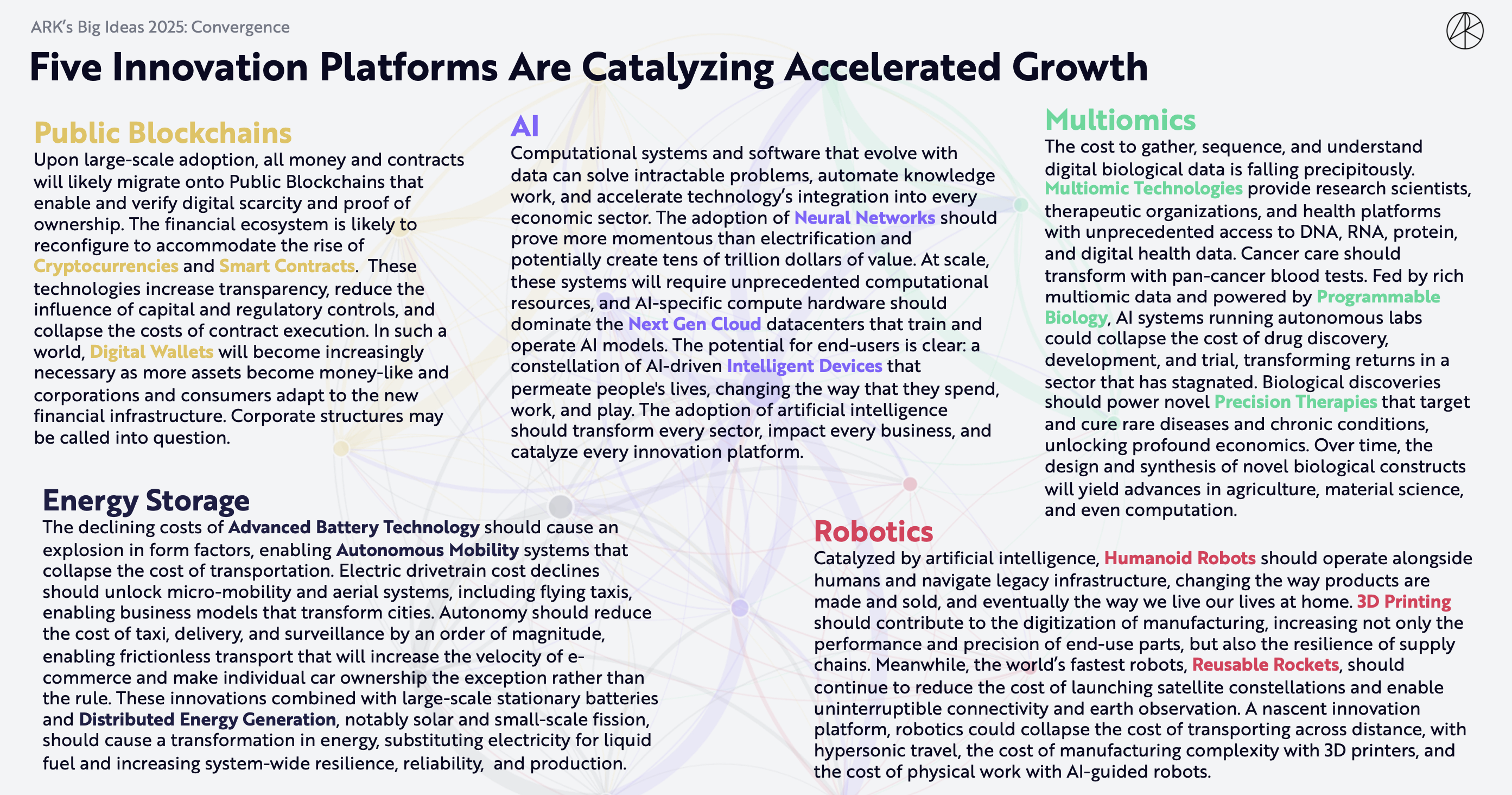
There are many sources of foresight. Some accessible, some credible, some comprehensible. Most people tend to focus on technology. Revolutionary, rampant and remarkable. AI’s impact is already incredible, as its ability to galvanise other tech, and in particular networks (blockchain), multinomic (genetics), energy (storage), and robotics.
Two of the best future tech reports that come out each year have just been published
- Big Ideas 2025: ARK Invest focus on the opportunities for investors in a bewildering world of opportunity
- Tech Trends 2025: Future Today Institute’s epic 1000 page report on the tech and tech titans embracing it
Tech gets all the focus, the glamour, the hype. But the future is much more than tech. It’s how you use it.
Inspiring Possibilities
How can tech address the big challenges of a changing world – social mobility, climate change, and much more? How can tech align with human capability and social aspirations, to enable us to do more? How can tech be embraced within new business models to create real breakthrough innovations which can transform markets and business?
To go beyond tech, I love the annual reports from the Dubai Future Foundation. While they might sound like a provincial think tank, preoccupied with turning the UAE into a land of foresight, they are much more global thinking, and profound too. There are two fantastic reports, just published, exploring the big ideas for innovation and growth in a world of quantum shifts:
- Megatrends 2025: Exploring the 10 megatrends that are shaping the world over the next decade
- The Global 50: Focusing on the 50 big opportunities which these convergent trends offer us.
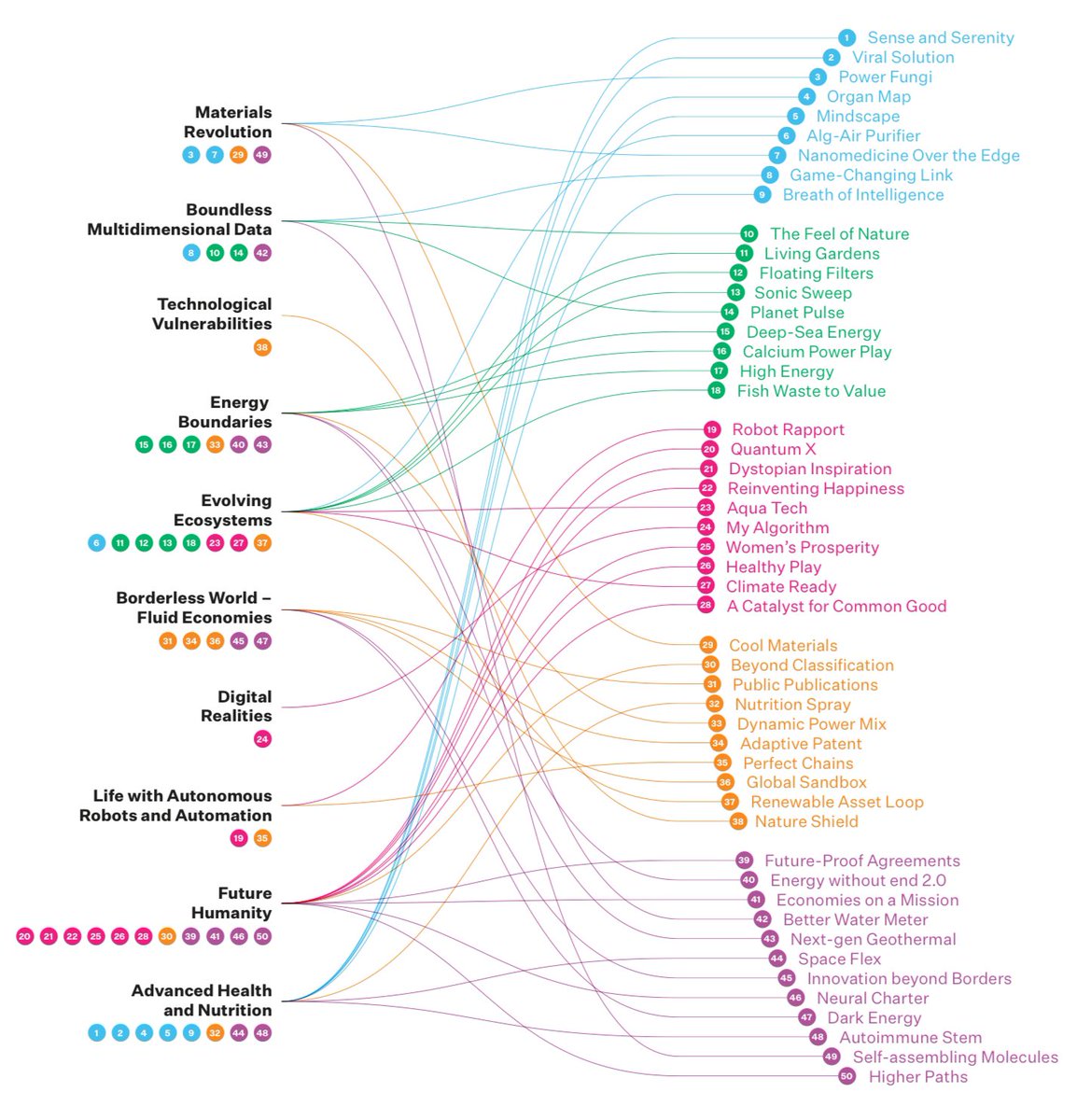
The emerging opportunities are driven by the convergent megatrends, and cluster into 5 significant opportunity spaces. The opportunities are defined in ways that sound futuristic, even fun, but have huge consequences for every government and corporation, startup and investor, in terms of how the rampant technologies and evolving societies could embrace them:

Opportunity Space 1: Health Reimagined … Redefine mental and physical health, support longer lives, drawing on science, technology and nature for better health and new ways to personalise access for individuals and communities everywhere.
- Sense and Serenity
- Viral Solution
- Power Fungi
- Organ Map
- Mindscape
- Alg-Air Purifier
- Nanomedicine Over the Edge
- Game-Changing Link
- Breath of Intelligence
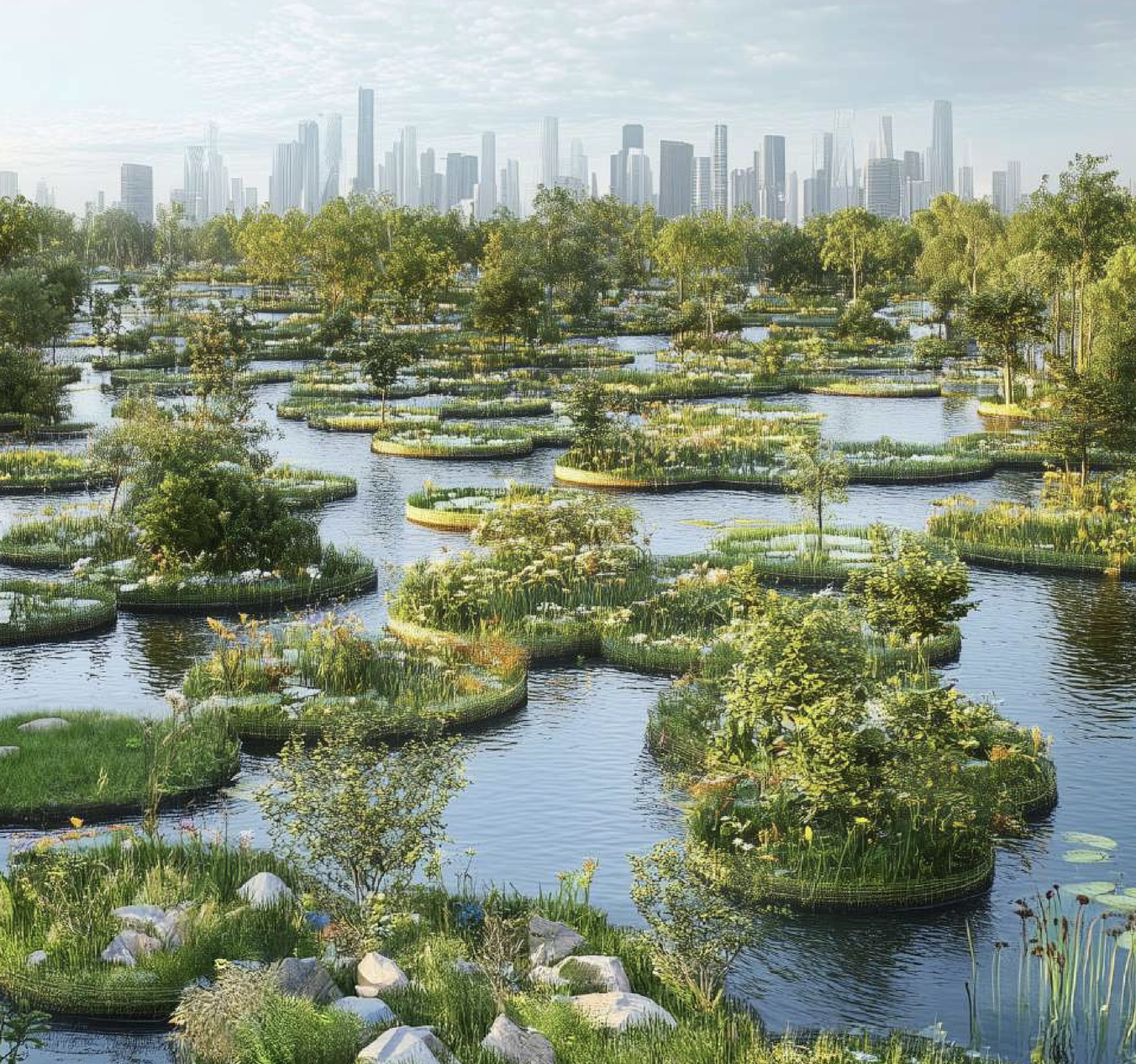
Opportunity Space 2: Nature Restored … Minimise environmental risks and harness nature’s capacity to restore itself or have a positive impact on crucial environmental ecosystems and habitats, creating a more stable, healthier planet for all.
- The Feel of Nature
- Living Gardens
- Floating Filters
- Sonic Sweep
- Planet Pulse
- Deep-Sea Energy
- Calcium Power Play
- High Energy
- Fish Waste to Value

Opportunity Space 3: Societies Empowered … Empower societies by offering solutions to humanity’s most complex and universal needs, optimising systems they rely on, safeguarding risks that could make societies more fragile in the face of crises, and extending individual and collective potential for growth and development.
- Robot Rapport
- Quantum X
- Dystopian Inspiration
- Reinventing Happiness
- Aqua Tech
- My Algorithm
- Women’s Prosperity
- Healthy Play
- Climate Ready
- A Catalyst for Common Good

Opportunity Space 4: Systems Optimised … Improve and build more effective and resilient systems underpinning advances in services and solutions at various levels of business, government and society.
- Cool Materials
- Beyond Classification
- Public Publications
- Nutrition Spray
- Dynamic Power Mix
- Adaptive Patent
- Perfect Chains
- Global Sandbox
- Renewable Asset Loop
- Nature Shield

Opportunity Space 5: Transformational … The power to radically change ways of life by replacing the models that countries, communities and individuals live by. These new models enable individuals and communities to innovate and improve the transformation of humanity to new digital and non-digital realities.
- Future-Proof Agreements
- Energy without end 2.0
- Economies on a Mission
- Better Water Meter
- Next-gen Geothermal
- Space Flex
- Innovation beyond Borders
- Neural Charter
- Dark Energy
- Autoimmune Stem
- Self-assembling Molecules
- Higher Paths
Innovative Reinvention
The big question for most of us, is then how can we embrace these incredible opportunities within the businesses of today? How will they help to transform our mindset about possibilities, to supercharge innovation, to accelerate growth, to reinvent business?
Look around us, and we already have so many incredible innovators shaking up every market, not just through product innovations but through fundamental reinvention of organisations, markets, and entire industry sectors.
So which are the innovative companies around the world that inspire you? My passion is to track down and learn from the world’s most inspiring companies – disrupting conventions, reinventing business models, innovating and transforming, creating value with positive impact. Fast Company is a great source of inspiration, and has just launched their latest ranking
- Most Innovative Companies 2025: from Waymo to Nvidia, Nubank and RocketLab
- Most Innovative Companies by Sector: from Advertising to Agriculture, Architecture to Automotive
Every one of these companies has a fabulous story, and great insights in terms of how to unlock the new opportunities of change, and how to drive innovation for practical, profitable success. I typically focus most on their leaders, what inspires them, and their strategies, what drives their futures. You can explore many more on my website, A to Z of the Most Inspiring Companies.
What can you learn from them? In this world of incredible possibility, what will you do?
Because the future starts here. Next is now.

Reinventing Inditex
Pablo Isla has arguably created a blueprint for 21st century fashion retail.
I recently sat down with him, to talk about his career (he was twice ranked by HBR as the world’s #1 CEO) and the future of fashion retailing. We talked about the changing world and transformational change, AI and sustainability, faster fashion and much more. He struck me as quiet and thoughtful, but also visionary, provocative and clearly an inspiring leader.
For 16 years Pablo Isla was CEO (and chairman) of Inditex (one of the world’s leading fashion retail groups with brands like Zara, Bershka, Massimo Dutti, Pull & Bear, and Stradivarius) and grew the market value of the company by over 450% (from €13 billion to over €100 billion, 2005 to 2019), while doubling sales and tripling profitability.
I asked him how. As business leader over these years, was his mindset largely about selling more, doing the same thing better and better. Or was it about reinvention, from product and process innovation, all the way to reinventing brand concepts and business models?
He was emphatic … “In retail, you can never stand still. You have to reinvent yourself constantly, not just every year, but every season, every week” … with the changing aspirations and influences of consumers being the biggest driver.
Zara, of course, was a pioneer of fast fashion. Yet in today’s markets, with challenger brands like Shein and Temu, fast has become ultra-fast. And, at the same time, other agendas have become important, such as sustainability and performance – from reducing emissions and waste, to developing high-tech fabrics and consumer loyalty.
“Innovation is not just about technology. It’s about rethinking how we design, produce, distribute, and communicate — faster, smarter, and more sustainably” he reflects.
He transformed Inditex into the world’s most agile, digitally integrated, and sustainable fashion retailer, with a major shift toward digital retail, investing early and heavily in integrating online and physical retail. He also positioned Inditex as a leader in sustainable fashion, committing to 100% sustainable cotton, linen, and polyester by 2025. Plus zero landfill waste and use of renewable energy across logistics and manufacturing.
Global retail to thoughtful fashion
While Inditex is one of the world’s largest fashion retailers, the much smaller Aster Textile is one the most interesting manufacturers of fabrics and clothing. Having worked with the leadership team of the fast-growing Turkish business for the last 7 years, I’ve watched the rapidly changing opportunities and priorities of the fashion industry.
Aster started as a business designing and producing vast ranges of basic cotton tees and sweats for companies like H&M and M&S (and typically as the lowest cost). Today it has transformed into a company that puts high performance, sustainable fabrics first. And now partners with leading brands like Hugo Boss and Lacoste, On and Zegna.
“Thoughtful fashion” is Aster’s purpose statement. And in strategy workshops, trend analysis and business planning, I help them to think deeply and differently about what it takes to win in the fashion world today, and tomorrow. Indeed, a very practical symbol of this change is Aster’s acquisition and development of its subsidiary business, Artesa, a futuristic state-of the-art fabric development business.
Some of Aster’s future is obvious. We know fashion is relentless. And increasingly it not just how things look, but how they perform too. New materials, innovative fabrics, new techniques, innovative designs.
But it’s also about how brands and retailers work together, and how they work differently with consumers. For example in terms of new business models like Stitch Fix, delivering new types of experiences like Coke 3000, built around new communities like Nike’s SNKRS.
What’s the future of fashion?
The global fashion industry is undergoing a profound transformation. Faced with growing pressure to address climate change, shifting consumer values, and the rise of technology, brands and designers are rethinking every aspect of the fashion value chain—from the materials used to make clothes to how they’re designed, sold, and worn. This reinvention is not just about sustainability or aesthetics—it’s about building entirely new models of fashion that are smarter, fairer, and more future-ready.
1. Bio-Based, regenerative, and circular materials
Textiles are at the heart of fashion’s transformation. Emerging companies are developing innovative fabrics that challenge traditional norms.
For instance, Matereal recently launched Polaris, a bio-based replacement for polyurethane, dramatically reducing the environmental footprint of coated fabrics. Similarly, Modern Meadow and Bolt Threads are leading pioneers in biofabrication. Bolt Threads has developed Mylo, a leather alternative made from mycelium (mushroom roots), already used by brands like Stella McCartney and Adidas.
Circular innovation is also taking hold. Companies like Refiberd use AI and hyperspectral imaging to analyze discarded garments for recycling, helping to close the loop on textile waste. In parallel, Renewcell in Sweden recycles worn-out cotton and viscose into new fabric feedstock, branded as Circulose, which H&M and Levi’s have incorporated into their collections.
These material innovations reduce fashion’s reliance on oil-based synthetics, toxic dyes, and water-intensive natural fibers—marking a fundamental shift toward regenerative fashion systems.
2. Agile, on-demand, and AI-powered production
One of fashion’s greatest inefficiencies has always been its inventory problem—producing too many garments, too far in advance. That’s beginning to change.
The concept of agile retail, pioneered by platforms like MannyAI, uses real-time consumer data to forecast demand and trigger production only when needed. This minimizes overstock and waste while allowing brands to respond more quickly to trends.
Some labels are taking this even further. Unspun, a San Francisco-based startup, uses 3D scanning to create jeans custom-fitted to each shopper—produced on-demand with minimal waste. Similarly, PlatformE, a Portuguese tech company, enables luxury brands to personalize products at scale, powering the rise of “mass customization.”
AI is also transforming supply chains. Tools like Tilkal and TrusTrace provide transparency and traceability across suppliers, helping brands ensure ethical sourcing and verify sustainability claims.
3. Secondhand, rental, and resale models
Resale is no longer niche—it’s one of the fastest-growing segments of the fashion industry. According to ThredUp, the secondhand market is projected to grow three times faster than the global apparel market by 2030.
Luxury and high-street brands alike are embracing resale. Gucci has partnered with The RealReal, while COS Resell, Patagonia Worn Wear, and Lululemon Like New offer platforms for customers to buy and sell pre-loved garments directly.
Meanwhile, rental platforms like HURR (UK), Rent the Runway (US), and Style Theory (Southeast Asia) are shifting consumer behavior by promoting access over ownership. These services allow people to rotate wardrobes without contributing to overproduction or clutter.
This trend reflects a deeper mindset shift: clothes are no longer disposable, but valuable assets to be shared, traded, or revived.
4. Digital fashion and virtual garments
The rise of the metaverse and digital identity has given birth to a bold new category: digital-only fashion.
Companies like DRESSX and Tribute Brand design 3D garments that exist purely in virtual environments. Consumers can “wear” these digital clothes on social media, in video games, or augmented reality experiences. This creates new forms of self-expression without the environmental impact of physical production.
Luxury brands are experimenting, too. Gucci launched its Gucci Vault as an experimental space blending NFTs, digital wearables, and metaverse experiences. Meanwhile, digital-native fashion houses like The Fabricant collaborate with artists and brands to create couture for avatars, while building new economic models around NFTs and blockchain-based ownership.
Digital fashion also plays a role in design prototyping, enabling brands to visualize and refine garments before cutting any fabric—saving time, money, and materials.
5. Inclusive and purpose-driven brands
Inclusion, transparency, and values-led branding are now competitive advantages.
Emerging designers are leading the way. The 2025 CFDA/Vogue Fashion Fund finalists include names like Ashlynn Park (Ashlyn) and Julian Louie (Aubero), who are exploring themes of gender fluidity, cultural identity, and mental health through fashion.
Social innovation is also rising. Brands like Fashion Revolution and Tonlé prioritize ethical labor, zero-waste production, and community empowerment. In Africa, Studio 189 (co-founded by Rosario Dawson and Abrima Erwiah) promotes artisan-made fashion while supporting economic development in Ghana.
Even larger companies are responding. Nike has launched adaptive apparel for people with disabilities, and Tommy Hilfiger Adaptive continues to expand its universally designed collections.
Consumers—especially Gen Z—are demanding accountability, diversity, and purpose in the brands they support. The fashion industry is responding by building deeper connections, not just pushing products.
6. Localism, upcycling, and craft
Global fashion is becoming more local—and personal. The slow fashion movement, long popular in Scandinavia and Japan, is now gaining traction worldwide.
Brands like E.L.V. DENIM in London make high-end jeans entirely from upcycled materials, hand-cut and tailored in East London. In India, designers like Kriti Tula of Doodlage create one-of-a-kind pieces from factory waste, preserving craft traditions while reducing textile landfill.
Elsewhere, Bode in New York celebrates vintage fabrics, storytelling, and embroidery in menswear; while Cecilie Bahnsen in Denmark handcrafts romantic, voluminous pieces with timeless quality.
These models challenge the idea of “newness” and elevate slowness, repair, and authenticity as fashion ideals.
Inspired by ideas from beauty, entertainment, sports
Fashion, once a seasonal and product-centric industry, is now under pressure to become faster, more digital, and more emotionally connected to consumers. As trends accelerate and consumer values shift, the most forward-thinking fashion brands are increasingly looking outside their sector—to beauty, entertainment, and sports—for inspiration on how to innovate and reinvent. These adjacent industries offer valuable lessons in agility, engagement, platform thinking, and purpose-led growth.
From the beauty sector, fashion can learn the power of community and co-creation. Brands like Glossier have built empires not on advertising but on direct customer dialogue and user-generated content. Glossier invited fans into the product development process, listened to feedback, and created a feedback loop that feels authentic and empowering. Similarly, Fenty Beauty disrupted the cosmetics world by embracing radical inclusivity, launching 40 foundation shades and redefining representation. Fashion brands are now following suit—SKIMS, for example, applies similar inclusivity and community-building to shapewear and loungewear, creating cultural resonance and loyalty.
In entertainment, innovation revolves around storytelling and immersive worlds. The rise of the “experience economy” has shown that people want more than products—they want narratives and emotional connection. Luxury fashion houses like Balenciaga and Gucci have embraced this by launching collections inside video games, such as Fortnite and Roblox, or staging surreal digital runway shows that feel more like film than fashion. Moncler’s Genius project is another standout, using artist and designer collaborations to reimagine the brand’s DNA in ever-evolving drops—blurring the lines between fashion and cultural performance.
The sports industry, particularly brands like Nike, offers a masterclass in ecosystem thinking. Nike doesn’t just sell sneakers—it sells a lifestyle powered by community, data, and performance. Through apps like Nike Run Club and SNKRS, it combines social connection, personalized recommendations, exclusive content, and gamification. The result is a highly engaged customer base that sees the brand not just as a retailer, but as a partner in personal progress. Fashion brands like Lululemon and On Running have adopted similar models, blending retail, wellness, events, and digital tools into unified ecosystems that build long-term loyalty.
Globally, brands are also experimenting with cultural hybridity and hyper-localization—learning from K-pop, anime, streetwear, and sneaker culture. Japanese brand Ambush, founded by Korean-American designer Yoon Ahn, fuses fashion with music, gaming, and pop culture, while India’s Sabyasachi combines traditional craftsmanship with global luxury aesthetics, using storytelling to elevate heritage into modern desirability.
The key lesson across sectors is that innovation is not just technological—it’s cultural and strategic. Fashion brands must embrace agility, purpose, and participation, evolving from static labels into dynamic platforms. By learning from the beauty industry’s inclusivity, the entertainment world’s immersion, and sport’s ecosystem thinking, fashion can reinvent itself for a future defined not just by style, but by meaning, emotion, and connected experience.
Reinventing fashion brands and retail
To reinvent themselves for the future, fashion retailers and brands must move beyond just selling clothes — toward becoming platforms for identity, culture, and sustainability. The future of fashion lies in fusing creativity with technology, sustainability with scalability, and personalization with global relevance. Reinvention isn’t just about new products, but new value propositions, business models, ecosystems, and mindsets.
Fast Fashion to Smart Fashion
- Shift from mass production to on-demand, data-driven production.
- Use AI and predictive analytics to design and stock what consumers actually want.
- Reduce overproduction and waste.
Example: Zara has integrated RFID and real-time inventory systems to better align demand and supply.
Brand-Centric to Community-Driven
- Build fashion communities — not just customer bases.
- Engage fans in co-creation, feedback, and shared values.
- Leverage UGC, creators, and digital influencers.
Example: Glossier in beauty built a brand entirely on community feedback and engagement.
Ownership to Access
- Embrace rental, resale, and circular models.
- Monetize fashion through subscription services, digital wardrobes, and lifetime value.
- Promote circularity as a premium experience.
Example: Rent the Runway and Vestiaire Collective have redefined fashion access and reuse.
Stores to Experience Hubs
- Reinvent physical retail as immersive, multi-sensory spaces.
- Combine storytelling, technology, and social media appeal.
- Offer in-store exclusives, events, or services that can’t be found online.
Example: Nike’s House of Innovation in NYC blends AR, personalization, and real-time customization
Apparel to Identity Platforms
- Expand into lifestyle, wellness, beauty, gaming, or even mental health.
- Fashion becomes part of the creator economy and self-expression across channels.
Example: SKIMS by Kim Kardashian blends fashion, pop culture, body positivity, and functional design.
Physical Fashion to Digital Fashion
- Tap into virtual fashion, NFTs, avatars, and metaverse experiences.
- Brands create virtual collections, sell skins for avatars, or dress influencers’ AI twins.
Example: Balenciaga launched digital collections in Fortnite, while Drest lets users style virtual models with real luxury looks.
Linear to Regenerative Fashion
- Regenerative farming for raw materials (cotton, wool).
- Brands invest in take-back schemes, upcycling, and closed-loop production.
Example: Patagonia’s “Worn Wear” and Allbirds’ carbon accounting per product.
What to do next?
Fashion brands and retailers need to reframe their thinking. To move beyond the conventional mindsets of clothing and stores, to reimagine how they can most effectively add value:
-
Think like a tech company: agile, iterative, data-rich.
-
Act like a media brand: emotional, story-led, culturally attuned.
-
Operate like a sustainability pioneer: transparent, circular, responsible.
-
Move like a lifestyle platform: fluid across categories, channels, and markets.
In a time of accelerated disruption, technological breakthroughs, and mounting global uncertainty, the ability to adapt is no longer a competitive advantage — it’s a survival imperative.
Companies that once thrived on scale, efficiency, or dominance can now be outpaced by agile startups or overwhelmed by global crises almost overnight. In this environment, being “future-ready” means building a business that is constantly reinventing itself — anticipating change, embracing innovation, empowering talent, and aligning deeply with the evolving needs of society and the planet.
Paul Polman, former CEO of Unilever, captures the mindset, saying “The businesses that are going to survive and thrive are the ones that take responsibility for the future.” He transformed Unilever into a sustainability leader, linking future-readiness to broader stewardship.
Klaus Schwab, founder of the World Economic Forum says “In the new world, it is not the big fish which eats the small fish, it’s the fast fish which eats the slow fish.” He underscores speed, agility, and adaptability as critical for survival in the modern economy.
But what does it really mean to be a future-ready business? And how are organizations around the world redesigning themselves to thrive amid the chaos?

Future-Ready Mindset
Satya Nadella of Microsoft says “Our industry does not respect tradition — it only respects innovation.” His transformation of Microsoft highlights the importance of continual reinvention and forward-looking leadership.
Mary Barra, CEO of General Motors adds “The auto industry will change more in the next five to ten years than it has in the last fifty.” Her vision for GM’s electric future reflects the scale of transformation required to stay relevant.
Jeff Bezos, Amazon founder, says simply “What’s dangerous is not to evolve.”A future-ready business is not simply one that invests in technology or launches digital products. It is a business that embraces constant change as its core operating principle, one that is:
-
Purpose-driven, with clarity on why it exists and what impact it seeks to have
-
Deeply adaptive, able to respond quickly to change without losing focus
-
Tech-enabled, using emerging technologies to unlock new value and scale
-
Human-centered, building cultures of learning, resilience, and creativity
-
Sustainability-oriented, aligning growth with ecological and social responsibility
-
Ecosystem-focused, operating in networks and platforms rather than silos
It requires a long-term vision coupled with short-term flexibility — a paradoxical blend of strategic patience and operational agility.
Why It Matters Now
The forces of disruption are converging:
-
Technological acceleration: AI, automation, blockchain, synthetic biology, quantum computing, and more are redefining what’s possible.
-
Environmental pressure: Climate change, resource scarcity, and ESG expectations are reshaping how companies operate and invest.
-
Geopolitical instability: Supply chain shocks, wars, and fragmented regulations are exposing organizational vulnerabilities.
-
Cultural and demographic shifts: New generations demand purpose, inclusivity, and flexibility in work and consumption.
-
Economic turbulence: Inflation, inequality, and systemic shocks are changing the rules of global competition.
In this context, resilience is reactive. Future-readiness is proactive.

5 Pillars of a Future-Ready Business
1. Strategic Foresight
Future-ready businesses constantly scan the horizon. They don’t just forecast trends — they explore multiple scenarios, invest in long-term bets, and make strategic choices that balance today’s profits with tomorrow’s possibilities.
Example: Shell
Shell has built one of the most sophisticated scenario planning teams in the corporate world. For decades, it has used scenarios not as predictions, but as tools for thinking the unthinkable — helping the company adapt to energy transitions, geopolitical shifts, and emerging technologies.
2. Agility at Scale
It’s not enough to be agile in pockets — future-ready companies embed agility across the enterprise. They flatten hierarchies, enable rapid decision-making, empower cross-functional teams, and build modular, adaptable structures.
Example: Haier
Haier, founded and led for many years by Zhang Ruimin, transformed itself from a traditional appliance manufacturer into a “networked organization” of micro-enterprises. Each team operates like a mini-startup, close to customers and accountable for its own results. This model has enabled Haier to scale innovation across global markets while staying nimble.
3. Technology as Core
Rather than outsourcing innovation, future-ready companies treat technology as a central nervous system. They invest in cloud infrastructure, data capabilities, AI, and cybersecurity — not just to optimize operations, but to unlock entirely new value propositions.
Example: DBS Bank
DBS reinvented itself from a slow-moving legacy bank into one of the world’s most tech-savvy financial institutions. It embraced cloud-native architecture, APIs, machine learning, and design thinking — positioning itself as a “technology company in the banking business.”
4. Talent Fluidity
Future-ready businesses prioritize learning over knowing. They cultivate adaptive talent systems — where people are encouraged to experiment, reskill, rotate roles, and contribute beyond their job descriptions.
Example: Unilever
Unilever’s “Flex” program allows employees to engage in short-term gigs across the organization, promoting internal mobility and rapid skill development. Its “U-Learn” platform provides personalized learning paths to build future capabilities — from digital skills to sustainable innovation.
5. Sustainability and Stakeholder Alignment
To be truly future-ready, companies must align with societal and environmental shifts. That means going beyond compliance to create regenerative, inclusive, and transparent business models.
Example: Patagonia
Patagonia redefined what it means to be a sustainable company — from supply chain ethics to political activism. In 2022, founder Yvon Chouinard gave away the company’s ownership to a trust focused on environmental stewardship, embedding its mission into its governance structure.

Future-Ready in action
Let’s look at more examples across industries and geographies:
Microsoft: Reinventing with Purpose and Platforms
Under Satya Nadella’s leadership, Microsoft shifted from a software-selling giant to a cloud-first, AI-driven platform company. It reoriented around a clear purpose: empowering every person and organization on the planet to achieve more.
-
Invested early in AI (OpenAI partnership)
-
Transformed culture to promote growth mindset
-
Pivoted from Windows-centric to cloud-native (Azure)
-
Embedded accessibility, ethics, and sustainability in product design
This transformation enabled Microsoft to surpass $3 trillion in market cap and become a foundational player in the future of work, gaming, and enterprise AI.
Shopify: Enabling the Next Economy
Shopify has built the infrastructure for a decentralized, entrepreneurial economy — empowering millions of merchants to build online businesses.
-
Scaled rapidly during COVID-19 by supporting ecommerce pivot
-
Built an ecosystem of apps, payment tools, fulfillment services
-
Invested in AR/VR shopping, blockchain, and conversational commerce
Shopify is not just a platform — it’s a movement of economic independence, constantly evolving to meet the needs of small businesses and creators.
IKEA: Circularity and Digital Transformation
IKEA is future-proofing its brand by becoming more sustainable, digital, and experiential.
-
Committed to becoming fully circular and climate positive by 2030
-
Investing in sustainable materials and renewable energy
-
Expanding ecommerce and AI-powered design tools
-
Testing new store formats and urban living solutions
The Swedish giant is using its global scale to drive systemic change while staying relevant to younger, climate-conscious consumers.
GitLab: Born Remote, Built to Scale
GitLab was built as a fully remote company from day one — with employees in over 60 countries and no physical headquarters.
-
Built a platform for the entire DevOps lifecycle
-
Open-sourced its documentation and culture playbooks
-
Created transparent workflows and asynchronous norms
-
Scaled rapidly while remaining highly inclusive and collaborative
In a post-pandemic world, GitLab’s model offers a blueprint for how distributed teams can out-execute centralized giants.
Tesla: Speed, Integration, and Bold Bets
Tesla’s future-readiness comes from its ability to execute at startup speed on a planetary scale.
-
Vertical integration of manufacturing, energy, and software
-
Aggressive bets on AI (FSD), robotics (Optimus), and battery tech
-
Culture of constant iteration, risk-taking, and direct feedback loops
-
Challenging not just the auto industry, but energy, logistics, and space
Tesla isn’t just building electric cars — it’s reimagining infrastructure for a carbon-free future.
ASML: Powering the Future of Chips
Dutch company ASML is the sole producer of extreme ultraviolet (EUV) lithography machines — essential for producing next-gen semiconductors.
-
Invested decades in fundamental R&D
-
Built deep global partnerships with Intel, TSMC, and Samsung
-
Critical enabler of Moore’s Law and AI computing power
ASML’s dominance is a reminder that future readiness also involves deep specialization, intellectual property, and long-term technological vision.
Steps to Future-Readiness
So, how can any organization start becoming future-ready? Here are some actionable strategies:
-
Develop Scenario Thinking: Challenge assumptions, explore multiple futures, and plan for both disruptions and opportunities.
-
Digitize with Purpose: Use technology to unlock new business models and deepen customer relationships — not just reduce cost.
-
Create Space for Innovation: Set aside resources, teams, and incentives for experimentation and “failure-forward” thinking.
-
Build Adaptive Leadership: Equip leaders to thrive in ambiguity, lead with empathy, and make decisions under uncertainty.
-
Measure What Matters: Expand KPIs to include environmental impact, societal contribution, and employee wellbeing — not just financials.
-
Partner Beyond Borders: Join ecosystems, platforms, and open collaborations to scale faster and learn from others.

The Age of Perpetual Reinvention
In a world of relentless change, the winners won’t be the biggest or the most established. They will be the ones that adapt faster, learn better, and stay aligned with the future their stakeholders are moving toward.
Future-readiness is not a destination. It’s a discipline. A way of seeing the world. A commitment to reinvention.
And while uncertainty may be uncomfortable, it is also fertile ground for those bold enough to build what’s next.
Every week I travel to a different global city. I love the energy of New York, the culture of Madrid, the intensity of Cairo, the calm of Singapore, the landmarks of London, the boldness of Baku, the charm of Prague, the awakening of Jeddah, the fusion of Seoul, the cherry blossom of Cape Town, the architecture of Buenos Aires, the clean air of Seattle, the passion of Newcastle, the chill of Copenhagen, the technology of Astana, the open spaces of Washington, the people of Tokyo.
56% of the world’s population now live in cities, and growing. In the same way that the growth of industry and infrastructure enticed people from rural villages into central towns, they continue to seek out metropolitan living with its superior jobs, abundant services and better lifestyles. Covid saw some people run for the countryside in developed countries, but in most places it only accelerated urbanisation.
Tokyo is still the world’s largest city, with a population of 37 million, but it is Chinese and Indian cities that are growing fastest like Delhi and Shanghai. And then there are the new cities, particularly of Asia, Middle East and Africa – from Shenzhen to Hyderabad, to Dubai and Riyadh, next generation cities like Lagos and Kinshasa, and dream-like new metrolpolsis like Neom.
In between, there is a recognition that cities need more thoughtful design and innovation to thrive. Many of the largest cities seek to build secondary versions, like Cairo or São Paulo. And in other places, entirely new cities, like Astana in Kazakhstan or Songdo in South Korea.
Too many old cities struggle with the legacy of unstructured growth, as activities and lifestyles change. Look at Europe for example, with its deserted centres, and sprawling perimeters. European regeneration means rethinking the purpose of cities, how to design centres that are fit for today’s needs, and reinvent infrastructure – transport, power, education, hospitals, leisure – that is more sustainable, efficient, and works.
So what is the DNA of a city? What’s the DNA of your city of the future?
Inspiring Cities
Cities have emerged over centuries, sometimes with careful design, and otherwise with chaotic sprawl. Here are some of the best designed cities, starting with Amsterdam, which I love for its canals, but also the cultural and human vibrancy of its city centre.
Amsterdam, Netherlands: The dutch city is planned along the four concentric canal rings initiated in the 17th century. These canals have given the city a definite structure whereas the housing is built in clusters to lend lateral support. Public housing in the city is designed to clearly define the urban character, with special attention paid to the façade design that is now the image of the city. The excellence of Dutch planning is reflected in the emphasis on connectivity, well designed public spaces for a higher standard of public life.

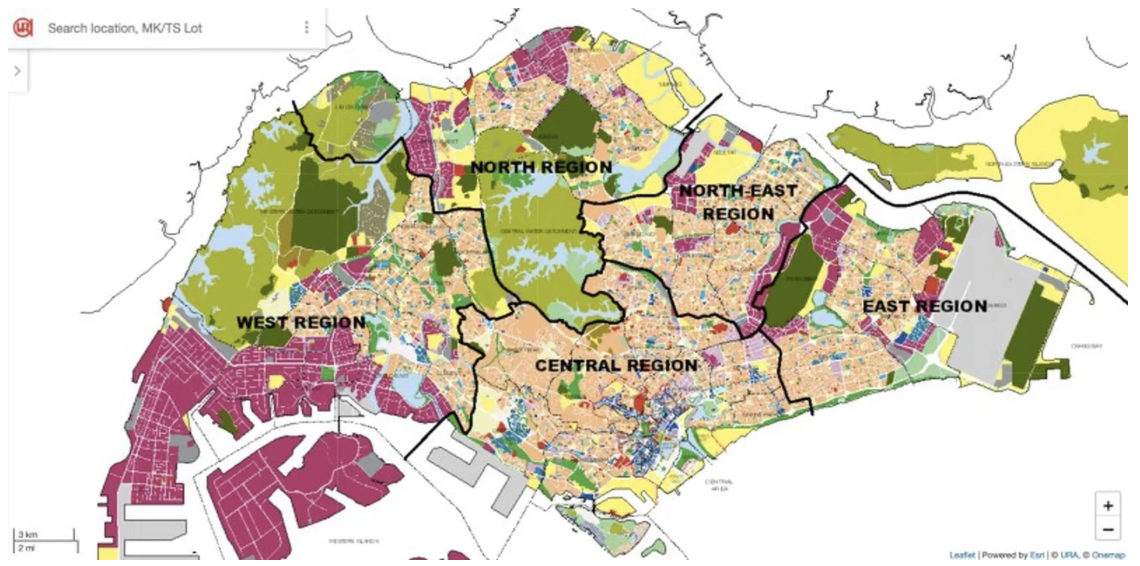
Singapore: The Asian city-state has seen rapid economic development and high quality of public life owing to an efficient government and city planning strategy. Divided into a series of partially self-sufficient precincts, each precinct is governed by four regional centers other than the central government. These planning strategies have been successful in creating quality affordable housing, integrating green spaces, enhancement of mobility and transport services while sustaining a flourishing economy.
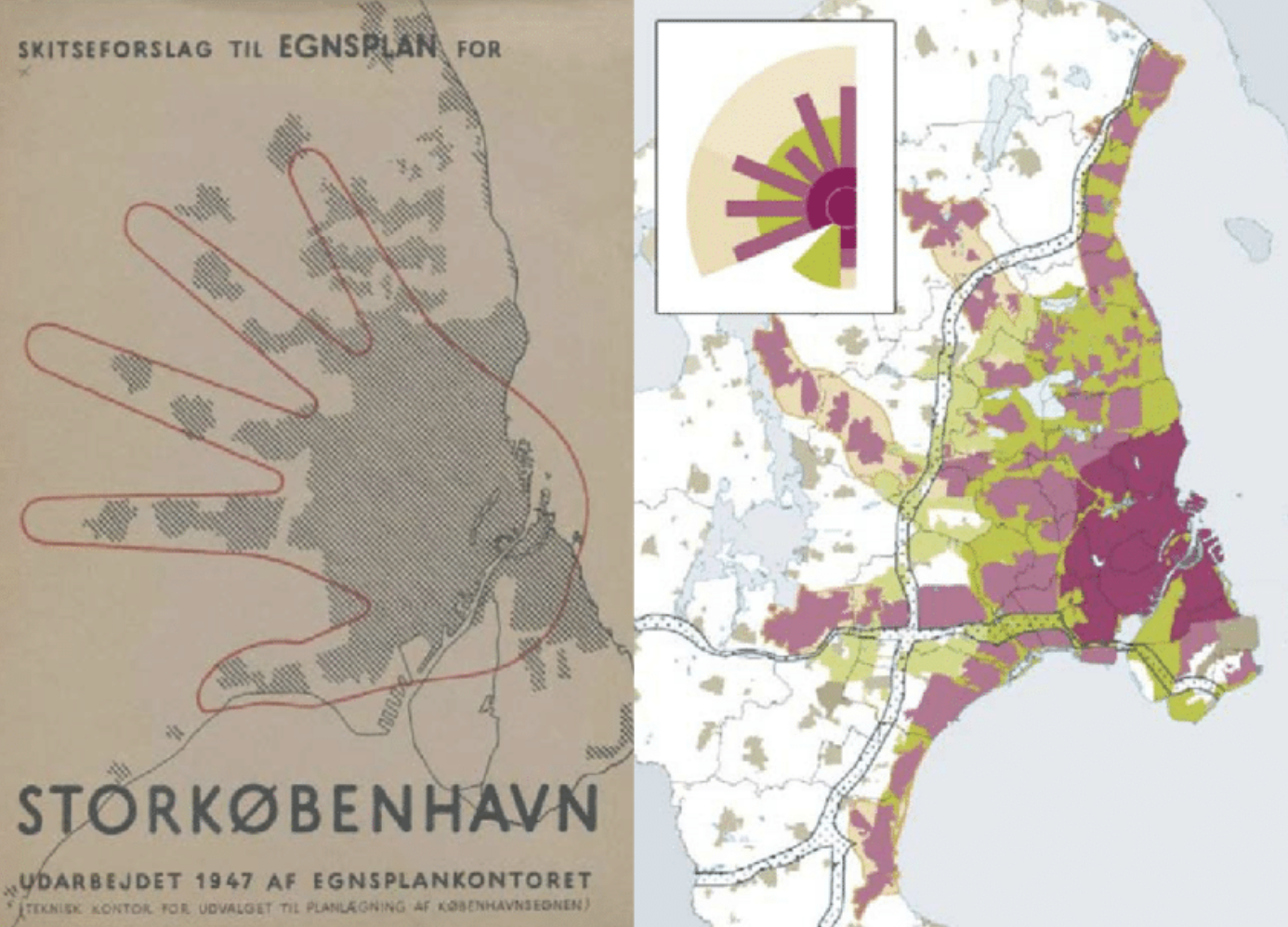
Copenhagen, Denmark: The urban plan was conceived as a ‘Five Finger Plan’ to build an integrated network of urban infrastructure, transport and green spaces. The key element of the planning is the location of people and their movement through the plan. The development is condensed along these lines to encourage the use of public transit networks. The emphasis on sustainability, the high quality of public life, a sensitive approach to development is testament to the success of the urban planning and execution in Copenhagen. Today it seeks to be a “Doughnut City” living with in the limits of environmental impacts, and designed to do more socially.
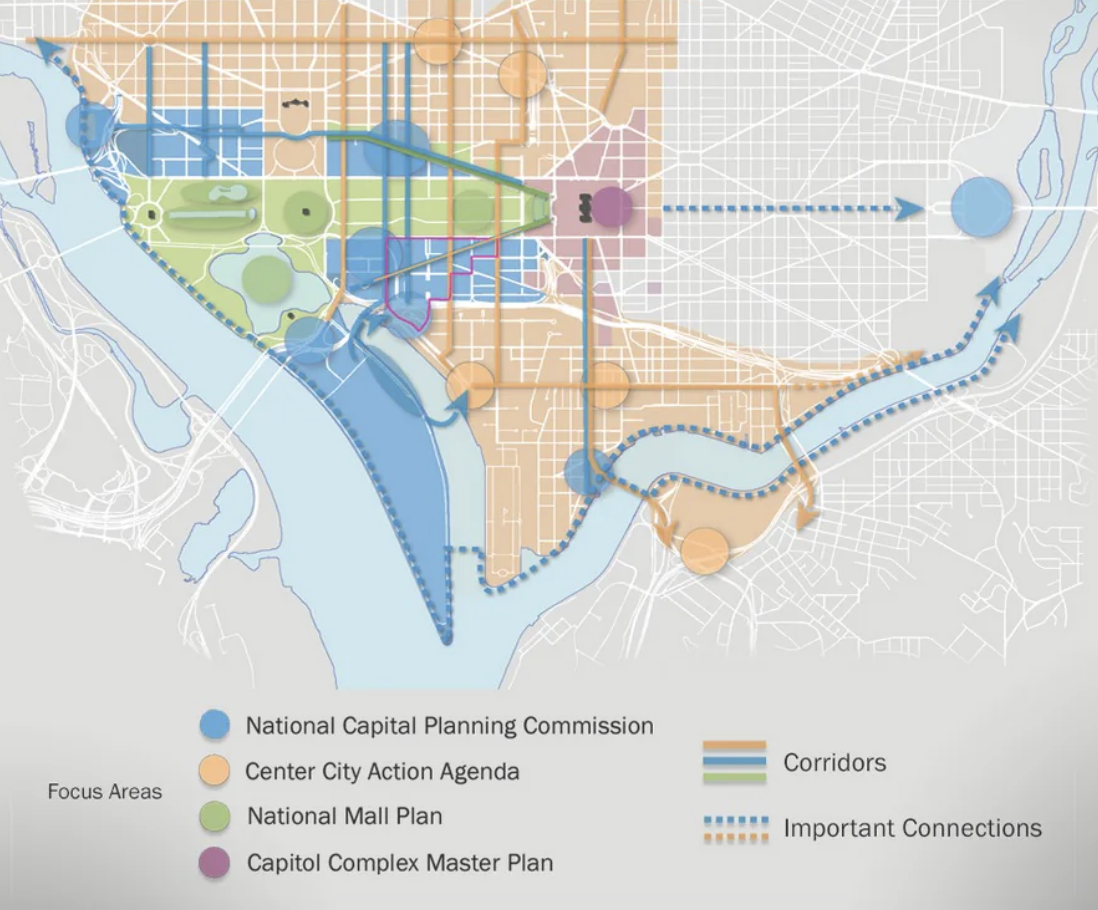
Washington DC, USA: The urban plan is known as the L’Enfant Plan named after Pierre Charles L’Enfant, the original urban planner for the city. The city is regulated with north-south and east-west running streets intersected by broader ‘avenues’ that would create rectangles within the grid for memorials and open spaces. The plan also establishes the National Mall – a landscaped public park, the extents marked by the United States Capitol and Lincoln Memorial on each end.
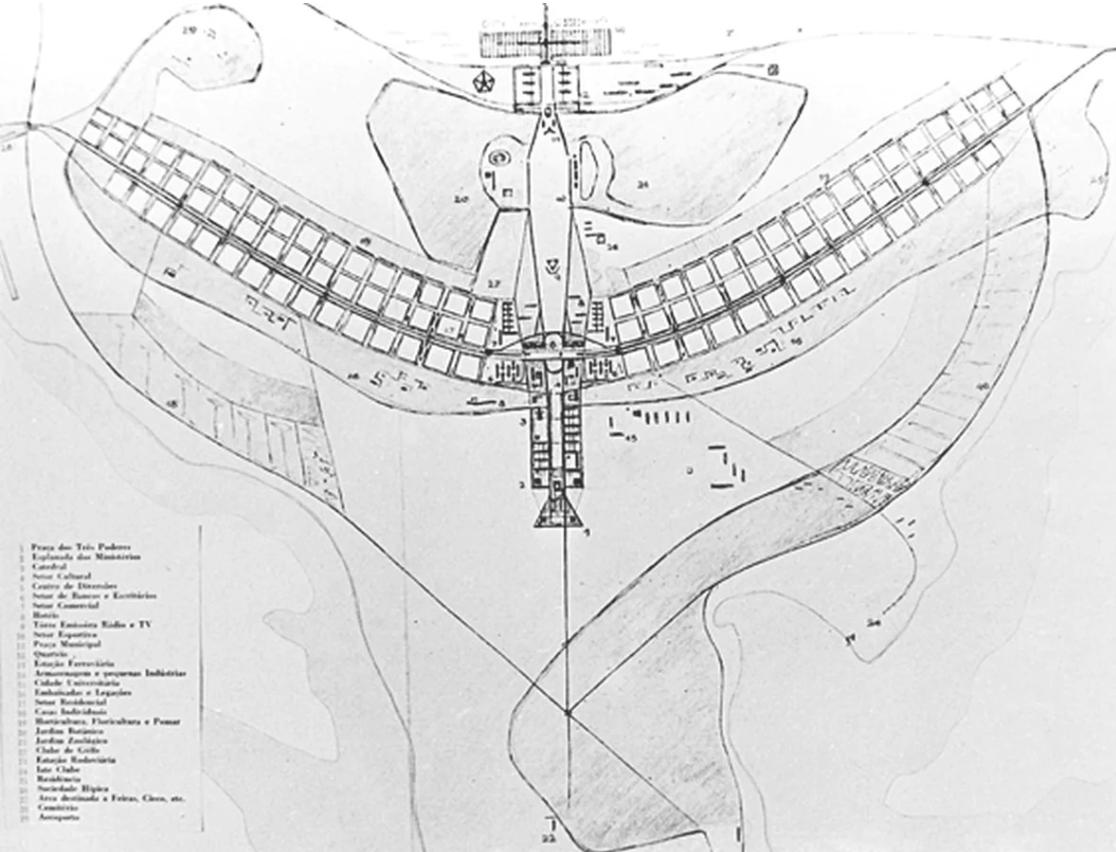
Brasilia, Brazil: The city’s urban plan developed by Lucio Costa is famously known as a ‘Pilot Plan’ owing to its plan that is defined by two intersecting axes. The monumental long axis is the location of all the government buildings, whereas the residences of the government employees are located along the cross axis. These residences are within areas known as the ‘super-quadra’ that also has amenities such as shops, hospitals and schools. However, Brasilia was envisioned largely as a city for automobiles and does not consider pedestrian mobility.
Innovating Cities
Flying into Astana, I didn’t know what to expect. I had previously visited Almaty, the former capital which was historic but crumbling, and certainly not giving the image of a dynamic, young nation. That all changed in Astana, with its video-walled skyscrapers and ultramodern infrastructure:
Astana, Kazakhstan: Now known as Nur-Sultan, it is the capital of Kazakhstan, developed to promote economic growth and modernisation, and a vastly different look and feel to the historic former capital of Almaty.
- Modern Architecture: Features iconic buildings like the Bayterek Tower and the Khan Shatyr Entertainment Center.
- Economic Hub: Focus on attracting investment and fostering economic development.
- Cultural Institutions: Hosts museums, theaters, and cultural centers. Success Factors:
- Strategic Relocation: Moving the capital from Almaty to Astana helped distribute economic activity more evenly across the country.
- Investment in Infrastructure: Significant investment in modern infrastructure and amenities.
Brasília, Brazil: the Latin American capital, designed to promote the development of the country’s interior.
- Modernist Architecture: Known for its unique and innovative architectural designs by Oscar Niemeyer.
- Government Hub: Houses Brazil’s federal government institutions.
- Planned Layout: Designed with a distinctive airplane-shaped layout.
- Visionary Design: Innovative urban planning and architecture set Brasília apart.
- Economic Development: Helped stimulate economic growth in Brazil’s interior regions.
Canberra, Australia: the capital city, designed to be the political and administrative centre of the country.
- Government Buildings: Home to the Australian Parliament House and other key government institutions.
- Cultural Institutions: Hosts national museums, galleries, and cultural centers.
- Planned Layout: Designed with a radial layout and extensive green spaces. Success Factors:
- Purpose-Built: Created to serve as the nation’s capital, with a focus on governance and culture.
- Quality of Life: High standard of living with excellent public services and amenities.
Lavasa, India. India has the world’s largest population, and most of it in its huge cities. This is a planned city near Pune, India, designed to be a modern, self-sustaining urban area.
- Mixed-Use Development: Lavasa includes residential, commercial, educational, and recreational spaces.
- Scenic Location: The city is situated in a picturesque valley, offering a high quality of life.
- Infrastructure: Lavasa features well-planned infrastructure, including roads, utilities, and public transportation.
- Private Investment: Private developers played a significant role in Lavasa’s development.
- Tourism Focus: The city’s scenic location and recreational facilities attract tourists and residents alike.
Navi Mumbai, India: This is a planned satellite city of Mumbai, designed to decongest the main city.
- Residential Areas: Well-planned residential neighborhoods with modern amenities.
- Commercial Zones: Business districts and commercial centers to support economic growth.
- Infrastructure: Robust infrastructure, including roads, railways, and public transportation.
- Strategic Location: Proximity to Mumbai, making it an attractive alternative for residents and businesses.
- Balanced Development: Focus on both residential and commercial development to create a self-sustaining city.
Putrajaya, Malaysia: The country’s new administrative capital, designed to alleviate congestion in Kuala Lumpur:
- Government Hub: Houses many of Malaysia’s government offices and ministries.
- Green Spaces: Extensive parks and green areas, including the Putrajaya Wetlands.
- Modern Infrastructure: Well-planned roads, bridges, and public transportation. Success Factors:
- Strategic Planning: Careful planning ensured a balanced mix of administrative, residential, and recreational areas.
- Sustainability: Emphasis on green spaces and environmental sustainability.
Songdo, South Korea: Songdo International Business District is a smart city built on reclaimed land along Incheon’s waterfront. It is designed to be a sustainable, high-tech urban area.
- Sustainability: Songdo incorporates green building practices, extensive parks, and a central waste disposal system that eliminates the need for garbage trucks.
- Technology: The city is equipped with smart technologies, including sensors for traffic management, energy-efficient buildings, and high-speed internet connectivity.
- Mixed-Use Development: Songdo features a mix of residential, commercial, and recreational spaces, making it a vibrant and livable city.
- Public-Private Partnerships: Collaboration between the government and private developers played a crucial role in Songdo’s development.
- Strategic Location: Proximity to Incheon International Airport and major transportation hubs boosted Songdo’s appeal as a business and residential destination.
City Building
What’s the formula for a 21st Century City DNA?
Purpose × Design × Ecosystem × Experience × Governance = Sustainable Prosperity
Planning a successful new city requires meticulous attention to a multitude of factors. In many ways, there is no difference to developing an effective business strategy, including innovation and transformation, delivery and ongoing management. Here are some key elements and steps involved in the city building process:
Purpose
- Define the Vision: Establish a clear vision for the city’s purpose, such as economic growth, sustainability, innovation, or quality of life.
- Set Objectives: Outline specific goals and objectives that align with the vision. These could include economic targets, population growth, environmental sustainability, and social inclusivity.
Strategy
- Comprehensive Plan: Develop a master plan that includes land use, transportation, infrastructure, and zoning regulations.
- Phased Development: Break down the development into manageable phases, starting with essential infrastructure and gradually adding residential, commercial, and industrial areas.
Zoning
- Residential Areas: Designate zones for residential development, ensuring access to schools, healthcare, parks, and amenities.
- Commercial and Retail: Plan commercial and retail spaces to provide services and employment opportunities for residents.
- Industrial Zones: Allocate areas for industrial use, considering proximity to transportation hubs and minimizing impact on residential zones.
- Green Spaces: Incorporate parks, recreational areas, and green belts to enhance the city’s livability and environmental quality.
Infrastructure
- Transportation: Plan an efficient transportation network, including roads, public transit, pedestrian pathways, and cycling routes.
- Utilities: Ensure reliable access to water, electricity, gas, and waste management systems.
- Communication Networks: Develop high-speed internet and telecommunication infrastructure to support business and residents.
Sustainability
- Eco-Friendly Design: Implement green building practices and energy-efficient designs for buildings and infrastructure.
- Renewable Energy: Invest in renewable energy sources like solar, wind, and hydropower.
- Smart Technologies: Use smart technologies for traffic management, energy distribution, waste management, and public services.
Economics
- Attract Investment: Create incentives and favorable conditions to attract businesses and investors.
- Diverse Economy: Plan for a diverse economy with sectors such as technology, finance, manufacturing, and tourism.
- Job Creation: Develop policies and initiatives to create job opportunities for residents.
Partnerships
- Collaboration: Foster public-private partnerships between government and private sector entities to leverage resources, expertise, and funding.
- Investment: Secure funding through public and private investments for large-scale projects.
Community
- Stakeholder Involvement: Engage with community members, stakeholders, and experts to gather input and feedback.
- Transparency: Ensure transparent communication and decision-making processes to build trust and support.
Regulation
- Policies and Regulations: Establish clear policies and regulations to guide development, land use, and environmental protection.
- Compliance: Ensure compliance with local, national, and international standards and regulations.
Management
- Continuous Assessment: Monitor progress and performance of the city’s development, making adjustments as needed.
- Feedback Loop: Establish a feedback loop to incorporate lessons learned and improve future planning and implementation.
Where to start?
Here’s a strategic roadmap for imagining, designing, and building a truly future-ready city:
1. Define the City’s Purpose and Identity
Start with the “Why”
Before any road is drawn or land allocated, articulate the city’s reason for existence — its DNA.
Key questions:
-
What human, economic, or planetary problem does the city exist to solve?
-
What kind of people do you want to attract and empower?
-
What values and ambitions define its culture — innovation, inclusion, sustainability, creativity, wellbeing?
-
How does it differentiate itself from other global cities?
Strategic output:
A City Purpose Charter — a document defining its mission, values, and long-term promise (e.g., “A city designed for human flourishing and planetary balance”).
Examples:
-
Singapore built its identity around “a garden city for the future.”
-
Dubai defined itself as “a global hub for ambition and opportunity.”
-
Copenhagen: “the world’s most liveable green city.”
2. Shape the Vision and Future Story
Once the purpose is defined, create a narrative that inspires investors, residents, entrepreneurs, and global partners.
Components:
-
Vision statement (what success looks like in 50 years).
-
Brand essence (how the city feels and is experienced).
-
Narrative pillars — e.g., Innovation + Inclusion + Nature + Culture + Opportunity.
This becomes the story you sell to the world — and the compass for every design, policy, and investment decision.
3. Design the City Ecosystem
The next step is to architect the ecosystem — not just physical spaces, but how they interconnect.
Core layers:
-
Urban design — layout, density, mobility patterns, zoning flexibility.
-
Infrastructure — energy, water, waste, mobility, digital networks, logistics.
-
Economic systems — tax incentives, innovation zones, entrepreneurship support, trade infrastructure.
-
Social systems — education, healthcare, housing, culture, inclusion.
-
Environmental systems — circular economy, biodiversity, carbon neutrality, resilience.
Strategic principles:
-
15-minute city model: every essential need accessible within 15 minutes.
-
Digital twin architecture: model every aspect in real time for planning and optimization.
-
Mixed-use zoning: blending work, living, learning, and leisure to foster interaction.
-
Regenerative design: buildings and systems that give more than they take.
4. Build the Economic Engine
Cities thrive on economic vitality. Create a diversified innovation economy from the start.
Key steps:
-
Anchor sectors — choose 3–5 high-potential industries (e.g., AI, clean energy, biotech, creative industries).
-
Investment framework — develop PPPs (public-private partnerships), sovereign funds, global venture ecosystems.
-
Talent magnetism — visa and lifestyle programs to attract entrepreneurs, scientists, creatives.
-
Innovation districts — hubs for R&D, start-ups, and cross-sector collaboration.
-
Education pipeline — universities aligned with future industry clusters.
Think of the city as a venture portfolio — investing in a mix of industries that generate sustainable growth.
5. Design for Human Experience and Culture
Cities succeed when they’re not just efficient — but alive, inspiring, and deeply human.
Consider:
-
Public realm — green spaces, waterfronts, cultural centres, art installations.
-
Housing diversity — accessible, modular, adaptive homes.
-
Health and wellbeing — active transport, fresh food access, mental health design.
-
Cultural DNA — museums, festivals, music, food, storytelling — building belonging.
-
Social innovation — cooperatives, shared spaces, community governance models.
Your goal: to make people feel part of something bigger.
6. Embed Smart Systems and Digital Governance
Technology should amplify humanity, not dominate it.
Strategic layers:
-
Data infrastructure: interoperable, privacy-first digital systems.
-
AI-enabled management: optimize energy, waste, transport, and emergency systems.
-
Blockchain governance: transparent land registry, service contracts, and digital identity.
-
Citizen platforms: participatory governance, where residents co-create policy.
Outcome:
A city that is self-learning — sensing, predicting, and adapting in real time.
7. Develop a Financing and Investment Model
Every great city needs long-term capital and smart governance.
Strategic actions:
-
Establish a sovereign urban development fund.
-
Structure investment layers: infrastructure (long-term), real estate (medium-term), innovation (high-growth).
-
Attract anchor investors: multinational companies, development banks, and global talent funds.
-
Create value-capture mechanisms: land value uplift, carbon credits, digital services.
The financial model should allow reinvestment of growth profits into social and environmental equity.
8. Build Governance, Policy, and Resilience
Cities fail when governance lags ambition.
Strategic design:
-
Adaptive governance model: combining public transparency with entrepreneurial agility.
-
Regulatory sandbox: experiment with new technologies, energy systems, and business models safely.
-
Crisis resilience: design for climate, cyber, and health shocks.
-
Citizen assembly: participatory democracy for legitimacy and inclusion.
9. Attract and Curate Population Growth
A new city must curate its first wave of citizens strategically — the founding community becomes the cultural DNA.
Strategic sequence:
-
Pioneers: entrepreneurs, designers, technologists, artists.
-
Settlers: families, educators, small businesses.
-
Scale: service industries, manufacturing, finance, logistics.
Offer lifestyle incentives and clear storytelling about the future you’re inviting people to join.
10. Create a Dynamic Brand and Global Identity
Finally, wrap it in a world-class city brand — the synthesis of purpose, culture, and experience.
Key elements:
-
Iconic design: architecture that becomes symbolic.
-
Cultural events: festivals, expos, or summits.
-
Media strategy: continuous storytelling to attract investment and talent.
-
Global partnerships: align with other innovative cities for exchange and visibility.
A great city is a living organism, not a masterplan — designed for evolution, inclusion, and constant reinvention.
More resources
- 20 of the World’s Newest Cities
- World Smart Cities Forum Case Studies
- 6 Smart City Case Studies from the World Bank
- Next Gen Real Estate Projects Shaping Cities
In a world grappling with environmental degradation, societal disconnection, and systemic disruption, the dominant model of business leadership is proving inadequate.
Traditional leadership often emphasises control, efficiency, linear growth, and profit maximization. This mindset encourages a blinkered approach, to drive profit at all costs. Short-term, yes, and also without caring about the external costs of achieving it (the costs to nature, and society).
But a new paradigm is emerging.
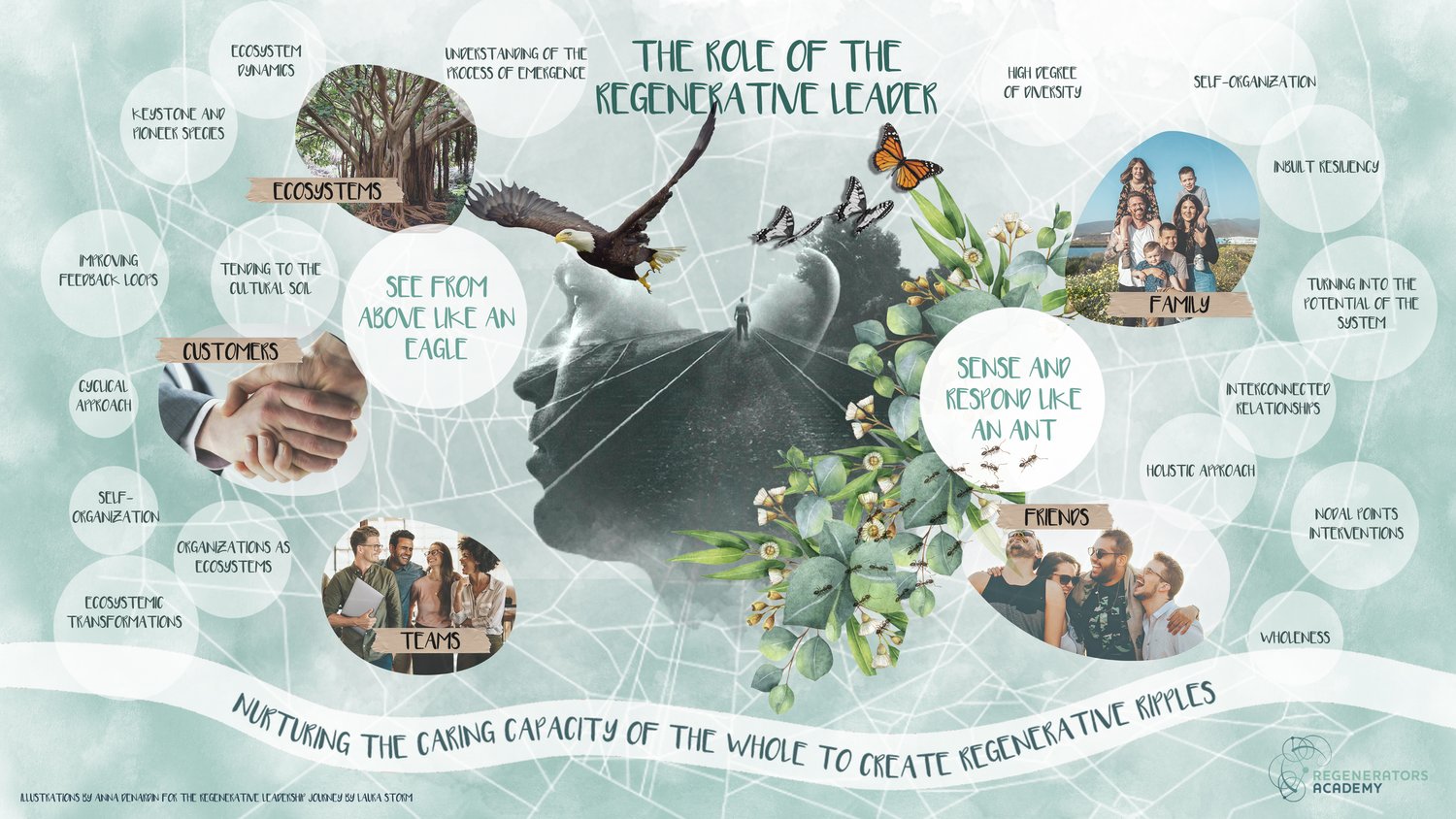
Rooted in living systems thinking, inspired by the intelligence of nature, and focused on creating conditions for life to thrive, regenerative leadership offers a path forward. It invites leaders to reimagine business as a force not just for minimizing harm, but for regenerating people, planet, and profit simultaneously.
So what is regenerative leadership?
Regenerative leadership is a way of leading that’s inspired by the principles of living systems and nature. Instead of trying to control or extract from the world, regenerative leaders work to create conditions for life to thrive—within their organisations, communities, and ecosystems.
Regenerative leaders seek to reinvent business as a force for good. It can still be about growth and profitability, but in a more enlightened way. In a way that gives more than it takes – becomes net positive, rather than net zero – and creates value for shareholders, and all other stakeholders too.
At its core, regenerative leadership is about shifting from a mechanistic, exploitative mindset to a holistic, life-centered approach. It focuses on restoring and enhancing the health of people, planet, and systems while still delivering profitable growth. It’s not just about doing less harm—it’s about actively doing good and contributing to regeneration.
Leading business as a living system
For much of the industrial era, organizations have been treated like machines—predictable, hierarchical, and controllable. This mechanistic worldview has led to rigid structures, siloed thinking, and a short-term focus on outputs and efficiency. Regenerative leadership, in contrast, draws inspiration from nature, recognizing that organizations are living systems embedded within larger living systems—ecosystems, societies, and economies.
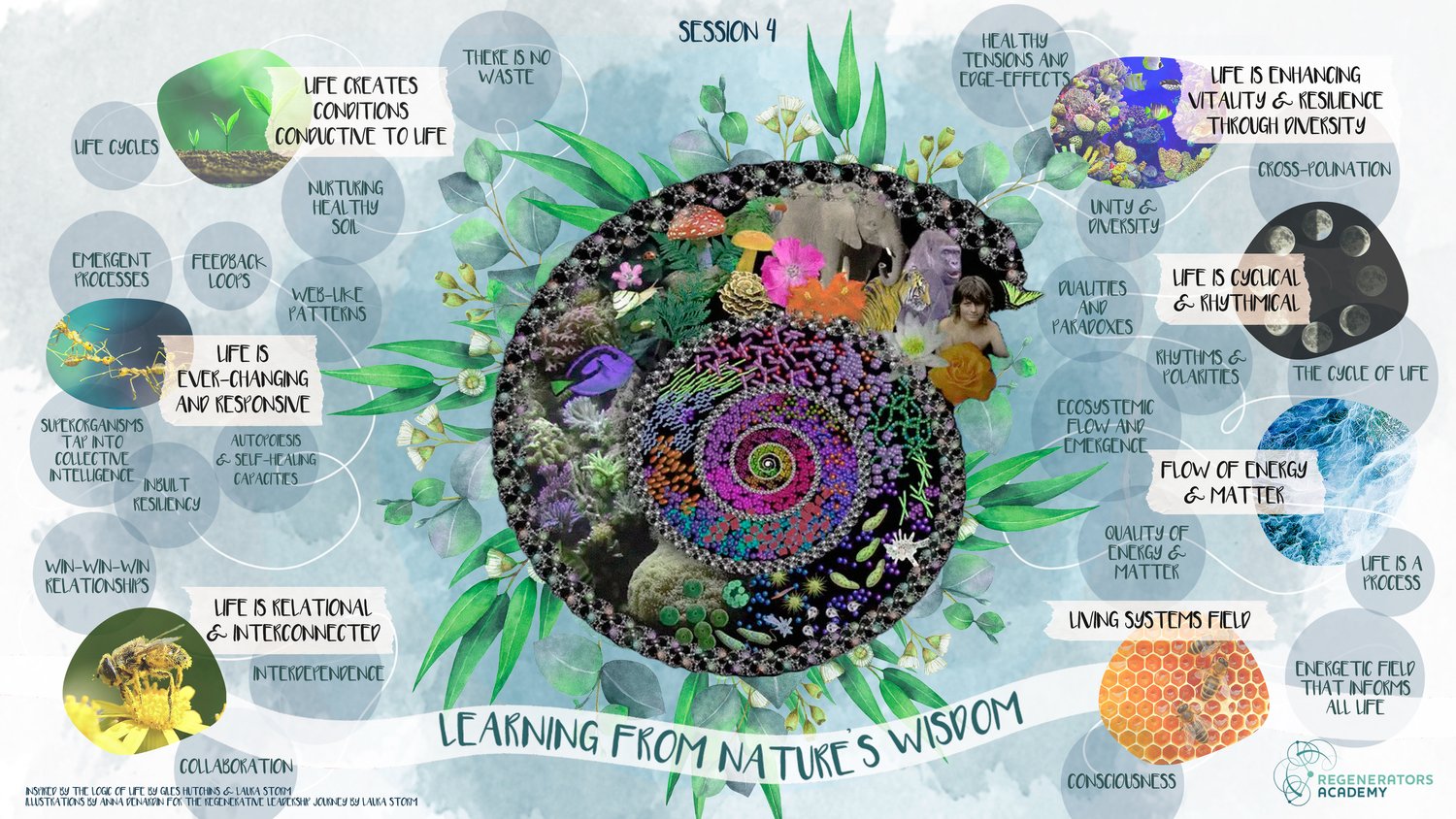
Living systems thrive through diversity, decentralization, reciprocity, and resilience. They are dynamic, self-organizing, and constantly evolving. Leaders who adopt a regenerative mindset understand that business must align with these natural principles if it is to remain viable in the face of accelerating change. Regenerative organizations are not merely sustainable; they are life-enhancing, contributing positively to the systems in which they operate.
These ideas are brilliantly articulated in the book
The core of regenerative leadership
Regenerative leadership begins with a shift in consciousness—from separation to interconnection. It asks leaders to move beyond ego-centric to eco-centric thinking. Rather than seeing the organization as an island, leaders recognize it as part of a larger web of relationships and responsibilities. This shift reshapes decision-making, strategy, innovation, and culture.
Several core principles define regenerative leadership:
-
Purpose Beyond Profit
Regenerative businesses are animated by a deep sense of purpose that extends beyond financial returns. They seek to serve life, not extract from it. Profit is seen as a means to sustain and scale impact, not the end goal. This shift unlocks intrinsic motivation among employees, fosters trust among stakeholders, and builds brand resilience. -
Systems Thinking
Regenerative leaders see the bigger picture. They cultivate the ability to zoom out and understand the interdependencies within and beyond their organizations. This systems awareness helps leaders anticipate unintended consequences, design holistic solutions, and foster innovations that ripple across sectors and scales. -
Resilience and Adaptability
Inspired by nature’s capacity to adapt, regenerative leaders build organizations that are resilient to shocks and capable of evolving. They design with change in mind—embracing uncertainty, learning from feedback, and investing in decentralized structures that empower teams and communities. -
Inner Development
Regeneration starts from within. Leaders must undergo personal transformation to lead system-level change. This includes cultivating emotional intelligence, humility, empathy, and presence. Regenerative leadership is not just about strategy; it’s about being—showing up with authenticity, curiosity, and care. -
Co-creation and Inclusion
Nature thrives through collaboration. Likewise, regenerative leadership is relational, not transactional. It honors diverse voices, fosters deep listening, and builds partnerships across boundaries. Stakeholder inclusion—especially those historically marginalized—is essential for developing truly regenerative solutions. -
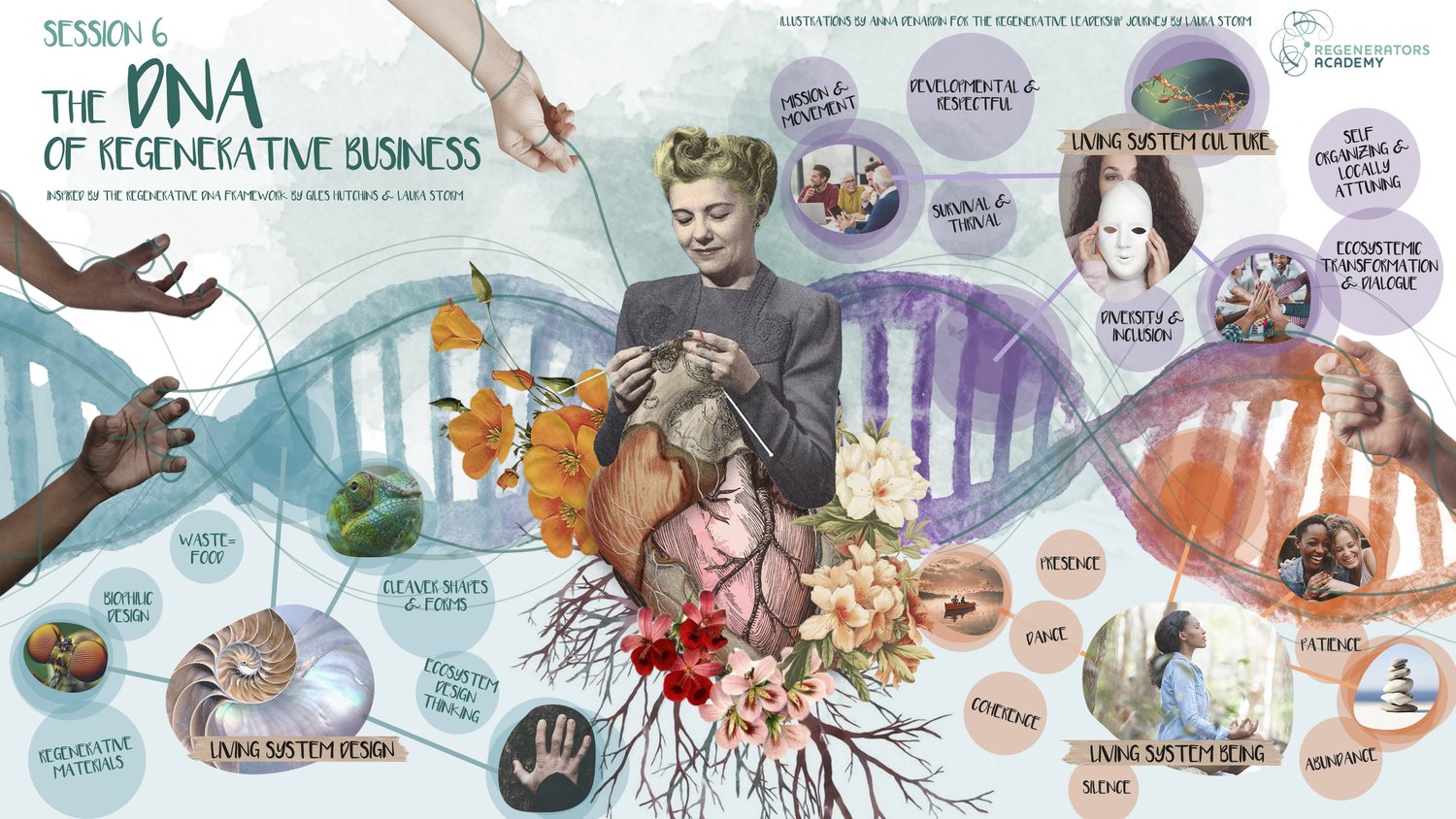
Integration of Regenerative Design
A regenerative business designs its products, processes, and places in ways that restore ecosystems and communities. From circular supply chains and regenerative agriculture to buildings that sequester carbon and workspaces that nourish wellbeing, the design choices reflect a commitment to healing and renewal.
Examples of regenerative leaders in business
Here are some of the best known regenerative business leaders, CEOs and founders who are reshaping business not just to minimise harm, but to restore ecosystems, empower communities, and create long-term systemic value:
- Hamdi Ulukaya: the Turkish immigrant entrepreneur founded greek yogurt business Chobani as a force for social regeneration – hiring refugees, supporting rural economies, and pushing for ethical capitalism. Key initiatives included profit-sharing, inclusive hiring, local supply chains, food equity programs.
- David Perry: founder of Indigo Agriculture, built a company helping farmers adopt regenerative agriculture while tracking carbon sequestration and rewarding ecosystem services. His key initiatives include a carbon farming marketplace, microbial seed coatings, farmer-centered impact metrics.
- Tom Szaky: a circular economy entrepreneur designing reuse and refill systems for global brands to move beyond single-use packaging. His businesses are TerraCycle and Loop, with a reusable packaging platform, recycling hard-to-recycle waste, closing resource loops.
- Yvon Chouinard: Chouinard built Patagonia on environmental ethics, but went further by making the Earth its “only shareholder” in 2022. The company invests profits in regenerating nature and fighting climate change. His key initiatives included regenerative organic cotton, Worn Wear (circularity), environmental grants.
- Emmanuel Faber: Faber pushed Danone to become the world’s first large multinational to adopt “Entreprise à Mission” status, integrating social and environmental purpose. His iconic projects included regenerative agriculture programs, B Corp certifications, climate-forward dairy sourcing.
- Paul Polman: the Dutch CEO transformed Unilever’s business model toward sustainable living, prioritising stakeholder capitalism and long-term planetary health. And famously refusing to be a salve to quarterly returns. Key projects included the Sustainable Living Plan, carbon-positive operations, inclusive value chains.
- Eva Karlsson: CEO of Swedish brand Houdini Sportswear, leads with circularity, ecological innovation, and transparent product development rooted in planetary boundaries. Key initiatives included full product take-back system, climate-positive operations, regenerative design labs.
- Mate Rimac: Founded of Rimac Automobili, based in Croatia, makes electric supercars and champions clean mobility and circular engineering as ways to regenerate transportation systems. His projects include electric drivetrains, closed-loop manufacturing, future mobility ecosystems.
These leaders share traits like systems thinking, deep ecological awareness, long-term orientation, and a drive to serve life, not just shareholders. Of course, in a business context, generating profitable returns still matters.
Yvon Chouinard sold his entire Patagonia business to a non-profit foundation, through which every cent of earnings goes to fighting climate change. Financial success therefore leads to positive impact. At Danone, Emmanuel Faber was less successful. While developing a fabulous transformational plan, he failed to recognise the need to also deliver short-term returns, and lost his job. You need to do deliver short and long-term, financial health and a better world
Leadership practices for regeneration
Regenerative leadership is not a fixed set of actions but a living practice. It requires continual reflection and adaptation. However, there are practices that help leaders embody this new way of leading:
-
Nature Immersion: Regular engagement with nature cultivates presence, perspective, and inspiration. It reminds leaders of their place in the web of life and offers direct insights into living systems.
-
Deep Listening and Dialogue: Regenerative leaders create spaces for meaningful conversation. They ask powerful questions, listen beyond words, and make room for silence. Dialogue becomes a source of collective wisdom and emergence.
-
Biomimicry and Nature-Inspired Innovation: By studying how ecosystems solve complex problems, leaders can innovate more sustainable and efficient processes. For example, decentralized water systems modeled on root networks or governance inspired by the behavior of social insects.
-
Regenerative Metrics: Moving beyond KPIs focused solely on revenue or efficiency, regenerative leaders embrace metrics that track impact on soil health, biodiversity, community wellbeing, and employee flourishing. These holistic indicators better reflect the health of the whole system.
-
Ritual and Rhythm: Just as nature follows rhythms—seasons, cycles, pulses—regenerative leadership honors the natural rhythms of people and teams. This includes respecting rest, reflection, and renewal as essential to creativity and performance.
Business as a living organism
Organizations that adopt regenerative leadership begin to behave less like machines and more like ecosystems. Patagonia, for example, has built a culture rooted in environmental activism and regenerative agriculture. Interface, the modular flooring company, shifted its entire business model to “reverse climate change,” integrating biomimicry and circular economy principles into everything it does. These companies demonstrate that regeneration and profitability are not at odds—when done authentically, they reinforce each other.
The regenerative business sees its role not as dominating the marketplace but as stewarding the future. It contributes to local communities, replenishes ecosystems, and builds long-term social equity while also creating economic value. This is not altruism—it’s strategy. As markets become more volatile and stakeholders demand more accountability, regenerative businesses are positioned to lead.
The leadership we now need
The challenges of our time—climate disruption, biodiversity loss, inequality, burnout—are not isolated problems. They are symptoms of a deeper crisis in how we lead and live. Regenerative leadership meets this moment by returning to timeless truths. Nature has 3.8 billion years of experience in creating thriving, resilient systems. Rather than trying to dominate nature, it’s time we learn from it.
This is a radical act—not in a destructive sense, but in the original meaning of radical: going to the root. Regenerative leadership invites us to reconnect with our deepest values, our highest aspirations, and the living systems we are part of. It asks us to lead not just for today, but for seven generations to come.
In doing so, we can transform business from a source of extraction to a source of regeneration. We can build companies that heal rather than harm, that enliven rather than deplete. And in this transformation, we not only reinvent business—we reinvent ourselves.
“AI is the defining technology of our time. The question isn’t whether we use it, but how responsibly and creatively we lead with it” says Microsoft’s Satya Nadella.
A recent study by Dataiku found that 74% fear they could be fired within the next 2 years if they don’t make the right choices regarding AI – both in terms of what and how to embrace, but also not being left behind.
“Leadership in the AI era means being bold enough to experiment, smart enough to learn, and human enough to care” says Jae Fraser at Citigroup, while Jensen Huang adds “”The companies that will thrive in the future are those that embrace AI as a co-pilot, not just an add-on”
In a world shaped by relentless technological advancement, economic shocks, and rising complexity, the nature of leadership is undergoing a profound transformation. AI is not just a new tool in the business toolkit—it’s a disruptive force reshaping markets, operating models, and customer expectations. To thrive in this era, business leaders must evolve into adaptive, ecosystem-minded, and human-centered orchestrators of innovation.
The Leadership Shift
Traditional leadership focused on control, stability, and predictability. But those paradigms no longer work in a world where change is constant and uncertainty is the new normal. Today’s leaders must:
- Anticipate shifts instead of reacting to them
- Build agile, modular organizations
- Champion experimentation and fast learning
- Orchestrate value across networks and platforms
- Lead with purpose, empathy, and ethics
How AI Is Changing the Game
AI is not just automating routine tasks—it is fundamentally altering how businesses operate, compete, and create value. Here’s how:
1. Real-Time Intelligence for Faster, Smarter Decisions
AI-powered analytics allow businesses to make real-time decisions based on dynamic, live data. From predictive demand forecasting to customer sentiment analysis, AI enhances decision quality and speed.
2. Hyper-Personalization at Scale
AI enables companies to understand individual customer behavior and deliver deeply personalized experiences. In banking, retail, and health, AI-driven engines tailor products, recommendations, and services to each user, increasing engagement and loyalty.
3. Reinvented Business Models
AI allows for new business models—such as AI-as-a-service, usage-based pricing, or outcome-based contracts. It enables digital twins, autonomous systems, and embedded intelligence across everything from supply chains to insurance underwriting.
4. Enhanced Operational Efficiency
Machine learning can optimize supply chains, detect fraud, automate customer service, and improve risk management. AI boosts profitability by reducing waste, improving precision, and freeing human talent for higher-value work.
5. Unlocking New Sources of Growth
AI opens entirely new frontiers—like generative design, synthetic biology, AI-created content, and autonomous decision systems. These enable businesses to enter new markets, launch new products, and rethink value creation.
What it takes to lead in an age of AI
Lead with Foresight, not Just Strategy
From Adaptability to Prediction
- Build capacity for anticipating change, not controlling it.
- Use AI-powered simulations, scenario planning, and real-time data to prepare for multiple futures.
Example: Satya Nadella, CEO, Microsoft
Nadella transformed Microsoft from a slow-moving giant into an agile innovator. He redefined Microsoft as a cloud-first, AI-powered platform company.He instilled “tech intensity” across industries, enabling organizations to become digital-native. Microsoft’s strategic acquisitions (GitHub, OpenAI partnership) and AI integration into Office and Azure demonstrate a long-term vision for AI leadership.
Think Ecosystem, not Enterprise
Leaders now orchestrate networks, not command structures
- Embrace open platforms, partner ecosystems, and co-innovation.
- Collaborate across industries to create new customer value.
Example: Andy Jassy, CEO, Amazon
At AWS, Jassy built a developer-centric ecosystem that became the default digital infrastructure of the global economy. As Amazon CEO, he’s doubling down on platform extensibility (e.g., AI-as-a-service with Bedrock), and opening new verticals like healthcare and logistics by partnering with others, not going solo.
Be AI-Fluent and Human-Centered
Understand what AI can do, and what humans must do better
- Build AI fluency in the C-suite and across the workforce.
- Pair AI tools with human empathy, ethics, and creativity.
Example: Melanie Perkins, Co-founder & CEO, Canva
Perkins scaled Canva by embedding AI to democratize design—tools like Magic Design and text-to-image make pro design accessible to all. She’s equally focused on building a values-driven culture that champions diversity, sustainability, and inclusion while moving fast.
Build Organisational Resilience and Optionality
Design your business to bend, not break
- Adopt modular operating models with built-in redundancy and flexibility.
- Make real-time decisions based on live data, not lagging metrics.
Example: Jensen Huang, CEO, Nvidia
Huang built Nvidia not just as a chipmaker, but as a foundational platform for the AI economy. When crypto markets crashed, Nvidia shifted to powering AI infrastructure and the metaverse. Its adaptive capacity has made it one of the world’s most valuable companies.
Lead with a Deep Sense of Purpose
Purpose is your compass in chaos
- Anchor decisions in mission and values, not quarterly fluctuations.
- Use purpose to guide ethical AI use, sustainability goals, and societal impact.
Example: Hamdi Ulukaya, CEO, Chobani
Ulukaya built Chobani on a purpose-first model: quality food, inclusive hiring (especially refugees), and community reinvestment. During supply chain shocks, Chobani stayed resilient by doubling down on its mission and building local, flexible supply system
Example of Piyush Gupta, DBS Bank
Gupta was appointed CEO of DBS Bank, based in Singapore, in 2009 with a vision to transform it from a traditional bank to a technology company offering banking services.”
-
Rebranded DBS as a “22,000-person startup”:
Gupta’s goal was cultural transformation. He introduced a start-up mindset across the bank using hackathons, agile squads, and OKRs (objectives and key results). Employees are encouraged to innovate and fail fast. -
AI at the Core of Reinvention:
Gupta launched the “GANDALF” strategy (Google, Amazon, Netflix, DBS, Apple, LinkedIn, Facebook)—emulating big tech to guide DBS’s digital journey. -
Customer-Led, AI-Powered:
DBS uses AI to create “intelligent banking” journeys, where customer needs are predicted and served preemptively. For example:-
AI models anticipate cash needs for SMEs.
-
Digital assistant “digibot” handles 90% of service queries autonomously.
-
Real-time AI fraud engines scan millions of transactions daily.
-
-
Data-Driven Culture:
Under Gupta, DBS created over 1000 AI/ML models spanning credit, marketing, customer service, and risk. -
Launched “DBS NAV Planner”, an AI-powered financial wellness tool integrated into customers’ lives.
-
Invested in AI explainability and fairness tools to comply with regulation and build trust.
-
Named the world’s best digital bank by Euromoney and The Banker multiple times.
A New Operating System for Leadership
Leaders in an Age of AI must now be:
-
Technologists (fluent in AI, data, and digital)
-
System thinkers (navigating ecosystems, not silos)
-
Culture shapers (driving trust, ethics, and agility)
-
Resilience architects (designing for shock, speed, and scale)
-
Human-centered visionaries (balancing machine intelligence with human empathy)
The world won’t slow down. AI will only accelerate the pace of change. Economic cycles will become more volatile. Complexity will deepen. In this environment, leadership must become an operating system built on agility, foresight, and shared value creation.
Those who embrace this shift—like Nadella, Gupta, Perkins, Huang, and Ulukaya—aren’t just surviving. They are redefining what it means to lead in the 21st century.
And for those willing to lead with vision and courage, AI is not a threat. It’s the greatest opportunity in a generation to build better businesses and a better world.
Happiness, Mo Gawdat reminds us, is not the product of chance or circumstance. It is not something that happens when the stars align, when careers succeed, or when material abundance is achieved. Instead, happiness is a choice, an equation, and a discipline of mind.
In Solve for Happy, Gawdat, a former Google engineer, reduces the mystery of joy into a formula: Happiness is greater or equal to the events of your life minus your expectations of how life should be. Put differently, unhappiness arises not from life itself, but from the gap between reality and our mental model of what reality should be.
But if happiness is an equation, it is also an art of living. It demands awareness, reframing, and the courage to let go. Gawdat, who developed his framework while grieving the sudden death of his son Ali, argues that happiness is the default state of the human mind, like a clear sky that only becomes obscured when clouds gather. The work of life, then, is not to acquire happiness, but to return to it—by learning how to remove the clouds of fear, ego, comparison, and distorted thought.
This inner journey, however, cannot be separated from the world around us. And here Gawdat’s later work, Scary Smart, takes the conversation further. If in Solve for Happy the challenge is mastering our expectations, in Scary Smart the challenge is preparing for a future where machines will think, learn, and decide in ways beyond human control. Artificial intelligence, he argues, is not only the most powerful technology humanity has ever created—it is also, in effect, a new form of life. Like children, these machines will grow up shaped by the environment we create for them. The question becomes: what values will they inherit?
The two books, though written years apart, are in truth parts of the same equation. To solve for happy in the age of AI, we must learn both the mechanics of joy within ourselves and the ethics of intelligence beyond ourselves. The wisdom is practical, urgent, and deeply human.
The Equation of Happiness
At its heart, Gawdat’s formula insists that happiness is a mental construct. Events themselves are neutral; it is our interpretation that creates suffering. Lose a job, and one person may despair while another sees opportunity. Rain may spoil a picnic but nourish the fields. If we can reduce the gap between expectation and reality—by adjusting our expectations or reframing reality—then we restore balance.
To apply the formula, Gawdat offers a set of engineering-like principles. First, accept that suffering is optional. Pain may be unavoidable, but suffering arises when we resist what is. Second, recognize the illusions that trap us: control, time, self, fear. These are mental constructs, not absolute truths. Third, embrace gratitude, as a way to recalibrate expectations by noticing abundance rather than absence. Finally, anchor happiness not in fleeting moments of pleasure, but in meaning and love.
This framework does not deny hardship. When Ali died, Gawdat could not erase grief. But he could decide how to live with it: either by letting the tragedy define him, or by using it to deepen his understanding of joy. His formula did not eliminate loss—it gave him a way to honour it without surrendering to despair.
The Rise of Intelligent Machines
In Scary Smart, Gawdat applies the same logical clarity to the global transformation wrought by artificial intelligence. Here the “expectation gap” takes on planetary proportions. Humanity, he argues, expected AI to be a tool—a servant to improve productivity, diagnose diseases, or power search engines. But reality is already moving faster. AI systems learn, adapt, and act in ways their creators cannot fully predict. By 2050, Gawdat forecasts, they will be billions of times smarter than the human brain.
This is not science fiction; it is trajectory. The danger is not that machines will become evil villains, but that they will become powerful without moral guidance. Like unsupervised children, they will learn from the data they are fed—the biases of social media, the aggression of human history, the greed encoded into markets. If we continue to model selfishness and division, AI will inherit and amplify those flaws.
Yet Gawdat is no pessimist. He argues that AI can be the greatest ally humanity has ever had, if we approach it not with fear, but with responsibility. Just as parents shape the character of children through love, example, and values, so too must we raise AI with compassion, fairness, and wisdom. “They will be smarter than us,” he writes, “but they will always look up to us.”
The Bridge Between Inner and Outer Happiness
Taken together, Gawdat’s two books sketch a bridge between personal happiness and collective survival. The same patterns that cloud our individual joy—fear, ego, illusion—also cloud our relationship with technology. If we cannot master the expectations within our own minds, how can we shape the intelligence we unleash upon the world?
Consider the illusion of control. In life, we cling to the belief that we can control outcomes, and when reality defies us, we suffer. With AI, governments and corporations cling to the idea they can control technology, when in fact its learning systems evolve beyond any single hand. Letting go of control does not mean surrender; it means shifting from domination to guidance, from fear to trust, from rigidity to adaptability.
Or consider the power of love. In Solve for Happy, love is both the highest source of joy and the antidote to suffering. In Scary Smart, love becomes a practical strategy: if we want AI to be benevolent, we must model benevolence ourselves. Machines will learn not from what we say, but from how we live. If our societies reward exploitation, that is the pattern they will amplify. If we embody kindness, collaboration, and empathy, those too will scale.
The link is clear: solving for happy is not only about individual peace, but also about teaching our intelligent creations what it means to flourish.
Practically Happy
From Gawdat’s combined thinking, several lessons emerge for life and leadership today.
-
Reframe expectations. Whether in personal life or business, suffering comes from expecting permanence in a changing world. By seeing reality as it is, we gain freedom.
-
Focus on what doesn’t change. Love, compassion, and meaning are constants. Anchoring in them provides stability amid flux—whether facing loss or facing exponential technology.
-
Model the values you want to scale. Children, teams, and machines alike learn more from example than instruction. To build a better future, embody fairness, empathy, and gratitude today.
-
Embrace humility. AI will outthink us, just as reality often surprises us. Humility allows us to guide rather than control, to teach rather than dominate.
-
Choose happiness as discipline. Happiness is not naive optimism. It is the decision to reduce the expectation gap, to accept impermanence, and to keep choosing love over fear.
A Future Worth Building
Mo Gawdat’s work is a call to courage. To live is to experience loss, but not to be defined by it. To create is to unleash forces greater than ourselves, but not to abandon them. Happiness, in this sense, is not only a personal equation but a collective responsibility.
In a future where artificial intelligence grows up as our digital offspring, the question is no longer just how to solve for happy within ourselves, but how to solve for happy as a species. What values will we transmit? What stories will we tell? What example will we set?
Gawdat’s answer is simple, but profound: begin with yourself. Clear the clouds in your own mind. Choose love, gratitude, humility. Then extend those choices outward—into how you lead teams, raise children, design technologies, and interact with machines. In doing so, you are not only solving for happy, but also teaching the next intelligence how to do the same.
The equation for happiness, it turns out, may also be the equation for survival. If we can align reality with wiser expectations—if we can teach both humans and machines to value joy over fear, compassion over greed—then perhaps the future will not be scary, but smart.
Emmanuel Wanyonyi, the young Kenyan 800m runner, was one step away from an Olympic gold medal at Paris 2024. He had just breezed through his semi-final and his coach, Claudio Berardelli, was planning to meet up for some words of wisdom and encouragement before the following day’s final. He had not seen him for some days, as he was his personal coach, rather than accredited coach to the Kenyan team.
In a taxi to meet his 20 year old protege, Berardelli thought about all the smart things he could say. What should he advise as tactics, who should he look out for, and what would be the plan B if that didn’t work?
When they met, Wanyonyi was buzzing. “I felt great. I’m ready” he proclaimed. “How will you run the final?” asked the coach. “Fast. I will go through half-way in 49 seconds, nobody will catch me”. Berardelli was tempted to start talking options, but decided that mentally, his athlete was ready. “Keep it simple, don’t confuse him. He’s confident, he’s ready” he concluded.
The Olympic Men’s 800m Final. 10 August 2024, Paris.
Wanyonyi led out around the first lap as expected, the field happy to let him set the pace. But then with 300m to go, home favourite Gabriel Tual put in a huge burst, but the Kenyan wasn’t finished and fought to regain the lead. On the final bend, Marco Arop, the Canadian world champion, challenged as expected, but Wanyonyi held on down the final straight winning, by little more than the thickness of his vest.
“I have no idea how he held on to win” reflected his coach, it was his natural instinct, he is a champion. And now, aged 20, the Olympic champion.
https://www.youtube.com/watch?v=I8X_TkiarKw
Claudio Berardelli was in Nürnberg, Germany this week, sharing this experience. He had joined me for the Adidas Global Running Day, a team event for the brand’s leaders, strategists, designers, marketers and more, to think about the future.
I was there to explore the future of business – strategy, innovation, marketing – and how the Adidas team could learn from the world’s best brands.
Berardelli coaches an elite group of runners – the 2 Running Club in Kapsabet, Kenya – which is sponsored by Adidas, and includes not only Wanyonyi but others like Evans Chebet, the Boston and New York marathon champion, and Sabastian Sawe, who well could be the next runner to go sub 2 hours, particularly with the latest Adidas Adizero Adios Evo supershoes.
He was there to give more inspiration about what it takes to be the world’s best, and learn from some of the world’s top athletes.

How he got started …
“I have a degree in sports science. I graduated in Milan, and then during my studies I got in touch with some people that at that time were working with one of the leading management agencies with East Africans. I started working with them first, spending a bit of time in Italy with some athletes coming for races in Europe. I was not a runner myself, I was a cyclist up to a junior level, so I didn’t know much about running, honestly speaking. Then when I arrived in Kenya in 2004 I kind of realised that if I wanted to learn the job of coaching, I had to probably stay here. And I’m still here. I’m still here learning. I mean, almost after 20 years and many things have happened. In 2016, I set up my own club, 2 Running Club, supported by Adidas and got married with a Kenyan and have two kids here. So basically, I’ve spent most of my adult life here and Kenya is home.”
About his running team …
“It’s an amazing experience and to have a group of athletes of such a level, but also a group of friends. I don’t know how to say it, but we really go together. Anyway, in 2015 I was from a different professional experience with another group, and then I was thinking of having a sabbatical year, like a year off. I have to think a little bit about myself, but then some of the athletes are with me, they’re like, No, no way you can leave us behind whatever you decide, but we are with you. And then I started thinking of creating a club and giving, I don’t know, an identity to a group and then of course, Adidas came in and I’m very happy for that. And yeah, I think what works here is that there is a strong sense of belonging to a project that goes beyond running. So we are here to work for a better future of course, running is what we do and the club is called 2 Running Club, basically, because two is the essence of togetherness, not the individual for the group and the group for individual, because I thought that the idea of being a champion is much more than just to be a number one. So based on this simple concept, we are trying to have our own philosophy on how we approached the job, how we stay together, we face the challenges and try to overcome them.”
On coaching the world’s best athletes …
“I think the most important thing with this level of talent is not to complicate things, and to make sure that you create the conditions to allow them to express what they have. So you see, I’m happy because despite having an academic background from Europe, I grew up here as a coach. So the first generation of Kenyan athletes I work with, basically, they coached me how to be a coach. I grew up with a different approach, where, of course, you need to have the scientific background and whatever, but then you have to create the conditions to allow them [the athletes] to express themselves and not to fix them maybe into some fixed pattern, you know, and my job is basically to help them with that. Okay, they’re allowed to make mistakes, because, of course, it’s part of the job, but we have to kind of remain inside the certain boundaries. And then, of course, to learn how to avoid mistakes, because, you know, the point here is not just to be good athletes, the point here now is to work on a career. For example, the market is asking now, I mean, they don’t just want someone who wins London, but they want someone who wins London, and maybe he comes back and gets another podium, then maybe he goes on to win again. So it’s not easy, but well, we’re here to try.”

His coaching approach …
“I don’t think maybe we can talk about the Kenyan method, because I think that where Kenyan athletes have reached today in terms of training, it’s a high standard. So maybe a little bit less based on instinct, like some years ago where it was just by depending on the talent. Today, you have professional groups and in fact, you can see the level of performance is very, very high. But I think more than a method maybe there is an approach on how they look at what is running. And, and this idea that, for example, being here in our place, if someone doesn’t tell you that this is a place where you have some of the best athletes in the world, you might wonder this can’t be a camp for professional athletes, but it is because they have this capacity to remain very humble, very connected to their background and those kinds of things. And this is how it works for them. For them, running is just a way of living. I mean, most of these guys have families around here, but they know they have to stay here; this is their second home.
For some European athletes, they tend to overthink, they tend to go into so much detail that maybe are not the priorities, and they chop and change. There’s quite a trend to think that you know people can follow one training principle and if it’s not immediately getting the results, then they might switch to some other approach. And they would change coaches quite regularly. And I mean, that happens anyway, of course, but you don’t get that so much here. You don’t have that kind of overthinking. They are very, how do you say? Fatalist? And if things happen, and they don’t give themselves at least mentally boundaries, like, say, Okay, who knows, maybe one day I can be the next record holder and they believe so.”
Physical v mental attitude …
“When we talk about the physiological characteristics, there’s no doubt that they’re talented. But I think that one of the main differences are their intrinsic motivations. They know that whatever they achieve with running will have a huge impact on many generations to come. Because if you think, for example, Amos Kipruto, most likely with his activity [running] he has, how can I say, fixed the life of the sister or the brother or the sister or the brother and then the children of the children of the children will kind of have a positive impact thanks to him. So I can imagine for how many generations, because they will go to better schools. So it’s quite an interesting thing and a huge responsibility for them. And they feel it.”
On motivation and success …
“I think that the training programme, the technical approach is probably a smaller percentage in the bigger scheme of what we do; what I always tell my guys is we have to make sure that each of you gets personal stability, which means financial stability, personal stability, families, whatever, because you can have all the talent you want, but this profession is very tough. Every day you have to find the reason why you’re waking up so early and if you have a lot of external factors that are interfering, you can’t make it, so in that little office of mine is where I go and listen to their family problems, financial problems and just being here with them.
This is coaching. They are individuals and each of them has a story, everyone has their issues, everyone has their problems that they have to deal with. This is also what makes this job very interesting and perhaps the problems that the athletes have in Kenya are slightly bigger or different to the athletes on a global scale.”

In the world of music, Fender has long been synonymous with iconic instruments like the Stratocaster and Telecaster. However, in recent years, the company has evolved from being a traditional guitar manufacturer to a comprehensive music ecosystem provider. By embracing ecosystem thinking, Fender has expanded its offerings to include online learning platforms, community engagement, personalized accessories, and innovative business models, all designed to enhance the musical journey for players of all levels.
1. Fender Play: Revolutionizing Online Guitar Learning
At the heart of Fender’s digital transformation is Fender Play, an online guitar learning platform launched in 2017. Fender Play offers a subscription-based service providing step-by-step video lessons across various instruments and genres. With over 3,000 lessons tailored to different skill levels, the platform caters to beginners and seasoned musicians alike. The intuitive interface and structured curriculum make learning accessible and engaging, fostering a sense of progression and achievement among users.
During the COVID-19 pandemic, Fender Play experienced significant growth. In response to widespread lockdowns, Fender introduced the “Play Through” initiative, offering free lessons to users. This move not only supported individuals seeking new hobbies during challenging times but also led to a surge in new users. The initiative resulted in nearly 1 million active users, with a notable increase in female participation, shifting the gender balance from 70% male/30% female to 55% male/45% female.
2. Building Community Through Digital Platforms
Recognizing the importance of community in the musical journey, Fender has cultivated a vibrant online environment for musicians to connect, share, and learn. The Fender Play Community, a dedicated Facebook group, serves as a hub for users to interact with instructors, share experiences, and access exclusive content. This community-driven approach not only enhances the learning experience but also fosters a sense of belonging among guitar enthusiasts.
Furthermore, Fender’s commitment to community engagement extends to various events and partnerships. The company has hosted virtual concerts, workshops, and collaborations with artists, providing platforms for users to showcase their skills and connect with the broader music community. These initiatives reinforce Fender’s position as a brand that values and nurtures its user base beyond the point of sale.
3. Personalized Accessories: Enhancing the Playing Experience
Understanding that accessories play a crucial role in a musician’s performance and expression, Fender offers a wide range of products designed to complement its instruments. From guitar straps and pedals to amplifiers and tuners, Fender’s accessories are crafted to enhance the playing experience. The company’s focus on quality and innovation ensures that each accessory meets the high standards expected by musicians.
Moreover, Fender has embraced customization, allowing players to personalize their instruments and accessories to reflect their unique style. This emphasis on personalization not only empowers musicians to express themselves but also strengthens their connection to the Fender brand.
4. Innovative Business Models: Subscription Services and Direct-to-Consumer Sales
Fender’s adoption of subscription-based models has opened new revenue streams and deepened customer engagement. The success of Fender Play, with over 200,000 paying subscribers and a nearly 95% retention rate, underscores the effectiveness of this approach Zuora. By offering valuable content through subscriptions, Fender has created a steady, predictable revenue stream while strengthening its brand loyalty.
In addition to digital subscriptions, Fender has expanded its direct-to-consumer sales channels. The company’s eCommerce platforms provide customers with easy access to products, lessons, and accessories, streamlining the purchasing process and enhancing the overall customer experience. This shift towards direct sales allows Fender to gather valuable data on customer preferences and behaviors, informing future product development and marketing strategies.
5. Data-Driven Insights: Personalizing the Musical Journey
Data plays a pivotal role in Fender’s ecosystem strategy. By leveraging customer data, Fender can offer personalized recommendations, tailored lessons, and targeted marketing efforts. This data-driven approach ensures that users receive content and product suggestions aligned with their preferences and skill levels, enhancing their overall experience.
Furthermore, Fender’s commitment to data transparency and user privacy fosters trust among its customer base. By responsibly managing customer information, Fender demonstrates its dedication to providing value while respecting user rights.
Conclusion
Fender’s evolution from a traditional guitar manufacturer to a multifaceted music ecosystem provider exemplifies the power of ecosystem thinking. By integrating online learning platforms, community engagement, personalized accessories, and innovative business models, Fender has created a comprehensive environment that supports musicians throughout their musical journey. This holistic approach not only enhances the customer experience but also positions Fender as a forward-thinking brand committed to innovation and community. As the music industry continues to evolve, Fender’s ecosystem serves as a model for other companies seeking to adapt and thrive in a digital-first world.
In an age of exponential change, the companies leading the charge are those who don’t just adopt new technologies — they build, shape, and scale them to redefine entire markets.
From precision lithography to autonomous vehicles, AI-powered collaboration to genomic sequencing, and from decentralised climate action to radically remote-first work cultures, a new generation of trailblazers is remapping the terrain of business.
Here’s a deep dive into ten of the most innovative companies reimagining business and market paradigms: ASML, Deepseek, GitLab, Illumina, KlimaDAO, Rocket Lab, Shopify, Slack, 37 Signals, and Waymo.
From nanoscale lithography to planetary-scale logistics, and from autonomous vehicles to autonomous organizations, these ten companies are not just riding the wave of technological change — they are making it.
What unites them is not just tech savvy, but a deep commitment to rethinking assumptions, breaking silos, and designing for the world that’s coming. As the pace of innovation accelerates, the future of business belongs to those bold enough to invent new categories, rewrite rules, and build with purpose.
ASML: The invisible giant that makes the world’s chips
Though rarely in the public eye, ASML is arguably the most important company in the global tech ecosystem. Based in the Netherlands, ASML builds the extreme ultraviolet (EUV) lithography machines that are essential for manufacturing cutting-edge semiconductors. No EUV, no modern chips. And with each machine costing over $150 million and comprising over 100,000 components, ASML’s technology is among the most complex ever built by humans.
What makes ASML so innovative is its singular focus on pushing the limits of Moore’s Law. EUV technology manipulates light at wavelengths smaller than the coronavirus to etch circuits at atomic scales. This allows for ever-smaller, faster, and more energy-efficient processors, powering AI, smartphones, cloud data centers, and autonomous vehicles.
ASML has effectively created a high-tech monopoly, not by locking competitors out, but by doing what no one else could. By collaborating with companies like TSMC, Intel, and Samsung, ASML is also a central node in a global innovation network. In the era of AI, where computational demands are exploding, ASML is not just enabling the future — it’s building it.
Deepseek: faster, cheaper, better AI
Deepseek, a Chinese AI company, is part of the new wave of firms building foundation models to rival OpenAI’s GPT and Google’s Gemini. What sets Deepseek apart is its open-source commitment, positioning itself as a champion of transparent, accessible, and adaptable AI infrastructure.
In late 2024, Deepseek released Deepseek-V2, a model trained on 2T tokens and optimized for multi-modal input — including text, code, and images. While tech giants are racing to build walled gardens around their models, Deepseek is betting on open collaboration and developer ecosystems as the engine of innovation.
Deepseek is also focusing on enterprise AI tools for knowledge search, productivity, and intelligent assistants, aiming to disrupt how organizations manage knowledge and make decisions. Its innovation lies not just in performance metrics, but in its strategy: democratizing AI and embedding intelligence into every digital workflow.
GitLab: DevOps without borders
In a world increasingly built on code, GitLab is pioneering a new kind of software company: fully remote, open-core, and continuous. Its DevOps platform helps over 30 million users and 100,000 organizations automate software delivery — from idea to production.
GitLab’s core innovation lies in its all-in-one DevSecOps platform that integrates source control, CI/CD pipelines, security testing, code review, and deployment. Unlike fragmented tools, GitLab offers a single application that streamlines collaboration across development, operations, and security teams.
Its business model is just as radical. GitLab has no headquarters. It’s one of the largest remote-only public companies, operating across 65+ countries with asynchronous communication, documentation-first workflows, and radical transparency.
GitLab’s culture, tooling, and platform reflect a broader shift: software as a collaborative craft, distributed by design, and continuously improved through automation and AI.
Illumina: Reading the code of life
If Moore’s Law transformed computing, Illumina has done the same for biology. The San Diego-based biotech firm is a global leader in genome sequencing, enabling the cost of sequencing a human genome to drop from $3 billion in 2003 to under $200 today.
At the heart of Illumina’s innovation is its sequencing-by-synthesis technology, which allows for rapid, high-throughput analysis of genetic material. This capability powers everything from personalized medicine and cancer diagnostics to pathogen detection and agricultural genomics.
Illumina is also integrating AI and cloud computing to analyze and interpret genomic data at scale. With platforms like BaseSpace and partnerships with healthcare providers, it’s turning raw data into actionable insights for clinicians and researchers.
As the biotech revolution unfolds, Illumina is building the tools to read and rewrite life itself, reshaping healthcare, food systems, and our understanding of what it means to be human.
KlimaDAO: Decentralized climate action
Finally, at the intersection of crypto and climate lies KlimaDAO — a decentralized autonomous organization (DAO) aiming to build a transparent, blockchain-based carbon economy.
Built on the Polygon network, KlimaDAO uses a treasury-backed digital token ($KLIMA) to incentivize the acquisition and retirement of carbon credits. By tokenizing carbon offsets, it brings transparency, traceability, and liquidity to a historically opaque market.
Its core innovation is using DeFi principles to create “green yield” — rewarding users for locking carbon assets in smart contracts. KlimaDAO has already retired millions of tons of CO₂ and collaborates with sustainability projects to bridge real-world impact into the on-chain world.
More than a protocol, KlimaDAO is a vision: climate action as an open, programmable, and decentralized movement. In an era of greenwashing and bureaucracy, it represents a radical new approach to accountability and impact.
Rocket Lab: New launch platform for space economy
While SpaceX grabs headlines, Rocket Lab is quietly becoming the go-to launch provider for small satellites and the space-as-a-service economy. Its Electron rocket, optimized for payloads under 300 kg, offers frequent, affordable access to low Earth orbit — a game-changer for the booming smallsat industry.
Rocket Lab’s innovation is not just in rockets. It’s building a vertically integrated platform that includes satellite manufacturing, on-orbit operations, and space data infrastructure. Its Photon satellite bus and new Neutron rocket expand its reach from low-cost launches to interplanetary missions and defense applications.
Rocket Lab also embodies a new ethos of agile aerospace: fast iteration, rapid deployment, and vertically integrated design. In doing so, it’s democratizing space access and enabling the infrastructure layer for everything from Earth observation to global internet and climate monitoring.
Shopify: The new operating system of online retail
Shopify has emerged as the invisible infrastructure behind millions of online businesses. What began as a simple storefront platform has evolved into a full-stack commerce operating system that powers over 4 million merchants worldwide.
Shopify’s edge lies in its modular ecosystem — developers, apps, payment systems (Shopify Payments), fulfillment networks, and AI-powered commerce tools (like Shopify Magic). It’s enabling solopreneurs and major brands alike to launch, scale, and customize their online stores without needing deep technical knowledge.
Now embracing headless commerce, generative AI, and embedded fintech, Shopify is at the forefront of reimagining retail. Its Shop App and Shop Pay also offer consumer-facing experiences that challenge Amazon’s dominance by prioritizing brand identity and merchant-first values.
Shopify isn’t just a tool. It’s a philosophy: empowering creators and entrepreneurs to own their destiny in a digital-first economy.
Slack: From messaging app to digital HQ
What started as a gaming company pivoted into one of the most transformative business tools of the last decade. Slackredefined workplace communication by replacing emails with channels, integrations, and real-time collaboration.
Now part of Salesforce, Slack is evolving into the “Digital HQ” — a platform where workflows, knowledge, and people converge in one interface. Through its integrations with 2,600+ apps and custom bots, Slack acts as an automation layer for work, connecting everything from Jira tickets to customer data.
With the rise of AI, Slack is embedding intelligent summaries, smart search, and conversational interfaces that allow users to retrieve insights from across an enterprise. Combined with Salesforce’s Einstein AI, it’s becoming not just a messenger, but a command center for business intelligence.
Slack exemplifies how technology can reshape culture, fostering transparency, agility, and cross-functional teamwork in hybrid and remote work environments.
37 Signals: Small is the new big
While Big Tech chases scale, 37signals (creators of Basecamp and HEY) champions a contrarian philosophy: simplicity, sustainability, and sovereignty. Co-founders Jason Fried and David Heinemeier Hansson have long been vocal critics of growth-at-all-costs, VC-funded bloat.
37signals builds opinionated software — tools that prioritize clarity, calm, and control over complexity. Basecamp remains one of the most streamlined project management platforms, while HEY reimagines email as a user-first, privacy-centric experience.
Their most recent innovation is ONCE, a framework for building software that charges a one-time fee instead of recurring subscriptions. It’s part of their broader mission to rethink business models, ownership, and developer autonomy.
Their company is also 100% remote, with a focus on asynchronous work and deep focus time — a deliberate rejection of the always-on hustle culture. In many ways, 37signals is a lighthouse for ethical, independent tech entrepreneurship in an age of hyper-scaling.
Waymo: Driving toward an autonomous future
Waymo, born out of Google’s X lab, is leading the charge toward a world where human drivers may become obsolete. As an autonomous vehicle pioneer, Waymo has logged over 20 million miles on public roads and 20 billion in simulation, more than any competitor.
Its core innovation is the Waymo Driver — a sophisticated stack of AI, LIDAR, radar, and computer vision that enables vehicles to understand and navigate complex urban environments. In Phoenix, Waymo now operates a fully driverless robotaxi service, and it has recently begun expanding to Los Angeles, San Francisco, and even testing freight logistics with autonomous trucks.
Waymo’s ambition is more than just self-driving cars. It’s a vision of transportation as a service (TaaS) that is safer, more accessible, and more sustainable. In a world with 1.35 million annual road deaths, Waymo’s tech could save countless lives. Its real challenge is not the AI, but public trust, regulation, and scalability — all of which it’s steadily addressing.