Healthcare, like many other industries is in the midst of disruptive innovation. Whilst technologies – from digital platforms to genetic engineering, remote monitoring and intelligent devices, robotic procedures and new business models – enable this disruption … it is much more about a change in attitude towards patients and their care.
It’s all about patients – personal, predictive and positive.
AirRater, for example is an example of a new start-up, monitoring air quality for asthma sufferers, so that they can predict high levels and warn patients to take action. CVS Health is a great example of the shift from medicines when you are unwell, to services that ensure your positive wellbeing. Pfizer is another example, their oncology team setting out on a new mission to beat cancer, or at least to help patients through the diagnosis and treatments, and improve their chances of recovery. Cleveland Clinics have reinvented the hospital experience around integrated care and patient wellbeing. 23andMe hand patients the ability through $99 DNA profiling to understand future health risks and take preventative actions now. Prudential reduce your health insurance premiums, based on your amount of exercise, tracked with a free fitness band.
This is a dramatic shift.
Healthcare used to be incredibly product-centric, based around the disease and the drug to treat it. Pharma companies focused on physicians rather than patients, seeking to get their drug front of mind, rather than thinking about the broader needs of the patient. Most people only visited a pharmacist when they were unwell, as opposed to seeking to stay well. Most payer, governments and health insurance, saw an endless rise in costs through a spiral of unhealthiness. Regulation also discouraged patient-interaction, forbidding the promotion of drug brands, and unlicensed delivery. Whilst there is an obvious need for responsible information, the opportunities to educate and engage people in taking a more responsible approach to positive healthcare are huge and exciting.

Here are some more examples of recent innovators:
AirRater … Using to sensors to crowdsource asthma care
AirRater is a mobile app that helps the citizens of Tasmania, Australia who are living with asthma, hay fever and other lung conditions to manage their symptoms and improve their quality of life. Through a network of sensors installed across the state, AirRater monitors smoke (often as a result of bushfires), temperature and pollen levels in multiple locations. Users can then enter the symptoms they are experiencing in their current location. AirRater uses this crowdsourced symptom data, combined with sensor data, to build a model of air quality across the state. This allows users to understand the extent to which current symptoms are attributable to air quality in their location. AirRater helps users to proactively manage their asthma, hay fever and other lung conditions through the provision of real-time data that hasn’t previously been available.
Beat2phone … Smartphone ECG app to check your heart
Beat2phone is a Finnish company offering a medical-grade ECG device for consumers that live streams data to a smartphone from a wearable chest-strap. Designed to help identify asymptomatic atrial fibrillation – a condition that causes an irregular heart rate – the device uses proprietary algorithms to process and analyze the signal, provide automatic detection of the presence of heart abnormalities and enable instant feedback to patients, relatives and health providers. Innovation like this is finally fulfilling the promise of wearable technology – to bring medical-grade technology to the patient, supporting early intervention and diagnosis, and ensuring that significant insights mined from patient-gathered, clinically useful data can be sent automatically to health providers.
Counsyl … DNA screening for the important moments in life
https://www.youtube.com/watch?v=xXwUjdqf-S4
A health tech start-up, Counsyl is focused solely on genetic testing. Their goal? They want to focus on helping patients make more knowledgeable decisions about their lives. Currently, Counsyl provides genetic counselors to help clients interpret their individual test results and evaluate a possible prevention plan. This ties back to personalized medicine. If an individual understands their individual genetic makeup, new doors open for better treatment plans and even preventing diseases before they develop.
Verily (Google) Life Sciences … harnessing big data to predict future health needs
Inside Google X, the future innovations team of Google, is a special sector dedicated to medicine called Verily Life Sciences. This small but fast-growing effort led by top physicians and researchers is looking to use data to help prevent people from getting sick rather than just treat sick people. From building a new robotic surgery platform in collaboration with Johnson & Johnson to genome storage, Google is arguably the biggest player. The reason? Google owns all of our information. Yes, you and me. Our searchers, our conversations, our email. Think about it. If they find a sweet spot of ensuring the privacy of our data but leveraging it to further health technology, Google may be able to affect changes in major areas of medicine and disease such as a cancer-detecting pill, Smart contact lens for diabetic patients, and even a medical record open sharing platform.
IBM Watson Health … using artificial intelligence to make better choices
https://www.youtube.com/watch?v=ZPXCF5e1_HI
Watson is IBM’s supercomputer designed to mimic how human cognition works (hence, how we learn), holds major promise to improve health care, administration and even more critically, cancer treatment. IBM began rolling this out to the medical world through insurance provider WellPoint and Memorial Sloan Kettering. Watson is currently diving deep into understanding how cancer is treated today from the world’s expert oncologists. Watson has the ability to memorize the data of thousands of studies and trials. What could this do? It has the potential to provide healthcare professionals significant patient care improvements using artificial intelligence and sharing that information with the click of a button.
Ginger.io … reinventing support for stress, anxiety and depression
This mobile app tracks behavioral data to improve care. They analyze patterns in communication and location through algorithms designed to alert caregivers of changes that may indicate new symptoms or an emergency. To date, they’ve collected more than 6 million data points from patients which will help the company’s technology improve as the customer base grows.
LifeguardMobile … Remote monitor of cancer symptoms
US-based Lifeguard Health Networks provides a novel, low-cost, mobile-based model of care for managing a range of conditions, but with a strong focus on integrated cancer care. LifeguardMobile allows health providers to define care plans that monitor cancer symptoms (i.e. patient reported outcomes), vital sign observations from consumer health devices, medications adherence, exercise, nutrition, sleep and more. Notifications remind a patient to regularly enter data about their adherence to the care plan. Once data is captured, it flows back to the health provider, where it is automatically assessed against thresholds defined by the oncologist care team in a personalized care plan. Patients whose data violates these thresholds show up on an at-risk patient dashboard and notify the care team to intervene. Where LifeguardMobile really comes into its own is transitional care for cancer patients moving back into community care following hospital treatment. This new model of care allows health providers to undertake early intervention and prevent hospital readmission.
Medisafe … your virtual pillbox to improve drug adherence
At least half the people who are prescribed drugs, don’t take them when they should. Medisafe is aiming to solve that problem. A new app from the MediSafe Project actually makes taking whatever your prescribed medication safer, more efficient and even fun, given the integration of gamification user design into the app. Medisafe is a mobile medication management platform that reminds patients to take their medications via smartphones and tablets, serving to improve medication adherence rates and curb the growing annual health care costs globally. Think of it as your virtual pillbox that set reminders for when to take your pills, requiring a scan of the medicine’s barcode at each dose. If the patient forgets, a family member or friend will get an alert as part of the setup of the app. Medisafe is one of the leading companies leveraging wireless and cloud technology to improve drug adherence. Last year, MediSafe revealed that Type 2 diabetic users of its technology boasted adherence rates of at least 26 percent higher than standard rates for long-term therapies.
Medivation … finding new therapies for chronic diseases
Medivation, recently acquired by Pfizer, is a company focused on finding new therapies for chronic diseases such as cancer. Based in San Francisco, one of the company’s drug products, Xtandi, has been shown to extend the lives of men living with advanced stages of prostate cancer. They tackle some of the most serious diseases that currently have limited treatment options. Diseases include breast cancer and prostate cancer, two of the most common cancers in men and women. This biopharmaceutical research entity hopes to provide sound treatments to patients with otherwise critical illnesses.
PatientsLikeMe … Patients trust patients, finding empathy and advice
PatientsLikeMe is a global digital health community where patients gather together to share data and insights about their conditions. It was developed by an ALS patient and his family who struggled to find information to guide their decisions, so they launched PatientsLikeMe to connect to other ALS patients. It quickly expanded to include patients with any condition, and now over 500,000 patients with more than 2,700 conditions share their stories, as well as information on their conditions, treatments and symptoms. One story can be powerful. The effect of data aggregated across thousands of people with the same condition is changing the way in which we deliver healthcare. Aggregated patient data is now available on a huge large scale across such a range of conditions, and it offers insights that are compelling to patients, HCPs, pharmaceutical companies and medical researchers.
More on the future of healthcare from Peter Fisk:
- FutureHealth … the future of healthcare, and innovation case studies
- Health Makers … from gene editing to brain stimulation, and 3D printed hearts
- Blockbuster drugs … building and sustaining billion dollar brands in a changing world of healthcare
- Event: Building Global Brands in Healthcare
- Event: FutureHealth USA
- Event: Customer-Centric Vision of Healthcare
- Download: FutureHealth 2020
Everybody talks about branding being more than a logo. So how do you harness the power of branding, whilst being unbranded?
A new startup launched this week called Brandless with a goal to sell a mix of household goods and food online with the goal of changing consumption habits and making quality food affordable.
As the name suggests, Brandless is trying to emphasize the products it sells rather than the brand itself. But creating the packaging for the 115 items the company sells as well as its graphic identity presented a unique challenge–how do you brand a company that’s called Brandless?
“I think we really wanted to be conscious from the start about not being insincere. Of course Brandless is a brand,” says Emily Heyward, a partner at New York-based branding agency Red Antler, which designed Brandless’s packaging and identity in an interview with Fast Company magazine. “We didn’t want that to ring false because that’s against the company’s philosophy.”
https://www.youtube.com/watch?v=0hu71-HS-F8
The company sells a limited number of products that range from food to kitchen supplies to beauty products, all for $3 or less. Brandless’s CEO and cofounder Tina Sharkey says this is possible because most food has what she calls a BrandTax, a markup in price that customers pay for the privilege of consuming a particular brand–which means that customers end up paying up to 40% more than what food actually costs.
But Brandless’s aim isn’t just to make quality food more affordable. It also wants to streamline and simplify the overwhelming number of tiny decisions people make when choosing what brand of food to buy by only selling one kind of everything, which includes pantry staples like rice and beans as well as cleaning supplies and even knives and kitchen utensils. Each Brandless product features a white box with a list of attributes about the food–organic, non-GMO, you name it–that are meant to be the things that customers really want to know when they’re purchasing food. That means the packaging for green tea and for toothpaste is slightly different, but follows the same basic formula.
Sharkey is very clear that Brandless isn’t anti-brand per se–instead, the company’s name is meant to be a clear rejection of the over-designed branded products that fill the aisles of grocery stores, each shouting that it’s healthier and more delicious than any of its many competitors. “We’re trying to reimagine what it means to be a brand in today’s world, a brand rooted in authenticity, transparency, and trust,” Sharkey says. “If we do this right we’re actually building a community of people who want to change the way we live, where we can focus on living more and branding less.”
To sidestep what Sharkey calls the “false narratives” of most food packaging, Brandless wanted simple design that got right to the point.
Heyward and her team’s solution: a white box. It sits clearly in the middle of each product’s label, and features the product’s name followed by a checklist of two to five descriptors like organic, non-GMO, no added sugar, no artificial preservatives, and gluten free. These are chosen by a group of people within the company that Sharkey calls the “white box council,” based on data about successful products and household penetration, research, and focus groups. The last checkmark is always BrandlessTM. But that’s not the only part of the packaging that’s trademarked–on each package, there’s a tiny “TM” outside the white box itself.
This is all in service of Brandless’s conviction that simple, straightforward presentation of what exactly customers care about most should be front and center on food packaging. “We’ve tried to strip everything back to create almost like a UI and a UX for a physical product company, with an interface driven by simplicity and transparency and just-what-matters philosophy,” Sharkey says.That presented a challenge to Red Antler’s designers, who had little outside of a white box and a checklist to make food look appealing (and differentiate toilet bowl cleaner from taco seasoning).
“If you think about your favorite hand lotion brand, it’s typically not the same as your favorite tomato sauce brand,” Heyward says. “So how do you build a system that sings each product’s benefits, and makes you covet each product for itself? We wanted you to want that tomato sauce, we wanted you to want that dishwashing liquid. It had to feel right for that individual category.”
While the trademarked white box is the vehicle for Brandless’s mission, it also allows for something else: a distinct background to differentiate the dish soap from the salad dressing. For instance, Brandless’s mac and cheese packaging features the white box against a photograph of cheesy pasta spilling out onto a yellow background, while the ketchup’s white box contrasts against a simple red background that nearly matches the color of the condiment. Most of Brandless’s snacks feature photography of the food itself so you know what you’re buying. Despite the mission, you still need to convince people they want to eat something. “There’s a visceral appetite appeal that needs to be part of food packaging,” Heyward says.Because Brandless sells such a broad array of food products, Heyward and her team also were conscious of choosing colors and photography that would look good together in someone’s pantry. The color scheme is generally bright, with special attention paid to similar foods. Now, your kidney, black, and garbanzo beans will all complement each other on the shelf.
So far, Brandless’s products are only available online and you’ll never find them at your local market–Sharkey says they’ll never show up on a retailer’s shelf, leaving open the possibility for Brandless brick-and-mortar stores. Though if you do buy Brandless’s brand and order some Spicy Jalapeño & Cheddar Flavored Quinoa Puffs, be prepared: If someone asks you where you got them, you’ll have to say with a totally straight face, it’s Brandless.
Klaus Schwab, founder of the World Economic Forum recently declared that “the fourth industrial revolution is upon us”. This is a rapid and revolutionary change to our world, characterised by the fusion of technologies blurring the lines between the physical, digital, and biological spheres.
These “disruptive” technologies and their broader implications for business and society, pose some challenging questions for business leaders, governments and entrepreneurs:
- Which disruptive technologies to focus on?
- What are these technologies and in what ways are they relevant?
- How can we embrace them as opportunities for innovation and growth?
- What are the broader issues and opportunities for humanity and society?
Not every technology will change everything – some will simply bring efficiency and speed – but others have the potential to reshape our global economy, to transform industries, and our lives. They will disrupt value chains, displace established practices and organisations, take our jobs or enable us to achieve more, and multiply the impact of what we can do.

The diagram shows the major technologies, the changes they drive, and the emerging opportunities.
The WEF working with McKinsey identified 12 disruptive technologies clusters, collectively able to to create $33 trillion economic impact by 2025.
Here are those 12 clusters:
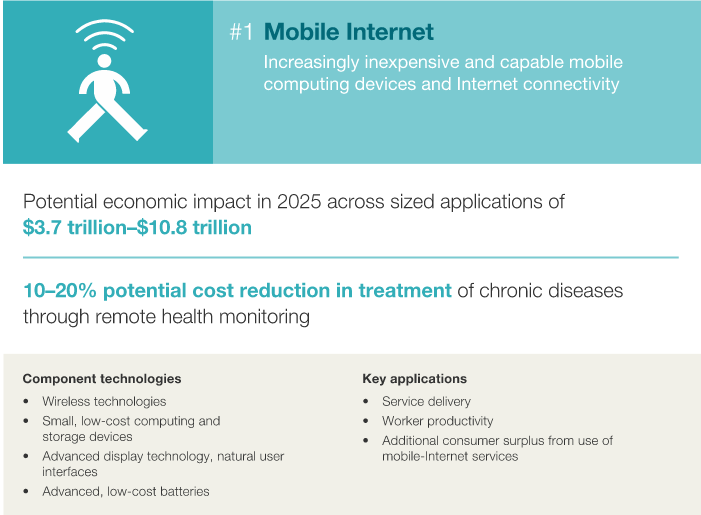
1. Mobile Internet … from Alibaba to Instagram, you know you have more computing power than the Space Shuttle in your hand, everything can be personal and connected, mobile-centric is the only architecture of business today:
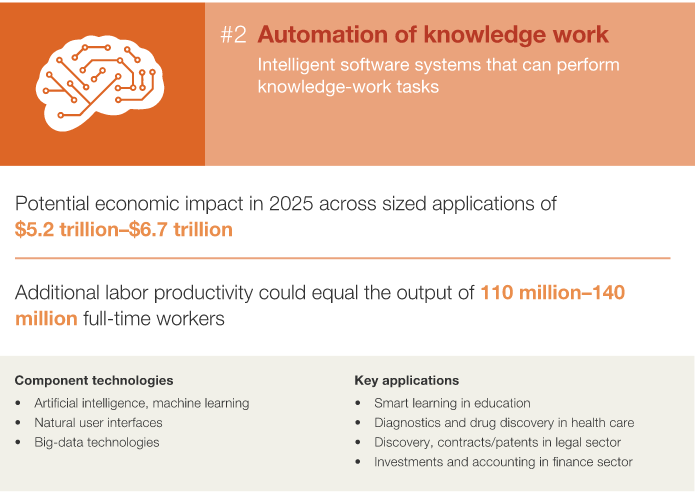
2. Automation of knowledge work … from networks to blockchains, big data to artificial intelligence, machine learning and natural user interfaces, the automation of knowledge is transforming the way we learn and work:
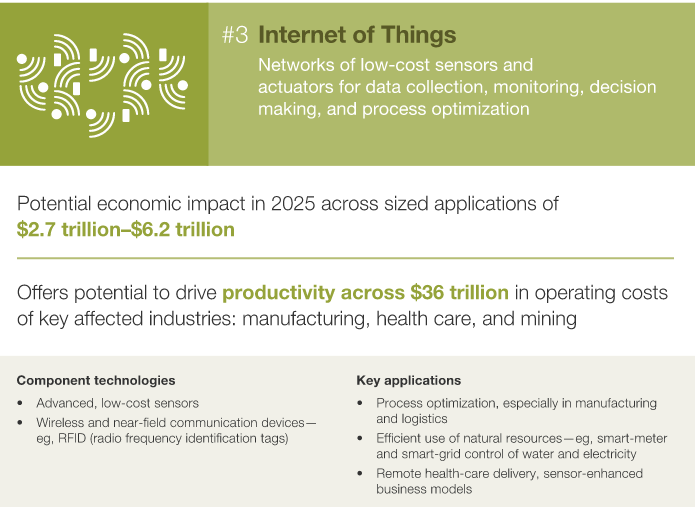
3. Internet of things … Whilst Intel was still thinking about chips for computers, Softbank’s ARM outplayed them by seeing a future of 50 billion connected devices, using smaller versions and long-life batteries to enable IOT applications from remote diagnostics to intelligent homes:
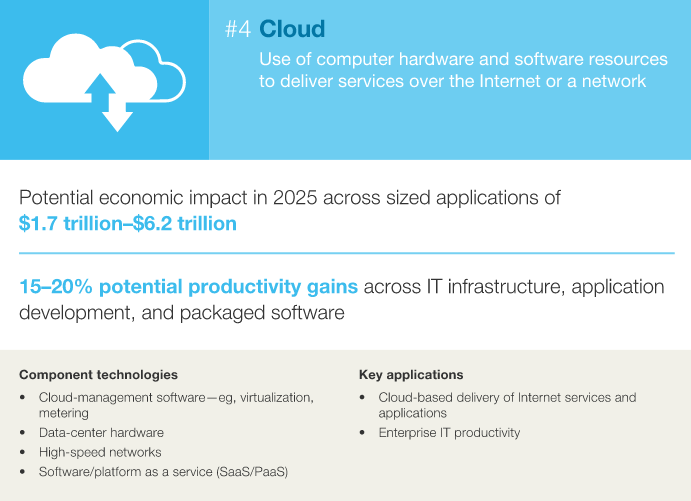
4. Cloud … transforming our ability to store and access information, anywhere and anytime, the cloud has become an accepted utility of the connected world, with companies like Rackspace have gone mainstream:
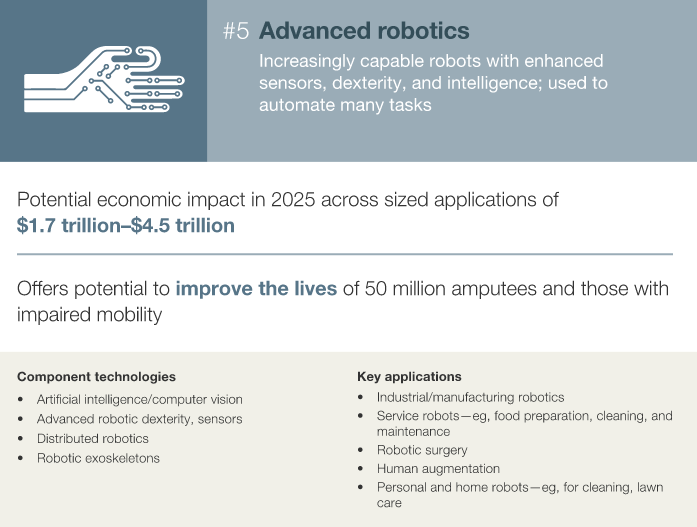
5. Advanced Robotics … Honda’s early robot concept ASIMO promised to be your best friend, always polite and never forgetful. But the use of robots has accelerated at incredible speed, invisible to most of us, transforming smart factories and processes:
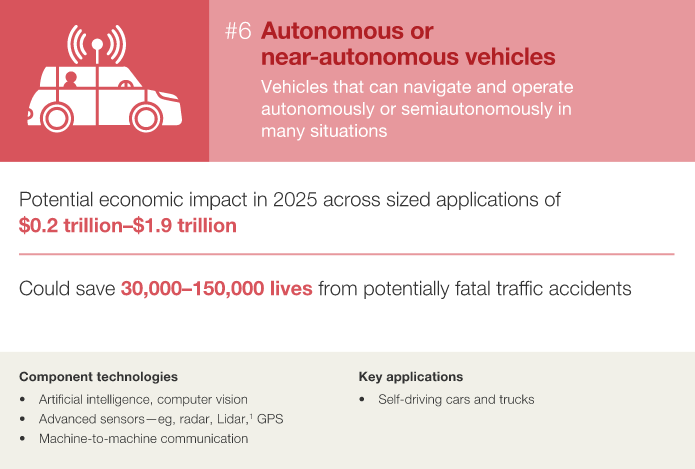
6. Autonomous vehicles … Tesla promised a future where every car will be self-driving, giving us more freedom, less congestion. Whilst the occasional mishap makes headlines, the safety record is exemplary compared to driving today, and the opportunities to save time, increase mobility are huge:
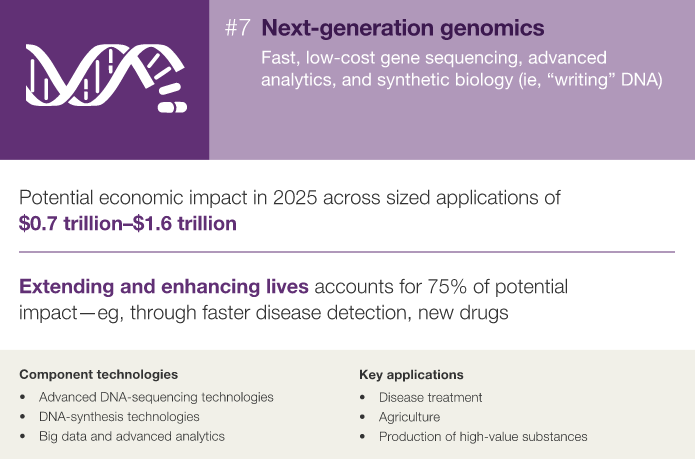
7. Genomics … 23andMe revolutionised DNA profiling, enabling anyone for $99 to understand where they come from, and how to live a better future. What does this then mean, not just for the smart life insurance salesman, but for the future of health and healthcare too:
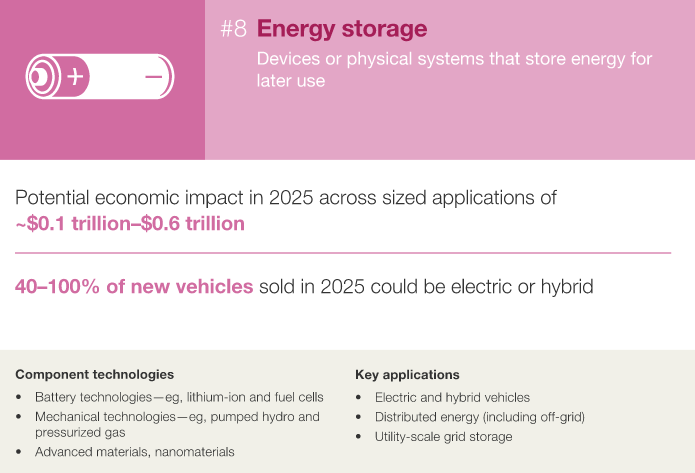
8. Energy storage … will transform the size and capabilities of tech devices, allowing body implants and incredible efficiencies:
9. 3D printing … in Amsterdam 3DHubs now has a network of over 1000 places to print out your new dress, car parts, evening meal:
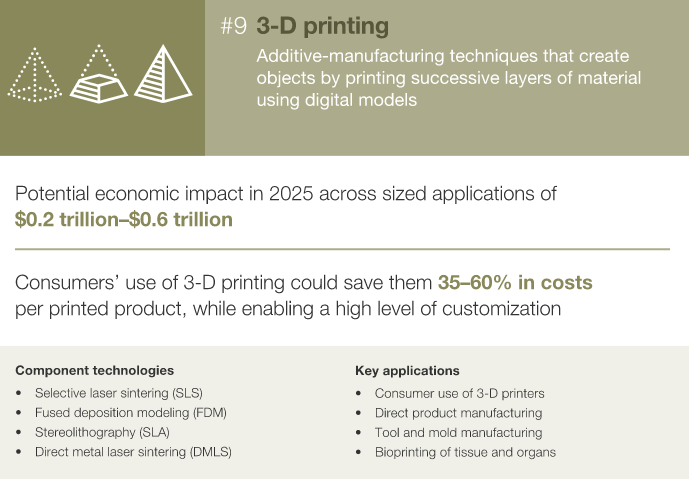
10. Advanced Materials … form nanoparticles to superconductors, from non-invasive operations, to superfast travel, and new sources of energy:
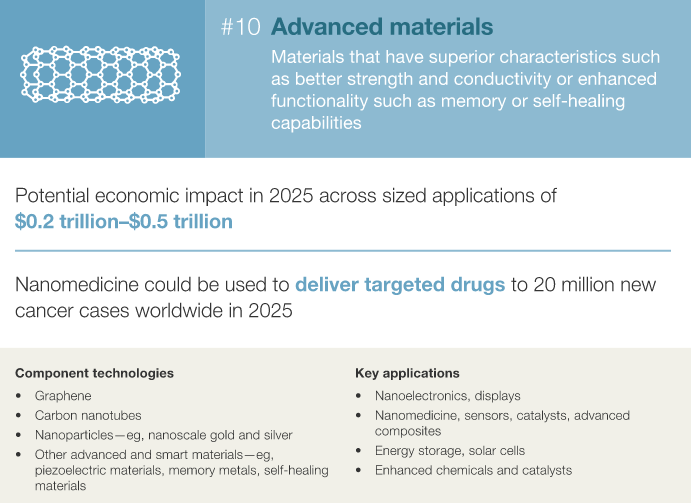
11. Oil and Gas … rethinking how we source and use carbon-intensive energies, in a way that is economical and better for the world:
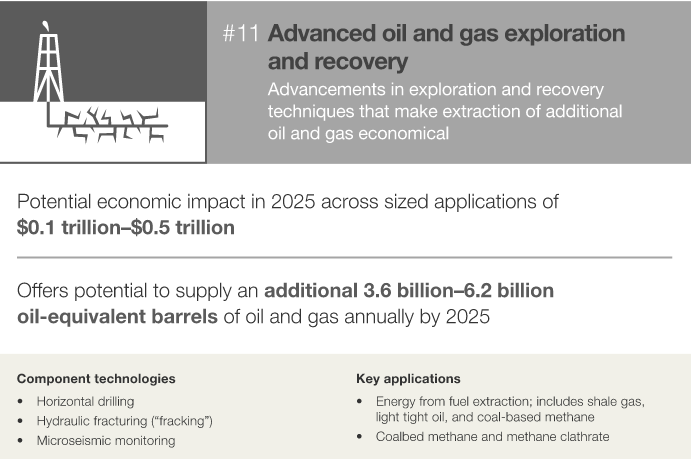
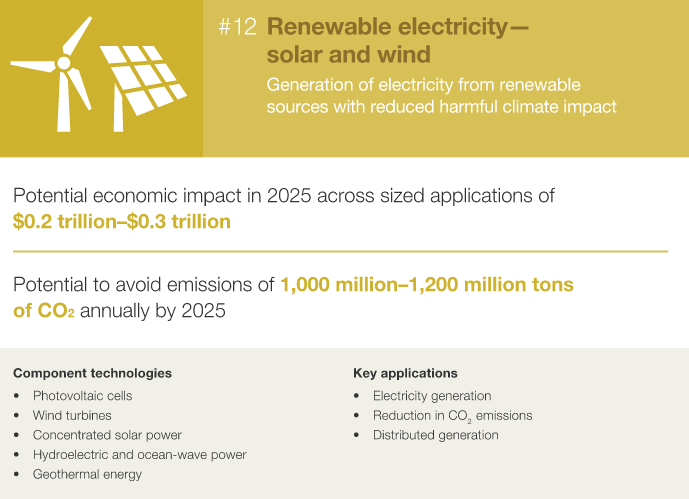
12. Renewable energy … going beyond carbon, to harness the sun and wind, in ways that could transform emerging markets and everyone’s health:
How will you respond to these changes?
- How will they impact your industry and markets, as threat and opportunity?
- What could you do to seize these opportunities, in new and value-adding ways?
- Where do you start? Building a strategic vision from the future-back to rethink today?
Getting started:
- The new Genius Workshops are for business executives, to learn and apply this new world to your own business, and develop the practical plans and important choices for your future.
Ideas can change everything.
Everything I do starts by enticing people, sometimes easily and sometimes not so, out of their intellectual comfort zones. I’m interested in helping business leaders to think bigger and different, to solve their most important problems, to seize their best opportunities.
This is a better starting point to create the future, to drive innovation, to accelerate growth, or simply to lead a business. With fresh thinking, with inspiring ideas, with a desire to create the future, strategy becomes more meaningful, and implementation much easier.
Yet most most business leaders struggle to capture and communicate their best ideas, to engage and inspire people with their vision, and to rise above the daily grind of delivery. My challenge is to stretch and stimulate their minds, as well as to guide their smarter choices and practical actions.
So where do I get new inspiration?
One of my favourite thinkers is Jason Silva. He is a filmmaker, an ideas curator and storyteller. Whilst no academic, or business expert, his fast, impassioned “idea explainers” explode with enthusiasm and intensity as they distill how technology is expanding our sphere of possibility.
He cuts through the jadedness of most business thinking. That can be saturated by the same old words, spoken by poor communicators, in ways that don’t match their incredible meaning. He wants big ideas to have aesthetic relevance. He wants to tickle people’s intellectual sensibilities and instill a sense of wonder.
He thinks “big ideas should get people high”:
Psychologist Nicholas Humphrey coined the term “the biological advantage of being awestruck” to describe his theory on why our unique ability to be enthralled was, somehow, biologically selected for in a Darwinian sense. He believes this quirk of our consciousness imbues our lives with a sense of cosmic significance that over the course of history has resulted in a species that works harder not just to survive but to flourish and thrive. To “awe” gives us a “raison d’etre.” A reason for being.
You can learn more about Humphrey’s idea in “A Movie Trailer for Awe.”
Humphrey says being enchanted by the magic of experience, rather than being just an aid to survival, provides an essential incentive to survive.
“We relish just being here,” he says. “We feel the yen to confirm and renew, in small ways or large, our own occupancy of the present moment, to go deeper, to extend it, to revel in being there, and when we have the skill, to celebrate it in words. …”
As pop philosopher Alain De Botton wrote in “The Art of Travel,” “There is an urge to say: I was here, I felt this, and it matters!”
And this sense of cosmic awe continues to manifest itself in the age of technology, as Erik Davis wrote in his book “TechGnosis”:
“Collectively, Human societies can no more dodge sublime imaginings or spiritual yearnings than they can transcend the tidal pulls of Eros …
“We are beset with a thirst for meaning and connection that centuries of skeptical philosophy, hardheaded materialism cannot eliminate. … Today we turn to the cosmic awe conjured by science fiction, or the outer-space snapshots of the Hubble telescope as it calls forth our ever-deeper, ever-brighter possible selves.”
Terence McKenna, in his book “Food of the Gods,” wrote about the origins of human language: this unique, often ecstatic expression of consciousness that bursts forth as morsels of meaning encoded as vocal patterns.
He believes the origins of language stem from our early use of psychedelic compounds, which caused a sort of “ontological awakening” of our species and thus acted as an early catalyst for religion, cosmic feelings of awe and a desire for transcendent experiences.
These experiences, to borrow the words of Tim Doody, re-contextualize oneself as a marvelous conduit in a timeless whole, through which molecules and meaning flow, from nebulae to neurons and back again. Early shamans, Davis wrote in “TechGnosis,” became ecstatic technicians of the sacred.
Regardless of whether you buy McKenna’s theory, he does provide a compelling case for the relationship between “cosmic, out-of-body euphoria” and the cognitive leaps to which it can give rise.
Some of our greatest poets, scientists and other thinkers have attributed some of their greatest inspiration to the use of these psychedelic chemicals and their resulting out-of-context perspectives.
But it’s not necessarily the chemicals themselves I’m interested in, but rather what they do to our sense of perspective and our reference points. My focus is the subjective experiences they seem “to occasion.”
Tom Robbins explains: “The plant genies don’t manufacture imagination, nor do they market wonder and beauty — but they force us out of context so dramatically and so meditatively that we gawk in amazement at the ubiquitous everyday wonders that we are culturally disposed to overlook, and they teach us invaluable lessons about fluidity, relativity, flexibility and paradox. Such an increase in awareness, if skillfully applied, can lift a disciplined, adventurous artist permanently out of reach of the faded jaws of mediocrity.”
In Jason Silva’s mind the key idea here is that of being forced out of context. We don’t necessarily require psychedelics for this, although they might offer a shortcut.
What we require is a bold new attitude and a sense of humility that accepts the ambiguity of many of our so-called truths, habitual thought patterns and cultural reality tunnels. By accepting the need to constantly de-condition our thinking to approach the world with new eyes, we can reconnect with our sense of awe and wonder.
As Michael Pollan wrote, “In order to see things as if for the first time, we must remember to forget.” Bucky Fuller used to say “dare to be naive.” Oftentimes, our sense of what we think we know is precisely what prevents us from approaching situations free of prejudice.
“Banality is a defense against being overwhelmed,” Pollan wrote in his book “The Botany of Desire.”
This makes perfect sense. In a world where disruption is the new normal, and technological change is happening at an exponential rate; a world where we are bombarded with media messages, and where “attention” is the new limited resource, it seems easier to recoil away from all the mindblowingness going on, and instead look for reasons to be bored. The mundane can be quite comforting for those terrified of leaving their comfort zone.
And this where I think my work serves the purpose of infecting people with wonderment. My short videos are “digital psychedelics” meant to “de-center” the self, dwindle the broadcast of the ego and provide people with a long view, “big picture” perspective on humanity, technology and how their symbiosis might make a dent in the cosmos.
As Alan Harrington wrote in “The Immortalist”: “We must never forget we are cosmic revolutionaries.”
Watch more of Jason Silva’s Shots of Awe
My book “Gamechangers” is all about businesses who are shaking up their markets, shaping the future to their advantage. At the heart of this is disruption.
The best companies increasingly shape their industries in their own vision. They redesign them to their advantage, in ways that make it hard for other companies to compete. Jack Welch once said “You need to destroy your own business before somebody else does – to think like a disruptor”.
The phrase became popular initially through TBWA’s Jean Marie Dru who explored brand disruption (and in particular, how to use disruptive communication techniques in order to change attitudes and behaviours). This was useful in that it changed mindsets, but it needed substance to sustain it.
Harvard’s Clay Christensen focused on disruptive technologies (and in his definition, how a new, often simpler, technology can outperform and existing technology over time). His original theory has been increasingly challenged as too narrow (tech, and product-centric) in recent times.
For me disruption is both of these and much more. It starts with a disruptive mindset – the attitude to question and challenge, the desire to reimagine and reinvent. It follows with a disruptive process – the ability to break and rewrite the rules, to see discontinuities and new possibilities. It is enabled by disruptive technologies – networks that shift power to users, with new capabilities and connections. It is realised through market disruption – new business models that change how businesses work, and new spaces in which value can be created.
Whatever your definition of disruption – reinventing a category, finding new space to compete, reframing brands with a bigger idea, or simply being better or cheaper, faster or smarter than the competition – then its time to start disrupting.
As John Chambers, CEO of Cisco says in the simplest way “Disrupt, or be disrupted“.
Here are 12 simple but effective “disruptors” to get you innovating:
Disruptor 1 >>> Break the rules … inspired by Airbnb’s house sharing, Dollar Shave Club’s low cost subscription service … start by defining the existing rules (conventions, behaviours, regulation), then explore how to “break” and redefine them.
Disruptor 2 >>> Think opposites … inspired by Ugly’s modelling agency, Beats by Dre large headphones … as Edward de Bono said, this is the easiest creative tool … define all the attributes of the market, then reverse them.
Disruptor 3 >>> Unusual combinations … Mercedes AVTR is unspired by James Cameron’s Avatar movie, a fusion of technology and nature … Leonardo da Vinci described innovation as making unusual connections
Disruptor 4 >>> Find new audiences … inspired by Zipcar’s on demand for students, Nintendo for seniors … like Blue Ocean Strategy, find unserved customers, and then explore how to be relevant to them.
Disruptor 5 >>> Give it away free … inspired by Skype’s videoconferencing, Spotify’s streaming music … the perfect challenge – if the core product was free, explore how would you make money in other ways.
Disruptor 6 >>> Make it virtual … inspired by Amazon’s Kindle, or Udacity’s online university … digitalise the total experience, be it on mobile or in the cloud, how to remove physical constraints.
Disruptor 7 >>> Reduce complexity … inspired by Twitter’s simple messages, Nest’s smart thermostats … simplicity is the ultimate sophistication, said Steve Jobs – how can you simplify the experience, smarter.
Disruptor 8 >>> Remove a component … inspired by Dyson’s bagless cleaners, Cirque de Soleil’s animal-free circus … eliminate one major aspect, in a way that creates convenience or interest.
Disruptor 9 >>> Border crossers … inspired by BMW iDrive from gaming, Nike Shox from F1 cars … This is my favourite technique, learning from other sectors where consumers already adopt new ideas.
Disruptor 10 >>> Develop the ecosystem … inspired by Nespresso’s pod system, Nike+ devices, and AppStore … harness the power of networks, a closed (or open) system, connecting partners, suppliers, consumers.
Disruptor 11 >>> Create new business models … inspired by Dollar Shave Club subscription, Netflix personalisation … this can have the most impact, reinventing how the business works – supply and demand, revenue and cost.
Disruptor 12 >>> Go to extremes … inspired by Virgin Galactic’s space travel … big ideas can change the world, but also learning from extremes (like Ford’s breaking system, from NASA Space Shuttle)
More …
My ”Creative Disruption” Workshop is a high energy and facilitated process of 1-2 days, driven by your big issue, driving more radical ideas and practical innovation.
The best companies increasingly shape their industries in their own vision. They redesign them to their advantage, and even in ways which make it hard for other companies to compete. Jack Welch once said “You need to destroy your own business before somebody else does – to think like to challenger, a start-up, a disruptor”. Whilst disruption is typically overused as a term and under delivered in reality, it can be a powerful approach to strategic thinking, holistic innovation and culture change..
Objective
- To reinvent your business, industry or category
- To create an mindset and process for creative disruption
- To develop specific disruptive innovations that will shake-up your market
Agenda
- Rule Breakers: rethinking every “rule” (assumption, convention) of your market
- Rethinking Assets: defining every asset, then exploring how it could be used new ways
- Border Crossing: applying ideas from other markets and companies (what would Apple do)
- Accelerated creativity: generating more ideas faster, connecting and stretching them further
- Rapid evaluation: prioritising the best ideas so far (HML x 4) and making the best better
- Concept definition: defining each emergent concept, customer and technical specifications
- Disruptive Impact: evaluating the impact, and planning the where and how for more resonance
Deliverables
- Idea Generation: More, more radical, more interesting ideas for your future
- Concept Specification: Clearly defined innovation concepts, ready to make happen
- Disruption Plan: Not just the “what” but the “when where and how” to disrupt too.
Format
- Executive team, brand or marketing teams
- 1-2 day workshop (can be packaged as a high energy “Disruption Day”)
Examples of more Genius Workshops
Disrupt or be disrupted!
12 years ago I wrote my first book, “Marketing Genius”. Since then it has been translated into 35 languages, become a business book of the year, endorsed by Sir Richard Branson (he actually read and reviewed it), and I’ve followed it with 6 more books on strategy, innovation, customers and leadership, most recently “Gamechangers: How will you change your world?”
When I started writing that first book, my mind was focused on all the usual hyperbole of business, of being a better leader, focused on your customers, delivering high performance. A wise friend then said I needed to find something more interesting, and more personal.
My inspiration came from my own experience in business.
Having started out as a research scientist, on entering business I was always given the analytical tasks. For me, that was relatively easy, and from spreadsheets and statistics, you can gain all sorts of useful insights and clarity. But it didn’t excite me. I enjoyed people, collaboration and creativity much more. That seemed to move things forward much more. As a young brand manager, it was ideas and intuition that we used to inspire people with brands like Concorde.
My book therefore focused on the combination of these approaches – left and right brain thinking – or whole brain thinking, as Dan Pink wisely called it a few years later (of course the brain is much more complicated, but the simplification is a useful model for thinking about thinking!).
My twist was to turn to two of history’s more interesting thinkers – Albert Einstein and Pablo Picasso.
Einstein, of course (as a nuclear physicist, I identified with him), was a great dreamer (right brain), but terrible mathematician (left brain). E=mc2 emerged out of his hypothesis (whilst walking in the Swiss alps) that there must be some connection between energy and mass. It was with his wife’s numeric help that he found the connection.
This type of hypothesis-driven problem solving lies at the heart of scientific progress – you need to use your imagination (hypothesis, intuition, right brain) to make the leap forwards, to find newness, to solve big problems – and then use your intelligence (mathematics, analysis, left brain) to prove it.
Picasso, meanwhile (studied under his mathematician father, went to Paris to learn from Toulouse Lautrec and the impressionist movement) soon put aside his following of conventions to disrupt the world of art. His knowledge of geometry (left brain) allowed him to think differently, and to make the leap to a new genre, to develop cubism. And then to embellish it with his creativity (right brain).
Einstein started with his right brain, and then moved to his (wife’s) left brain. Picasso started with his right brain, and then added his left brain. Whole brain, or connected-brain (interestingly women have 3 times more white connective tissue than men). Analysis and intuition, intelligence and imagination. Together they enabled Einstein and Picasso to leap forward, to progress.
I called this thinking “genius” thinking.
The point of “Marketing Genius” was actually to say “What would Einstein and Picasso do in today’s world?”
Given the challenges of fast-changing markets, new technologies, intense competition and relentless aspirations, how would Einstein and Picasso compete in markets, and win in business? And then to explore how data analytics can help focus creativity, and how imagination can create new spaces to optimise.
Since I wrote that book 10 years ago, the world’s has become a lot more turbulent – the VUCA (volatile uncertain complex ambiguous) effect of economic crisis, technological disruption, and social fragmentation. At the same time it has also become a lot more opportunistic for those who want to create the future – VUCA seen differently (vibrant, unreal, crazy, astounding).
To progress in today’s world, you need to think like Einstein and Picasso, more than ever.
You need “genius” thinking.
Of course, I don’t claim to be a genius, and don’t even promise to make you one either. But I do believe that the combined thinking can help us all to think better, solve problems in smarter ways, to innovate and drive progress in every aspect of business.
The genius concept is also not unique of course. Philosopher AC Grayling recently published a new book “The Age of Genius” that seeks to learn from other great minds.
Grayling, who describes himself as the master of the New College of the Humanities, looks back at one of the most turbulent historical periods when science moved from the alchemy and astrology of John Dee to the painstaking observation and astronomy of Galileo, from the classicism of Aristotle, still favoured by the Church, to the evidence-based, collegiate investigation of Francis Bacon.
At the recent Telegraph Festival of Education, he argued that these transitions of thought created the modern mind:
Grayling tells of how once upon a time, not so long ago, people believed in a wondrous time called the Enlightenment, a particularly triumphant period in the story of human progress from barbarism and superstition to civilised rationality. Nowadays, it is more fashionable to dismiss this narrative as a secular myth, believed only by whiggish optimists.
The focus of “The Age of Genius” is on the 17th century, which he argues marked a radical turning point in human history. At the start of this century, the ways in which even the best educated and intelligent thought “was still fundamentally continuous with that of their own antique and medieval predecessors”. By its end, they had become recognisably modern. This followed a suspiciously neat linear progression from “thought’s obeisance to the demands of religious orthodoxy” through “a period of inflated hopes for mystical or magical shortcuts to the universe’s secrets” to “the triumph of the more accurate methods of mathematics and empirical inquiry”.
There is surely something to this, but even Grayling accepts it is not quite as simple as that. The question is whether acknowledging the complications requires serious revision or even rejection of the central claim. For Grayling, the answer is so self-evidently no that he wastes little time dignifying doubting fools with lengthy rejoinders. “Well, think what you like,” he tells them in the concluding chapter.
He gives similarly short shrift to historians who dispute that the Westphalian settlements created “a society of states based on the principle of territorial sovereignty” or “shifted the focus of politics from the religious to the secular”. “A glance at the map of Europe after 1648” is sufficient to counter the first objection, while “a cursory view across the landscape of the centuries since Westphalia” deals with the second.
However, the truth is not as self-evident as Grayling claims. He identifies several supposed turning points that support his narrative, but fails to make the case that these are one-off epochal pivots rather than part of the ebb and flow of history. Take, for instance, toleration of criticism of church orthodoxy. In 1686, Bernard le Bovier de Fontenelle published Conversations on the Plurality of Worlds, outlining the new Copernican heliocentric cosmology. Grayling points out that 70 or 50 years earlier “he could not have published these views freely, without thought of punishment or proscription”. But he also notes that Copernicus published an early sketch of his theory in 1510, without problems, supporting the view that toleration for heterodox views has waxed and waned over the centuries and did not simply weaken during the 17th. For instance, the last execution by the Inquisition wasn’t until 1826 in Spain, while the medieval Islamic caliphate of al-Andalus was for long periods more tolerant than many of the Christian kingdoms that succeeded it.
Grayling occasionally comes tantalisingly close to grappling with the complexities of the debate. At one point he notes that rather than there being a series of two-way tussles between science and religion, religion and occultism, occultism and science, there was “a three-cornered relationship that was sometimes a fight and sometimes not, between each of the three and the other two”. But rather than develop this, it is offered simply as an observation at a chapter’s end.
Helen Greiner is often called the “drone queen” since founding her drone company, CyPhy Works.
She is also known as the co-founder of iRobot – the company behind the first automated and commercially successful home vacuum, the Roomba, which hit the market in 2002 and has now sold more than 16 million units worldwide.
In 2008, she made the jump from terrestrial to aerial robotics, founding her drone company to focus on applications including public safety, construction and agriculture. Helen also shared her thoughts on why the sky is a natural superhighway for drone delivery, how to get more women into technology, her love of Star Wars and what happened when she tried to fly her drone on the White House lawn.
She says, “I can’t think of an industry that shouldn’t be thinking about their drone strategy.”
You might think of drones as toys or flying cameras for the GoPro set, and that is still the lion’s share of the business. But like the smartphone and other examples of the “commercialization of enterprise” before them, drones are now being outfitted with business-grade software and becoming serious data-collection platforms — hardware as open and extensible as a smartphone, with virtually limitless app potential. As in any app economy, surprising and ingenious uses will emerge that we haven’t even thought of yet; and predictable and powerful apps will improve over time.
Or you might think of drones as delivery vehicles, since that’s the application — consumer delivery — that the media grabs on to most ferociously when seeking click-generating amazing/scary visions of the future. Frankly, delivery is one of the least compelling, most complicated applications for drones (anything that involves autonomously flying in crowded environments is the black-diamond slope of technology and regulation). Most of the industry is focused on the other side of the continuum: on data, not delivery — commercial use over privately owned land, where the usual concerns about privacy, annoyance, and scary robots overhead are minimized.
Drone economics are classically disruptive. Already drones can accomplish in hours tasks that take people days. They can provide deeply detailed visual data for a tiny fraction of the cost of acquiring the same data by other means. They’re becoming crucial in workplace safety, removing people from precarious processes such as cell-tower inspection. And they offer, literally, a new view into business: Their low-overhead perspective is bringing new insights and capabilities to fields and factories alike.
It may seem like semantics, but in every different kind of business today, creating – or recreating – a category is the most effective winning strategy.
Geoffrey Moore’s Crossing the Chasm revolutionized how we think about new products in an existing market. Clayton Christensen’s The Innovator’s Dilemma taught us about disrupting an aging market. In my book Gamechangers we explore how to create markets, either by finding completely new spaces, like Blue Oceans, or more likely by reframing and redesigning how markets work.
These Gamechangers give us new ways of living, thinking or doing business, many times solving a problem we didn’t know we had—or a problem we didn’t pay attention to because we never imagined there was another way. Before Uber, we hailed a taxi cab by standing at the kerbside, waving frantically as every usually occupied taxi approach. After Uber, life was much easier.
These companies don’t only invent something to sell us. They are not making products or services that just incrementally improve on whatever came before. They don’t sell us better. The most exciting companies sell us different. They introduce the world to a new category of product or service—like Clarence Birdseye creating the very idea of frozen food a century ago or Uber defining on-demand transportation in recent years. Such companies replace our current point of view on the world with a new point of view. They make what came before seem outdated, clunky, inefficient, costly or painful.
Disruption has been a holy word in the tech industry, like maybe you should genuflect when someone says it. But disruption is a byproduct, not a goal. Add to that Christensen, has pedantically insisted that only his approach to disruption – an inferior technology beating a superior one – was right.
Winning companies create new categories that generate a gravitational pull on the market. Customers rush to a new category because it makes sense to them. In some cases, people leave an old category behind, and their departure sucks the life out of it.
In that way, sure, new categories disrupt old categories. But for the smartest innovators on the planet, disruption is never the goal. Elvis Presley didn’t set out to disrupt jazz. He set out to create rock ’n’ roll—a sound that came from his soul. Rock was different from jazz, not better. But over time, as young audiences embraced rock, they left big band jazz and crooners behind. The byproduct of Elvis’s creation was disruption.
Sometimes, booming new categories don’t disrupt anything. Airbnb created a new category of on-demand places to stay, but no one, including and especially its co-founder Brian Chesky, is predicting the new category will lead to the collapse of the hotel industry.
A term for the companies that create, develop and dominate new categories is category kings. From time to time, like the recent surge of “unicorns”, the technology industry gets caught up in hype about soaring valuations of startups. But like disruption, valuations are an outcome, not a strategy. A billion-dollar valuation of a company that is not a category king is likely to be fleeting. A billion-dollar valuation of a category king is often a bargain, in good economies or bad. Think of Amazon, Salesforce or Google.
Download: Why it Pays to be a Category Creator
Another new book Play Bigger explores the same theme. It analyses data on U.S. venture capital–backed tech startups founded from 2000 to 2015 and found that category kings earned 76% of the market capitalization of their entire market categories. Tech analyst Michael Walkley of Canaccord Genuity looked at the earnings of smartphone companies in late 2014 and found that Apple took in 93% of the industry’s total profits that quarter. Eddie Yoon, a principal at the Cambridge Group, analysed the top 20 of Fortune’s 2010 list of fastest-growing companies. Those companies received an average of $3.40 in incremental market capitalization for every dollar of revenue growth. But half of those 20 were category creators, Yoon determined, and those 10 companies got $5.60 in incremental market cap for every dollar of revenue growth. “Wall Street exponentially rewards the category creation companies,” Yoon wrote.
Download: Time to Market Cap: The New Metric that Matters
Why is this happening? The ubiquity of networks, cheap cloud-based distribution and lightning-fast word-of-mouth through social media is intensifying a winner-take-all economy—especially when we’re talking about digital products and services.
Since networks give everyone from anyplace access to the perceived best in any category, the vast majority choose the leader and leave the second- or third-best behind.
Once a company wins a position as category king, a gap widens between the leader and the rest. The leader, for example, increasingly has the best data. In today’s world, data is power. Also, the best employees want to work for the category king. The best partners want to sign deals with the category king. Outside developers want to develop for the category king. The best investors want to put in their money, and the best investment bankers want to work on the initial public offering. As a category king pulls far ahead economically, it has the wherewithal to make acquisitions that vault it even further into the lead. The economic power of a category king builds and builds.
A category king strategy is important and effective when the economy is roaring, and perhaps even more powerful when downturns cripple runner-up competitors. Some of the great category kings have been built during some of the “worst” times—Google in the early 2000s, right after the dot-com crash; Airbnb in 2008, as financial markets melted; Birds Eye amid the Great Depression.
Airbnb, Tesla Motors, Snapchat and Twitter are recent category kings in consumer-facing markets. The enterprise technology space is full of category kings too. Salesforce developed the cloud-based sales automation category. VMware defined and dominated a category of computer virtualization. Workday, NetSuite, and Slack are among the new category kings of business services.
Most category kings are once-in-a-founder’s-lifetime achievements. A rare few individuals have proved to be master creators of category kings. One of the best of all time, as you might imagine, was Steve Jobs, especially during his second go-round at Apple. He led the creation of three important new categories: digital music (with the iPod and iTunes), smartphones (iPhone) and tablets (iPad).
Elon Musk made Tesla into the category king of electric cars and SpaceX into the category king of private spaceflight, incredibly doing that for both companies at the same time. Jeff Bezos started out making Amazon.com the category king of online retail, and he repeated that success with e-book readers (Kindle) and cloud-based computing services (Amazon Web Services). A lesser-known but no less prolific creator of category kings is Seattle entrepreneur Rich Barton. He had a hand in founding Expedia, Zillow and Glassdoor.
While our connected age has revved up category king economics, category kings aren’t just a connected-age phenomenon. When Chrysler introduced the minivan in 1983, it created, and then dominated for three decades, a new category of personal vehicle. Bob Pittman’s MTV and Ted Turner’s CNN were once category kings. Boeing created the category of the jet airliner with its 707 in 1958.
So forget about that whole unicorn thing. Roll your eyes at anybody who calls themselves a disruptor. To find the next great companies, look for creators. Or as I call them, the Gamechangers.
https://www.youtube.com/watch?v=6V5tDrmRPDg
5 ways to create a new category
Branding veteran David Aaker reflected on this challenge in a recent article. He said “Gaining share in the market would require educating the consumer and essentially reframing the category. They needed to build a new sub-category in which they could be the dominant brand. This sort of new category creation, if done well, can make the competition irrelevant”.
For inspiration, consider other products in traditionally commoditized markets that have used a strong brand to establish a new category – and 5 key principles for anyone looking to grow their business:
- Establish a frame of reference and central benefit that is instantly relatable (but that can also evolve over time into something unique and defendable)
When Gatorade launched, the notion of a “sports drink” and what it could do was completely foreign. While the long term goal was to demonstrate that the drink delivered better hydration and athletic performance, the company initially positioned the product around the notion of “quenching thirst,” which everyone could relate to. Over time, the messaging evolved as they built awareness and familiarity for the category. - Create a compelling brand personality that speaks to your core audience. Cuties introduced the clementine to the United States and has since become synonymous with the category. They achieved this by investing heavily in a visual identity and strong brand personality that spoke to the parents of young children. The logo, typeface and color pallet all embody the playful innocence of a young child. Despite being a commodity, it was marketed as a consumer good with branded promotions, packaging (as opposed to simply a bar code) and advertising like “Know why Cuties are small? Because kids have small hands.”
- Develop a simple, consistent message that is integrated into every element of the product, packaging and promotion. MiO, the liquid water enhancer, achieved $100M in sales within the first nine months after launch. The MiO team created a story around “your drink, your way” that served as the platform for the brand covering everything from the name (which means “mine” in Italian) to the packaging (which enabled use on the go) to the marketing strategy (which was built around personalized social campaigns).
- Articulate a core belief that translates into a brand promise. Chobani became a billion dollar brand and almost single-handedly built the greek yogurt category by defining its core belief and developing a brand promise that was embraced by consumers. It declared, “Yogurt is meant to be simple: milk and cultures. Our promise is to make yogurt the right way, not the easy way, and to inspire you to experience the enjoyment that comes from eating simple, delicious, nourishing foods.”
- Subtly tap into influential early adopters. Before launching major ad campaigns, the #1 selling coconut water brand Vita Coc0 tapped into celebrity brand ambassadors to give authenticity to the category. Madonna drank Vita Coco during her world tour and caused sales to rocket up 168% as a result of her “endorsement.” She wasn’t a paid sponsor at first, but did become an investor in the brand, which used the pop icon’s celebrity status to introduce the category in a way that was natural and genuine.
Blockbuster drugs, those medicines that bring in more than $1 billion in sales every year, are the holy grail of drug development. They can make a pharmaceutical company and send them to rock-star status among investors, as evidenced by the rise of Gilead Sciences after the launch of its hepatitis C treatments.
New CEO of GSK, Emma Walmsley said that the £81 billion pharma company will focus on developing blockbuster drugs, rather than what it has done in recent years, diffusing their efforts by rolling out many more new launches, with lesser impact. She claimed GSK would be “returning to its glory days of science and innovation, which saw it produce leading asthma drug Advair.”
What are the next blockbusters?
Top of the list of blockbuster drugs to be launched in 2017 (ranked by FiercePharma in terms of projected 2022 sales), is Ocrevus, the Roche multiple sclerosis drug that’s promising to shake things up in more ways than one. In clinical trials, the drug outperformed Merck KGaA’s standard therapy Rebif, and it’s also gone where no other MS drug has gone before, posting positive data in patients with the primary progressive form of the disease. Analysts think Sanofi and Regeneron hot-shot Dupixent (dupilumab) could make a big splash in severe atopic dermatitis, assuming payers don’t get in the companies’ way.
However there are critics of the blockbuster mindset too. “The system has served us well in terms of developing good new medicines, but in the past 10-20 years there has been very little breakthrough in innovation,” says Dr Kees de Joncheere at the World Health Organisation. Of the 20 or 30 new drugs brought to the market each year, “many scientists say typically three are genuinely new, with the rest offering only marginal benefits,” he says.
How to launch a blockbuster?
Finding a new blockbuster is difficult. Walmsley’s GSK predecessor called it trying to find a needle in a haystack. And even when you do, the smart science could still fall foul of commercial or regulatory hurdles. It might often be easier to find an existing drug, and consider how to scale it up. I like the simple 5S model developed by Harvard’s John Quelch as a checklist of what matters when seeking to build a blockbuster. It combines some aspects similar to launching any other product, in B2B or consumer markets, but also with other aspects unique to healthcare:
- Sheer size. A blockbuster has a transformational impact on a company and an industry, often opening up new markets worldwide. Blockbusters break sales records and exceed expectations. Around 100 pharmaceutical brands exceed $1 billion in annual sales. Procter & Gamble has 23 such brands.
- Speed. It’s not just the sales volume, it’s the speed of the sales trajectory. Remember that the original blockbuster was a bomb that could destroy an entire city block. Blockbuster brands address pressing consumer needs so well that they often enjoy vertical sales lift-off. Think Viagra.
- Scarcity. A blockbuster brand is often in such high demand that stock-outs and shortages occur in the market. Remember the consumer lines to buy the new i-Phone As imitation is the sincerest form of flattery, the speedy availability of counterfeits is another indicator of popularity.
- Sustainability. A blockbuster brand is not a one hit wonder. It is a gift that keeps on giving. Remember Intel’s Pentium chip. Or look at the seven Harry Potter books and the five companion movies. Adding DVD and merchandise sales, and theme parks etc., Advertising Age valued the Potter economy at $15 billion.
- Sizzle. A blockbuster does not just address an important need. It does so in an exciting and accessible way. Pfizer’s Lipitor was not the first cholesterol reducer but superior marketing and sales made Lipitor number one. And, in the movie world, remember the magical and memorable special effects in the Star Wars series.
Blockbuster drugs have a limited patent life.
After 14 years on the market, the most profitable prescription drug in history, Lipitor, came to the end of its protected life – it became a generic – there for anybody else to copy, usually more cheaply.
To me, it is a symptom of the industry still engrained product-centric thinking. A consumer-centric company wouldn’t have these challenges in the same way. The patent relates to the product not the brand per se, so being able to develop a brand model that elevates the brand concept above the product is crucial to creating a brand that can be sustained beyond the moment when anybody can make the product. Here are a few of the techniques I have found useful
- Build the brand beyond the product – in most other industries brands have come to identify a consumer need or aspiration, and can support a whole range of products and services. The brand resonates much more closely with the consumer because it is about the benefits (outcomes) not the features (drug), and so can continue to uniquely do this after patent expiry.
- Connect with the patient, not just the physician – there his a huge shift in focus in healthcare to become more patient-centric (most big pharma company mission statements say thats why they exist!). Within regulation, find ways to engage patients as primary consumers.
- Extend the brand to services – within the brand concept, introduce services that are relevant to each audience – payers, pharmacists, physicians as well as patients – based around ease and convenience, support and advice. They become sticky and indispensable parts of the treatment.
- Branding of devices – with increasing ways to deliver drugs, such as non-invasive injections, devices can be distinctive and an enduring advantage. Maybe reducing packaging costs and waste too. More importantly, they help to build the brand more visibly, around trust and habit.
- Create brand platforms – as companies specialise in certain therapeutic areas, then their brands can work across the different products, like is normal in consumer brands. This platform approach reduces the risks to the brand if one product declines, sustaining presence and familiarity.
- Change the business model – pharma companies should build into their strategies an approach for non-patent later years, flexing pricing and distribution models to respond to this, even creating new multi-year business models with payers, and managing portfolios for evolution.
Healthcare world is changing rapidly
We have already discussed the shifts in power in the healthcare market. Towards patients, with each stakeholder more actively engaged in a shared approach to treatments, a focus on successful outcomes for patients, and preferably to sustaining wellbeing.
Many companies have become more specialist – including an increasing focus on rare diseases, the development of more convenient single-dose regimens, and more affordable treatments. Novo Nordisk, for example has found success through focus on diabetes. Genentech goes further, and focuses on increasing personalisation of drugs. As DNA profiling becomes relatively cheap and easy, then the ability to customise therapies more closely to the needs of patients becomes important. Whereas previously one drug would be used to treat different types of cancer, for example, now different strains can be treated with a specific medicine. The growth in gene editing, could accelerate the decline of blockbuster thinking.
Blockbuster drugs in some ways are still about product-thinking, push-marketing, average-audience thinking. They need to evolve in their approach. There is nothing wrong with having a few big concepts – Apple is the classic example of having only a small number of product lines (iPhone, iPad, iMac etc). Tesla has even fewer (three car types). But they have infinite customisation – partly in terms of the product features (16GB v 32GB, black or silver, etc) but mainly in customer use (App store, content, etc).
Blockbusters can still matter in this world. But with new thinking.
Footnote: The biggest drugs right now
Here are the world’s current top selling drugs (at end of 2016, annual sales):
- Enbrel, $8.7bn … Enbrel is owned by Amgen, Inc. and is a treatment for arthritis and psoriasis. Amgen has reportedly raised the price of Enbrel by 80.3 percent since 2013.
- Abilify, $9.3bn … Abilify is owned by Otsuka Group and is prescribed for serious mental illnesses such as severe depression, schizophrenia and bipolar disorders. The cost of Abilify can run around $900 per month for patients suffering from these conditions.
- Sovaldi, $9.4bn … Sovaldi is owned by Gilead Sciences and is used for the treatment of Hepatitis C. After gaining FDA approval for Sovaldi in 2013, Gilead priced a 12-week dose of the drug at $84,000.
- Lantus, $10.3bn … Lantus is owned by Sanofi and is used for the treatment of diabetes. A 2015 Bloomberg report found that the price of Lantus has increased in wholesale by more than 160 percent in the last five years.
- Humira, $11.8bn … Humira is owned by AbbVie and is prescribed for the treatment of arthritis, psoriasis and bowel diseases. IMS Health data show the price of Humira having risen 126 percent from 2011 to 2014, the largest jump of any top 10 drug.
Peter Fisk works with many of the world’s leading pharma companies including Bayer, GSK, Pfizer, Novo Nordisk, and others – delivering innovation and strategy consulting projects, executive workshops and advisory, and keynote speeches. More articles on healthcare by Peter include:
- FutureHealth (Industry overview, and case studies)
- FutureHealth 2020 (Keynote presentation)
- Customer-Centric Vision for Healthcare (Keynote presentation)
There was a time when beauty companies used to build brands, based on aspirational ideas and celebrity endorsements, which they hoped consumers would buy and buy again.
Beauty counters clustered around the entrances of every department stores, offering free make-overs and life-changing serums. The beauty companies built, or licensed, these brands at huge cost, witnessed by the volume of beauty advertising on televisions or in magazines. And companies like L’Oreal, Unilever, and more recently Coty, became hugely profitable and admired.
And then came digital.
Initially, this seemed to be simply a way to sell the same products cheaply. Without all of those instore fixtures, discount beauty .coms could undercut RRPs by around 50%. This is easy when the margins on such brands are often closer to 90%.
But then came millennials. You might say, perfect for such digital channels. But they didn’t want the same things. We all know the defining characteristics of millennials
- they’re individual, but more significantly they are collaborate, they care about and trust each other (and so they want to share beauty ideas, to take the beauty counter experience to their phones in their bedrooms, and influence each other more than any advertising or celebrity)
- they’re experimental, they like to try new things experientially (in particular, not what their mother’s use!), they like variety, playfulness, choice (and frequent change) – look at how they shop at Asos or Zara for fast fashion, share messages with a Snap, images by Instagram
- they’re digital, they grew up with the medium not as a substitute store experience, but as a completely different way of working – they subscribe to Netflix without even knowing how scheduled TV used to be, or listen to music on Spotify in a completely new way – they embrace new ways.
And therefore digital is much more than an online store. It is a different experience.
New generation of beauty
A new generation of disruptive innovators have harnessed these insights to engage millennials in more relevant and inspiring ways. They embrace digital, but with completely new business models, demanding new products and services. Sometimes embracing existing brands, and sometimes blasting them out of the way.
Birchbox to BeautyPie, Glamsquad to Glossier, Scentbird and ScentTrunk, are examples of new brands who have embraced the power of subscription, on demand services, content and community, personalisation and replenishment – to do things differently. Existing brands have been slow to repond, L’Oreal for example creating apps like MakeUpGenius and intelligent devices, like their smart brush.
But its’s beauty boxes that I think are most interesting.
Birchbox was one of the first to offer a monthly box of beauty goodies for a subscription of $9.99 per month. Ipsy then soon followed, developed by Michelle Phan, who herself had become a millennial folk hero for YouTube weekly blogs about beauty treatments and product recommendations. More recently, Amazon jumped on the train, with its own-branded collections of brands. And retailer Sephora ventured into the same world, with its Play concept.
Some of these concepts have huge funding (Birchbox has received $87m investment to date), and are quickly now starting to turn a profit alongside their growth. Whilst interesting, I still think these propositions are confused. Birchbox, for example, promises a box of samples every month, getting the samples free from the large brands, and then making a huge profit on both the boxes, and also taking a cut of any follow on sales. The big brands take part in the hope of upselling to full size products, and ultimately converting consumers to their brand. But millennials don’t think like this, they just enjoy the frequent variety. Far better, would be to just offer a curated box of “play size” beauty products each month.
Birchbox vs Ipsy vs Play
We asked a group of millennials to give us their comparison on the three subscription boxes. All proved successful, although they liked Ipsy best:
Birchbox
Birchbox allows you to pick one of your samples or the curated box for each month, so if you want to have a little more control over your box, this is a good choice. They also have a ton of great high-end brands. If you are concerned about the value of your boxes, I recommend going for the curated box each month – the values with those boxes seem to be consistently good.
- Number of items: 5
- Full-size items: 0
- Deluxe size items: 0
- Brands featured: Murad, Mellow, Benefit, Davroe, Davines
- Categories featured: Skincare (1) Makeup (2) Haircare (2)
- Total Value: $40
- Favorite item in the box: Davroe Ends Repair
Ipsy
This will likely be the highest value out of all 3 boxes every month. It’s also the best of the 3 if you are looking for full-size items. The one thing to keep in mind is that Ipsy samples both high-end, mid-tier, and drugstore brands, so you’re going to get a mix of price point brands.
- Number of items: 5
- Full-size items: 3
- Deluxe size items: 0
- Brands featured: NYX, Trust Fund Beauty, TheBalm, City Color, Delectable
- Categories featured: Makeup (3) Nailpolish (1) Skincare (1)
- Total Value: $26.50
- Favorite item in the box: City Color Shimmer Shadow in Cheers to Life
Play by Sephora
Great for brands – if Sephora carries the brand, it may appear in the box, which means they have a ton of inventory to pick from, and you’re going to get great brands across the board. Sample sizes may be small for some products, but you get 5 beauty samples plus a fragrance sample
- Number of items: 6
- Full-size items: 0
- Deluxe size items: 0
- Brands featured: Tarte, Thierry Mugler, Bumble and Bumble, Briogeo, Murad
- Categories featured: Makeup (2) Skincare (1) Haircare (2) Fragrance (1)
- Total Value: $37
- Favorite item in the box: Tarte Tarteguard Tinted Moisturizer in Medium
Verdict: Even though it has the lowest value, their favourite is Ipsy. The eyeshadow plus the bright orange nail polish are two standout products for me. (Otherwise it would have been difficult to pick a winner this month).
Subscription in every industry
Whilst we have all become familiar with subscription models like Netflix, they have become common in almost every industry. Graze is a great example in the food snacking market.
JustFab which first attracted investment in 2011 with its women’s apparel and accessories subscription boxes, achieved unicorn valuation by mid-2014. Dollar Shave Club which investors first funded in 2012, was acquired earlier this year by Unilever at a $1B valuation.
As the subscription landscape has become increasingly crowded, research data shows that entrepreneurs and investors have been increasingly willing to apply the subscription model to new product categories. While early subscription startups mainly focused on apparel and cosmetics, newer startups are increasingly likely to offer leisure products or snacks and beverages. Furthermore, the subscription category is set to grow, as 2016 is on track for a record high in startup first fundings.
This year, in fact, 12 snack & beverage subscription startups have already raised first funding rounds, at least twice the number of any other segment. We also see growth in the leisure segment, which saw more first fundings in the first ten months of 2016 than it did in any full year before. Beyond LootCrate mentioned above, the first fundings to Leisure subscriptions in 2016 encompass everything from Cairn, a curated box of snacks and gear for outdoor enthusiasts, to Robb Vices, which ships curated luxury items such as luxury drinks and chocolates or high-end headphones.