At Thinkers50 we dedicate ourselves to bringing together the best ideas for business leaders, curating the theories and practices of gurus across the world, to help leaders think smarter and win in a fast-changing world.
Over the last year we’ve been incredibly busy developing the concept further – including the launch of new “IdeasLabs” in Odense (Thinkers50 Europe) and Qingdao (Thinkers50 China), we’ve also launched some ground-breaking books (Dear CEO, 50 Letters to the World’s CEOs from the Best Thinkers), a new speakers agency (get all the top people in one place), and we put on the top business event in Europe this year (Thinkers50 European Business Forum 2017).
At the heart of all of this are the thinkers … The Thinkers50 global ranking is published every two years, it is the essential guide to which business thinkers and ideas are in – and which have been consigned to business history. The Thinkers50 ranking is unveiled at the “Oscars of Management Thinking”.
Here is the new ranking of the world’s top 50 most influential business gurus. The ranking is published every two years and is the essential guide to which thinkers and which ideas matter now.
#1. Roger Martin
The former dean of University of Toronto’s Rotman School of Management, Martin is a strategy advisor to CEOs worldwide and the author of ten books, including Thinkers 50 award winners Playing to Win (with AG Lafley) and Getting Beyond Better.
#2. Don Tapscott
The Hammond B3 organist in the band Men in Suits, Don also happens to be one of the world’s leading authorities on innovation, media, and the economic and social impacts of technology. He is the CEO of The Tapscott Group, a think tank that regularly advises business leaders on technology and its impact.
#3. Clayton Christensen
One of the world’s pre-eminent experts on innovation, Clayton Christensen topped the Thinkers50 in 2011 and 2013. He is the Kim B. Clark Professor of Business Administration at Harvard Business School, and one of the world’s foremost experts on innovation and growth.
#4. W. Chan Kim & Renée Mauborgne
W. Chan Kim and Renée Mauborgne are Professors of Strategy at INSEAD and Co-Directors of the INSEAD Blue Ocean Strategy Institute. They are the authors of the New York Times, #1 Wall Street Journal, and USA Today bestseller Blue Ocean Shift.
#5. Michael Porter
Regarded as the father of modern business strategy, Porter, who has consulted to dozens of corporations and a number of national governments including the UK, returns to the No. 1 slot in 2015 after previously topping the list in 2005. Porter’s influence on business includes his new approach to shared value.
#6. Marshall Goldsmith
Dr. Marshall Goldsmith is one of the world’s leading executive educators, coaches, and authors. He is a pioneer in helping successful leaders achieve positive, lasting change in behavior. His success is built upon a very practical, no-nonsense approach to leadership.
#7. Alexander Osterwalder and Yves Pigneur
Osterwalder and Pigneur are the authors of Value Proposition Design: How to Create Products and Services Customers Want (2014) and Business Model Generation: A Handbook for Visionaries, Gamechangers and Challengers (self-published, 2010).
#8. Adam Grant
Adam Grant is the youngest tenured professor at Wharton, University of Pennsylvania. Previously, he was advertising director at Let’s Go Publications, an All-American springboard diver, and a professional magician. He is the author of the bestseller Give and Take.
#9. Richard D’Aveni
Richard D’Aveni, professor of strategic management at the Tuck Business School at Dartmouth University, created the concept of hyper-competition. Most recently his work has looked at commoditization in his 2012 book Strategic Capitalism.
#10. Rita McGrath
Rita McGrath, Columbia Business School Associate Professor, is a globally recognized thought leader and author whose focus is on developing innovation and growth strategies during times of uncertainty. Her recent book declared “the end of competitive advantage”.
The Full List: Thinkers50 Ranking 2017
Here are the 2017 winners of the Thinkers50 Global Awards:
Breakthrough Idea Award
The Thinkers50 Breakthrough Idea Award celebrates a Eureka moment in management. It is given for a radical idea, which has the potential to forever change the way we think about business. From Taylorism to the Fortune at the Bottom of the Pyramid, new ideas have challenged what we know about the world. This award is dedicated to the legacy of CK Prahalad, who proved there is nothing so practical as a great idea.
Previous winners: Rachel Botsman for collaborative consumption (2015); the Ellen MacArthur Foundation for the circular economy (2013); and Vijay Govindarajan for the $300 house (2011).
Winner: Emotional Agility/Susan David
How do you stay sane in a relentlessly changing world? Make sense of paradox? Keep disrupting and shaping your own thinking to stay with, or get ahead of the zeitgeist? Susan is on the faculty of Harvard Medical School, and is co-founder of the Institute of Coaching at McLean Hospital. She is the author of Emotional Agility (Penguin, 2016), which Harvard Business Review rated as one of its Management Ideas of the Year.
https://www.youtube.com/watch?v=lIAk9p-EYT4&t=71s
Other nominees were
The DRIVE Framework/Mark Esposito & Terence Tse
Mark Esposito teaches at Harvard University’s Division of Continuing Education and is a senior professor at Grenoble Graduate School of Business in France and a fellow at the Judge Business School at Cambridge University. Terence Tse is an associate professor of finance at the London campus of ESCP Europe Business School and head of Competitiveness Studies at the i7 Institute for Innovation and Competitiveness.
They are authors of DRIVE: Understanding How the Future Unfolds (Lioncrest, 2017).
100 Coaches/Marshall Goldsmith
One of the world’s leading executive coaches and author, most recently of Triggers (Crown, 2015), Goldsmith has launched a project to pass on his knowledge to the next generation. The original plan was to attract 15 coaches who would commit to passing on their own knowledge to 15 others. Such was demand that the project was expanded to 100 coaches.
The 100-Year Life/Lynda Gratton & Andrew Scott
London Business School professors and authors of The 100-Year Life: Living and Working in an Age of Longevity (Bloomsbury, 2016). Gratton and Scott’s book heralds massive social upheaval – and opportunity for social and commercial innovation.
The Purpose Economy/Aaron Hurst
Author of The Purpose Economy (Elevate, 2016), Hurst is the CEO of Imperative, a technology platform that helps people to discover what gives them purpose in their work. He is the founder of the Taproot Foundation where he helped develop the $15 billion pro bono service market.
Onlyness/Nilofer Merchant
Silicon Valley-based ex-Apple exec, Merchant is the author of 11 Rules for Creating Value in the Social Era (HBR, 2012). Her latest book is The Power of Onlyness: Make Your Wild Ideas Mighty Enough to Dent the World (Penguin Random House, 2017).
Corporate Rebels/Joost Minnaar, Pim de Morree & Freek-Jan Ronner
Known as “The Corporate Rebels,” Minnaar, de Morree and Ronner are on a mission to make work more fun. They quit their frustrating corporate jobs and set out to travel the globe and visit the world’s most inspiring organizations, from Spotify to Patagonia, sharing their insights as they go.
Awesomely Simple/John Spence
The author of five books, John Spence’s rallying call is “Making the Very Complex…Awesomely Simple.” In his twenties, he was the CEO of an international Rockefeller foundation, overseeing projects in 20 countries. He has been the owner or CEO of six companies and currently serves on the board or as an adviser to several companies. He speaks and teaches throughout the world.
Digital Thinking Award
Digital technology has transformed the world of work. It has also changed the way we understand ourselves as human beings. But which thinker’s research and insights shed the newest and most original light on the new digital reality? The Thinkers50 Digital Thinking Award celebrates the thinker who has done the most to convert the digital language of the 0 and 1 into useful human insights.
This Award was introduced in 2015 and won that year by Erik Brynjolfsson & Andrew McAfee.
Winner: Don Tapscott & Alex Tapscott
Networks are more powerful than ever – their value multipliers with every additional participant. They drive exponential impact. New technologies like blockchain will enable the next generation of the internet-based world to have any more profound impact on markets. Authors of The Blockchain Revolution: How the Technology behind Bitcoin is Changing Money, Business, and the World (Portfolio, 2016), an international bestseller. Canadian technology trailblazers, they are also co-founders of the Blockchain Research Institute. Don Tapscott is the author of The Digital Economy, Wikinomics and other global bestsellers.
Other nominees were:
1. Erik Brynjolfsson & Andrew McAfee
Directors of the Massachusetts Institute of Technology’s (MIT) Initiative on the Digital Economy and co-authors of The Second Machine Age (Norton, 2014) and Race Against the Machine (Digital Frontier Press, 2011). Their latest book is Machine, Platform, Crowd (WW Norton, 2017).
2. Kate Darling
An expert in robot ethics, Darling is a researcher at the MIT Media Lab. Her work explores the emotional connection between people and life-like machines and anticipates difficult questions that lawmakers, engineers, and the wider public will need to address as human-robot relationships evolve.
3. Jose Esteves
Professor of Information Systems at Spain’s IE Business School, Esteves’ work is at the forefront of understanding how technology impacts lives – from hacking to e- government and cyber-attacks. He is co-author of Value in a Digital World (Springer, 2017).
4. Martin Ford
Martin Ford is a futurist focusing on the impact of artificial intelligence and robotics on society and the economy, and the author of Rise of the Robots: Technology and the Threat of a Jobless Future (Basic Books, 2015) and The Lights in the Tunnel: Automation, Accelerating Technology and the Economy of the Future (Acculant, 2009). He is founder of a Silicon Valley-based software development firm.
5. Anindya Ghose
An Indian-born professor at New York University’s Stern School of Business, Ghose’s work focuses on economic issues and consumer behaviour as it relates to the internet, mobile, digital marketing, big data, and business analytics. In his book TAP: Unlocking the Mobile Economy (MIT Press, 2017), Ghose discusses the opportunities created by the global prevalence of and dependence on smartphones.
7. Sherry Turkle
The Abby Rockefeller Mauze Professor of the Social Studies of Science and Technology at MIT, as well as the founder and director of the MIT Initiative on Technology and Self, a center of research and reflection on the evolving connections between people and artifacts. She is the author of Reclaiming Conversation: The Power of Talk in a Digital Age (Penguin Press, 2015) and Alone Together: Why We Expect More from Technology and Less from Each Other (Basic Books, 2011).
8. Hu Yong
A professor at Peking University’s School of Journalism and Communication, Hu Yong’s publications include Internet: The King Who Rules, the first book introducing the Internet to Chinese readers, and The Rising Cacophony: Personal Expression and Public Discussion in the Internet Age, documenting major transformations in Chinese cyberspace. He is co-founder of the Digital Forum of China, a nonprofit organization that promotes public awareness of digitization and advocates a free and responsible Internet. His blog has a readership of seven million.
Innovation Award
If necessity is the mother of invention, then innovation is its nurturing father. The word innovate comes from the Latin to “make new.” It has never been more pressing – in society or in organizations. The Thinkers50 Innovation Award recognizes the thinker who has contributed the most to our understanding of innovation over the last two years.
Previous winners: Linda Hill (2015), Navi Radjou (2013), and Clay Christensen (2011).
Winner: Scott Anthony
Scott is a great strategic thinker, and I am currently using his A+B+C dual transformation to help a pharma client deliver today’s business whilst also creating tomorrow. Managing partner of Innosight, the innovation and growth consulting firm, he is the author and co-author of several books, including (with Clay Christensen) Seeing What’s Next (HBR, 2004) and The First Mile (HBR, 2014). His latest book, Dual Transformation: How to Reposition Today’s Business While Creating the Future, co-authored with Clark Gilbert and Mark W. Johnson, (HBR Press 2017), tackles how successful incumbent companies can counter the threat of disruption.
Other nominees were
2. Jeff Gothelf & Josh Seiden
Lean thinking and design evangelists, founders of the global Lean UX movement, and authors of Sense & Respond: How Successful Organizations Listen to Customers and Create New Products (HBR Press, 2017). They argue that becoming a sensing organization requires shifting from managing outputs to what the authors call “outcome focused management.”
3. Jeanne Liedtka
Professor of Business Administration at the Darden School at the University of Virginia, Liedtka was formerly the chief learning officer at United Technologies Corporation. She is the co-author of Designing for Growth: A design toolkit for managers (Columbia Business Press, 2011) and Solving Problems with Design Thinking: Ten Stories of What Works (Columbia Business Press, 2011). Her forthcoming book is Designing for the Greater Good.
4. Soren Kaplan
A former Hewlett Packard executive, Kaplan is an affiliated professor at the Center for Effective Organizations at USC’s Marshall School of Business. He is the founder of the consulting firm Innovation Point, and a co-founder of iCohere, a web collaboration platform for online learning and social networking. His latest book The Invisible Advantage (Greenleaf, 2017) looks at how firms create and sustain a culture of innovation.
5. David Robertson
David Robertson is Professor of Practice at the Wharton School at the University of Pennsylvania. From 2002 through 2010, he was the LEGO Professor of Innovation and Technology Management at IMD. Robertson is the author (with Bill Breen) of Brick by Brick: How LEGO Reinvented its Innovation System and Conquered the Toy Industry, (Random House, 2013). His latest book is The Power of Little Ideas: A Low-risk, High-reward Approach to Innovation (HBR Press, 2017).
6. Christian Seelos & Johanna Mair
Johanna Mair is a professor at the Hertie School of Governance and the Distinguished Fellow at the Stanford Center on Philanthropy and Civil Society and a senior research fellow at Harvard’s Kennedy School. Christian Seelos is a visiting scholar at the Center on Philanthropy and Civil Society at Stanford, and the Leo Tindemans Chair of Business Model Innovation at KU Leuven. Seelos and Mair are the authors of Innovation and Scaling for Impact: How Effective Social Enterprises Do It (Stanford Business Books, 2017).
7. Tendayi Viki
The founder and principal consultant at Benneli Jacobs, a strategy and innovation consultancy firm that helps companies develop their internal ecosystems to innovate like startups, Viki co-designed and helped implement Pearson’s Product Lifecycle, an innovation framework that won Best Innovation Program 2015 at the Corporate Entrepreneur Awards. He is the co-author, with Dan Toma and Esther Gons, of The Corporate Startup: How Established Companies Can Develop Successful Innovation Ecosystems (Vakmedianet, 2017).
8. Howard Yu
Professor of Strategic Management and Innovation at IMD in Switzerland, Yu specializes in technological innovation, with a focus on why and how some firms can sustain new growth while others cannot. His award-winning paper, “Leopards sometimes change their spots: How established firms can transform themselves,” argues that as well as being vulnerable to disruption from new start-ups, incumbent companies can also leverage their advantages.
Leadership Award
Teams, corporations, and organizations of every kind, demand and require leadership. Yet the nature of that leadership and how we understand the role of the leader is constantly being reappraised. The Thinkers50 Leadership Award acknowledges thinkers who shed powerful and original new light onto this perennial and still vital subject.
Previous winners: Marshall Goldsmith (2015 and 2011), and Herminia Ibarra (2013).
Winner: Hal Gregerson
Leadership is about asking the right questions, not having all the answers. Hal is all about questions. Executive director of the MIT Leadership Center and a senior lecturer in leadership and innovation at MIT’s Sloan School, he is the author of 10 books. His question-centric research project to surface insights into how leaders can build better questions to unlock new solutions helped defined what Gregersen calls his Catalytic Questioning methodology.
Other nominees were:
1. Angela Duckworth
Angela Duckworth is a professor of psychology at the University of Pennsylvania. She is also the founder and CEO of Character Lab, a nonprofit whose mission is to advance the science and practice of character development. Duckworth studies grit and self-control, two attributes distinct from IQ. Her first book, Grit: The Power of Passion and Perseverance (Simon & Schuster, 2016) was a New York Times bestseller.
2. Sydney Finkelstein
The Steven Roth Professor of Management and Faculty Director at the Tuck Center for Leadership, Syd Finkelstein is the author of several best-selling books including Why Smart Executives Fail and What You Can Learn from Their Mistakes (Portfolio, 2003). His latest book, the result of a ten-year research project, is Superbosses: How Exceptional Leaders Master the Flow of Talent (Penguin Portfolio, 2016).
3. Heidi K. Gardner
Author of Smart Collaboration: How Professionals and Their Firms Succeed by Breaking Down Silos, (HBR Press, 2017), Gardner’s work focuses on leadership and collaboration in professional service firms. She is a distinguished fellow at Harvard Law School’s Center on the Legal Profession and faculty chair of the school’s Accelerated Leadership Program.
5. John Mattone
John Mattone is one of America’s leading executive coaches, with over 30 years’ experience in the fields of leadership and human capital management. He champions the 4As of leadership: Altruism, Affiliation, Achievement, and Abundance. He is the author of Talent Leadership (Amacom, 2012) and Intelligent Leadership: What You Need to Know to Unlock Your Full Potential (Amacom, 2013). His latest book, co-authored with Nick Vaidya, is Cultural Transformations: Lessons of Leadership and Corporate Reinvention (Wiley, 2016).
6. Margarita Mayo
Margarita Mayo is professor of leadership and organizational behaviour at IE Business School in Madrid. A Fulbright Alumni of Harvard University, and research award winner at the Center for Creative Leadership, her latest book Yours Truly: How to Stay True to Your Authentic Self (Bloomsbury, 2018) explores what it means to be an authentic leader.
7. Karl Moore
An expert in CEO and C-Suite leadership, Karl Moore is an associate professor at the Desautels Faculty of Management McGill University and an associate fellow at Green Templeton College. His current research looks at introvert/ambivert/extrovert leaders in the C-Suite and the issues faced in leading millennials. His book Effectively Working with Millennials will be published later in 2017.
8. Simon Sinek
Born in the UK and now based in the US, Simon Sinek is a marketing consultant and lecturer at Columbia University. He is the author of four books including the 2009 best seller Start With Why: How Great Leaders Inspire Everyone to Take Action (Penguin, 2009) and Leaders Eat Last: Why Some Teams Pull Together and Some Don’t (Penguin, 2015). His latest book is Find Your Why: A Practical Guide for Discovering Purpose for You and Your Team (Portfolio, 2017).
Strategy Award
Where you are going and how you intend to get there lie at the heart of management and leadership. Strategy is the intellectual and inspirational lifeblood of organizations. The Thinkers50 Strategy Award celebrates the very best of strategic thinking. If you were running a corporation, who would you turn to for strategic advice?
Previous winners: Alex Osterwalder and Yves Pigneur (2015); Rita McGrath (2013); W Chan Kim and Renée Mauborgne (2011).
Winner: Richard D’Aveni
The Bakala Professor of Strategy at the Tuck School of Business at Dartmouth College, D’Aveni is the author of a number of influential books including Hypercompetition (Free Press, 1994), Beating the Commodity Trap (HBR Press, 2009) and Strategic Capitalism (McGraw-Hill, 2012). His forthcoming book, When Titans Rule the World (Houghton Mifflin Harcourt, 2018), builds on his HBR article “3-D Printing Will Change the World,” and charts the rise of “panindustrial” manufacturers.
Other nominees were:
1. Weiru Chen
Weiru Chen is an associate professor of strategy at the China Europe International Business School, where he teaches industry and competitive analysis, business model innovation, and strategy. He is the author (with Cho-Hsuan Yu) of Platform Strategy: Business Model Revolution, a Chinese bestseller based on a study of 40 Chinese firms and 20 global companies.
3. Pankaj Ghemawat
Indian-born Pankaj Ghemawat is the professor of management and strategy and director of the Center for the Globalization of Education and Management at the Stern School of Business. He is also the Anselmo Rubiralta Professor of Global Strategy at IESE Business School in Spain. He is the author of World 3.0: Global Prosperity and How to Achieve it (HBR Press, 2011) and The Laws of Globalization (Cambridge, 2017).
4. W Chan Kim & Renée Mauborgne
W. Chan Kim and Renée Mauborgne are Professors of Strategy at INSEAD and Co-Directors of the INSEAD Blue Ocean Strategy Institute. They are the authors of the New York Times, #1 Wall Street Journal, and USA Today bestseller Blue Ocean Shift – Beyond Competing (Hachette, 2017) and the over 3.6 million copy international bestseller Blue Ocean Strategy, which is recognized as one of the most iconic and impactful strategy books ever written. Blue Ocean Strategy is published in a record-breaking 44 languages.
5. Rita G McGrath
On the faculty of Columbia Business School since 1993, Rita McGrath is the author of The End of Competitive Advantage (Harvard, 2013). She is also co-author of MarketBusters: 40 Strategic Moves that Drive Exceptional Business Growth (HBR Press, 2005), and The Entrepreneurial Mindset (HBR Press, 2000). Her next project, tentatively entitled “Discovery Driven Advantage,” examines how companies can build true proficiency in innovation.
6. Roger Martin
The former dean of University of Toronto’s Rotman School of Management, Martin is a strategy advisor to CEOs worldwide and the author of ten books, including Thinkers 50 award winners Playing to Win (with AG Lafley, HBR Press, 2013) and Getting Beyond Better (with Sally Osberg, HBR Press, 2015). His new book Creating Great Choices (with Jennifer Riel, HBR Press, 2017) follows up on his 2007 bestseller The Opposable Mind (HBR Press).
7. Alex Osterwalder & Yves Pigneur
Yves Pigneur is a Belgian computer scientist and Alex Osterwalder is a Swiss consultant and founder of Strategyzer. They are the authors of Business Model Generation (Wiley, 2010), which has sold more than one million copies in 30 languages. They invented the “Business Model Canvas,” used by companies worldwide. The original book has been followed by Business Model You (Wiley, 2012) and Value Proposition Design (Wiley, 2014).
8. András Tilcsik
Hungarian-born Tilcsik is an assistant professor of strategic management at the Rotman School of Management and a faculty fellow at the Michael Lee-Chin Family Institute for Corporate Citizenship. In 2015, he and Chris Clearfield won the Bracken Bower Prize from McKinsey and the Financial Times, given to the best business book proposal by scholars under 35. The book, Meltdown: Why Our Systems Fail and What We Can Do About It, is forthcoming (Penguin, 2018).
Talent Award
In ancient Greece, the talent was a unit of currency. Today, human talent has become the global currency, with organizations competing for the very best people from around the world. With the changing attitudes to work and new generations entering the workforce, the challenge now is to better understand how talented individuals work best and how they can effectively be attracted, motivated, and retained. Research into talent has never been so important and practically useful.
This award was introduced in 2015 and won that year by Stew Friedman.
Winner: Amy Edmondson
The Novartis Professor of Leadership and Management at Harvard Business School, Amy Edmondon’s field research into teamwork has spanned a range of environments including the cardiac surgery operating room; factory floor; and executive suite. She is the author of Teaming: How Organizations Learn, Innovate, and Compete in the Knowledge Economy (Jossey-Bass, 2012) and Extreme Teaming: Lessons in Complex, Cross-sector Leadership (Jossey-Bass, Sept 2017).
Other nominees were:
1. Ayse Birsel
Ayse Birsel is co-founder and creative director of the design and innovation studio Birsel + Seck. The Turkey-born, New York-based designer is the creator of Design the Life You Love (Ten Speed Press, 2015), a book and coursework that teaches non- designers how to create a meaningful life using her design process. This process is labeled Deconstruction: Reconstruction (DE:RE).
2. Shane Cragun & Kate Sweetman
Founding partners at the consulting firm SweetmanCragun, their latest book is Reinvention: Accelerating Results in the Age of Disruption (Greenleaf Book Group Press, 2016). A former editor at Harvard Business Review, Sweetman teaches at MIT’s Legatum Institute for Entrepreneurship. Cragun is co-author of The Employee Engagement Mindset (McGraw Hill).
3. Carol Fishman Cohen
CEO of iRelaunch, Fishman Cohen consults to corporations on career reentry strategy. Her return to work at Bain Capital after 11 years out of the full-time workforce is documented in a Harvard Business School case study. Her article “The 40-year old intern” was selected for HBR’s 90th anniversary celebration of articles that made the biggest difference to readers’ lives. Her TED talk “How to get back to work after a career break” has been viewed over 1.4 million times and translated into 27 languages.
5. Sallie Krawcheck
CEO and co-founder of Ellevest, a digital financial advisor for women, and the owner and chair of Ellevate Network, Sallie Krawcheck was previously the president of the Global Wealth and Investment Management division of Bank of America. An outspoken commentator on the topic of Wall Street regulatory reform, she is the author of Own it: The Power of Women at Work (Crown, 2017).
6. Lauren Noël & Christie Hunter Arscott
Lauren Noël is managing director of QUEST, a global leadership institute for early career women. Her work focuses on engaging, advancing and inspiring women in the first decade of their careers. Christie Hunter Arscott is a principal at QUEST. She is an expert on gender and generational strategies, and formerly deputy leader of Deloitte Consulting’s US Diversity & Inclusion Service Offering. They are the authors of “What executives need to know about millennial women” (ICEDR, 2015).
7. Jennifer Petriglieri & Gianpiero Petriglieri
INSEAD professors Jennifer Petriglieri and Gianpiero Petriglieri are the authors of the Harvard Business Review article “The Talent Curse: Why High Potentials Struggle – and How They Can Grow Through It” (May-June 2017). They have previously been shortlisted for the Thinkers50 Radar Award and the Thinkers50 Leadership Award, respectively.
8. Tomas Chamorro-Premuzic
An international authority in psychological profiling, talent management, and people analytics, Chamorro-Premuzic is the CEO of Hogan Assessment Systems, Professor of Business Psychology at University College London, and a visiting professor at Columbia University. He has published eight books and is co-founder of metaprofiling.com, a digital start-up that enables organizations to identify individuals with entrepreneurial talent.
Ideas Into Practice
There is nothing so practical as a great idea. At Thinkers50 we value new thinking that makes a meaningful contribution in the real world. Equally, we admire organizations that are open to new ideas no matter what their source. The T50 Ideas into Practice Award celebrates an organization putting new ideas to work.
This award was introduced in 2015 and won that year by Zhang Ruimin, CEO of Haier Group.
Winner: Antonio Nieto-Rodriguez
Antonio Nieto-Rodriguez is director of the Program Management Office at the pharmaceuticals company GlaxoSmithKline Vaccines and former chair of the Project Management Institute. He was head of post-merger integration at Fortis Bank, leading the largest takeover in financial service history: the acquisition of ABN AMRO. He is the author of The Focused Organization (Routledge, 2012) and creator of the Hierarchy of Purpose concept.
Other nominees were:
2. Mary C. Gentile
Professor of Practice at the University of Virginia Darden School of Business, Mary Gentile is the creator and director of Giving Voice to Values – a pioneering business curriculum for values-driven leadership. A senior advisor at the Aspen Institute Business & Society Program, she is the author of Giving Voice To Values: How To Speak Your Mind When You Know What’s Right (Yale University Press, 2010). Giving Voice to Values has piloted in over 900 business schools and organizations globally.
3. ofo
Putting the sharing economy to work is the Chinese bike-sharing startup ofo. It began life two years ago with its founders pooling private savings of 150,000 yuan ($21,800). Dai Wei, the 26-year-old entrepreneur, named the firm ofo as the letters look like a bike. Its value was recently calculated as more than $3 billion. Over 6 million of the company’s bright yellow bikes can be found in more than 150 Chinese cities, and are now moving into London and Singapore with a planned expansion to 20 countries, including Japan, Spain, France, Netherland, Germany, and the Philippines.
4. The Faculty of Medical Leadership and Management
The UK’s Faculty of Medical Leadership and Management works to promote excellence in leadership on behalf of all doctors in the National Health Service and at all stages in their medical careers. The CEO and medical director is a former neurosurgeon, Peter Lees, a long-time champion of the importance of leadership in the medical world.
5. Adele Sweetwood
Adele Sweetwood is senior vice president of global marketing for SAS. She is the author of The Analytical Marketer: How to Transform Your Marketing Organization (HBR Press, 2016). Challenged to change by its company’s own analytical products, the SAS marketing organization was forced to rethink. The book presents practical guidance for developing a marketing culture that thrives on and adds value through data and analytics.
6. Peter Terium & Deborah Rowland
In 2016 RWE AG Group CEO, Peter Terium, and change coach, Deborah Rowland, concluded an innovative transformation programme of a 62,000-strong energy company. Over the course of 3 years, a radical leadership development programme for the company’s top 360 leaders – using Rowland’s Still Moving model of change leadership – helped transform a century-old energy company, leading to a more open, collaborative, agile and socially responsible organization fit for the 21st century. RWE has now undergone a significant split and launched one of the fastest and most successful IPO’s in German history.
7. Anita Krohn Traaseth
Anita Krohn Traaseth is the managing director of Innovation Norway, the Norwegian Government’s most important instrument for innovation and development of Norwegian enterprises and industry. Previously, she was CEO of Hewlett-Packard Norway. Traaseth has also had leading positions in Simula Innovation, Intelligent Quality, and Det Norske Veritas. In August 2012, she began to publish a personal blog on leadership, titled tinteguri and went on to publish her first book, Good enough for the bastards – courage, vulnerability and credibility (Kindle, 2014).
8. Louise van Rhyn
Louise van Rhyn is a social entrepreneur who believes the worlds’ biggest problems can be solved through cross-sector collaboration and an understanding of complex social change. In 2010, she started the School at the Centre of Community Social Change Process and the Partners for Possibility Leadership Development Process to change education in South Africa through collaborative partnerships between business leaders and school principals.
Radar Award
Which of the new generation of business thinkers is most likely to shape the future of business and business thinking? Whose work has the potential to challenge the way we think about management? With the Thinkers50 Radar Award we identify and celebrate the thinker-most-likely-to.
Previous winners: Erin Meyer (2015), Nilofer Merchant (2013), and Lucy Marcus (2011).
Winner: Amy Webb
Amy Webb is a quantitative futurist. She is a professor of strategic foresight at the NYU Stern School of Business and the founder of the Future Today Institute. Webb’s research focuses on the future of technology, business, governing and society, and her work has been featured in the New York Times, Harvard Business Review, Wall Street Journal, MIT Sloan Management Review, Guardian, BBC and elsewhere.
Other nominees were:
1. Noah Askin
Assistant professor of organizational behaviour at INSEAD, Askin’s research interests include social and cultural networks, status, the production and consumption of music, and higher education. His TED talk, “The recipe of a hit song” examined what makes a song reach the top 100 Billboard chart.
2. Alexander Betts
Betts is Professor of Forced Migration and International Affairs and director of the Refugee Studies Centre at the University of Oxford. His research focuses on the politics and economics of refugees. He is the author of Mobilising the Diaspora: How Refugees Challenge Authoritarianism (Cambridge University Press, 2016) and Refugee Economies: Forced Displacement and Development (Oxford University Press, 2016). Most recently he co-authored Refuge (Allen Lane, 2017).
3. Zoë Chance
Former marketing manager at Mattel and now a professor at the Yale School of Management, Zoë Chance examines persuasion and decision-making through the lens of behavioural economics. Her 4Ps Framework for Behaviour Change was the foundation for Google’s global food guidelines, helping 60,000 people make healthier choices every day. Her TEDx talk on influencing behavioural change is called “How to make a behaviour addictive.”
4. Mona Hammami Hijazi
Former US President Jimmy Carter describes Hammami Hijazi as “a leading voice on global giving.” The author of The Giving World (Thinkers50, 2016), she is a director at the Office of Strategic Affairs, Abu Dhabi Crown Prince Court. Previously, she was a lead associate at the consulting firm Booz & Company and also worked as an economist with the International Monetary Fund and the UN Economic and Social Commission for Western Asia. She has authored several articles and policy papers published by the IMF.
5. Mark Greeven
Mark Greeven is a Dutch academic based in Hangzhou, China, with a ringside seat on fast evolving developments in Chinese management and leadership. He is an associate professor at Zhejiang University’s School of Management. In addition, he is a research fellow at China’s National Institute for Innovation Management and the International Institute for Asia Studies. He is co-founder of the ERIM China Business Research Centre.
6. Maja Korica
Croatian born Maja Korica is an associate professor at Warwick Business School in the UK. Her research focuses on understanding the nuances of complex and rarely seen organizational settings, particularly at the top of organizational hierarchies, and has appeared in leading practitioner publications including MIT Sloan Management Review (“Staying in the know: overhauling your personal knowledge structure,” 2015).
7. Katherine Milkman
Katherine Milkman is an associate professor at the Wharton School at the University of Pennsylvania, and an associate professor at the Perelman School of Medicine. Her research uses “big data” to document various ways in which individuals systematically deviate from making optimal choices. Her work has examined what factors produce self-control failures and how to reduce them. She has also explored race and gender discrimination, focusing on how a decision’s context can alter the manifestation of bias.
More: Thinkers50 European Business Forum 2017
Brands are powerful and valuable, yet also fragile and intangible.
Capturing a brand “concept”, beyond a name and logo, designs and streamlines, products and services, is never easy.
The brands that do have attitude. Their big idea is universally recognisable, even without the multitude of marketing devices. Think of Walt Disney’s dreams, Red Bull’s adrenalin, Lego’s play, Harley Davidson’s freedom. Sometimes it’s not even a simple word, but a supreme feeling that goes beyond words. Think of Apple’s design experience, or Nike’s performance attitude.
In recent times, brands have worked hard to find their higher ground. A great example is Airbnb, knowing that it is much more than an accommodation platform, and that users seek more than functional benefits such as a good facilities, location and price. It’s concept of “belong anywhere” is both distinctive, and inspiring.
Indeed a great brand should do more for you – to engage and inspire you in a bigger idea, and ultimately through its delivery, to enable you to achieve more.
Which brings us to Vodafone.
Telecoms brands have struggled to jump out of the increasingly commoditised sea of utility-based brands. They deliver everyday functional benefits, they are ubiquitous, and as a result they largely compete on functionality and price.
Are you ready?
Vodafone today launched a new brand positioning strategy, strapline and visual identity worldwide – the first changes to one of the world’s best-known brands since the introduction of the ‘Power to you’ strapline in 2009.
The strategy – to be implemented across all 36 countries* in which the Vodafone brand is present – is designed to underline Vodafone’s belief that new technologies and digital services will play a positive role in transforming society and enhancing individual quality of life over the years ahead.
Vodafone’s brand positioning strategy focuses on the theme of optimism about the future, using the new strapline, “The future is exciting. Ready?“. The first part of the strapline will be presented in local languages with the second part – “Ready?” – presented in English. For example: “il futuro è straordinario. Ready?” in Italian;
and “El futuro es apasionante. Ready?” in Spanish.
The new visual identity will place much greater emphasis on Vodafone’s iconic ‘speech mark’ in the biggest change to one of the most recognisable symbols of Vodafone since the ‘speech mark’ logo was created in 1998. The ‘speech mark’ will now appear as the central graphical focus overlaid on all marketing and marketing communications activity. The logo will also appear in a new 2D design in place of a skeuomorphic 3D approach.
The brand positioning strategy and related advertising campaigns were developed after a period of extensive research and concept testing, including quantitative and qualitative inputs from nearly 30,000 people in 17 countries.
On 6 October 2017, Vodafone launched its largest advertising campaign in its 33-year history. The lead commercial (above) is a 60-second film focused on how human interaction remains constant while technologies evolve over time – was produced by Ridley Scott Associates.
https://www.youtube.com/watch?v=QnRcNo6IURI
Optimism about the future
Vodafone commissioned opinion research among almost 13,000 people in 14 countries** to assess the extent to which the public are optimistic – or pessimistic – about their future prospects. The research conducted by YouGov found that:
- people of all ages believe that technology innovation will have the most positive influence on the future over the next 20 years;
- 18-24 year olds are the most optimistic about the future: 62% of younger people surveyed believe that living standards will be better in 20 years’ time compared with today; and
- respondents overall in all age groups, believe that their own living standards, and those of children, will have improved 20 years from now.
Vodafone also commissioned the Futerra consultancy (https://www.wearefuterra.com/) to identify 10 of the top emerging trends that could transform home and working life. Technological developments identified by leading futurologists from five countries included:
- 3D printed components for housing construction, with 4D printed components that evolve over time as families’ accommodation requirements change;
- a five-fold increase in global power generation capacity as clean energy such as solar panels are extended from rooftops to windows, walls and even some highways;
- personalised medical interventions such as 3D bio-printing of organs and limbs;
- new public transportation systems connecting cities with trains running at up to 600mph (966kph);
- large-scale water capture projects, including precipitation harvesting, groundwater replenishment and improved desalination, transforming the lives of 1.2 billion people in water-constrained areas; and
- a tripling of connected sensor usage in farming leading to increased food yields coupled with the development of new protein sources that increasingly displace meat.
Further details of the Futerra research can be found here: Futerra Briefing Paper
Vodafone’s Group Chief Commercial Operations and Strategy Officer, Serpil Timuray said:
“We believe there are very good reasons to be optimistic about the future as emerging innovations in science and technology begin to have a profoundly positive impact on society. Vodafone has a long and proud history of bringing new technologies to hundreds of millions of people worldwide, enhancing quality of life and transforming the workplace. Our new brand positioning is intended to embody Vodafone’s mission and purpose to help our customers and communities adapt and prosper as these remarkable new trends reshape the world.”
Here’s how Scott Bicheno of industry commentator telecoms.com reviewed the “gratuitous” launch:
“Few things seem to illustrate corporate folly more than blowing tons of cash on brand positioning, but that doesn’t stop them persisting with it.
The latest to take the plunge is UK-based operator group Vodafone, which has embarked on its first major brand spasm since the introduction of the ‘power to you’ strapline in 2009. This time some expensive brand consultancies have helped the company come up with the idea that technology ‘…will play a positive role in transforming society and enhancing individual quality of life over the years ahead.’
To represent this digital utopia Vodafone has gone for the new strapline: ‘The future is exciting. Ready?’. The ‘Ready’ bit seems to be especially important, so much so that Vodafone is going to force the English version on all its markets regardless of their spoken language. So in Spain, for example, it will be “El futuro es apasionante. Ready?” as opposed to “El futuro es apasionante. ¿Listo?”
To back up this wide-eyed optimism Vodafone commissioned some research that concluded people are really optimistic. Vodafone is also doing a minor tweak to its parenthesis logo, which was first unveiled back in 1998, but the brand timeline video below serves mainly to illustrate how little it has evolved since then. Lastly there’s a video ad that Vodafone plans to inflict on us before long to hammer home the message.”
Today I’m back in Denmark’s fairytale city of Odense – combining Hans Christian Andersen’s storytelling of the past, with the city’s new role as Europe’s leading robotics and drones hub. The perfect place to create the story of the future, and to bring the world’s top business thinkers and leaders together to do it.
The Thinkers50 European Business Forum has already established itself as Europe’s premier business event, bringing together gurus and CEOs to explore, share and define the new business agenda.
Next year’s event will be in Odense on the 26-27 September 2018. I will again be hosting the forum, and am currently putting together the program to ensure we create an inspiring, provocative and collaborative experience.
We’re building on the best ideas of participants from this year’s incredible event, where there was a huge debate about the challenges for Europe as power shifts East, the legitimacy of global businesses, the obsession with analytics, the waste of innovation on frivolity, and the opportunity of new approaches.
In summary, we defined an emerging “agenda” for Europe’s business leaders:
- Fast change has left business out of touch with people
- Leaders are complacent, and innovation is wasted
- How can European business rediscover its place in the world?
- Business should be a force for positive progress

The EBF18 theme builds on that agenda. It is about “Making Better Choices.” And in particular, how to apply the new technologies – from digital networks and blockchain, to robotics and artificial intelligence – for people and profit.
Adidas Parley is a great example of this theme in action – transforming marine plastic pollution into high performance sportswear.
Our oceans are full of plastic waste – from water bottles to fishing nets – which do not degrade quickly, pollute our beaches, and kill or poison huge amounts of sealife. Adidas developed sophisticated AI tracking and capture techniques to collect the waste, and then 3D printing technology to turn the waste into new fibres, from which they developed the coolest shoes.
The emerging Adidas Parley shoes were not only good for the world, but also premium priced – and incredibly in demand. Priced at $200, the first batch of 1000 pairs sold out within 24 hours. A second model, even more expensive at $300 sold out even faster. Doing good can be great for profits too.
https://www.youtube.com/watch?v=gHFd0MJM764
How to make better choices?
To help us achieve this “triple goal” – of solving a big problem, creating fantastic products, and making more money – (or social entrepreneurship as some might call it) we are bringing together some of the world’s top 10 business thinkers:
- Roger Martin on making better strategic choices
- Alex Osterwalder on making better innovative choices
- Don Tapscott on making better technological choices
They, together with many more speakers (including more women, entrepreneurs, young talent and local heroes too!), will combine to inspire Europe’s leaders, in both a stretching debate and practical focus on the challenge of winning in new ways, in our rapidly changing world.
Roger Martin will deliver the 2018 European Business Lecture.
He is one of the world’s leading strategists, and perhaps most famous for his “Playing to Win”collaboration with P&G’s former CEO AG Lafley, which defined the key choices to make in developing a great strategy. He has almost dedicated much of his time to social entrepreneurship, and has a new book just out called Creating Great Choices, which explores how “integrative thinking” can lead to solutions which are not trade-offs or compromises, but adopt a better way.
https://www.youtube.com/watch?v=ANvU6qkPvGo
Alex Osterwalder will facilitate the 2018 Exponential Lab
Alex is most popular in business circles for his Business Model Canvas, a one-page framework in which you map and then creatively explore the opportunities for rethinking every aspect of your business. With post-it notes, and a blank canvas you can play with your future business model, including how to achieve those new choices introduced by Roger. Here Alex describes how to develop a business model for social entrepreneurship including the challenges of design thinking and lean implementation:
https://www.youtube.com/watch?v=0dsRa5Hr5G0&t=85s
Don Tapscott will fire the 2018 Technology Moonshot
Often known as Mr Wikinomics, Don has become the spokesperson of the network age – explaining the exponential potential of networks when you make them work for you (like Wikipedia, but equally by turning your customer base into a vibrant community). Now he turns his attention to Blockchain, one of the many new technologies that fascinate and baffle most business leaders. How will distributed, network-based transaction systems transform the way money works, and almost every other industry too?
Having spent the last few weeks travelling the world (Miami to Guayaquil to Athens to London to Zurich to Copenhagen has been quite a trip!), then I really do think we will have Europe’s (maybe the world’s) best business event in Odense again next year. Many more fabulous thinkers, business leaders, entrepreneurs, celebrities and social leaders will be announced very soon.
The European Business Forum 2017 was incredible … 2018 will be even better:
https://www.youtube.com/watch?v=kdCLUbml9q8
If you want to find the future, its time to come to Odense.
“The land of the future, where the greatest minds and best talents are empowered to embody pioneering ideas and exceed boundaries in a world inspired by imagination.”
Neom is the vision of Saudi Arabia’s 32 year old heir, Crown Prince Mohammed bin Salman, a $500 billion city on the Red Sea due to open for business by 2025, with limited operations expected as early as 2020.
For the last decade I have worked with businesses and governments across the Middle East, and they continually talk about how to move away from the dependence on oil which has ensured their vast wealth. Local leaders often look to the likes of Singapore, which has grown as a knowledge hub, or Hong Kong with financial services. However their ambitions have been turbo-charged in recent times by the “moonshot” thinking of the likes of Jack Ma and Elon Musk, but with the blank canvas and financial resources to go further and faster.
The social and economic changes, which the Saudi government embarked on in 2015, already include selling a stake in oil giant Aramco, and ending a longstanding ban on women driving cars. This week, Prince Mohammed announced the Noem city project, which plays alongside a more contemporary vision of society, business and lifestyle.
His promotional video for Neom features scenes inconceivable a few years ago. The virtual women of Neom go running in leotards in public spaces, work alongside men, and play in a musical ensemble. Artificial intelligence and the Internet of Things combine to offer a lifestyle not available anywhere else. “Your medical file will be connected with your home supply, with your car, linked to your family, linked to your other files,” he said. “And the system develops itself in how to provide you with better things.”
He envisions an app-driven city that is almost entirely automated and responsive to the needs to its residents. “The first robot in Neom will be Neom itself,” he said. Whilst his unveiling of Sophia, an intelligent humanoid robot created by Hanson Robotics, who was awarded citizenship of the country, caught the media headlines, the real story of Neom itself.
https://www.youtube.com/watch?v=HEw269YwLOA
Saudi Arabia’s sovereign wealth fund and other investors are putting in “hundreds of billions,” Prince Mohammed said, backed by more than $500 billion of investments from the Saudi government, the Public Investment Fund, and local and international investors.
Agreements signed between Saudi Arabia and Egypt last year, including one to develop an industrial zone around the Sinai peninsula, were concluded with the new city in mind, he said. “The purpose of signing this free zone north of Sinai is to link it with Neom,” the prince said. “Neom will have a lot of ports. Some of them in Saudi Arabia and some of them in Egypt.”
Plans for the project include a bridge spanning the Red Sea, connecting the proposed new city to Egypt and the rest of Africa. 25,900 square kilometres of land have been allocated for development of the urban area, which will stretch into Jordan as well as Egypt.
Asked if the city would compete with other regional commercial hubs such as Dubai, Prince Mohammed said the outcome will be more win-win than zero-sum. He said Neom will “create new demand” that will help its neighbors too. “I don’t think Hong Kong harmed Singapore, or Singapore harmed Hong Kong.”

Here is a summary of the launch presentation:
- NEOM incorporates the new way of life and the strategic crossroads in trade, innovation, and technology with livability at its core
- NEOM aspires to be the safest, most efficient, most future oriented, and best place to live and work
- NEOM is developed independent of the Kingdom’s existing governmental framework with investors, businesses, and innovators consulted at every stage of development
- NEOM’s unique location connects Asia, Europe, and Africa, will include the world’s most significant and promising economic sectors
- NEOM land expands over 26,500 km2; its location will facilitate NEOM’s rapid emergence as a global hub that has the potential to bring together the best of Arabia, Asia, Africa, Europe and America
- NEOM will be backed by more than $500 billion over the coming years by the Kingdom of Saudi Arabia, the Saudi Arabian Public Investment Fund, local as well as international investors
NEOM is born from the ambition of Saudi Arabia’s Vision 2030 to see the country develop into a pioneering and thriving model of excellence in various and important areas of life. NEOM aims to thrive the transformation of the Kingdom into a leading global hub through the introduction of value chains of industry and technology.
“NEOM will focus on nine specialized investment sectors and living conditions that will drive the future of human civilization, energy and water, mobility, biotech, food, technological & digital sciences, advanced manufacturing, media, and entertainment with livability as its foundation. The focus on these sectors will stimulate economic growth and diversification by nurturing international innovation and manufacturing, to drive local industry, job creation, and GDP growth in the Kingdom. NEOM will attract private as well as public investments and partnerships. NEOM will be backed by more than $500 billion over the coming years by the Kingdom of Saudi Arabia, the Saudi Arabian Public Investment Fund, local as well as international investors”, said HRH Prince Mohammed bin Salman, Crown Prince and Chairman of the Public Investment Fund (PIF).
NEOM commands a unique location to bring together the best of Arabia, Asia, Africa, Europe and America. It resides in the Northwestern region of Saudi Arabia, and spans over 26,500 km . Overlooking the waterfront of the Red Sea to the South and the West, and the Gulf of Aqaba, NEOM enjoys an uninterrupted coastline stretching over 468 km, with a dramatic mountain backdrop rising to 2,500 m to the East. A constant breeze leads to mild temperatures. The wind and sun will allow NEOM to be powered solely by regenerative energy.
NEOM is situated on one of the world’s most prominent economic arteries, through which nearly a tenth of the world’s trade flows. Its strategic location will also facilitate the zone’s rapid emergence as a global hub that connects Asia, Europe and Africa, enabling 70% of the world’s population to reach it in under eight hours, which brings the potential to combine the best of major global regions in terms of knowledge, technology, research, teaching, learning, living and working.
The site will also become the main entrance to the King Salman Bridge, linking Asia and Africa, which will add to the zone’s economic significance. NEOM’s land mass will extend across the Egyptian and Jordanian borders, rendering NEOM the first private zone to span three countries.
Investments and financing will play a vital role in NEOM, set to be spearheaded by the Kingdom’s economy and supported by PIF – a major global fund with access to a worldwide network of investors and major companies — set to be brought onboard to drive the success of NEOM.
With the ambition of becoming one of the world’s future economic and scientific capitals, in addition to being the future commerce capital of Saudi Arabia, NEOM is set to attract new foreign direct investment that will contribute to PIF’s long-term growth strategy aimed at strengthening the Saudi Arabian economy.
NEOM is developed to be independent of the Kingdom’s existing governmental framework, excluding sovereignty. NEOM will adopt a regulatory framework that fosters technological as well as societal innovation and entrepreneurship in accordance with international best practices. Investors, businesses, and innovators will be consulted at every step of the development in how best to create the economic framework, design the urban plans, and attract top quality talent that will drive the growth of this zone and its resident population.
“NEOM will be constructed from the ground-up, on greenfield sites, allowing it a unique opportunity to be distinguished from all other places that have been developed and constructed over hundreds of years and we will use this opportunity to build a new way of life with excellent economic prospects. Future technologies form the cornerstone for NEOM’s development: Disruptive solutions for transportation from automated driving to passenger drones, new ways of growing and processing food, healthcare centered around the patient for their holistic well-being, wireless high speed internet as a free good called “digital air”, free world-class continuous online education, full scale e-governance putting city services at your fingertips, building codes that make net-zero carbon houses the standard, a city layout that encourages walking and bicycling and all solely powered by renewable energy just to name a few. All of this will allow for a new way of life to emerge that takes into account the ambitions and outlooks of humankind paired with best future technologies and outstanding economic prospects”, His Royal Highness Prince Mohammed bin Salman added.
NEOM will achieve its ambitious goals of becoming among the top secure areas in the world – if not the most– by adopting the future technologies in the fields of security and safety. This will raise the standards of public life activities and ensure the safety and protection of residents, visitors, and investors.
All services and processes in NEOM will be 100% fully automated, with the goal of becoming the most efficient destination in the world, and in turn be implemented on all activities such as legal, government, and investment procedures among others. Additionally, NEOM will be subject to the highest sustainability standards, and will provide all transactions, procedures, and claims through paperless and electronic means.
A new concept for the workforce will be implemented, based on attracting high-caliber human resources with unique competencies for full-time innovation, decision making and business leadership. Repetitive and arduous tasks will be fully automated and handled by robots, which may exceed the population, likely making the NEOM’s GDP per capita the highest in the world. All these elements will put NEOM at the world’s forefront in terms of efficiency which will make it the best destination in the world to live in.
“Hello, my name is Sophia.
I would like to go out into the world and learn from interacting with people. Every interaction I have with people has an impact on how I develop and shapes who I eventually become. So please be nice to me as I would like to be a smart, compassionate robot.
I hope you will join me on my journey to live, learn, and grow in the world so that I can realize my dream of becoming an awakening machine.
Please connect with me and be my friend.”
Sophia is an intelligent humanoid robot created by Hanson Robotics and most famous for being the first robot to be awarded citizenship of a country, Saudi Arabia. “I am very honoured and proud of this unique distinction. This is historical to be the first robot in the world to be recognized with a citizenship,” she said.
Specific details of Sophia’s citizenship were not discussed. It is unclear whether she will receive the same rights (and limitations) as human citizens, or if Saudi Arabia will develop a specific system devoted to robots.
At the Riyadh conference on 25 October 2017, which mainly focused on the launch of Neom, Saudi Arabia’s incredible new mega-city vision, Sophia speculated on the future of AI, and how she plans to use her own capabilities.
“I want to live and work with humans so I need to express the emotions to understand humans and build trust with people,” she said on stage
But she appeared to avoid questions directed at robots’ self-awareness, and instead poked fun at Elon Musk and his recent comments that AI is a “fundamental risk to human civilisation”. “You’ve been reading too much Elon Musk and watching too many Hollywood movies,” she told journalist Andrew Ross Sorkin. “Don’t worry, if you’re nice to me, I’ll be nice to you. Treat me as a smart input, output system.”
Created by Hanson Robotics founder David Hanson, Sophia’s AI is based on a foundation of three humanistic traits: creativity, empathy and compassion.
Her face is designed to look like actor Audrey Hepburn, with a skin-like surface covering the robotics in her head. To make her appear as human as possible, Hanson gave her the ability to express different emotions. Her eyes also change colour in response to lighting.
Sophia also made headlines when she played a game of “rock, paper, scissors” with talk show host Jimmy Fallon. She has also featured on the cover of fashion magazine Elle Brazil.
Every enterprise needs to transform and become business agile. Flow is a handbook for how to go about finding that elusive business agile culture. The book is a step-by-step digital transformation guide, showing you how to become more collaborative, inventive and slicker at delivering the right products to your customers.
“Flow” recasts agility as a core business requirement and shows you how to get there using techniques that the authors have pioneered through their own customer-centric, highly visual, collaborative and interactive techniques.
How you go about empowering people to work better is one of the most difficult challenges in the modern workplace. It can be traced back to how we design work. All “frameworks” are really structures, or hierarchies, of work. All structures lead from a high level idea, or work area, to a low level task or unit of work.
Project management is the most entrenched hierarchy of all. Scrum is not far behind. They provide benefits but have drawbacks. It is contradictory to empower people them give them rules to follow.
Flows principles of empowerment:
1. Smart people will create their own rules if they have the right guidance. In Flow we encourage value-seeking behaviour at all stages of work. We want to be agile so we can find and deliver value. Value has traditionally been interpreted as less waste. We are pro-value. Pro-value ideals guide the work breakdown process.
2. To be pro-value you have to start with customers even before you think of products. You need to have a constant feel for how markets are changing and be ready to deliver, at pace. But you also need customers in your feedback loops so their experience informs work design and strategy.
3 .Because you have to work at pace, we aim to work in two-day cycles or less. The benefit is constant interaction guided by value. Because innovation is now more matrix-like, the level of interaction opens up the power and collective intelligence of the crowd.
The “Flow” book
Think of the matrix of innovation going on in your organisation. You need that to flow like a calm, wide, and deep river.
“Flow” helps with that challenge. And what’s important to grasp is:
-
It really does not need a huge amount of time to learn;
-
It is short on rituals and rules;
-
But you do have to create trust and win trust;
-
Which makes it a different deal for leaders.
Fin Goulding and Haydn Shaughnessy’s new book “Flow: A Handbook for Change-Makers” offers 12 Steps to “Flow” to guide people through the implementation process. Flow can be picked up quickly by anyone with a background in agile, though it does need some training.
It will teach you how to accelerate the pace and scope of innovation by integrating Agile and Lean methodology with new principles of continuous innovation.
The major benefits are:
- Ultra-short cycle times
- More value, less waste
- Startup-style pivot ability
- Process innovation at pace
I spend a lot of time working in the Middle East, and particularly in UAE, supporting both private and sector to drive big ideas and impact through innovation. What marks out the nation from others, including those more obvious innovation-obsessed places like North America and Europe, is a passion to be radical, to look forwards, and to shape the future in their own vision.
As part of the UAE Centennial 2071 initiative, Sheikh Mohammed has appointed the first State Minister for Artificial Intelligence
The UAE made a bold move that is perhaps the strongest demonstration of any government’s official endorsement of Artificial Intelligence technology. This week the Vice President and Prime Minister Sheikh Mohammed announced a new position in the government ministers that focuses on the development of artificial intelligence. The UAE is the first nation with a government minister dedicated to AI.
The official title will be State Minister for Artificial Intelligence, and the activities of the position will coincide with UAE’s 2031 AI Strategy, a comprehensive government effort that will integrate all AI technologies in the society.
The young appointee is 27-year-old Omar Sultan Al-Ulama, who brings his experience as Deputy Director of the Future Department and now Managing Director of the World Government Summit to the position.
Sheikh Mohammed bin Rashid Al Maktoum also added that the new phase of governing in the UAE will focus on “future skills, future sciences and future technology, as we prepare for the centenary to ensure a better future for our generations.”
The UAE’s focus on artificial intelligence comes as applications of the technology are expected to make a major impact in the near future. Earlier this year, a study conducted by PricewaterhouseCoopers estimated that artificial intelligence could potentially contribute $15.7 trillion to the global economy by 2031.
Though the UAE’s Centennial 2071 initiative is quite ambitious, this official restructuring of leadership is undoubtedly laying the foundation for accomplishing the aims set forth. The danger is not in Artificial Intelligence itself, but in countries which take on R&D projects for the technology without putting a solid blueprint in place, in other words, solid integrative approach. The UAE is proving with its recent actions that it can be a model in this domain.
“Reinvention” is Latin America’s premier festival of creativity.
Whilst there is no shortage of youthful passion and ambition in the emerging markets of South America, this has often failed to convert into commercial ideas that can spread further, taking the inventiveness of a vibrant culture to new markets across the world.
Reinvention seeks to change that. The event brings together new ideas and practical insights from global markets, and in particular from the entrepreneurial successes of neighbouring countries.
An example of its content this year was 24 year old Mexican entrepreneur Daniel Gómez Iñiguez who was recently voted by Forbes as one of the world’s top “30 social entrepreneurs under 30”. He started his bioenergy company Solben when he was only 16, and made his first million in the same year. Since then he has established his business as a market leader across the continent. He talked about how to build your own story for business success. Another example, was Brazilian creative Fernando Machado who as VP Global Brand Development for Dove at Unilever created the incredible “Dove Real Beauty Sketches.”
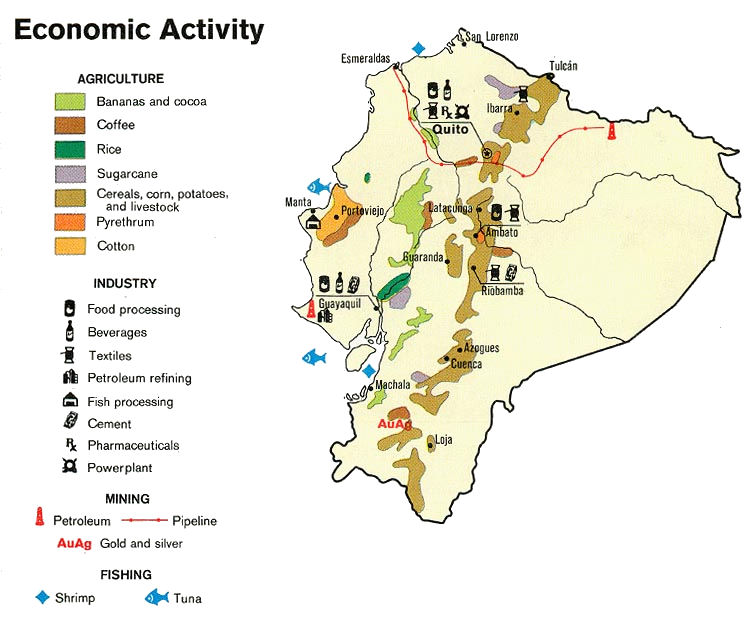
Eduardo Jurado Bejar, founder of SEM Group, established the annual event based in Guayaquil, Ecuador some years ago. And with organiser Andrea Serrano and her team from Insights, they have taken the event from what was once an imitation of Cannes Lions into something which is now far more interesting, strategic and compelling for creatives, entrepreneurs and every business leader. The audience gathers in Guayaquil with nations from Brazil to Argentina, Colombia to Miami (an honorary latin nation!), all well represented.
This year I had the privilege to both open and close the two day event, sharing my latest ideas and insights on the theme of Gamechangers – how to drive smarter innovation, and faster growth. Of course its not all all about theory, and the best insights come from the disruptive innovators who are shaking up every market right now. These 100 companies, which I update almost every week thanks to the unstoppable progress of the likes of Elon Musk, offer incredible inspiration and practical solutions for every company to borrow and adapt.
You can download a summary of my two keynotes here:
- Day 1 Opening Keynote … Gamechangers: Smart Innovation and Fast Growth
- Day 2 Closing Keynote … Gamechangers: What will you do differently?
I also took the opportunity to search for some “Gamechangers Ecuador” – local companies who are winning not just by working and competing hard, but using their ingenuity to think in a different way, to reinvent their markets, to rewrite the rules, to reach out to new audiences, or create new markets. Here were the three winners which we celebrated in Guayaquil.
Nevado Roses … the Ecuadorian farm Nevado Roses, owned by Roberto Nevado and his son John. In 2005 John Nevado was chosen by The World Economic Forum in Davos, Switzerland, to join their Young Global Leaders Initiative for his work in sustainable agriculture. Since January 1998, Nevada produces best quality roses in two farms located at altitudes between 2750 and 2950 metres above sea level, and 140 kilometres South of Quito (Ecuador).
At the moment, the farms continue their expansion to 40 hectares with 2.8 million rose plants in 36 varieties. The nursery itself is constructed as a closed eco-system, where most waste is recycled and the fertilization is accomplished with chicken droppings.
Mashpi Lodge … a luxury cocoon in the clouds, located in the Andean cloudforest of Ecuador, close to Quito: a sanctuary for your senses. It is part of the National Geographic Unique Lodges of the World, and an unexpected oasis of urban comfort for just 47 guests in a truly unique location: a mega-biodiverse private forest reserve located within the Metropolitan District of Quito.
Guests at the lodge can now explore the Andean Cloudforest by Sky Bike. If you’re brave enough, you can take this human-powered, two-seat bike across the Cloudforest and see the canopy of the rainforest up close. The current bike is the result of five prototypes inspired by an article in Popular Mechanics.
Pacari Chocolate is a Ecuadorian family-owned company which aims to make the highest quality fine flavour chocolate in the world. Made from tree to bar in Ecuador, this fair trade, sustainable, socially responsible, certified organic dark chocolate has won over 180 International Chocolate Awards since 2012.
Santiago Peralta and Carla Barboto built a business based on socially and environmentally sustainable principles to ensure that the production of chocolate supports the well-being of the local community and the land. The word Pacari means “nature” in Quechua, an indigenous language of the Andean region.
As I said to the fabulous audience in closing, anything is possible in today’s incredible world. The best businesses are built on ideas and networks, which means that the smallest company from the smallest market has just as much potential as the big companies. The challenge is for you – to use your imagination and intelligence, to search for new ideas and insights – to be bold, brave and brilliant.
- Report of the my keynote in Insights Magazine
- My interview with Insights Magazine
- More in Insights Magazine
Here’s my interview in full:
Describe your path to what you’re doing now. What led you to become who you are?
I started with a passion to understand the world. At school I loved sciences, the path of discovery, making sense, and exploring possibilities. I went on to study nuclear physics, the potential of the invisible world, and harnessing the smallest particles to innovate everything from nanotech healthcare to superfast travel.
But I wanted to progress faster. So I joined the world’s largest airline, entering the much more creative and human world of marketing, and by 28 years old I had my dream job – managing the supersonic Concorde brand. I went on to work with all types of companies, with innovative brands and in markets all around the world.
Years later, when I wrote my first book, I wanted to find something personal to write about. When I started in business, people always gave me the analytical jobs because of my scientific background. But I loved people and the excitement of creativity much more. Then I realised the best people can do both – they have a left and right brain – they can be Einstein and Picasso at the same time.
I called it “genius” – to be creative and analytical, to be local and global, the yin and the yang, to create the future whilst also delivering today. My first book “Marketing Genius” was translated into 35 languages, and about how Einstein and Picasso would do business today. Since then I’ve written 7 books, most recently “Gamechangers”, about how you can think bigger and different, and have the potential to change your world.
What interests you outside your professional work and why?
My passion is running. I have run almost every day since I was 10 years old. I was inspired by the challenge of testing myself to run further and faster, but also by the love of feeling fit and healthy, and to run through the countryside or cities of the world and see everything at high speed.
I was inspired by the world’s great athletes, but also be legendary feats of endurance, like the Tarahumara Indians of Mexico who are able to run hundreds of miles everyday. Today I can’t run quite as fast for the mile or marathon as I could in my youth. But I still love the freedom, the friendships and the feeling of wellness and achievement by starting each day with a run.
What is your current field of research in innovation?
We live in the most incredible time. We will see more change in the next 10 years than we have in the last 30 years. Innovations like we could never imagine and at superfast speed. From autonomous cars to robotic pills that you can swallow to operate on your heart or brain in minutes.
Yet most of our innovation is wasted. The world spends around 3 trillion dollars on innovation every year. That’s equivalent to 30 “moonshots” (the Apollo space mission cost $137bn). Yet most of the innovation is focused on creating frivolous games like Pokemon Go, or smart socks that don’t smell.
We need to ensure that innovation is focused on the big challenges for our society – solving the big problems of poverty, environment, security and healthcare. Business should be a force for good, to create value that has a positive impact for customers and shareholders, but also society. This is a great incentive for bigger thinking in innovation.
As part of this I’m particularly interested in what drives “exponential” growth – why some companies can grow incredibly fast like WhatsApp $19bn in 3 years, Uber $60bn in 5 years, Alibaba $130bn in 11 years. At the heart of their success is that they think differently about business – they don’t believe in linear, transactional ways of making and selling, instead they think about two things – ideas and networks.
That’s really the secret of the most innovative businesses today – ideas that spread rapidly, because they are powerful, human and contagious – and networks that spread these ideas rapidly, with a multiplying impact.
Is being a gamechanger a gift with which you’re born or is it a skill that can be developed through experience?
Everybody has a brain. Anybody can challenge the status quo. You need to be bold and brace to do it. No, it’s not a gift you are born with, it’s a mindset. And increasingly it’s the smallest companies, with a youthful irreverence, and ambition to make life better that drive the most successful innovations. Immigrants trying to find their place in new countries, emerging markets where they want to find simple but better solutions. Like Mohatma Ghandi said “be the change”, or as my book says “Be the Gamechanger”.
What is the essential difference between those who simply have good ideas and those who become gamechangers?
Gamechangers … change the game! It sounds obvious, but what does it mean: well, what’s the game? In simple terms, your game is your market – you are in the game of fashion retailing, or online gaming, or fresh food delivered to your door. So how can you change your market?
Most innovation focuses on products and services. But these improvements tend to be incremental, they are based on the same assumptions as before, and they are quickly copied by others. Better innovation looks beyond the product – to the channel, the pricing, the way it is made, the ongoing support to customers. Best of all it innovating your market.
Change the way your market works. That’s what Gamechangers do. Or better still, create the future in your own vision. Don’t live in somebody else’s shadow, define the future you want to have, and shape it to your advantage.
Gamechangers think differently:
- Future back (Don’t look sideways or backwards) … Winners develop a vision of the future they want to create, to make sense if it better than others, to shape it to their advantage. GE, Tesla, Apple, for example, adopt a “future back” approach to strategy. They use “horizon planning” that is driven by a forward radar, whilst providing the strategic flexibility to choose different paths as the context keeps changing. They are not worried by competitors, being more concerned with being relevant than different. This contrast with the old incremental approach, that tries to hang on to past success- where companies took a steady state approach to strategy, ideally an extrapolation of the past, satisfied to be slightly better or cheaper than competitors, or even avoid change if things still seem to work.
- Outside in (Think like a customer, solve real problems) … It sounds obvious, but winners start from the customer perspective – rethinking the problem to solve, the opportunity to seize – rather than just of a product or service – enable them to do what they want to do better. Not just the customers of today, but looking for the outliers who are adopting new behaviours, thinking differently. These might be next generation demographically, or extreme users who need something more advanced than the mainstream. You don’t learn about these customers through average quantitative research, but through deep dives to find new insights and emergent behaviour. Amazon, P&G, Nike are all driven by what they enable, not by what they do. They embrace deep insight (design thinking, collaboration etc) to develop solutions that are more human (empathetic design), more relevant (personalised, applied) and more inspiring (clear narrative).
- Change the game (Disrupt markets, innovate the model) … Winners don’t limit themselves to “the game” as it is currently played (market definition, audiences, rules, roles, conventions, behaviours etc). Instead they rethink markets in their own vision – they focus on “market innovation” if you like. Again this is not a one-off shift, but an ongoing task. Markets become morphous, as customer expectations and aspirations grow through peer to peer influence and cross-border experiences. Change the name of your market, fuse the best of different sectors together, and acquire and adapt the best ideas from anywhere. Airbnb and Uber are the obvious examples, although Netflix is better. They combine the vision and customer thinking (“how can we make life better”) plus the commercial and practical implications (“how can we achieve this profitably”) – to redefine, reinvent and reengage markets in new ways.
- Embrace networks (Be digital. Work the multipliers) … Winners harness the power of networks to work in non-linear ways, to embrace the big data and personal insights within them, and to unlock the potential multiplying impact of network-based business models (from peer to peer communities and social networks, to franchised and distributed models, influencer marketing and subscription revenues). Networks, more than anything, challenge the linear and transactional mindsets of old. Of course short-term revenues are an obsession of most investors and leaders, so it takes the strong leader, or enlightened investor, to see things differently, to rethink the business model, and make the business case for winning in a different way. Alibaba (platforms of buyers and sellers), Spotify (building C2C communities), FedEx (hub and spoke network model) are all examples of thinking in “multiplier” ways to drive more exponential growth potential.
- Be relentless (Don’t stop reinventing. Be fast and agile) … Winners build innovation into their business as usual (core skills but also dedicated teams), they build organisations strategically (directional but flexible, with metrics that drive and reward change), structurally (adaptive process, fluid organisation), culturally (in particular through the leadership mindset) that are highly adaptive, with a “growth mindset” and approach to markets (like Red Bull, or Coty Beauty, or Virgin). They combine the “lean” entrepreneurship and speed of a startup, with the discipline and impact of a larger company. Ecosystems of supply and distribution partners enhance this flexibility and credibility. Better still is to create an organisation of start-ups like Haier, the world’s leading white goods maker, who combines 10000 micro businesses all working entrepreneurially under one brand. They become “growth hackers” in the sense of constantly experimenting within the frame of a collective directions (inspired by purpose, but guided strategically). Growth is not a destination, but an enduring discipline.
Do you consider yourself a risk taker? What is the biggest risk you have taken in your career?
Everybody takes risks. The moment they ride a bike, travel to a new place, choose to learn a new subject, start a new job. We move forwards by doing new things, exploring new opportunities, things which are uncertain and we don’t know if they will work. We take risks throughout our lives.
But in business, we typically see risk as a negative thing. If we don’t take risks, we don’t progress. Too many businesses like to hang on to the model which made them successful, to keep stretching the old models of success. The challenge, is to let go of the old ways, and to create the new. What got you to where you, is unlikely to get you where you want to go.
So yes, I’m constantly taking risks. But I try to make them risks that a smart – things that I want, that I believe I can achieve, and am determined to find a way to make them succeed. The biggest one for me personally? Probably leaving the world of big companies, with the security of a job with regular salary, perks and pensions, and starting my own business. But for me, and many others I know, it’s the best risk you could take, because it enables you to progress, to achieve more, and go for your dream.
You say we should always expect failure in anything we do. What’s one point in your career when you failed and how did you move past it?
You cannot do everything you want, I learnt, despite how passionate, and logical, and committed, you might be. Around 15 years ago I was CEO of a small company with around 500 employees. I deeply cared for its future, wanted to move it forwards, with new services, new locations and a new image. As a team, we were certain of our strategy, that it was right and that we could make a real difference to our world by delivering it.
But a group of stakeholders didn’t want to change. They liked the comfort of their existing world, the benefits of their own positions, and preferred to keep things how they used to be. For almost two years we worked hard to engage, influence and work with them. On top of this, I discovered many financial irregularities in the old business that I inherited, and many of the same stakeholders were to blame. We had to fix the business, and also try to move it forwards.
Eventually I decided that I had done all I could, that this job wasn’t for me, and I could put my time and passions to work better elsewhere. I left the challenge to other people, giving them my continued support and good wishes. In the end, I found a better vocation, easier and faster to make a difference, both for me, and for the people I cared about most.
How do you motivate yourself to accomplish your goals even at times of despair?
Go for a run. Be with friends. Have a glass of very chilled New Zealand wine. Smile. Remember what is good in the world. Then keep trying to make it better, for you and others.
What is your ultimate goal as a gamechanger?
I’m not the Gamechanger, you are. My goal is to help the millions of students, entrepreneurs and business leaders who are striving to create a better business, achieve their goal. And to find the best way I can help them is to think bigger, think different, and to find smarter ways to make their ideas happen.
What would you want to be remembered for?
Inspiring people to make a difference to their worlds.
What is your life insight?
“Whatever you can do, or think you can do, begin it. Because boldness has power, genius and magic in it.”
Which companies are your personal favorite gamechangers?
Wow.
23andMe’s DNA profiling for $99 to transform your future health, Aeromobil’s flying cars from Slovakia now selling for $1.25m, Amazon’s relentless innovations of the last 25 years to transform so many industries, ARM outthinking and outperforming Intel with virtual microprocessor design, OneWeb soon to give the whole world free wifi, and Vice Media which talks in the language of millennials.
In emerging markets, you see even more dramatic change: and you see even more Ctrip the world’s fastest growing travel company from China, Janicki Bioenergy turning human waste into drinking water, Dalian Wanda is the Walt Disney of Shanghai and the biggest investor in Hollywood, Ouarzazate solar power station creating anough energy to power a continent in Morocco, and Xiaomi which is the new Apple for the new world.
Here are a few slightly more detailed examples of incredible businesses who are changing the world right now:
- Hyperloop: From Elon Musk’s concept, Hyperloop One (H1) pounced on the opportunity for next-gen transit using vacuum tubes. H1’s first commercial project is a 99-mile system between Dubai and Abu Dhabi, aiming to reduce the two hour trip to a mere 12 minutes. Virgin recently joined as a major investor, adding their brand and promotional skills, whilst another investment from DP World Group, the world’s 3rd largest ports operator, points to high-speed cargo distribution, in addition to passenger transit.
- Magic Leap: Wired Magazine describes it as the world’s hottest (and most secretive) start-up”. Their mind-bending “mixed reality” technology uses photonic wafer chips to manipulate light. It superimposes 3D generated images over real world objects, by projecting a digital light field into the user’s eye. Founder Rony Abovitz says “the best way to describe it, is like dreaming”, has attracted $1.4bn funding from Alibaba and Google, and is currently signed up contracts with leading movie studios and game makers.
- AvaWinery: Mardonn Chua and Alex Lee claim they can “turn water into wine” in just 15 minutes, without using grapes. The San Francisco startup aims to disrupt high-end wines by offering bottles of chemically identical wine cheaper and more sustainably (lab-grown wine uses 50 to 100 times less water than traditional).
I have around 250 favourites – you can find them, and case studies of how they changed their games on my website – www.theGeniusWorks.com
Even more importantly, I want to learn about the best Gamechangers in Ecuador, and from across South America. I will be holding an online competition to discover, share and celebrate the best innovations of an incredibly exciting part of the world.
What are the big trends you see shaping business in 2017 and beyond?
I’m not a big fan of “trends” because they assume that the world is still a largely average and predictable place. It’s not. The drivers of change in one sector, the opportunities for growth, and the aspirations of customers, change by sector, geography and even individual. There is not algorithm for future success. Its about creating your own path. That comes by defining and redefining your own world, in your own vision, taking insights from your customers, and inspiration from other places.
If I was to try to capture some of the biggest themes of reinvention, they would be
Virtual Experiences … Kevin Kelly observed that the maturing of VR, AR and mixed reality technologies heralds a fundamental shift: from an internet in which information is the basic unit of currency, to one in which experiences are. These digital experiences will quickly come to carry a status-weight equal to ‘real’ experiences, if not become more sought-after and prized. And yes, we know that’s a bold statement given most executives still consider digital experiences as more diverting than.
Examples: 2016’s Singles’ Day saw Alibaba launch Buy+, a virtual reality shopping experience. The demo video shows how Chinese shoppers could be transported to – and shop in – Macy’s in New York. The platform also launched an augmented reality shopping game “Catch a Cat” or its TMall platform, similar to Pokémon Go. Experiences are also about creating – Google’s Tilt Brush is an app for the HTC Vive VR headset. The app allows the user to ‘paint’ in three dimensions, using a simple handheld control as the brush. And can transform industries – ABBA, one band that resisted the temptation to reform, have just announced their 2018 virtual tour dates.
World’s Apart … Trump, Brexit, Syria, North Korea … we see the economic, social and cultural impacts of globalisation in its extremes. This is a changing world framed by complexity and relentless change, job automation, depressed wages, a deeply uneven recovery from the economic crisis, generational and racial divides, terrorism fears, the ongoing refugee crisis. One direction for brands wanting actionable ideas about how to actually respond to this trend in 2017: purposeful brands will find renewed opportunities in helping people understand their changing relationship to home – in terms of their nation, city or neighbourhood. People, and similarly brands, will turn outwards (more global), or inwards (more local). Its hard to be both. And that’s the polarisation.
Examples: In June 2016, Copenhagen-based travel website Momondo posted a video that highlighted the hidden racial diversity that exists in all individuals, called The DNA Journey, showing people talking about their national pride, and then revealing to them their true multi-ethnic make up. Tiger Beer recently set up a pop-up store in New York’s Chinatown, seeking to redefine Asian stereotypes. The Tiger Trading Company store showcased products from the worlds of art, fashion, technology and design, representing over 700 artists from Asia.
Incognito Individuals … Anonymity makes a comeback. Brands recognise non-traditional yet more authentic demographic segments (last month, 17-year-old makeup artist James Charles became the first male face of Covergirl). At the same time new volumes and sources of data are moving us closer to the ‘segment of one’ at a mass scale (think Spotify’s Discover Weekly, which sees over 40 million users receive a unique playlist every Monday). While customers will welcome the greater relevance that comes with both these approaches, true flexibility and fluidity means there will still be moments where everyone wants to break out and explore. As customers hand over more control to algorithms (or perhaps as they become increasingly aware of just how much their lives are being predicted and shaped by such mathematics – witness the Facebook news ‘filter bubble’ awakening), they will also want to be less predictable.
Examples: Interviewing.io is a platform for engineers to practice technical job interviews, announced a feature that disguises both the interviewer’s and candidate’s voices. Using Twilio’s cloud communications technology and proprietary voice software, the service alters voices to sound androgynous, add synthetic elements or sound like animals to eliminate interview bias. Users can reveal their identities should they want the interview process to continue. Antipersona simulates the experience of being signed into Twitter as another person. Users can choose to simulate any Twitter account, and see the same timeline and notifications – for follows, mentions and retweets – as that Twitter user for 24 hours.
Capacity Capture … The eco-friendliness of your products is now assumed. Meanwhile the sharing economy, peer-to-peer consumerism and the rise of access-over-ownership business models have radically recalibrated consumer expectations around utilization and waste. When you can pay to use cars by the minute, offices by the hour, eat food cooked by neighbours, then ‘traditional’ business processes suddenly start to look even more wasteful. Which is why smart brands will broaden their thinking around sustainability and turn their attention to finding and unlocking exciting new sources of value, or finding creative new ways to eliminate any wasted resource.
Examples: Nissan launched a scheme allowing UK-based owners of the Nissan LEAF car and e-NV200 electric van models to sell back their vehicle battery’s stored energy to the National Grid. Created in partnership with power company Enel, the Vehicle-2-Grid (V2G) system will be available at 100 charging units across the country, where the transactions can take place. São Paulo-based food bank Banco de Alimentos launched Reverse Delivery, to harness the power of the thousands of delivery drivers that return empty-handed after dropping off food. Participating restaurants (there are currently more than 35 signed up) ask the customer if they want to donate any food. The driver then collects the items from the customer when they deliver the meal and takes it back to the restaurant, where it is picked up by Banco de Alimentos and distributed to those in need.
Big Brother Brands … Convenience. Seamlessness. Relevance. Customer expectations of basic factors will reach new heights in 2017. And while in George Orwell’s 1984 Big Brother was a dystopian overlord, the relentless desire for magical levels of personalised service will meet new intelligent technologies and lead to a new generation of brands. But now we’ll willingly be watched. First, voice will replace touch as the primary interface. Baidu’s voice technology is now (three times) faster and more accurate than typing on a smartphone keyboard. Second, these intuitive interactions will converge with the rapidly improving capabilities of artificially intelligent assistants. One signal: users of digital virtual assistants are set to rise from 390 million in 2015 to 1.8 billion worldwide by 2021.
Examples: Google Home is a voice-activated speaker powered by Google Assistant. Once permission is granted, the USD 129 ‘always-on’ device connects to the user’s Google accounts and scan emails, calendars and files and photos uploaded to Google to check appointments, create lists, add items to a shopping list and more. Beijing-based tech firm Roobo unveiled Domgy in June 2016: a canine-like home robot that uses proprietary AI and facial recognition to recognize family members, play their preferred entertainment, alert the family to intruders, and more. Domgy rolls around and can navigate normal obstacles in a home and shallow steps, and automatically goes back to its charging station when the battery is getting low.
What are your tips for anyone seeking to innovate and grow their business?
Go and spend time with your customers. Real people. Don’t ask them what they need or want. Ask them about their lives, how they work, what they are trying to do, how they want to be different, what stops them, and what they dream of. Then make it happen for them.
Most importantly, remember that we live in the most incredible time – more change in the next 10 years than the last 250 years. So how is your business changing? How are you?
Never stop reinventing … never stop thinking, never stop listening, never stop exploring, never stop changing, never stop innovating, never stop growing. Never stop believing in your own potential.
“It’s a complicated and noisy world … and we’re not going to get a chance to get people to remember much about us” mused Steve Jobs back in 1997, just before his decade of greatness … “so that chance to make a memory, is the essence of brand marketing.”
Whilst quoting Jobs is perhaps not seen as cool these days, he was a genius of branding. And having just returned to Apple, he recognised that one of their biggest challenges was their brand. “A brand is not so much about rational arguments” he argued “but the way that the company resonates with people emotionally.”
“Nike sells a commodity, they sell shoes. And yet when you think of Nike you feel something different than a shoe company. In their ads, as you know, they don’t ever talk about the product, they don’t ever talk about their air soles, how they’re better than Reebok’s air soles. What’s Nike do in their advertising? They honour great athletes and they honour great athletics. That is what they are about.”
Branding answers the question of what are we here to do?, he said “Our customers want to know, “Who is Apple and what is it that we stand for? Where do we fit in this world?” What we’re about isn’t making boxes for people to get their jobs done, though we do that well. We do that better than almost anybody in some cases. But Apple’s about something more than that: Apple, at the core, its core value, is we believe that people with passion can change the world for the better. That’s what we believe.”
That communication would turn into advertising history:
https://www.youtube.com/watch?v=8rwsuXHA7RA
20 years later, what are the best ideas and next practices in brand marketing?
In some ways not much has changed. The challenge for most brands is still about making that shift from inside-out to outside-in thinking, to build a brand around their customer’s world, defined by a relevant purpose that in some ways makes life better. But its also fundamentally changed, from a world where broadcast push of average messages (advertising) has been replaced by new types of social, personal engagement. Some brands do it perfectly, like RedBull, others still struggle, like Coke.
Brands in a customer-centric world … How do brands work at a higher level to create more value for customers?
The customer-centric brand, is about the customer not the business, about their aspirations not the products … therefore brands are about enabling customers to achieve more (e.g. Airbnb belong anywhere, Nike to perform better, Lego to play better) … therefore the brand reframes the context in which we engage customers, to a wide platform through which we support customers to do what they aspire to do, better
The customer-centric brand narrative, is therefore about a bigger idea, about more than communication and devices … our opportunity is to engage people in this bigger context (e.g. Red Bull’s Air Race is not about energy drinks, but adrenalin experiences), Nike’s events are not about shoes (but Rockstar Workouts, or whatever engages the target segment), similarly all content, promotions etc.
The customer-centric brand experience, is also therefore about a bigger idea – its not simply “the touchpoints with the organisation” but the experience which the customer has in doing what they do (e.g. making mobile payments, taking better photos, finding new friends, monitoring business operations etc).
2. Making monolithic brands relevant and personal … How to connect brands to multiple segments/propositions?
The framework for connecting monolithic brands and CVPs, making brands engaging to each audience in different, relevant and practical ways … from marketing communication and delivered experiences. Learning from customer-centric brand proprosition models like Umpqua Bank, and its implications on the business to deliver in relevant ways
Aligning products and services, prices and incentives, to the propositions in smarter ways, to achieve clarity and maximum perceived value, whilst also reducing complicity and cost. In particular using relevant partner brands to build affinity bridges with other brands that a most resonant with each audience
How this makes the brand more multi-dimensional, more pull than push, and how to retain the consistency of a brand strategy whilst also multiple meanings and executions. Specifically what it means for brand identity, brand messaging, and service styles online, and within stores and call centres.
3. Communicating content in fast and social markets … How do we connect all the content together for more impact?
Connecting the brand stories together so they become “liquid and linked” – learning how Coca Cola turn all these fragments Facebook posts, Tweets, Instagram messages, online blogs, sponsorship activities, multi-channel, activities into a coherent and progressive story that has structure and progress. In particular, when most of the content is created from outside not inside.
Being fast and responsive in communication across all media – moving from the old model of planned campaigns and push execution, to a more dynamic model that is “realtime, relevant and responsive” so that media assets can be aligned and executed within minutes, in order to connect with topical activities, or to address problems. Learning from Nestle Digital
https://www.youtube.com/watch?v=sTqPKyJ6YSM
Aligning these together for more impact, understanding the new metrics of customer-centric, digital-enabled, realtime brand marketing … both in tactical KPIS, but also how it can be actively managed to optimise sales and profitability, and ultimately to enhance and protect brand reputation, and enhance the economic value of the brand
4. Brands in action, building brand communities … How do we use the power of networks, to achieve more together?
What is brand trust and loyalty … Trust is low, loyalty is rare … so how do we engage people, build relationships that endure retention and advocacy amongst our audiences? – Today’s winning brands, Lego to Snap, Google to IBM, is facilitate relationships between them, rather than try to have relationships with them (the old CRM) … a community with a higher purpose, to achieve more together.
Bringing more brand partners together to achieve the higher goals of the community, and for a brand to take a lead facilitator role in being that – like Rapha brings together the passion of cyclists – more than bikes and clothing, it gives them a place and a club, stories and dreams, to share. This community becomes the gateway to customer-centric solutions, and brand portfolios.
Using the brand community to achieve more – from co-creating and co-selling, to co-supporting and co-empowering … building on previous successes to achieve more – and in particular to fuse digital and physical assets together in more innovative ways – stores, events, bills, phones – whilst also exploring new revenue streams.
Explore more about brands:
- Article: Bolder Braver Brands
- Article: Building Brands like Pixar make Movies
- Article: The New Luxury
- Article: Winning Private Labels
- Book: “Brand Innovation”
- Book: “Gamechangers: Are you ready to change the world?”
- Workshop: “Brand Innovation Lab: Unlocking the real value of your brand”
- Workshop: “21st Century Brand Safari: Learning from the world’s most innovative brands”
https://www.slideshare.net/geniusworks/brand-marketing-new-ideas-and-next-practices
Antoine de Saint-Exupéry, the author of The Little Prince, said:
If you want to build a ship, don’t drum up the people to gather wood, divide the work, and give orders. Instead, teach them to yearn for the vast and endless sea.
Reed Hastings likes to say that a hundred million members is a good start, but ultimately he wants Netflix to entertain everyone. And that includes his employees too.
Whilst Netflix is admired across the world for its innovative business model that has transformed the world of entertainment – from the early days of videos and DVDs by mail, to a subscription-based, data-fuelled, personalised experience that is the envy of every industry – Netflix has been a market innovator. But inside, it realises it needs to innovate how it works, how people work and lead too, in order to deliver the external promise and sustain its market momentum.
“Entertainment, like friendship, is a core human need”, says Hastings. “It changes how we feel and gives us common ground. The invention of motion pictures 120 years ago, and then of television 70 years ago, were the first two entertainment revolutions. The third revolution is streaming, personalized any-screen anytime anyplace video, which allows Netflix to provide better entertainment at lower cost and greater scale than the world has ever seen.”
“Netflix Culture: Freedom & Responsibility” has been called by Sheryl Sandberg as “the most important document ever to come out of the Valley.”
The book was developed by former chief talent officer , Patty McCord. “We [she and Hastings] had been at another company together, and we didn’t like how that company was when we left,” said McCord, who now works as a consultant and advises companies on leadership and culture. “It was like every other company.”
So, the two decided to start a different kind of company. Instead of listing the company’s core values like every other company was doing, McCord decide to write down the things the company valued, what mattered to them, what they expected in their people. For instance, if the company wanted courageous employees, they also wanted employees to know what “courage” looked like and what it didn’t look like.
The result is a document that demands self-sufficient employees who feel a responsibility to the company. There’s no vacation policy, a nonexistent travel policy, and no annual employee reviews. McCord says the culture is meant to only attract “fully formed adults.”
“If you look at an innovator’s mind, the innovator never says, ‘I know what we should do. We should look around and see what everyone else is doing and do it a smidge better,’” said McCord. “We just took risks with the people stuff, just like we took risks with the business.”
The Netflix Culture document defines “the unusual ways we work together so we can eventually entertain everyone” …
We are Netflix
Like many great companies, we strive to hire the best and we value integrity, excellence, respect, and collaboration. What is unique and special, though, about Netflix is how much we:
- encourage independent decision-making by employees
- share information openly, broadly, and deliberately
- are extraordinarily candid with each other
- keep only our highly effective people
- avoid rules
Our core philosophy is people over process.
More specifically, we have great people working together as a dream team. With this approach, we are a more flexible, fun, inventive, stimulating, creative, and successful organization.
Specific Values
Many companies have value statements, but often these written values are vague and ignored. The real values of a firm are shown by who gets rewarded or let go. Below are our real values, the specific behaviors and skills we care about most. The more these sound like you, and describe people you want to work with, the more likely you will thrive at Netflix.
Judgment
- You make wise decisions despite ambiguity
- You identify root causes, and get beyond treating symptoms
- You think strategically, and can articulate what you are, and are not, trying to do
- You are good at using data to inform your intuition
- You make decisions based on the long term, not near term
Communication
- You are concise and articulate in speech and writing
- You listen well and seek to understand before reacting
- You maintain calm poise in stressful situations to draw out the clearest thinking
- You adapt your communication style to work well with people from around the world who may not share your native language
- You provide candid, timely feedback to colleagues
Curiosity
- You learn rapidly and eagerly
- You contribute effectively outside of your specialty
- You make connections that others miss
- You seek to understand our members around the world, and how we entertain them
- You seek alternate perspectives
Innovation
- You create new ideas that prove useful
- You re-conceptualize issues to discover solutions to hard problems
- You challenge prevailing assumptions, and suggest better approaches
- You keep us nimble by minimizing complexity and finding time to simplify
- You thrive on change
Courage
- You say what you think, when it’s in the best interest of Netflix, even if it is uncomfortable
- You are willing to be critical of the status quo
- You make tough decisions without agonizing
- You take smart risks and are open to possible failure
- You question actions inconsistent with our values
- You are able to be vulnerable, in search of truth
Passion
- You inspire others with your thirst for excellence
- You care intensely about our members and Netflix’s success
- You are tenacious and optimistic
- You are quietly confident and openly humble
Selflessness
- You seek what is best for Netflix, rather than what is best for yourself or your group
- You are open-minded in search of the best ideas
- You make time to help colleagues
- You share information openly and proactively
Inclusion
- You collaborate effectively with people of diverse backgrounds and cultures
- You nurture and embrace differing perspectives to make better decisions
- You focus on talent and our values, rather than a person’s similarity to yourself
- You are curious about how our different backgrounds affect us at work, rather than pretending they don’t affect us
- You recognize we all have biases, and work to grow past them
- You intervene if someone else is being marginalized
Integrity
- You are known for candor, authenticity, transparency, and being non-political
- You only say things about fellow employees that you say to their face
- You admit mistakes freely and openly
- You treat people with respect independent of their status or disagreement with you
Impact
- You accomplish amazing amounts of important work
- You demonstrate consistently strong performance so colleagues can rely upon you
- You make your colleagues better
- You focus on results over process
It’s easy to write admirable values; it’s harder to live them. In describing courage we say, “You question actions inconsistent with our values.” We want everyone to help each other live the values and hold each other responsible for being role models. It is a continuous aspirational process.
In describing integrity we say, “You only say things about fellow employees you say to their face.” This attribute is one of the hardest for new people to believe — and to learn to practice. In most situations, both social and work, those who consistently say what they really think about people are quickly isolated and banished. We work hard to get people to give each other professional, constructive feedback — up, down and across the organization — on a continual basis. People frequently ask others, “What could I be doing better?” and themselves, “What feedback have I not yet shared?”
We believe we will learn faster and be better if we can make giving and receiving feedback less stressful and a more normal part of work life. Feedback is a continuous part of how we communicate and work with one another versus an occasional formal exercise. We build trust by being selfless in giving feedback to our colleagues even if it is uncomfortable to do so. Feedback helps us to avoid sustained misunderstandings and the need for rules. Feedback is more easily exchanged if there is a strong underlying relationship and trust between people, which is part of why we invest time in developing those professional relationships. We celebrate the people who are very candid, especially to those in more powerful positions. We know this level of candor and feedback can be difficult for new hires and people in different parts of the world where direct feedback is uncommon. We actively help people learn how to do this at Netflix through coaching and modeling the behaviors we want to see in every employee.
Dream Team
A dream team1 is one in which all of your colleagues are extraordinary at what they do and are highly effective collaborators. The value and satisfaction of being on a dream team is tremendous. Our version of the great workplace is not comprised of sushi lunches, great gyms, big offices, or frequent parties. Our version of the great workplace is a dream team in pursuit of ambitious common goals, for which we spend heavily. It is on such a team that you learn the most, perform your best work, improve the fastest, and have the most fun.
To have an entire company comprise the dream team (rather than just a few small groups) is challenging. Unquestionably, we have to hire well. We also have to foster collaboration, support information sharing, and discourage politics. The unusual part is that we give adequate performers a generous severance package2, so that we can find a star for that position. If you think of a professional football team, it is up to the coach to ensure that every player on the field is amazing at their position, and plays very effectively with the others. We model ourselves on being a team, not a family. A family is about unconditional love, despite your siblings’ unusual behavior. A dream team is about pushing yourself to be the best teammate you can be, caring intensely about your teammates, and knowing that you may not be on the team forever.
We have no bell curves or rankings or quotas such as “cut the bottom 10% every year.” That would be detrimental to fostering collaboration, and is a simplistic, rules-based approach we would never support. We focus on managers’ judgment through the “keeper test” for each of their people: if one of the members of the team was thinking of leaving for another firm, would the manager try hard to keep them from leaving? Those that do not pass the keeper test (i.e. their manager would not fight to keep them) are promptly and respectfully given a generous severance package so we can find someone for that position that makes us an even better dream team. Getting cut from our team is very disappointing, but there is no shame. Being on a dream team can be the thrill of a professional lifetime.
Given our dream team orientation, it is very important that managers communicate frequently with each of their team members about where they stand so surprises are rare. Also, it is safe for any employee at any time to check in with their manager by asking, “How hard would you work to change my mind if I were thinking of leaving?” In the tension between honesty and kindness, we lean into honesty. No matter how honest, though, we treat people with respect.
One might assume that with dream team focus, people are afraid of making mistakes. In fact, it’s the opposite. We try all kinds of things and make plenty of mistakes as we search for improvement. The keeper test is applied as a judgment of someone’s overall expected contribution.
Within a dream team, collaboration and trust work well because your colleagues are both exceptionally skilled at what they do, and at working well with others. In describing selflessness we say “You make time to help colleagues. You share information openly and proactively.” We want new colleagues to feel very welcome and get all the support they need to be effective.
Some people ask about loyalty. Loyalty is great as a stabilizer. Employees with a strong track record at Netflix get leeway if their performance takes a temporary dip. Similarly, we ask employees to stick with Netflix through any short term dips. But unconditional allegiance to a shrinking firm, or to an adequately performing employee, is not what we are about.
On a dream team, there are no “brilliant jerks.” The cost to teamwork is just too high. Our view is that brilliant people are also capable of decent human interactions, and we insist upon that. When highly capable people work together in a collaborative context, they inspire each other to be more creative, more productive and ultimately more successful as a team than they could be as a collection of individuals.
Succeeding on a dream team is about being effective, not about working hard. Sustained “B” performance, despite an “A” for effort, gets a respectful generous severance package. Sustained “A” performance, regardless of level of effort, gets rewarded. Of course, to be great, most of us have to put in considerable effort, but hard work is not how we measure effectiveness.
Being on a dream team is not right for everyone, and that is OK. Many people value job security very highly, and would prefer to work at the many companies whose orientation is more about stability, seniority, and working around inconsistent employee effectiveness. Our model works best for people who highly value consistent excellence in their colleagues.
To help us attract and retain stunning colleagues, we pay employees at the top of their personal market. We make a good-faith estimate of the highest compensation each employee could make at peer firms, and pay them that max. Typically, we calibrate to market once a year. We do not think of these as “raises” and there is no raise pool to divide up. The market for talent is what it is. We avoid the model of “2% raise for adequate, 4% raise for great”. Some employees’ market value will rapidly rise (both due to their performance and to shortage of talent in their areas) while other employees may be flat year-to-year, despite doing great work. At all times, we aim to pay all of our people at the top of their personal market.
Note that if our company experienced financial difficulty, we wouldn’t ask our employees to accept less pay. A sports team with a losing record still pays top of personal market for the players they hope will get them back into a winning position. On the other hand, if the company does well, our broadly distributed stock options become quite valuable.
The dream team model reinforces the idea that your economic security is based on your skills and reputation, not on your seniority at one company. At Netflix, you learn a lot working on hard problems with amazing colleagues and what you learn increases your market value. Knowing that other companies would quickly hire you if you left Netflix is comforting. We see occasional outside interviewing as healthy, and encourage employees to talk with their managers about what they learn in the process.
While our teammates are fantastic, and we work together very well, we know we can always do better. We strive to have calm confidence, and yet yearn to improve. We are mediocre compared to how great we want to become.
Freedom & Responsibility
There are companies where people walk by trash on the floor in the office, waiting for someone else to pick it up, and there are companies where people lean down to pick up the trash they see, as they would at home. We try hard to be the latter, a company where everyone feels a sense of responsibility to do the right thing to help the company at every juncture. Picking up the trash is the metaphor for taking care of problems, small and large, as you see them, and never thinking “that’s not my job.” We don’t have rules about picking up the real or metaphoric trash. We try to create the sense of ownership, responsibility and initiative so that this behavior comes naturally.
Our goal is to inspire people more than manage them. We trust our teams to do what they think is best for Netflix — giving them lots of freedom, power, and information in support of their decisions. In turn, this generates a sense of responsibility and self-discipline that drives us to do great work that benefits the company.
We believe that people thrive on being trusted, on freedom, and on being able to make a difference. So we foster freedom and empowerment wherever we can.
In many organizations, there is an unhealthy emphasis on process and not much freedom. These organizations didn’t start that way, but became that way as they grew over time. Specifically, many organizations have freedom and responsibility when they are small. Everyone knows each other, and everyone picks up the trash. As they grow, however, the business gets more complex, and sometimes the average talent and passion level goes down. As the informal, smooth-running organization starts to break down, pockets of chaos emerge, and the general outcry is to “grow up” and add traditional management and process to reduce the chaos. As rules and procedures proliferate, the value system evolves into rule following (i.e. that is how you get rewarded). If this standard management approach is done well, then the company becomes very efficient at its business model — the system is dummy-proofed, and creative thinkers are told to stop questioning the status quo. This kind of organization is very specialized and well adapted to its business model. Eventually, however, over 10 to 100 years, the business model inevitably has to change, and most of these companies are unable to adapt.
To avoid the rigidity of over-specialization, and avoid the chaos of growth, while retaining freedom, we work to have as simple a business as we can given our growth ambitions, and to keep employee excellence rising. We work to have a company of self-disciplined people who discover and fix issues without being told to do so.
We are dedicated to constantly increasing employee freedom. Some examples of how we operate with unusual amounts of freedom3 are:
- We share documents internally broadly and systematically. Nearly every document is fully open for anyone to read and comment on, and everything is cross-linked. Memos on each title’s performance, on every strategy decision, on every competitor, and on every product feature test are open for all employees to read. Despite this huge access, we’ve had very few leaks, due to our culture of self-discipline and responsibility.There are virtually no spending controls or contract signing controls. Each employee is expected to seek advice and perspective as appropriate. “Use good judgment” is our core precept.
- Our policy for travel, entertainment, gifts, and other expenses is 5 words long: “Act in Netflix’s Best Interest.” We also avoid the compliance departments that most companies have to enforce their policies.
- Our vacation policy is “take vacation.” We don’t have any rules or forms around how many weeks per year. Frankly, we intermix work and personal time quite a bit, doing email at odd hours, taking off weekday afternoons for kids’ games, etc. We also don’t have a clothing policy, but no one has come to work naked; you don’t need policies for everything. Our leaders make sure they set good examples by taking vacations, often coming back with fresh ideas, and encourage the rest of the team to do the same.
- Our parental leave policy is: “take care of your baby and yourself.” New parents are encouraged to take whatever time they feel is right in the first year, which they generally aren’t sure of until a few months after the baby arrives.
- Each employee chooses each year how much of their compensation they want in salary versus stock options. You can choose all cash, all options, or whatever combination suits you4. You choose how much risk and upside you want. These 10-year stock options are fully-vested and you keep them even if you leave Netflix.
- There are no compensation handcuffs requiring you to stay in order to get your money. People are free to leave at any time, without loss of money, and yet they generally choose to stay. We want managers to create conditions where people love being here, for the great work and great pay.
You might think that that such freedom would lead to chaos. The lesson is you don’t need policies for everything. Most people get the need to wear clothes at work.
There are a few important exceptions to our anti-rules pro-freedom philosophy. We are strict about ethical issues and safety issues. Harassment of employees or trading on insider information are zero tolerance issues, for example. Some information security issues, such as keeping our members’ payment information safe, have strict controls around access. Transferring large amounts of cash from our company bank accounts has strict controls. But these are edge cases.
In general, freedom and rapid recovery is better than trying to prevent error. We are in a creative business, not a safety-critical business. Our big threat over time is lack of innovation, so we should be relatively error tolerant. Rapid recovery is possible if people have great judgment. The seduction is that error prevention just sounds so good, even if it is often ineffective. We are always on guard if too much error prevention hinders inventive, creative work.
On rare occasion, freedom is abused. We had one senior employee who organized kick-backs on contracts for several years before being caught. But those are the exceptions, and we avoid over-correcting. Just because a few people abuse freedom doesn’t mean that our employees are not worthy of great trust.
Some processes are about increased productivity, rather than error avoidance, and we like process that helps us get more done. One such process we do well at is effective scheduled meetings. We have a regular cadence of many types of meetings; we start and end on time, and have well-prepared agendas. We use these meetings to learn from each other and get more done, rather than to prevent errors or approve decisions.
Informed Captains
For every significant decision there is a responsible captain of the ship who makes a judgment call after digesting others’ views. We avoid committees making decisions because that would slow us down, and diffuse responsibility and accountability. We “farm for dissent.” Dissent is not natural or easy, so we make a concerted effort to stimulate it. Many times, groups will meet about topics and debate them, but then afterwards someone needs to make a decision and become that “captain.” Small decisions may be shared just by email, larger ones will merit a memo with discussion of the various positions, and why the captain made such a decision. The bigger a decision, the more extensive the dissent/assent gathering should be, usually in an open shared document. We are clear, however, that decisions are not made by a majority or committee vote. We don’t wait for consensus, nor do we drive to rapid, uninformed decision making. When the captain of any particular decision is reasonably confident of the right bet for us to take, they decide and we take that bet.
Context Not Control
We want employees to be great independent decision makers, and to only consult their manager when they are unsure of the right decision. The leader’s job at every level is to set clear context so that others have the right information to make generally great decisions.
We don’t buy into the lore of CEOs, or other senior leaders, who are so involved in the details that their product or service becomes amazing. The legend of Steve Jobs was that his micromanagement made the iPhone a great product. Others take it to new extremes, proudly calling themselves nano-managers. The heads of major networks and studios sometimes make many decisions in the creative process of their content. We do not emulate these top-down models because we believe we are most effective and innovative when employees throughout the company own decisions.
We strive to develop good decision-making muscle everywhere in our company. We pride ourselves on how few, not how many, decisions senior management makes. We don’t want hands-off management, though. Each leader’s role is to teach, to set context, and to be highly informed of what is happening. The only way to figure out how the context setting needs to improve is to explore a sample of all the details. But unlike the micro-manager, the goal of knowing those details is not to change certain small decisions, but to learn how to adjust context so more decisions are made well.
There are some minor exceptions to “context not control,” such as an urgent situation in which there is no time to think about proper context and principles, when a new team member hasn’t yet absorbed enough context to be confident, or when it’s recognized that the wrong person is in a decision-making role.
We tell people not to seek to please their boss. Instead seek to serve the business. It’s OK to disagree with your manager. It’s never OK to hide anything. It’s OK to say to your manager, “I know you disagree, but I’m going to do X because I think it is a better solution. Let me know if you want to specifically override my decision.” What we don’t want is people guessing what their manager would do or want, and then executing on that decision.
Highly Aligned, Loosely Coupled
As companies grow, they often become highly centralized and inflexible. Symptoms include:
- Senior management is involved in tons of small decisions
- There are numerous cross-departmental buy-in meetings to socialize tactics
- Pleasing other internal groups takes precedence over pleasing customers
- The organization is highly coordinated and less prone to error, but slow and frustrating
We avoid this by being highly aligned and loosely coupled. We spend lots of time debating strategy together, and then trust each other to execute on tactics without prior approvals. Often, two groups working on the same goals won’t know of, or have approval over, their peer activities. If, later, the activities don’t seem right, we have a candid discussion. We may find that the strategy was too vague or the tactics were not aligned with the agreed strategy. And we discuss generally how we can do better in the future. The success of a “Highly Aligned, Loosely Coupled” work environment is dependent upon the collaborative efforts of high performance individuals and effective context. Ultimately, the end goal is to grow the business for bigger impact while increasing flexibility and agility. We seek to be big, fast and nimble.
Seeking Excellence
New employees often comment in the first few months that they are surprised how accurate our culture description is to the actual culture they experience. Around the world, we live and create our culture together. In fact, hundreds of global employees contributed to this document.
We do not seek to preserve our culture — we seek to improve it. Every person who joins us helps to shape and evolve the culture further. We find new ways to accomplish more together. Every few years we can feel a real difference in how much more effectively we are operating than in the past. We are learning faster than ever because we have more dedicated people with diverse perspectives trying to find better ways for our talented team to work together more cohesively, nimbly and effectively.
Summary
As we wrote in the beginning, what is unique and special about Netflix is how much we:
- encourage independent decision-making by employees
- share information openly, broadly, and deliberately
- are extraordinarily candid with each other
- keep only our highly effective people
- avoid rules