Aussie Farmers Direct was a great story. I loved the notion of farmers coming together in a national branded network, creating one of the best consumer apps to help people choose the best and freshest foods, then delivered with a human and friendly face to your door.
Today a notice on their website spelt the end of a great story:
“Australia’s first independent grocery delivery businesses to reach a national scale. They were pioneers in the grocery delivery space. Their mission resonated with millions, which lead to a strong community of people who wanted to bypass the supermarket duopoly and support Australian farmers.
After 13 years of fighting the supermarket duopoly, the Aussie Farmers Direct business model ultimately became unsustainable and the company went into voluntary administration on March 6th, 2018”
However local grocery business YourGrocer seeks to carry on the Aussie Farmers mission. Morgan Ranieri, its founder, saying
“The reason farmers in Australia struggle so much is because we have one of most concentrated supermarket ecosystems in the world. The vast majority of food in our country is sold by the big two supermarkets, which gives them tremendous negotiating power. Local shops, on the other hand, do not have enough buying power to screw over farmers, producers, brands or manufacturers.
The more we buy from a local shops, the stronger our independent grocery sector becomes. And the stronger our independent sector is, the stronger our farmers, producers, brands and manufacturers are.
They say absolute power corrupts absolutely. We tend to agree with that. This is why we believe in helping Australia’s 10,000+ independent shops to compete for a larger share and create a better food and grocery ecosystem for everyone.
YourGrocer pledges to continue this mission standing on the shoulders of the great work done by Aussie Farmers Direct.”
Aussie Farmers Direct … a great idea
AFD was one of the first Gamechangers I profiled in the book. Here is the way I described their business when writing the book a few years ago:
Aussies love the outdoors, fresh and natural. So the farmers jumped on the milk floats and brought together the best of local, authentic produce from across the nation, ready to deliver direct to the door. The business model is lean and networked, taps current trends and builds community.
Graeme Beevers from Mildura in Victoria grows the tastiest Aussie oranges, John Bruce produces highly sought-after Aussie beef from Cape Grim in Tasmania, whilst Michelle Wilkinson is a superstar in the mushroom world, knowing just when to pick her cups. Authentic, curated and delivering direct to your home, Aussie Farmers Direct have transformed the definition of fresh food down under. By bringing back the much loved “milko”, or local milkman, a network of franchisees deliver a huge selection of the best 100% Australian owned, grown and produced products every morning.
https://www.youtube.com/watch?v=5LX4ixt6UM0&t=67s
CEO Braeden Lord says ”We started with an underlying philosophy around supporting the Australian farmer, and making a stronger connection between the farm and the urban household and the front doorstep by cutting out the middlemen and looking at the most expedient and efficient way to take great quality Australian produce and deliver it to people’s front doorsteps”
Since 2006, the network has grown from a three people and one milk float, to a company with 250 franchisees who provide almost 250,000 households across Australia with fresh fruit, vegetables, milk, eggs, bread, meat, seafood and more. It’s also the largest supplier of organic food. Yet there is still much potential, having so far only gained around 4% market share. The network is also investing in suppliers, for example, buying a dairy plant in 2011 that had been mothballed for 12 years in a small rural community.
AFD is about personalisation and community, a preferred choice for many farmers tired of the buying power of large supermarkets. Quality and sustainability come before price, recognising that its target consumers will pay a little more for such things. It is also advanced technologies. Most orders come through its smartphone apps, allowing easy ordering and fast delivery.
https://www.youtube.com/watch?v=pHi4_bRiIHA&t=26s
YouTubers, also known as vloggers – people who regularly post their own video shows on YouTube – have become the new celebrities, the most significant brand influencers, and multi-millionaires in the process. Whether it’s daily fashion tips from the bedroom of a teen girl just like you, or a review of the latest digital games and how to get the highest scores, cookery tips straight from somebody’s kitchen, or a travelog captured on a mobile phone, YouTubers are the masters of self expression in the digital age.
It might seem like vanity, to turn your phone camera towards yourself, and start telling the world what you think, but YouTubers are followed and listened to by millions. These are not highly paid celebrities, paid to say “I’m worth it”, these are people just like you. Their shows can be quite informal, fairly amateur in their camera skills and laid back in their chatting style, but that just makes them more authentic. For the YouTubers, their regular videos – or channel, as it becomes – can evolve into a vocation, combining passion and profit, even a route to global stardom and multi-million dollar fortunes.
YouTubers first came to my attention in the world of teen fashion and cosmetics, when I wondered what my two teen daughters spent their hours watching online. When they suddenly became incredibly knowledgable of the the latest brands, which they just had to buy now, I became more intrigued. Michelle Phan, for example, was an early YouTube superstar, initially broadcasting her beauty tips, and recommended products, but then deciding to take matters into her own hands, setting up a “beauty curation” brand of her own called Ipsy. Zoe Suggs did the same for a younger demographic, and her Zoella brand was suddenly a best selling book, alongside the Zoella brand of cosmetics, accessories and clothing.
More recently, gaming and sports, comedy and music, have become the top genres of YouTubing. Whilst many see it as entertainment, vloggers have fundamentally challenged the marketing models of sectors from fashion to entertainment, and also the preference for watching a homemade video channel over a high production TV show. Males have become the most watched YouTubers, drawn from countries across the world. A recent book even asked “Are all YouTubers psychopaths?” … Here’s how the king of YouTube, PewDiePie responded:
To get a closer look into which stars rule YouTube, take a look at the SocialBlade rankings to see who had the most subscribers. This focuses on independent YouTube stars, disregarding YouTube channels like mainstream music artists. Here’s how the new generation of YouTube stars stacks up in 2018:
#1. Felix Kjellberg, Sweden, Gaming
Subscribers: 60.4 million
Felix Arvid Ulf Kjellberg, better known as PewDiePie, is a boisterous Swedish video game commentator whose videos feature him playing various video games, while a box in the top corner of the screen shows his reactions to what’s happening. His YouTube account has over 60 million followers. The Brighton-based vlogger came into a negative spotlight last year after a Wall Street Journal report described anti-Semitic messages in his videos, leading Disney and YouTube to cut direct business ties with him (though he hasn’t been barred from YouTube). His 2017 estimated salary was $12 million.
#2. Germán Garmendia, Chile, Comedy
Subscribers: 33.1 million
Chilean YouTuber Germán Garmendia is Latin America’s biggest YouTube star. The comedian and musician has two channels in the top 20. He released a book in 2016 titled, “#Chupaelperro.” He became famous with his video “Las Cosas Obvias De La Vida” (“The Obvious Things of Life”). Besides HolaSoyGerman., Garmendia has another YouTube channel called JuegaGerman, which has 24.4 million subscribers and is focused on video games.
#3: Ruben Gundersen, Spain, Gaming
Subscribers: 27.3 million
Rubén Doblas Gundersen, better known on YouTube as ElRubiusOMG, is a 27-year-old Spanish YouTuber. He’s the most followed Spanish YouTube star. Like other popular YouTubers, Doblas Gundersen is a gamer who does walk-throughs, reviews, and more, peppered with funny commentary. He published an interactive book called “Troll” in 2014.
#4: Whindersson Nunes, Brazil, Comedy
Subscribers: 26.7 million
Whinderssonnunes, 23-year-old Whindersson Nunes, is a Brazilian YouTube star who does comedy and vlogs. He uploads parodies, songs, movie reviews, and videos about his daily life. He started making videos at 15.
#5: Konrad Dantas, Brazil, Music
Subscribers: 26.6 million
Konrad Dantas, the 29-year-old Brazilian music video director known as Canal KondZilla, has one of the fastest growing pages on YouTube. His first upload to the site came in 2012 with a music video for the Brazilian rapper Nego Blue.
#6: Cory and Coby Cotton, USA, Sports
Subscribers: 26.5 million
Dude Perfect is a channel from twins Cory and Coby Cotton and three of their college friends from Texas A&M, all of whom are former high school basketball players. They do sports tricks and comedy, some of which makes fun of sports stereotypes.
#7: Luis Flores, El Salvador, Gaming
Subscribers: 26.2 million
Fernanfloo — Luis Fernando Flores — is a YouTube star from El Salvador known for his gameplay videos and wacky antics. His dogs sometimes make appearances in his videos.
#8: Ian Hecox and Anthony Padilla, USA, Comedy
Subscribers: 22.6 million
Smosh, started by comedy duo Ian Hecox and Anthony Padilla, was one of the first YouTube sensations, becoming well known for the duo’s slapstick comedy videos that parodied video games and pop culture.Anthony Padilla left the Smosh channel in June 2017 to create his own solo YouTube account, which now has over 2 million followers. In 2017 they made $11 million.
#9: Evan Fong, Canada, Comedy
Subscribers: 22.3 million
VanossGaming (or Vanoss) is the YouTube name of Evan Fong, a 25-year-old Canadian. While not much is known about Fong, he posts comedy videos that show him playing various video games. What sets his videos apart is the quality of his editing — he frequently posts montages that compress his hours of gaming into one compact video of funny moments. In 2017 he is estimated to have $15.5m earnings.
#10: Samuel de Luque, Spain, Gaming
Subscribers: 20.8 million
Samuel de Luque is a wildly popular Spanish YouTuber who has become known for his voiceovers of gameplay videos for “Minecraft,” “Saint’s Row,” and “Battlefield.” His signature style is to create elaborate narratives and histories for the characters in his video games to make them “like a movie.”
#11: Mariand Castaned, Mexico, Beauty
Subscribers: 20.5 million
Yuya or Mariand Castrejón Castañed is a 24-year-old Mexican beauty vlogger. She posts makeup, hair, and other beauty tutorials, and has a secondary channel where she talks about her day-to-day life. Yuya’s beauty-tutorial channel has featured her in Vogue and on Mexican television.
#12: Ryan Higa, USA, Comedy
Subscribers: 20.4 million
Ryan Higa, who goes by the username NigaHiga, was one of the first major YouTube stars. Higa produces a variety of comedy videos, including sketches, music videos, and short commentaries on pop culture. His videos have high production value and a professional touch, with a quick, funny, and incisive sensibility.
These two recent documentaries dive deeper into the world of YouTubing:
So you now want to know how you can make millions by just chatting to your phone?
Hold on a second. A recent Bloomberg News study found that vloggers who dream of earning a fortune shouldn’t get too exciting. It said 97 per cent of those who aspire to follow her will not earn enough to rise above the poverty line. Mathias Bärtl, of Offenburg University in Germany, says that even channels in the top 3 per cent with 1.4 million views a month attracted annual advertising revenue of only $16,800.
Bärtl admits that the lucky few vloggers who reach the top still make a fortune. The most-viewed 1 per cent of channels earn more than $10,000 a month, he says. Whilst the above rankings are based on subscribers, revenues don’t always follow the same line. Forbes Magazine estimates that Daniel Middleton, the English gaming vlogger known as DanTDM, made $16.5 million last year. A YouTube spokesman said that the number of channels earning six figures was up 40 per cent on last year.
The process of innovation needs to be designed around a company’s culture, to fit their style of work and their workforce’s personalities. But to help you figure out how to start putting together the blueprints for your process of innovation, here are a few examples from the world’s leaders in innovation. How can you learn, adapt and apply the best parts of each for your own business?
Nike
One of the keys to Nike’s 50 years of success is that they have never sat back and rested on the power of their “swoosh.” They consistently power forward and strive for innovation. And they base their innovation on a flexible but strong four-part process.
- Embrace disruption. This is where the ideas come from. They don’t ask their engineers to make a product better. They encourage them to change the process and the product altogether.
- Build in time for change. The original idea or prototype will very rarely be the successful end innovation. Because of this, Nike understands that their engineers will possibly need to make a thousand prototypes before they get it right.
- Nike partners with the best. Admitting you don’t know everything is a crucial step towards creating something great. Collaboration with other innovators and organizations can introduce unexpected insights that produce a better final product.
- Nike holds company culture close. Company lore is sacred and new projects are treated with the reverence of top-secret government documents. This culture helps keep employees motivated to take the best possible innovations to the finish line of production.
Nike successfully implemented this process with their Flyknit shoe. In the first stage, the engineers came up with an idea that would completely disrupt Nike’s shoe production process. Their first prototype was a tube sock stitched to a rubber sole, since the designers and engineers knew that the product would completely evolve over time. Nike decided to partner with athletes like Paula Radcliffe to ensure that the shoe really was designed for sport performance. Finally, Nike pushed the Flyknit through to production and market success by ensuring that every employee that touched the shoe understood the importance of the product and that they were proud of their input.
While Nike has a process that allows for a lot of flexibility, Google has a more stringent process for its innovations. Google is also different from Nike in that instead of aiming to disrupt, their goal is to constantly improve—by a lot.
The first part of Google’s innovation process is explicitly encouraging their employees to spend part of their time on side projects in addition to performing their core job functions. The second element is narrowing down those ideas, prioritizing the ones that will make a product or service ten times better than it is. Then, similar to Nike, Google reaches out to the global community for help making an innovation the best it can be. Finally, the company takes a leap of faith and launches without the expectation of perfection. They want feedback from their consumers. Once they get it, they address user concerns and either scrap the product or improve it.
Gmail is one product that exemplifies this process of innovation. The idea was generated by a Google employee during their built-in innovation time. It was then accepted by Google as a major project when they saw that they could make the email experience ten times better by creating an intuitive interface and offering vastly more storage.
Next, Google recruited engineers and product managers just out of college to come work on the project. During the fourth step, the initial rollout of Gmail, the required infrastructure to make the service reliable was not even built yet. In the final step, Google made improvements, provided the necessary infrastructure, and succeeded in giving the world a revolutionary new way of communicating with each other.
Amazon
Compared to Google and Nike, Amazon has a different, yet more traditional, process of innovation. Amazon’s major differentiating factor is that rather than allowing total creative freedom for employees, Amazon sets innovation objectives.
This setting of objectives is really the first step in Amazon’s innovation process. Individuals at the executive level look at where technology and consumer needs are heading and they formulate where their innovations should be directed. The second step in the process is sourcing ideas. Amazon sources ideas from anyone in the company, and then the executives at the top identify the ideas with the highest potential. Next, these top innovative ideas are pared down even further through a more stringent evaluation process. Finally, innovations are executed and the results are measured.
This process can be seen through the development of Amazon’s Kindle. First, Jeff Bezos set the objective of making Amazon’s best-selling products—books—more connected to technology. Second, he communicated the goal to his workforce and various ideas were generated. Third, they looked over those ideas to narrow the search down, and fourth, they analyzed the top ideas to pick the most innovative. Fifth, the e-reader was chosen and developed. Finally, the results were easily measured when the device sold out in less than six hours.
Nike, Google, and Amazon are ranked first, second, and fourth, respectively, as the most innovative companies in the world. They all refuse to sit back and wait for an innovative idea to just appear. They pursue innovation, encourage it among their workforce, and shepherd it through a process that allows an impactful product to be refined and developed.
So, what lessons can you take away from these highly innovative companies? Maybe your business innovates better with an established goal, like Amazon. Maybe, like Google, setting aside time specifically for innovation would be optimal. Or maybe total and unrestricted freedom and time to cause disruption, like Nike, is how your team works best. The only way to figure it out is through experimentation.
We used to think we knew it all.
We used to go to business school and emerge with MBA-style passports to a long and prosperous career. We used to top up our business skills with the occasional workshop, maybe augmented by a business book or two. We used to go through those chaotic moments of “change” when organisations shake up, and then settle down again. We used to become increasingly expert in our chosen field. And do what we do.
But the world isn’t like that anymore.
Change is relentless, everywhere and in everything. More change in the next 10 years than the last 250 years. Technology, but also its applications and consequences. Changing what people want, their aspirations and expectations. Changing how we work, our business models and daily tasks. Changing what success looks like, from productivity and scale, to new measures of impact and progress.
How do we keep pace with this incredible world?
What we learnt 10, maybe even 20 or 30, years ago just isn’t relevant, or even sufficient anymore. The capabilities that made us great have been superseded by new skills or even machines. The ability to keep doing the same thing, or evolving the same model doesn’t work. And as change accelerates, it feels like there is no time for anything – shorter cycle times, faster delivery, instant results.
So when is there time to learn, to develop ourselves?
Taking time out to refuel your mind, to attend a training program, seems impractical and impossible. 4 weeks for an executive program seems like a lifetime. A book is quickly distracted. Even sitting down to watch a TED Talk seems like a luxury. Yet there is a whole new world to explore – new knowledge, new skills, new opportunities.
The problem is not time, it is our mindset.
Too many of us still try to optimise the whole world. To keep doing what we have always done, but better, evolving and adapting, in search of perfection. Instead we need to let go, to adopt a growth mindset, where we constantly seek to explore and experiment. To grow. To move ourselves and our organisations forwards in new ways. To be interested, curious and creative, to learn in everything we do.
Added to this is how we think of learning.
The best forms of learning are when we are active not passive – when you need it, when you are doing it, when its gone wrong, when you’re teaching it. The old forms of learning – classrooms, seminars and books – are passive. Learn on demand. Learn from each other. Learn by doing. Learn by figuring out the learnings. This means learning becomes part of every day at work, not an alternative to work.
You need the drive to develop yourself, to do better and different, everyday.
Like in our children’s schools, teachers have realised that the key skill is now what to learn, but how. Today’s universe of knowledge is so fast and dynamic, that it is not about retaining information, even specific skills, but knowing when you might need them, and how to find them when needed. Innovative educational platforms, like Udacity with its nanodegrees, have reinvented how we learn.
We need a new mindset to survive, as well as learn and thrive.
It used to be the young people who did most of the training. Today it is the older people, and often the most senior people, who have most to learn. In a world where we will live to 100 years or more, we need to learn to keep learning, to keep challenging and changing ourselves in order to be relevant and useful in an even faster changing world.
Brain scientists have one piece of really good news.
That old idea that as you got older your brain declines has been proven to be totally wrong. The brain is alive, and can be shaped and reshaped to your advantage. At least until you’re around 70. Keeping your mind malleable matters, giving your the ability to keep growing. Solving puzzles, playing music, foreign languages, and red wine, are all ways to keep your brain fit and healthy.
Here are 9 strategies from Ryan Stephens to think about how we learn, and ways to learn better:
- Did you know there’s a science behind learning new skills ? Well there is and it is super interesting. (Lifehacker)
- Work on your presenting skills by speaking up more . Whether it’s at an all-company meeting or a small morning team check-in, find places to let your voice be heard. (Jonathon Colman)
- Make it a goal to learn something new about everyone on your team this week. You’d be surprised at how much those little interactions can build your bonds and help your career in the long run. (Ryan Stephens)
- Chances are that you could probably be better at meeting deadlines. Use these four tips to start turning things in early (without breaking a sweat!). (LinkedIn)
- Do you have enough on your plate? If not, here’s what you need to doto ask your boss for more responsibility. (Brazen)
- Given all the stress in most work environments, it’s easy to feel tired, irritable, and negative. Instead, work to change your mindset and put forth a positive attitude . (Tiny Buddha)
- Push yourself to meet more people and put yourself out there professionally. Hey, knowing a couple more people is never a bad thing. (Careerealism)
- No one likes hearing about their weaknesses, but if you want to grow as a professional, you need to ask people (bosses, co-workers, and clients) for feedback . (Fast Company)
- If you’ve never tried out different productivity tricks before, using one of these may be the way to go. (The Daily Muse)
Try to learn something new and make at least one improvement that makes me better at something every single day. It sounds daunting, but improvements don’t have to be huge, they can be really small which incrementally leads to huge change. Think improving just 1% each day and build upon that every single day. Doing so has a dramatic effect and will make us 37x better, not 365% (3.65x) better at the end of the year. Wake up every day and ask yourself what is the 1% improvement I can change to make myself better personally and professionally. Imagine yourself making 1% changes every day. That compounds and will make you 37x better by the end of the year. Imagine if everybody was doing the same. Imagine how much better you. and the world will be next year.
So here are the 25 “brain hacks” to keep growing:
Never stop learning
Learn something new every day. Whether that is reading a book, listening to a pod cast or completing a MOOC online. You need to take continue to take responsibility for your own learning and actively pursue means to improve. Read for 1 hour every single day.By reading one hour a day, regardless of your perceived level of knowledge, you can become a world leading expert in any subject in 7 years. If you begin now, you could become a world leading expert in your chosen field in less than 10% of your lifetime. It obviously requires commitment and consistency but its incredibly easy to sit and read if you are literate. 42% of college graduates never read anotherbook after college so think how far ahead that could get you.
Do something different
If you zig when others zag you will avoid being in the majority making it easier to rise to the top. Its far easiest to be great in a smaller pool.
Unmercifully pursue your dreams
10,000 of hours of dedication to something is what it takes for someone to be the world-class at something. With that being true I would advocate another route being inherently more useful as the world moves towards a more diverse future. Spend 1,000 hours on 10 different subjects. You won’t become the best in the world at any one thing but you will become a world leading generalist which will ensure you can benefit from most of this new exciting post-capitalist world. The benefits of being better at 10 things than 90% of the global population than better than 99% of the world population at one are monumental. The crossover between your skills will lead to new unimaginable opportunities.
Compete against people better than you.
Go places where you know you will be at a disadvantage. Competing against superior performers will expose you to strategies which enable you to alter your own. You’ll learn tricks and spot hints to improve your own performance you won’t learn in years of competing against rookies.
Give yourself too little time
Purposefully give yourself less time than you know you need to achieve something. You’ll surprise yourself or be forced to invent creative ways to improve your efficiency. It might help you spot trends from alternative industries/activities/sports you can utilise in a new way. In business it is often better to repackage and existing average idea and improve on it to achieve greatness.
Remove interruptions
Live life without distractions by disposing of the things in your life that are frivolous. Abandon social media, stop living your life through the prism of technology and comparison to other and experience things instead of seeing them. Unmercifully remove the things in your life that don’t matter so you can foxus on the things that do.
Set goals
write them down. recording your goals will make you 100% more likely to achieve them. Write short, medium and long term goals and actively track your progress against them. It will give you a sense of achievement which will inspire you and spur you on.
Say no
Say no to almost everything so you can say to the things that matter.
Be more original
Following the status-quo may help you achieve short term success, it might assist in enabling you to pass exams and get into university, but ultimately it is going to detrimentally affect your creativity. Take risks, spot chances and dove in. Share your ideas and get feedback. Be brave.
Put yourself out there
Meet people, reach out and talk to people; never be afraid to ask advice. I never let somebodies reputation scare me into submission. I’m a vehement believer in the adage that if you never ask you’ll never know and find this particularly true of those people who have ascended to the highest heights. I’ve exchange correspondence with everyone from Arianna Huffington, Bob Keiller, Gareth Williams, Adam Grant to name but a few. It’s worth remembering even the most successful among us are people to.
Travel
Broaden your horizons, open your mind and deepen your well of exposure. Understand the idiosyncrasies between cultures and experience living. Go to the places on the periphery and understand the countries you visit. A resort with a pool and a sandy beach could be anywhere. Go to places and distil their true meaning and gain enlightenment. By understanding how different cultures and communities operate our lives are enriched with understanding, compassion and appreciation for people unlike ourselves.
Record your ideas
Record your thoughts and ideas in a journal every day for you to reflect upon labour. Recording a brilliant thought you’re not quite sure to develop allows your mind to continue working on a solution or utilisation of your mind long after you’ve recorded the words on paper.
Recording ideas is the single most important piece of advice I would ever give. What do the greatest people in the world have in common? Prolificness. Those who develop things which result in paradigm shifts are more likely to have worked on thousands of solutions than those who did not. They simply give themselves more opportunity to achieve greatness. You only need to be right once to change the world.
Don’t waste time
Use a timer for everything. Some things may seem inconsequential but that 30-minute meeting that takes 37 minutes bi-weekly is costing you over 12 hours of productive time a year. Extrapolate that figure across every individual at the meeting and you have a significant economic loss. Multiply that for every meeting that runs even a minute over. Your schedule is sacred, protect it or you’ll pay for it in your own time. The same applies even for menial chores. Once you know how long something takes you have a target to beat.
‘Swallow the frog’
Do the thing you are least looking forward to first and the whole day will seem brighter and easier. Get the things out the way that make the biggest difference to progress not the things that take longest. Email takes time, can be done at any point and slows down momentum, do the things that enable progression.
In fact, lock email in a box and do the following.
Only check emails once per day. Some of you may question how this is possible or believe it would force me to miss important messages through the day. In truth, it simply made me far more productive. It allowed me to focus on the task at hand more clearly and if anything did come up I started receiving phone calls which allowed me to tackle the problem quicker, easier and without the need for additional emails.
Stop sending as many emails. It sounds simple because it is, but I was able to drastically reduce my emails received on a daily basis by as much as 40%. No more emails to emails that didn’t require a reply. No more emails to people I could phone and get an answer from in ten seconds. The freedom gained is truly invigorating.
If something that requires attention comes up someone will call; you wouldn’t email the fire brigade to inform them your house is on fire.
Recognise errors
Recognise when you are wrong and make amends. Never be too proud to apologise or patch things up. Even if you are right and the other person is wrong, if they are adamant in their beliefs, changing their mind isn’t going to improve relations therefore even being right can mean you are wrong.
Trust people
Don’t be precious and protective of things. Let people showcase their expertise and benefit collectively. Welcome people into the team with open arms, don’t be suspicious of their intentions. Ultimately you and the team are the beneficiaries. You will meet lone superstars along the way so find ways to connect whereby the partnership is mutually beneficial.
Congratulate and inspire
Praise people when they do well. Nothing motivates people more than the acknowledgement of the effort they have put in to achieve success. Better yet praise people in front of the whole team which simultaneously encourages the person who has done the great work and lets the team witness what happens then they contribute to the team’s success.
Who are you?
Character is who you are when nobody is looking. Be more concerned with your character than your reputation, because your character is what you really are while your reputation is merely what others think you are.
Humility
Treat people how you want to be treated. Whether you acknowledge the cleaner tidying up your mess in the hotel or the CEO of your company, humility and sincere interest are ubiquitous in revealing you humanity.
Be trusted, earn respect
Do what you are going to do when you say you are going to do it. In fact, do it before. Trust is the currency that enables transactions to occur in higher frequency. Without trust and respect, in life and in business, you are nothing.
Ask, don’t tell
The easiest way to lose the support of your team/friends/family is to demand and tell instead of requesting or politely asking. Kill people with kindness and generosity and they will gladly assist you in any endeavour. Thank them for their time and expertise making them feel valued and appreciated.
Realise you can’t win arguments
You can’t because if you lose it, you lose it; and if you win it, you lose it. Suppose you triumph over the other man and shoot his argument full of holes and prove that he is wrong. Then what? You will feel fine. But what about him? You have made him feel inferior. You have hurt his pride. He will resent your triumph. “A man convinced against his will is of the same opinion still.”
Be honest
Be honest to others but most importantly be honest with yourself. Being upfront and honest about your own limitations, sharing concerns and identifying problems when they happen can save huge expense and alleviate small issues before they become massive problems. Being honest with yourself allows you to identify your weaknesses and unmercifully pursue improvement and personal development.
Never wait for things
You need to fight to improve. Good things come to those who go out and get them, nobody achieved greatness waiting for it to find them.
Be prolific
Quality comes from quantity. Quantity is evolved from trying over and over again until you perfect something. Be relentless, never give up. You’ll succeed through obsession, normal people can’t compete with it. Persevere with your passions and create on an unprecedented scale. Love what you do and never settle. You need to find what you love.
Gamble
9 out of 10 companies fail, so start 10, keep going until you find success but never a plan B. Having one means you’ve already accepted the possibility of failure. Failure is only failure if you fail to learn, take chances when you have the opportunity, one day you won’t be afforded with the time you have now.
It doesn’t matter how many times you fail, it only matters that you don’t the last time you try.
https://www.youtube.com/watch?v=uMJ5Zwfz1pU
On January 16, 2018, the leaders of the world’s largest public companies will be receiving a letter from one of the most influential investors in the world. It is likely to cause a firestorm in the corner offices of companies everywhere and a debate over social responsibility that stretches from Wall Street to Washington.
Laurence Fink, founder and chief executive of the investment firm BlackRock, will inform business leaders that their companies need to do more than make profits … they need to contribute to society as well if they want to receive the support of BlackRock.
Fink has the clout to make this kind of demand. His firm manages more than $6 trillion in investments, exchange-traded funds and mutual funds, making it the largest investor in the world, and he has an outsize influence on whether directors are voted on and off boards.
“Society is demanding that companies, both public and private, serve a social purpose,” he wrote in a draft of the letter that was shared with me. “To prosper over time, every company must not only deliver financial performance, but also show how it makes a positive contribution to society.”
The New York Times suggested it may be a watershed moment on Wall Street, one that raises all sorts of questions about the very nature of capitalism. “It will be a lightning rod for sure for major institutions investing other people’s money,” said Jeffrey Sonnenfeld, a senior associate dean at the Yale School of Management and an expert on corporate leadership. “It is huge for an institutional investor to take this position across its portfolio.‘‘ He said he’s seen “nothing like it.’’
In a candid assessment of what’s happening in the business world — and perhaps taking a veiled shot at Washington at the same time — Fink wrote that he is seeing “many governments failing to prepare for the future, on issues ranging from retirement and infrastructure to automation and worker retraining.” He added, “As a result, society increasingly is turning to the private sector and asking that companies respond to broader societal challenges.”
It is a refrain that we’re hearing more and more from various pockets of the business community, and in fact last year company leaders found themselves taking stands on issues like immigration policy, race relations, gay rights and more.
But for the world’s largest investor to say it aloud — and declare that he plans to hold companies accountable — is a bracing example of the evolution of corporate America. Fink says he is adding staff to help monitor how companies respond; only time will tell whether BlackRock truly uses his firm’s heft to influence new social initiatives.
Part of Fink’s argument rests on the changing mood of the country regarding social responsibility. He contends that if a company doesn’t engage with the community and have a sense of purpose “it will ultimately lose the license to operate from key stakeholders.”
Business leaders face more choices than ever before – there are few limits to the ways in which a business can grow – any geographical market, any industrial sector, any business model – enabled by technology, partners, people and investment. In fact, in a world of infinite possibilities, the hardest part is often deciding what not to do – to make choices.
In the “fourth industrial revolution” it is the new generation of technologies – from digital networks and blockchain, to robotics and artificial intelligence, 3d printing and biotechnologies – that challenge business leaders to rethink what matters, how to embrace the new capabilities, and what creates sustained economic value. They also offer huge opportunities to innovate and grow in new ways. In my view, the next 10 years are likely to see more change to society, than the last 250 years.
Take 3d printing as an example … It has the potential to fundamentally disrupt the whole way in which we make and distribute products, and even our relationships with brands themselves. Gone will be the complex supply chains, factories and warehouses, shipped across the world – and all the time and risk, cost and carbon, involved. Instead you can press “print” whenever you want – a new dress, new food, a new car part. Just for you. Maybe you’ll even subscribe Netflix-style to brands to access their designs on demand.
Yet another challenge – how the business exists within society, and the value it adds to people, local communities and social progress – might have just as much impact on a business’ future success. This year’s World Economic Forum focused on our “fractured world”. The huge inequalities driven by thoses who have and have not. Global or local. Tech or human. Trusted or fake. So what is fair, what is good, what is progress, have become huge questions – particularly for business leaders.
As an example of the growing importance of social impact for every business, two weeks ago Laurence Fink, the CEO of one of the world’s leading investment firms BlackRock, told companies they need to contribute to society if they want to receive his financial support. But this is not about a bit of CSR, giving away a little of your huge profits as a way of almost relieving your guilt. It should be core.
The real opportunity, is to connect these challenges and opportunities – social problems and new disruptive technologies – exploring how business leaders can most effectively apply these new technologies for more impact, for both people and profit. This is social innovation 2.0. It requires us as business leaders to explore new options, make new smarter decisions, and innovate for more impact – socially and financially.
“Making better choices” is the theme of this year’s Thinkers50 European Business Forum.
At the previous forum, Europe’s business leaders said “Fast change has left business out of touch with people. Leaders are complacent, and innovation is wasted.” Collectively we asked ourselves how can European business rediscover its place in the world. There was a strong and overwhelming message from participants: “Business should be a force for positive progress.” This year we build on your agenda.

Agenda Day 1
0900 – 1015 … Technologies that will change our world
The “Odense Moonshot” explores the incredible potential of new technologies to transform every market. Whilst Bitcoin has grabbed headlines, the underlying blockchain technologies could transform the way every market works, and not just in financial services. It could transform business models and supply chains, whilst reinventing the ways in which consumers engage, and their trust in brands. This will be enhanced by other technologies, adding intelligence, speed and efficiency. Which technologies matter most to your future, and how will you embrace their potential?
- Don Tapscott is often known as Mr Wikinomics, and is #2 in the Thinkers50 global ranking of business gurus. He has become the spokesperson of the network age – explaining the exponential potential of networks when you make them work for you (like Wikipedia, but equally by turning your customer base into a vibrant community). Now he turns his attention to Blockchain, one of the many new technologies that fascinate and baffle most business leaders. His new book is Blockchain Revolution. How will distributed, network-based transaction systems transform the way money works, and almost every other industry too?
1045 – 1200 … Social issues that will change our world
Dramatic change brings new tensions, not least in how business progress is challenging our ways of life, our society and environment. Global and local, rich and poor, fake and authentic, climate and ecology, fairness and ethics. What is the impact of your business on our world, in your local community and far across continents? At the same time, social issues provide new opportunities for business to do good. How could you innovate your business activities in a way that does more for society, engaging people more deeply and maybe even more profitable too? This is no longer about CSR, but has profound implications for every part of business.
1230 – 1330 … Big Talk: Defining the Choices
What are the biggest challenges for us all, as business leaders? The forum works together in roundtables, speakers and participants, to explore the questions, tensions and dilemmas we face in business – the role of technology in driving progress, and the impact financially and socially which they can have. Together we will create an “agenda” for European business, considering which factors are most significant together and individually. By learning from each other, we may uncover choices we didn’t even realise we had, and new opportunities to innovate and grow.
1430 – 1515 … Rethinking Purpose
Entrepreneurs have a clarity of purpose when they set out, which is often lost or confused as their businesses grow and evolve. Finding a purpose beyond profit has become the guiding path of most enlightened businesses today, rethinking “why” the business exists before “what and how” to do. Purpose gives you a north star, and source of enduring difference. By rediscovering the mindset of your founder, businesses can often rekindle their creativity, reneergise their people, and refocus their priorities. This often involves applying innovation to every aspect of the business, and its wider impact.
1545 – 1700 … Rethinking Organisations
Disruptive technologies are unlikely to thrive in traditional organisations built around hierarchies of people and products. Creativity and agility comes from new ways of working together, more flexibly and collaboratively, building new types of partnerships with new capabilities. Organisations need in many ways to mirror the new market models, speed and agility, but also human and responsible. They need to harness their connected intelligence, whilst maintain emotional agility to sustain the delivery of projects and results. How can you build the right organisation for the future? What are the big choices, and best solutions?
Agenda Day 2
0900 – 1015 … Innovation Accelerator
Innovation drives business progress. It has become core to what the organisation does, and all embracing in its scope, rethinking everything from business models to customer experiences. At the same time, the process of innovation has become smarter, faster, more collaborative and more creative. From design thinking to lean implementation, organisations seek to bring an entrepreneurial mindset to the development process. At the heart of all of this sits the business model. And often one that can be expressed on a one page canvas. So how can you develop a better business model, and in particular, one that embraces the potential of technologies for both people and profit?
- Alex Osterwalder is popular for his Business Model Canvas, a one-page framework in which you map and then creatively explore the opportunities for rethinking every aspect of your business. With post-it notes, and a blank canvas you can play with your future business model, including how to achieve those new choices. Together with Yves Pigneur, and 470 co-creators, the Swiss innovation guru has authored three books, and is now #7 on the Thinkers50 global ranking.
1045 – 1200 … Rethinking Networks
Networks are the drivers of exponential growth – social media, distribution partners, licensing models, business ecosystems, media networks. Every additional member creates a multiplying effect through its added connections. As a result, customers trust customers, businesses work together to share capabilities, and reaching across markets is fast and easy. What are the best ways to make networks work? How can you engage business partners more effectively, and more consumers faster and more authentically?
1230 – 1330 … Big Talk: Making Better Choices
So how can we, as business leaders, make better choices? The forum works together in roundtables, speakers and participants, to address the core theme, building on the ideas of previous sessions, and the experiences of all of us. How can the new technologies help us to make better choices, in a way that delivers success for society, and profitable growth too? What are the new choices? How do we choose? What difference will it make?
1430 – 1515 … Rethinking Leadership
Leaders are the ultimate decision makers. How has decision-making changed in today’s world? With ever greater complexity and relentless change, multiple cultures and dispersed working, how do you make better choices? Information is ubiquitous, analytics are rampant, yet making the right choices requires more than lots of data. It is about understanding the choices – what options are available; and then the impacts – the consequences of decisions. Do you have what it takes to rethink your role as leader, maybe even to disrupt yourself, and to rethink how you think, decide and lead?
1545 – 1700 … European Business Lecture 2018
The European Business Lecture defines the agenda for business across the continent in the year ahead, a seminal moment in the European business calendar. What are the priorities for business, for governments, and others? How will Europe win in a fast and dynamic world? How can smarter choices enable leaders to see their future differently, to focus on new priorities and practices, and to have more impact? Good judgement is a rare but crucial quality in today’s business leaders. Winners, particularly in a world of new technologies and new priorities, are the ones who make great choices.
- Roger Martin is the world’s #1 business thinker, and tops the 2017 Thinkers50 ranking of global management gurus. He is a Canadian strategist, formerly Dean of the Rotman School of Management. He is perhaps most famous for his “Playing to Win” collaboration with P&G’s former CEO AG Lafley, which defined the key choices to make in developing a great strategy. He has almost dedicated much of his time to social entrepreneurship, and has a new book just out called Creating Great Choices, which explores how “integrative thinking” can lead to solutions which are not trade-offs or compromises, but adopt a better way.

Keynote speakers
I will be hosting the event again, and working with my Thinkers50 colleagues Stuart Crainer and Des Dearlove to design an event that brings together the best ideas in a fresh and though-provoking. Here are some of this years top speakers who will be working together, and with you:
- Roger Martin, author of Creating Great Choices, the world’s #1 business guru
- Don Tapscott, author of Blockchain Revolution, the world’s #2 business guru
- Alex Osterwalder, co-author of Business Model Generation, and #7 business guru
Together with:
- Matt Brittin, President of Google Europe, on the humanity of technology
- Jim Hagemann Snabe, Chairman of AP Moller-Maersk, one of Europe’s top leaders
- Martin Lindstrom, Denmark’s Lego kid, and though leader on consumer insight
- Whitney Johnson, Harvard executive coach, author of Disrupt Yourself
- Chris Zook, Bain & Co partner, and author of Founders Mentality
- Johanna Mair, German social innovation expert from Stanford
- Erica Dhawan, from Harvard on the power of Connectional Intelligence
- Casper von Koskull, Finnish banker and CEO of Nordea Bank
- Alexandra, Countess of Frederiksborg, author of The Sincerity Edge
- Tania de Jong, Dutch Australian operatic-singing creative catalyst
- Jimmy Maymann-Holler, EVP of AOL, previously CEO of Huff Post
- Andrew Shipilov, Insead professor, and author of Network Advantage
- Esben Østergaard, founder and CTO of Universal Robots
- Nikolaj Coster Waldau, UN Ambassador and star of Game of Thrones*
Video gallery
Here is a preview of some of their best ideas:
Roger Martin, author of Creating Great Choices, the world’s #1 business guru
The former dean of University of Toronto’s Rotman School of Management, Martin is a strategy advisor to CEOs worldwide and the author of ten books, including Thinkers 50 award winners Playing to Win (with AG Lafley, HBR Press, 2013) and Getting Beyond Better (with Sally Osberg, HBR Press, 2015). His new book Creating Great Choices (with Jennifer Riel, HBR Press, 2017) follows up on his 2007 bestseller The Opposable Mind (HBR Press).
Don Tapscott, author of Blockchain Revolution, the world’s #2 business guru
The Hammond B3 organist in the band Men in Suits, Don also happens to be one of the world’s leading authorities on innovation, media, and the economic and social impacts of technology. He regularly advises business and government leaders around the world. He has authored or co-authored over 15 books on the digital economy. His latest book, entitled Blockchain Revolution: How the Technology Behind Bitcoin Is Changing Money, Business, and the World, is co-authored with his son Alex Tapscott, and is, according to Harvard Business School’s Clay Christensen, “thebook, literally on how to survive and thrive in this next wave of technology-driven disruption.”
Alex Osterwalder, co-author of Business Model Generation, and #7 business guru
Alex Osterwalder and his academic partner Yves Pigneur are the authors of Value Proposition Design: How to Create Products and Services Customers Want (2014) and Business Model Generation: A Handbook for Visionaries, Gamechangers and Challengers (self-published, 2010). Business Model Generationis based on a tool called the Business Model Canvas. The book’s contents were co-created by 470 Business Model Canvas practitioners from 45 countries, and features a highly visual, four-colour design that explains a range of strategic ideas and tools.
Matt Brittin, the Olympic rower who now leads Google across Europe
Matt is president of EMEA business and operations for Google. He’s also an Olympic (Seoul 1988) and world championship rower (he won a bronze medal). His first job was relatively mundane, a surveyor. Then an MBA took him to McKinsey, and into tech strategy as commercial director at Trinity Mirror. He joined Google as director of sales in 2007 and rose rapidly to become MD for Google UK in 2009 and then vice-president for Northern Europe in 2011. Google, despite all its innovation and success, has faced huge challenge from media and governments in recent times, about everything from tax evasion to responsible content. Matt has been the man at the centre of defending the brand’s reputation, and finding ways forward to drive the business, and engage society.
Jim Hagemann Snabe, Chairman of Moller-Maersk and Siemens
Jim Hagemann Snabe is one of Europe’s top business leaders. He’s Chairman of the Board of A.P. Moller-Maersk and Seimens, and a board member of SAP, Bang & Olufsen, Allianz and the World Economic Forum. His new book “Dreams and Details” is about two things: Dreams are about having a vision – extremely ambitious, but attainable in its nature. It acts as a beacon for the organization and it is the purpose and the goal the employees sign up for. Details is the daily practice that supports those goals. All the single initiatives, that move you closer to the dream. He defines what a dream is and isn’t and why many fail – they forget to dream and instead make financial plans.
Whitney Johnson, Harvard executive coach, author of Disrupt Yourself
Former award-winning Wall Street equity analyst Whitney Johnson is an expert on disruptive innovation and personal disruption; specifically, a framework which she codifies in the critically acclaimed book Disrupt Yourself: Putting the Power of Disruptive Innovation to Work and expands on in the upcoming book Build an “A” Team: Play To Their Strengths and Lead Them Up the Learning Curve. Whitney’s research and work in disruptive innovation starts with the understanding that the framework of disruption is at a very high level a framework for managing change – beginning with the individual. She developed her proprietary framework and diagnostics after having cofounded the Disruptive Innovation Fund with Harvard Business School’s Clayton Christensen. Whether scaling a business or trying to get your people to be more innovative, Whitney’s research helps people to harness, rather than just cope with change and become a person people want to hire and a boss people want to work for.
Casper von Koskull, Finnish banker and CEO of Nordea Bank
Nordea, which was formed through a succession of deals involving Swedish, Danish, Finnish and Norwegian banks at the end of the last century, has been praised by investors for emerging from the financial crisis in relatively good shape. In last year’s stress tests of European banks, Swedish lenders led the way with Nordea having 11.8 per cent capital under the most severe scenario, well ahead of the 5.5 per cent requirement. Von Koskull, who started his career at Citibank in Helsinki before working for UBS and Goldman Sachs, is in charge of implementing Nordea’s new three-year plan to boost its dividend and return on equity while keeping costs down.
Martin Lindstrom, Denmark’s Lego kid, taking us inside the consumer’s mind
Martin Lindstrom is a fabulous author and speaker on brands, consumers and innovation. From his early days in growing up in Denmark, where he was recruited by Lego for his childhood insights, to a US TV series explaining the secrets of brand marketing today, Martin travels the world, helping his clients structure their brands, products and services by design, to enhance their sales and productivity throughout their businesses. His latest book is Small Data is all about finding the small clues to understand our futures, and drive big innovation.
Alexandra, Countess of Frederiksborg, author of The Sincerity Edge
Recognizing their role as “corporate citizens,” companies are seeking guidance on how to be true to their missions, principled in practice, and well regarded for their contributions to society. As this book reveals, the key lies in sincerity―the sum of values like authenticity, integrity, and trust. Countess Alexandra (née Manley) is the first wife of Prince Joachim of Denmark, the younger son of Queen Margrethe II. She grew up in Hong Kong with British and Chinese parents, and was married from 1995 to 2005. In her new book, tracing inspirational tales and scandals alike, she shows how leaders can head up companies that more reliably make good decisions and conduct themselves in a trustworthy manner. She concludes with twelve concrete actions that businesses can take to cultivate “the sincerity edge.”
Chris Zook, Bain & Co partner, and author of Founders Mentality
Chris Zook is a partner in Bain & Company’s Boston office. He was co-head of the Global Strategy practice for 20 years. During his more than 25 years at Bain, Chris has specialized in helping companies find new sources of profitable growth. A best-selling author, Chris published his fifth book, The Founders Mentality (Harvard Business Review Press) in 2016. Based on a decade-long study of companies in more than 40 countries, he shows how leaders can overcome the predictable crises of growth and set their companies on a path of sustainable growth.
Johanna Mair, German social innovation expert from Berlin and Stanford
Johanna is a Professor of Organization, Strategy and Leadership at the Hertie School of Governance in Berlin and the Hewlett Foundation Visiting Scholar at the Stanford Center on Philanthropy and Civil Society. She currently serves as the academic editor of Stanford Social Innovation Review. Her research lies at the intersection of organizations, institutions and social change. More specifically, she is interested in how institutions stifle and enable social and economic progress and the role of organizational activity in this process.
Erica Dhawan, from Harvard on the power of Connectional Intelligence
Technology has made us the “most connected” society… but how do you make the right connections to get ahead? Move beyond smart networking to a deeper wisdom and learn the secrets of a new wave of leaders: how to connect creatively with the most important people you need to know. Erica Dhawan is the co-author of Get Big Things Done: The Power of Connectional Intelligence. She is a researcher, strategist and keynote speaker on the new world of work and advises Google, Deloitte, Fidelity and the United Nations.
Tania de Jong, Dutch Australian operatic-singing creative catalyst
Tania de Jong makes the case that people singing together can change the brain. Pushing the idea that creativity is the strategic tool of the 21st century, she says how our voices have been silenced and that it’s not doing us any good. She explains how singing is a survival mechanism, how it makes our hearts beat together and can help heal strokes and depression.
Esben Østergaard, founder and CTO of Universal Robots, a moonshot in Odense
In the future, robots may take over many jobs. What jobs will the humans do? Meet your future job role as a cloudworker. How can you help the robots? With more than 25 years of experience in robot development, Claus is one of the founding fathers of modern European robotics. He has created the successful robot development company and incubator, Blue Ocean Robotics in Odense. In just three years the company has grown from only being 3 employees to more than 110 and world-wide presence in more than 65 countries.
Jimmy Maymann-Holler, previously CEO of Huff Post and EVP of AOL
Entrepreneur, Former Huffpost CEO and EVP of content and consumer brands at AOL, Jimmy Maymann has learnt a thing or two about how content remains king. Maymann started his internet career in Denmark in the mid-1990s after he graduated from the University of Odense with a degree in Economics and International Marketing His final university thesis – about the commercial opportunities presented by the internet – was inspired by a fieldtrip he took to the USA in 1994, during which he was exposed to the internet for the first time, and which ultimately laid the foundation for his first business ventures. From 2012 to 2015, Maymann served as the CEO of the Huffington Post based in New York during which time he focused on the transition of the brand towards becoming a profitable, global media company. Until early 2017, he was the Executive Vice President and President, AOL Content & Consumer Brands, where he led AOL’s content portfolio, strategy and OTT operations.
Andrew Shipilov, INSEAD professor, and author of Network Advantage
Shipilov is a Professor of Strategy and the Akzo Nobel Fellow of Strategic Management at INSEAD. In 2014, he received a prestigious Emerging Scholar Award from the Strategic Management Society. He is an expert in the areas of strategy, innovation, and networks. His current academic research examines how social networks, strategic alliances, and partnerships affect firm’s competitive advantage. He teaches and directs Executive Education programmes on competitive strategy, collaborative strategy, and Blue Ocean Strategy. From 2010, he is an Academic Director of the INSEAD’s Blue Ocean Strategy open programme. Here he talks about the new book “Network Advantage” describing how you can unlock value from your alliances and partnerships:
Nikolaj Coster Waldau, UN Ambassador and star of Game of Thrones (*to be confirmed)
Nikolaj is a Danish actor, best known for portraying Jaime Lannister in hit series Game of Thrones. He has also portrayed Horus in Gods of Egypt and appeared in Oblivion alongside Tom Cruise. He made hi US film debut in Black Hawk Down. Since April 2011, Coster-Waldau has played Jaime Lannister on HBO’s hit series Game of Thrones. In his role as UNDP Goodwill Ambassador he focuses on raising awareness and support for the Global Sustainable Development Goals which are a universal call to action to end poverty, fight inequality and stop climate change. “My main mission as UNDP Goodwill Ambassador will be to raise awareness and support for the Global Goals for a better future for all, which cannot be achieved without empowering women and protecting our planet.”
EBF is like no other event. Thinkers50 is all about finding, connecting and sharing the best ideas. Therefore we want you and the thinkers to stop and think … to explore the current ideas, but go further, to challenge each other’s thinking, and do better. Not just on stage. This is not a show. Its about great minds – academic and commercial, working together to think further, smarter and practically.
Here is a short reminder of last year’s incredible two days:
Tickets are available from europe.thinkers50.com
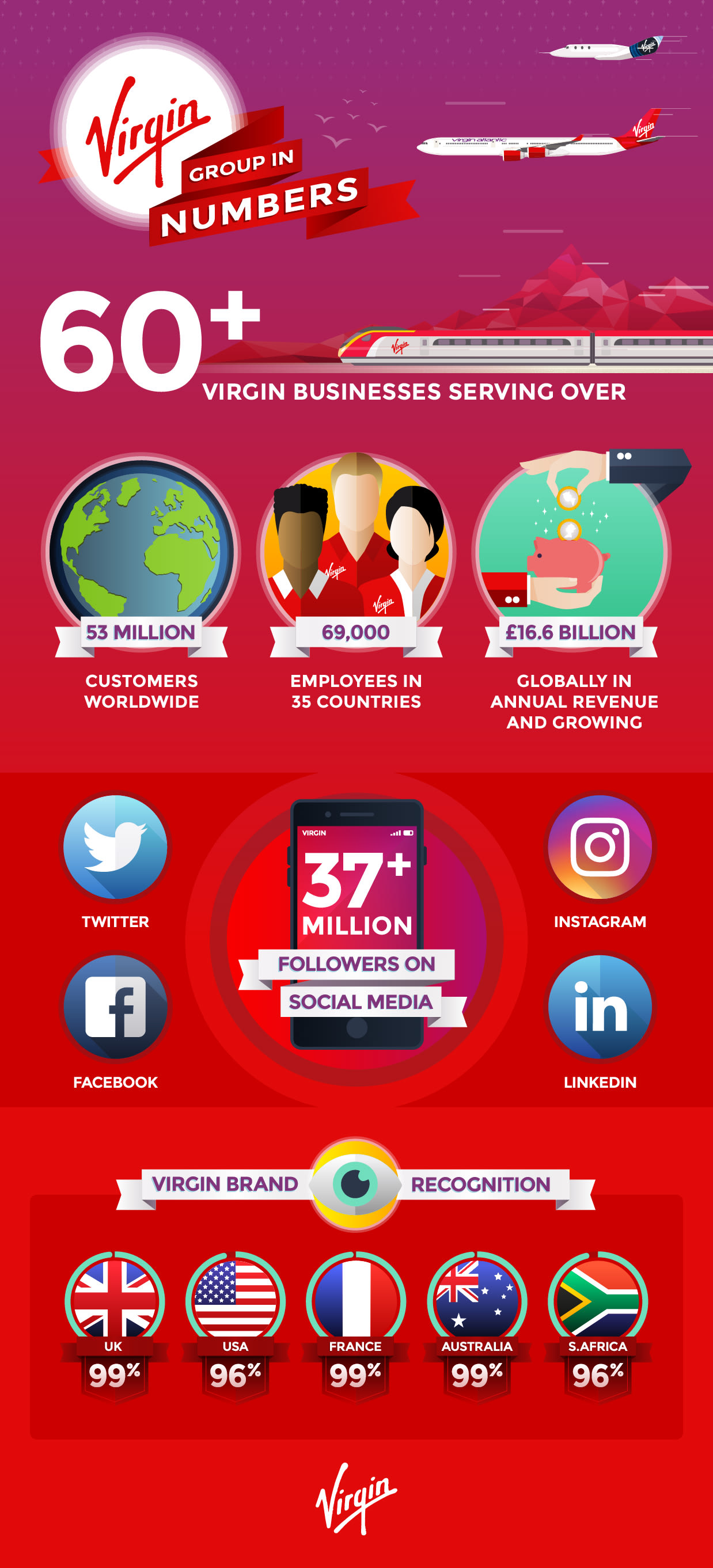
Smart disruption is in Virgin’s DNA – from Branson’s early exploits with Student magazine to launching Virgin Records, Virgin Atlantic, and so many more businesses.
In fact Virgin’s purpose is “changing business for good”.
So what does that actually mean?
- Thinking about the long-term impact of the business decisions that we make today.
- Having a clearly articulated and measurable purpose in every Virgin business – so that it drives decisions and fuels success, resulting in a positive impact on our customers, people and communities, and the environment.
- Embedding our purpose principles and values in all existing and new business investments.
- Rising to challenges and pioneering systemic change beyond the Virgin Group, through Richard Branson’s profile as a global business leader and advocacy work.
It’s about being “delightfully surprising, red hot, straight up whilst maintaining an insatiable curiosity, giving a heartfelt service and creating smart disruption.”
Virgin Management Group is the company that sits at the core of the organisation, a family owned growth capital investor, with a globally recognised and respected brand.
The investment team focuses on our core consumer sectors of Travel & Leisure, Telecoms & Media, Music & Entertainment, Financial Services and Health & Wellness. They aim to deliver long term capital appreciation through investment in these sectors. We actively seek new investment opportunities and to partner with like-minded investors.
They provide value to investments in three ways:
- Sector expertise and track record across our five core sectors
- Experience and understanding of consumer behaviour, brands and marketing
- Strong network of investors, management teams and alumni
Virgin Group is also an active technology-focused venture investor with a portfolio of over 35 companies spanning the consumer internet, fintech and sharing economy sectors.
You can read my full interview with Richard Branson here, about his secrets and passions, hopes and fears, childhood and lifestyle, businesses and charities – and his dreams to come.Branson is an inspiration to many, the champion of customers and hero of many business people. The Virgin founder is a maverick entrepreneur and hippy billionaire, adventurer and philanthropist. He is always looking for new ways to do more for people, and to create a better world.
Approaching Noma, perhaps the world’s most famous restaurant, one can’t help feel the sort of trepidation that comes with any trip to a high-end dining experience. Fancy restaurants are by their nature intimidating places – expensive, filled with wealthy, successful people, and often, snooty staff.
Noma, a restaurant that takes immense pride in defying almost every convention in the book, doesn’t fit that stereotype, and makes its point from the very beginning.
Rather than a greeting from an aloof maitre’d with a waxed moustache and immaculate hair, guests’ first contact at the restaurant is with a 63-year-old Gambian immigrant called Ali Sonko and his infectious smile.
Sonko, a permanent fixture at Noma since it opened almost 15 years ago, started as a dishwasher at the restaurant, and having worked his way through the ranks, now owns a 10% stake in the business.
Voted the best restaurant in the world four times in the well-respected, but often controversial World’s 50 Best list, Noma is portmanteau of the word’s “Nordisk,” meaning “Nordic,” and “mad,” the Danish word for food. The restaurant’s name perfectly defines its ambitions.
Noma and its founder Rene Redzepi have built a culinary dynasty by focusing solely on ingredients from the Scandinavian region, shunning things like olive oil, and focusing instead on foraged ingredients from near the restaurant.
Famous dishes to appear on the restaurant’s menu over the years include dried moss, ants, and more recently mould.
Located in the Danish capital, Copenhagen, it has a fair claim to be the most influential place of gastronomy in the world. Alumni are spread all over the world, and have taken the restaurant’s philosophy of hyperlocalism with them.
Any time you eat an edible flower at a local bistro, or hear about the house churned butter at that trendy new spot downtown, Noma has probably had at least some influence.
The story of reinvention of Noma 2.0 reminds me of El Bulli, and in particular the movie which captured the innovative approaches of celebrity chef Ferran Adria at his restaurant just outside Barcelona which is now closed (not for lack of demand, but more because Adria wanted to move on):
This is how the New York Times reviewed the movie …
“A treat for chefs and foodies and a slog for everyone else, “El Bulli: Cooking in Progress” fastidiously documents one year in the creative life of the esteemed Spanish chef Ferran Adrià.“
Like Wylie Dufresne, the affable owner of the Manhattan restaurant WD-50, the admirably self-possessed Mr. Adrià embraces molecular gastronomy, the boundary-pushing marriage of sustenance and science. Each winter, for up to six months, the chef and his impeccably groomed team close up El Bulli, their noshing idyll in the Catalonia region of Spain, and repair to Barcelona. There, in a gleaming test kitchen as sterile as any laboratory, they vacuum, freeze, extract and deconstruct ingredients into possible menu items for the coming season.
In 2008-9, the German director Gereon Wetzel followed, hovering his hand-held camera over flying fingers and furrowed brows. Swarming deferentially around their maestro like white-coated eunuchs tending a rather demanding vestal virgin, the chefs record failures as meticulously as successes.
But anyone looking for the lowdown on haute cuisine will be sorely disappointed: devoid of emotion, context or narrative, the baffling avant-garde techniques and extreme politesse of the lab become oppressively dull. Only an occasional shopping trip relieves the monotony, as Mr. Adrià’s bleary-eyed minions painstakingly purchase five grapes and three beans, much to the disgust of the eye-rolling vendors.
Unlike the lively “Kings of Pastry” (2009), or Sally Rowe’s insightful 2010 portrait of the young British chef Paul Liebrandt, “El Bulli” offers no inkling of the man behind the mushroom broth. Sucking on a bizarre fluorescent fish ice pop or musing on the various tortures to which he can subject a defenseless sweet potato — oven, pressure cooker or juicer? — Mr. Adrià talks only about food.
“Don’t give me anything that isn’t good,” he instructs vaguely before delivering a lengthy disquisition on yuzu. When, almost an hour into the proceedings, we return to El Bulli (scheduled to close for good on Saturday and then reopen as a culinary research foundation ), the lucky patrons who will spend up to three hours — and heaven knows how many euros — to consume a meal of more than 30 courses are conspicuously marginalized, as if their pleasure or its lack were the least important aspect of the enterprise.
What comes across most strongly in this docile, finger-licking film is that only one set of taste buds matter. Their owner, a culinary magician who strives to please the eye, nose and emotions as much as the palate, appears as stingy with praise as Mr. Wetzel is with beauty shots. Not until the film’s final moments are we rewarded with luscious images of the chosen dishes (adoringly photographed by Francesc Guillamet, Mr. Adrià’s longtime collaborator). Only then are we reassured that the intriguingly named “vanishing ravioli” is probably not as dry as the film that celebrates it.
% Arabica‘s Japanese coffee shops and Aussie Farmers Direct speeding from field to fork, Ava Winery‘s perfect artificial wines and Scotland’s Brewdog that gives equity to its “punks”, Deliveroo transforming food delivery and Graze healthy snacks by subscription, Juan Valdez Cafe transforming the Colombian coffee experience and Nespresso‘s business model, Syngenta‘s Good Growth Plan to feed the future billions with GM food and Zespri reinventing Chinese Gooseberry’s as kiwi fruit.
Just some of the example of “Gamechangers” in the world of food and drink, rethinking every aspect of the way we source, produce, package, distribute, promote, buy and consume. Technology has been a key enabler of these disruptive innovators, but also creative development of business models and consumer experiences.
Imagine sitting down to a meal. For the appetizer, the long table of guests shared bowls of seasonal salad from Graze the Roof, a vegetable garden located on the roof of Glide Memorial Church. The main course was a frittata with onions (served in a compostable box) from Sprig, a new dining-on-demand service founded by Nate Keller, Google’s former executive chef. Dessert consisted of lemon curd mousse with strawberries and mint, prepared with Nomiku, which bills itself as the first immersion circulator made for home cooks.
These dishes have little in common, except for one thing: They all provide hints of our collective food future, as imagined by the Institute for the Future, which collaborated with Nomiku and Suppershare to put on the dinner.
The three courses–local greens, dining-on-demand, immersion circulator desert–represent examples of forecasts found on IFTF’s Seeds of Disruption map, which looks at the food supply chain, technological disruptions, and low probability, high impact “wild cards” in the food industry over the next decade.

Many of the trends detailed in the map are still in their infancy. Drone delivery of food (and other goods), for example, is often discussed, but has not yet been put into use–though Amazon may soon change that. Some, like “augmenting mindful eating” with products like Soylent and the HAPIfork electronic fork, are already available to the public.
The trends exemplified by my future-focused dinner are also quickly coming to fruition. Nomiku–a compact sous vide appliance that lets home cooks make things previously only accessible to restaurant chefs–is an example of the local manufacturing trend, which also includes 3-D printed food and Momentum Machines‘ ultra-precise hamburger-making robots.
The IFTF research project and emerging map includes forecasts of how technologies will disrupt core strategies our food system has pursued:
- Production: Reorganising intensification—from resource-intensive agriculture to low-impact alternatives
- Distribution: Rebalancing efficiency—from large-scale efficiency models to distributed resilience
- Manufacturing: Remixing standardization—from standardized to personalized formulation
- Shopping: Rethinking centralization—from centralized shopping sites to just-in-time delivery
- Eating Redefining convenience—from on-the-go eating to mindful food experiences
For each of these, the map includes signals—today’s innovations that indicate a direction of future change. For example, small food producers could learn from ColaLife’s strategy to tap into existing distribution infrastructure by literally filling the gaps in shipping containers. Or small, autonomous robots, such as Prospero, could enable cultivation on hard-to-reach surfaces and depopulated rural farms.
At the edges of the map are “strains of uncertainty,” wildcards that are low probability but with the potential for high impact. These are seen in experiments such as Ghost Food that use multisensory technologies to explore future dining experiences in an eating landscape altered by climate change and biodiversity loss.
Technologies create bold new possibilities. But people, and their tastes and values, determine which possibilities become reality. These four essays explore how the world the forecast map describes intersects with human values for food freshness, sustainability, satisfaction, and convenience.
Each perspective includes a narrative, today’s signals of change from around the world, and an Artifact from the Future—an illustration that makes the future more tangible in the present. Licensed under Creative Commons, we encourage you to share and use these Artifacts as inspiration for your own ideas.
More
- WEF: How can the Middle East meet its food needs?
- Entrepreneur.com: Digital Disruption In The Food Industry
- Euromonitor: Convenience Trends Driving Disruption in Packaged Food
- StartUpGrind: These 13 Companies are Leading the FoodTech Revolution
- Entrepreneur.com: How Dubai-Based Basmaty Is Disrupting The Culinary World
- FastCompany: The World’s Most Innovative Companies 2018 in Food
I remember my first day as a CEO (it was in early 2004, I had just been appointed the new leader of a mid-size 500-person organisation). I found my office and settled in, worked out my plan to get started. Lots of people to meet, lots of listening and learning, lots of being humble. Trust your top team, keep the business running, focus on the priorities, engage all stakeholders, then start dreaming about the future.
The thing which hit me first was how differently people treated me, compared to in my previous roles.
Before I was one of them. A colleague, a peer, a worker. However senior I was before, being “the boss” was different. Everybody wanted an answer. Everybody was looking for clues as to what I was thinking. Everybody accepted everything I said without challenge. It didn’t feel right. And I quickly went about trying to build a more consensual, more collaborative, more relaxed style of working as a team.
It still amazes me how people put CEOs on a pedestal. So often they are treated like an alien species, who never had a normal background in business like everyone else. Who don’t have normal human passions and frustrations. And don’t have space in their schedules or minds for being human anymore. That’s why I loved this series of short CEO interviews with the Wall Street Journal:
Satya Nadella, CEO of Microsoft, on explaining the rules of cricket … and more:
Emmanuel Faber, CEO of Danone, on keeping meetings short … and more:
Susan Wojcicki, CEO of YouTube, on why Waze works best … and more:
Carlos Ghosn, CEO of Nissan, on his first car – a Fiat … and more:
Robin Hayes, CEO of Jet Blue, on becoming an US citizen … and more:
Actually, that last one has a personal connection for me. Way back in 1993 I worked with Robin in a small, noisy office at the back of Victoria Coach Station in London. This was the super-unimpressive marketing nerve centre of British Airways. Robin was always the joker, always the team player, and first to the pub most evenings. He lived and breathed with loyalty to his brand, and you can see the same to his new brand, but he was always human. The soul of a party, the butt of plenty a joke, and the leader of the gang.