She calls it “The Remarkable Story of the Traits, Foibles, and Genius of Breakthrough Innovators Who Changed the World”.
It is built on the stories of eight serial breakthrough innovators – Elon Musk, Dean Kamen, Steve Jobs, Marie Curie, Albert Einstein, Thomas Edison, Benjamin Franklin, and Nikola Tesla – to identify commonalities in their capabilities, motives, personalities, and experiences. These characteristics are then integrated with the research on innovation and creativity to show how they might influence breakthrough idea generation and extreme persistence
The Financial Times called it “an entertaining and enlightening romp through the lives of eight breakthrough innovators, exploring their remarkable abilities, personalities and motives. Schilling deftly draws out some of the other quirky characteristics that these innovators shared. Perhaps the most significant was that, with the notable exception of Benjamin Franklin, they all had a sense of separateness, which created the space for original thinking … The more intriguing point, with which Ms Schilling concludes, is that breakthrough innovation in science does not always come from people who have pursued a “typical” scientific path. That makes it all the more imperative to broaden educational opportunities, allow non-scientists to access scientific resources and expertise, and give free rein to the quirky.”
Schilling embraces what you might call the “great person” view of innovation. Many recent studies of innovation have focused on the importance of collaboration and social setting, and emphasized the ways in which good ideas are typically the product of many minds, rather than one.
The approach is a variant of the case study method — instead of companies, the cases here are the lives of great inventors. She examines their lives to uncover the common personality traits and “foibles” that helped them see what others did not. Schilling argues that serial breakthrough innovators are different from the rest of us because they’re able to come up with groundbreaking innovations over and over again, rather than just once. And their innovations represent dramatic leaps, rather than incremental improvements.
Strategy and Business said “Schilling has a nice eye for the telling detail, and shares the stories of these well-known innovators’ lives with economy and precision. In some ways Schilling’s study conforms squarely to our assumptions about what creative geniuses are like. Great innovators, she argues, tend to be obsessive workers who sleep very little and are willing to sacrifice almost everything to the pursuit of their goals. They’re able to do so in part because they have an unrelenting drive for achievement and because they derive tremendous pleasure from work, which offers them that feeling Mihaly Csikszentmihalyi famously called “flow.”
Innovators also have exceptional working memory, and the ability to hold many concepts in their mind at once. This allows them to “search longer paths through the network of associations in their mind,” increasing the chances they’ll make interesting and unexpected connections between ideas. Schilling also suggests that there may be something concrete about the cultural association between genius and madness. Pointing to the experience of Tesla, who had an extraordinary sensitivity to outside stimuli and would routinely go for long stretches on almost no sleep, she argues that most great innovators have at least a touch of mania.
Innovators are also typically blessed (or cursed) with a deep sense of what psychologists call self-efficacy, which is a nice word for what, in other contexts, might be called hubris: the misplaced confidence in one’s ability to accomplish whatever one sets one’s mind to. This is crucial because the very nature of breakthrough innovations means that most people will be skeptical of their value. Indeed, most of the people Schilling writes about were, in one sense or another, outsiders in the fields they helped revolutionize. They were also idealists, convinced that they could change the world. As Schilling puts it, “They are willing to pursue an idea even when everybody else says it’s crazy precisely because they don’t need the affirmation of others — they believe they are right even if you don’t agree.” It was that sense of self-efficacy that allowed Elon Musk to believe he could become the first civilian to put rockets into space, and that allowed Dean Kamen to build a wheelchair that could climb stairs, even though everyone told him it was impossible.
Part of that willingness to ignore the judgment of others also seems to proceed from what Schilling calls the “marked sense of ‘separateness’” that most of her subjects have felt, which was manifested as “a lack of interest in social interaction, a rejection of rules and norms, and often isolation even from family members.” This makes it difficult for innovators to have rich social lives, but also makes it easier for them to think for themselves.
Much of this model seems intuitively correct. But Schilling’s sample size is so small that it’s hard to know if the conclusions she draws from that sample about the nature of serial innovation would hold up to closer scrutiny. And even within her group of eight, not everyone fits the model. Benjamin Franklin, for instance, had a rich social life and cultivated a large network of friends, but was also an undeniably brilliant innovator. The same was true of Leonardo da Vinci. Einstein made sure to get 10 hours of sleep a night. Thomas Edison, as Schilling says, was resolutely un-idealistic, insisting on commercializing everything he could.
So what are organizations and leaders supposed to do with this information? It seems pretty clear that the kinds of innovators Schilling is writing about are more born than made: Most of them seem to have had “quirky” traits since childhood. And although the qualities she describes may be necessary for breakthrough innovation, they alone are not sufficient. Silicon Valley, after all, is full of socially awkward, would-be idealists who work obsessively long hours and are convinced they’re right and everyone else is wrong. But it has produced only one Steve Jobs.
In fact, the real paradox of Schilling’s work is that even though it looks at completely extraordinary people, it may be most valuable for what it tells us about how organizations can harness the innovative power of ordinary people. Understanding the characteristics that enabled Einstein to come up with ideas that others couldn’t might help organizations do the same. Encouraging a diversity of cognitive and social styles, and allowing employees to maintain a measure of distance from one another, rather than insisting on constant connection, will facilitate independent thinking. Letting people come up with ideas and solutions on their own, and then aggregating those ideas, is more likely to yield interesting answers than brainstorming in groups. Casting a wide net when looking for ideas, rather than talking only to specialists in a field, amplifies the possibilities for unusual approaches. Finding a way to imbue employees with a real sense of purpose can also be valuable. An organization doesn’t need to find a breakthrough innovator if it can make itself the innovator instead.
“iMarketing” is more than a digital platform with a profusion of mobile apps, social media and community building, big data enabling clever analytics. Marketing is already on its own transformational journey from mass and anonymous, to personal and predictive. However the journey is just in its infancy. Much more is to come in the next 3 years, a fundamental change in how we engage customers and build brands. With the help of ChiefMarTec and others, here are some of the big drivers and impacts:
The essence of digital transformation is that marketing, sales, service — and most of all — product are all being entwined together under the banner of “customer experience.”
Naturally, that makes sense from the customer’s point-of-view. How much delight or disgust do customers feel across the entire spectrum of engagements they have with your company, from the very first touchpoint onward?
Their whole end-to-end experience is the product.
The five things that make this transformational are:
All of these touchpoints are either digital or digitally-supported.
Orchestrating these touchpoints is inherently a cross-organizational mission.
Marketing is increasingly at the center of that orchestration.
Marketing is embedded in the product (and, vice versa, product in the marketing).
The resulting end-to-end experience for customers is how smart companies are disrupting their competitors — e.g., Uber isn’t the car ride, it’s the whole seamless experience.
A report produced a couple of months ago by the CMO Council asked CMOs to identify one — and importantly, only one — top mandate that they had for the year ahead. As shown in the chart below, 67% reported a cross-organizational mandate on growth and/or customer experience.
Of course, it’s one thing to talk about customer experience, another to actually effect it.
But as Barry Levine wrote on MarTech Today a couple months ago, “At our most recent MarTech Conference, there seemed to be a transformation percolating throughout the sessions and presentations. After several false starts in previous years, it seemed to me that ‘marketing’ is now clearly becoming something bigger.”
In many ways, marketing is looking, sounding and feeling less like its traditional role of “demand generation” and more like “experience management.” — Barry Levine
David Edelman, CMO of Aetna, emphasized in his keynote at MarTech how marketing was now deeply engaged in helping to shape customer experience — including pioneering mobile and wearable touchpoints that innovate the very nature of the relationship between the company and its customers.
Successful marketing-led customer experience projects and programs shared by other speakers at MarTech included:
Keurig Green Mountain, launching connected coffee machines that enable a whole new kind of digitally-augmented customer experience with their products
Staples, using marketing analytics to map and improve steps across the customer journey that spanned traditionally separate teams within the firm
Dr. Martens, implementing omni-channel personalization seamlessly across email, their e-commerce site, and social media in ways that genuinely amplified their brand
And that’s just a representative sample. The thing that they all have in common: marketing is being embedded into the product/service and the end-to-end customer experience.
Last year I wondered whether marketing would continue to rise to the challenge of this scope explosion — from communications to experiences. Over the past year, I’ve been excited to see so many marketing teams embrace this opportunity in the charge of digital transformation.
But there’s another aspect of digital transformation in marketing that I’ve noticed over the past year: the changes in what marketers were actually doing. Not just shifts in their mission — i.e., delivering delightful customer experience. But shifts in what they’re building with their hands and minds to achieve that mission.
Empowered by a plethora of marketing technologies that are widely accessible to and usable by non-technical, “generalist” marketers, ordinary citizens of the marketing department have increasingly become do-it-yourself wizards in crafting digital interactions with customers, digital workflows throughout their organizations — beyond marketing, into sales, service, finance, etc. — and dynamic data dashboards, models, and reports.
I use the phrase “citizens of the marketing department” quite intentionally, because these wizard-like capabilities that marketers are acquiring align with three big IT-democratization movements:
CITIZEN DEVELOPERS — who use no-code or low-code tools to create web apps, mobile apps, interactive content, bots, and other kinds of functionalexperiences for staff, prospects, and customers
CITIZEN INTEGRATORS — who use iPaaS and other workflow automation tools to create business processes on-the-fly, intelligently routing data and triggering activities across multiple teams
CITIZEN ANALYSTS or even CITIZEN DATA SCIENTISTS — who easily pull together business intelligence data from a variety of sources on demand, analyze it, visualize it, tease out insights, and even automate decisions around it
That’s not to say that these “citizens” have eliminated the need for “experts” wholesale. There is still plenty of work that requires professional developers, systems integrators, and data scientists. But the scope of what individual marketers can build on their own is astounding — and unprecedented.
This is digital transformation in a company’s internal ecosystem. The kind of power that would have taken teams of experts and weeks of work to implement an idea even just 5 years ago is now in the hands of individual citizen marketers to instantiate almost immediately.
And as marketing technology continues to race forward, their power to create only grows.
2. MICROSERVICES & APIS
The rise of citizen technologists — citizen developers, citizen integrators, citizen analysts, and so on — was largely enabled by two big movements in the software world:
Cloud computing — most data and applications are now accessible on-demand through ubiquitous connectivity from anywhere across the globe.
Microservices & APIs — these cloud-based solutions have evolved from closed, monolithic applications with solely human UIs into more open services that also expose APIs for other software applications to interact with them and mash those capabilities together into whole new solutions.
The mash-up possibilities of APIs have inspired an explosion of combinatorial innovation. Partners and customers can now leverage these machine interfaces to businesses to drive their own digital transformation, which has given rise to the “API economy.”
You can get a sense of how fast the API economy has been growing from this chart of public APIs listed on the Programmable Web directory from 2005-2017 — which captures just a tiny, tiny fraction of the total number of APIs available out there:In addition to allowing different applications and businesses to cross-connect, the advantages of cloud-based APIs have changed how core applications themselves are designed and built. Increasingly, they are architected as a collection of microservices that use APIs internally to assemble a large solution out of dozens or hundreds of small, flexible components.
Key advantages of this microservices approach:
The individual microservices can evolve more rapidly.
The larger solution can add and remove microservice components more easily.
These microservices can potentially be exposed as stand-alone offerings for others to leverage, internally or externally (e.g., touchpoints in the API economy).
This is happening in the context of tremendous adoption of cloud-based apps of all sizes across the entire organization.
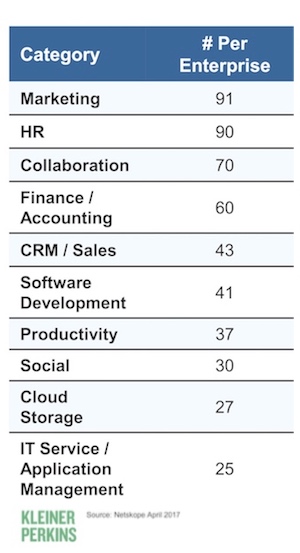
As reported in Mary Meeker’s State of the Internet report earlier this year, the average enterprise uses 1,000 cloud services.
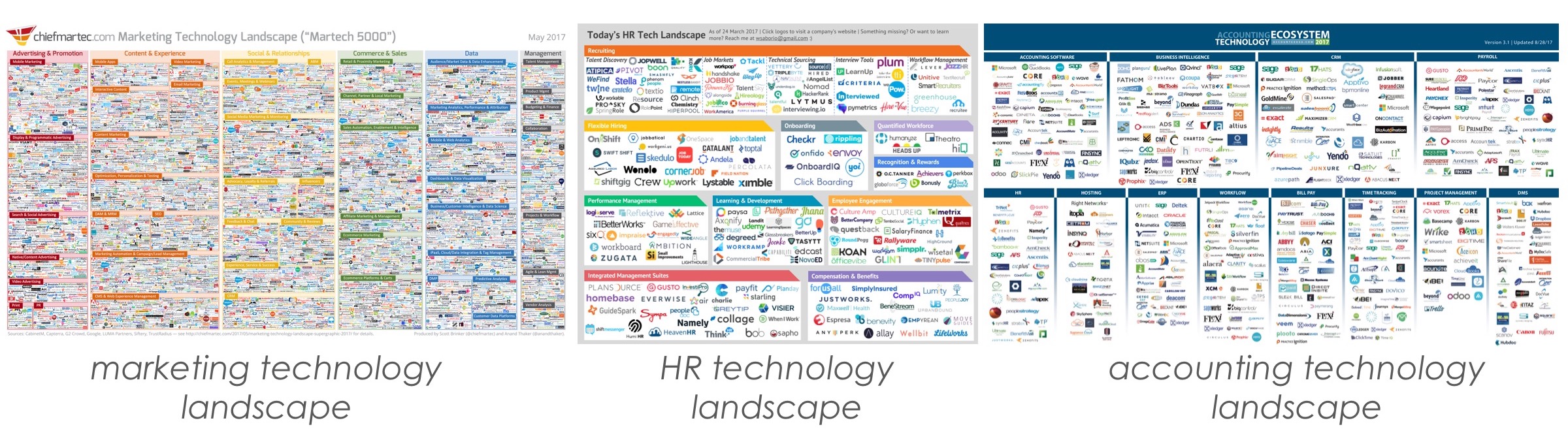
The marketing technology landscape is not an anomaly. There are now large tech landscape graphics for every department across the organization:
Where things get really exciting is the combination (literally!) — all these cloud services, most of them offering more and more APIs, and a whole Internet of other public APIs, including for services such as Google, Facebook, Twitter, and so on — ready to be “mashed up” together.
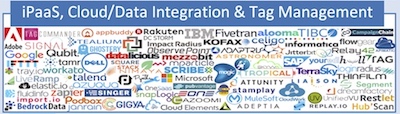
This opportunity is where iPaaS (integration-platform-as-a-service) solutions have blossomed: Zapier, Workato, PieSync, Azuqua, IFTTT, Segment, Automate.io, Dell Boomi, Bedrock Data, Scribe, Built.io, Flowgear, Elastic.io, SnapLogic, MuleSoft, Tray.io, and dozens of others.
iPaaS handles these technical integration to these cloud services and Internet APIs, often through out-of-the-box “connectors.” Non-technical business users can then drag-and-drop connections between them to create their own workflows and automations across them.
iPaaS makes these business users — such as marketers — citizen integrators.
A report released earlier this year by AGC Partners — discussed in detail in my post back in July, Is marketing technology entering a post-platform era? — quantifies the growth of the overall “integration sector,” including iPaaS solutions as just one small piece:
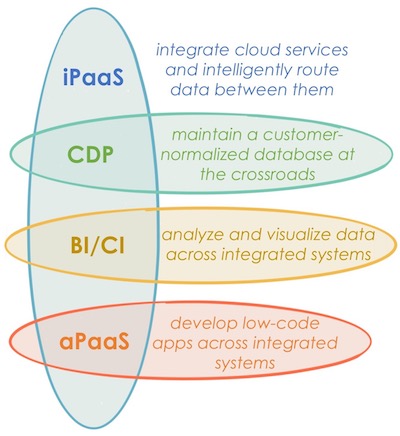
As I’ve studied the iPaaS market, I’ve come to realize that there’s considerable overlap with other growing martech categories:
CDPs (customer data platforms)
business/customer intelligence platforms
aPaaS (application-platform-as-a-service)
Essentially, all of these solutions make it easy to integrate cloud services and intelligently share data between them.
Pure iPaaS solutions focus on the workflow and data routing between these services.
CDPs extend that model by maintaining a customer-normalized database at the crossroads of those integration — storing the the data that is being routed through their hub.
Business/customer intelligence platforms — including a cornucopia of “dashboard” products — focus on analyzing and visualizing the data that’s accessible through all of these integrations.
And low-code/no-code aPaas solutions let citizen developers build internal or external “apps” that leverage data and API services from across all of these connected applications.
This is what led me to conclude that we’ve entered a post-platform era. With all these cross-application integrations in the cloud, everything is becoming an open platform to a certain degree. There’s far less exclusivity to software platforms than we saw in the pre-cloud era.
By the way, if you’re wondering how I think about post-platform dynamics given my new role as VP platform ecosystem at HubSpot, I believe a platform’s success isn’t just about APIs — that’s table stakes today. It’s about a qualitatively greater relationship with the ecosystem.
Successful platforms enable third-party products to be deeply integrated in the data models, workflows, and user experience of a platform’s key users. They create a business ecosystem that facilitates the adoption of those third-party products.
A great platform in the post-platform era is the center of gravity for a particular group of professionals or a business function — where that gravitational field meaningfully orchestrates the ecosystem of services and data sources orbiting its star. (If you’re interested, I’ve recently written about the 7 elements of a lovable platform that I believe help create that center of gravity for third-party developers.)
A post-platform world is actually a world of many, many interconnected platforms. But not all platforms are equal in the context of the audience they serve.
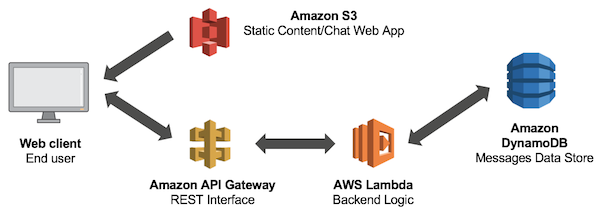
By the way, one other, slightly “techy” trend to keep an eye on in the evolution of microservices and APIs is serverless computing. “Serverless” lets software developers deploy small pieces of functionality up in the cloud without having to explicitly think about the operational aspects of running that code. The cloud provider, such as Amazon Web Services, does that all auto-magically behind the scenes.
It’s worth reading about Amazon’s AWS Lambda service, which was one of the first commercial serverless providers, to learn about the benefits they offer developers.
Now as a marketer, why should you care? Serverless will make it even easier for there to be a near-infinite explosion of small pieces of software functionality, spread throughout the cloud, which can be assembled and orchestrated on-the-fly by flexible and ever-more-dynamic business applications and workflows.
The days of closed, monolithic software are over, and this will continue to be a big disruption in how marketing operates — and what it makes possible.
3. VERTICAL COMPETITION
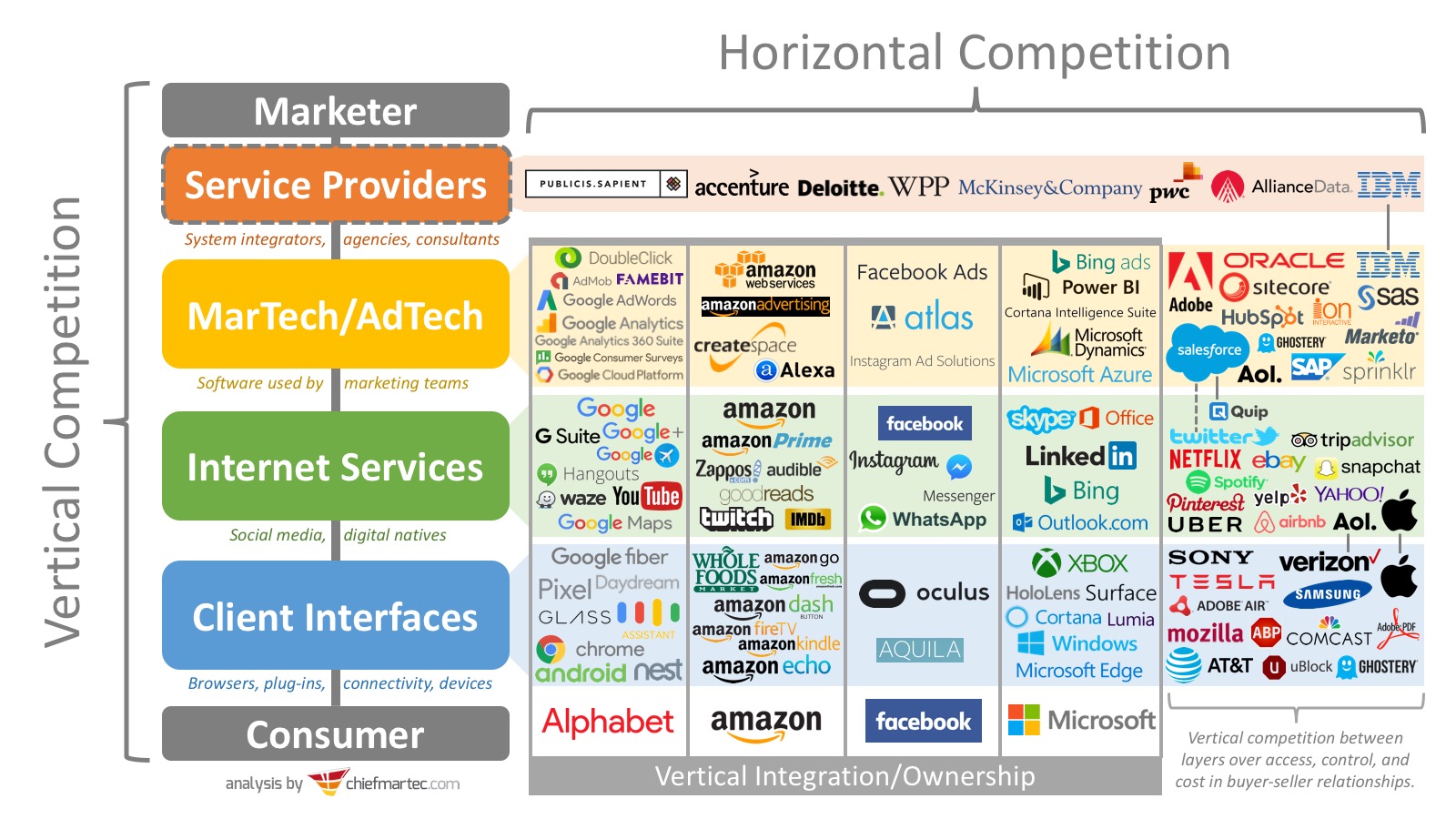
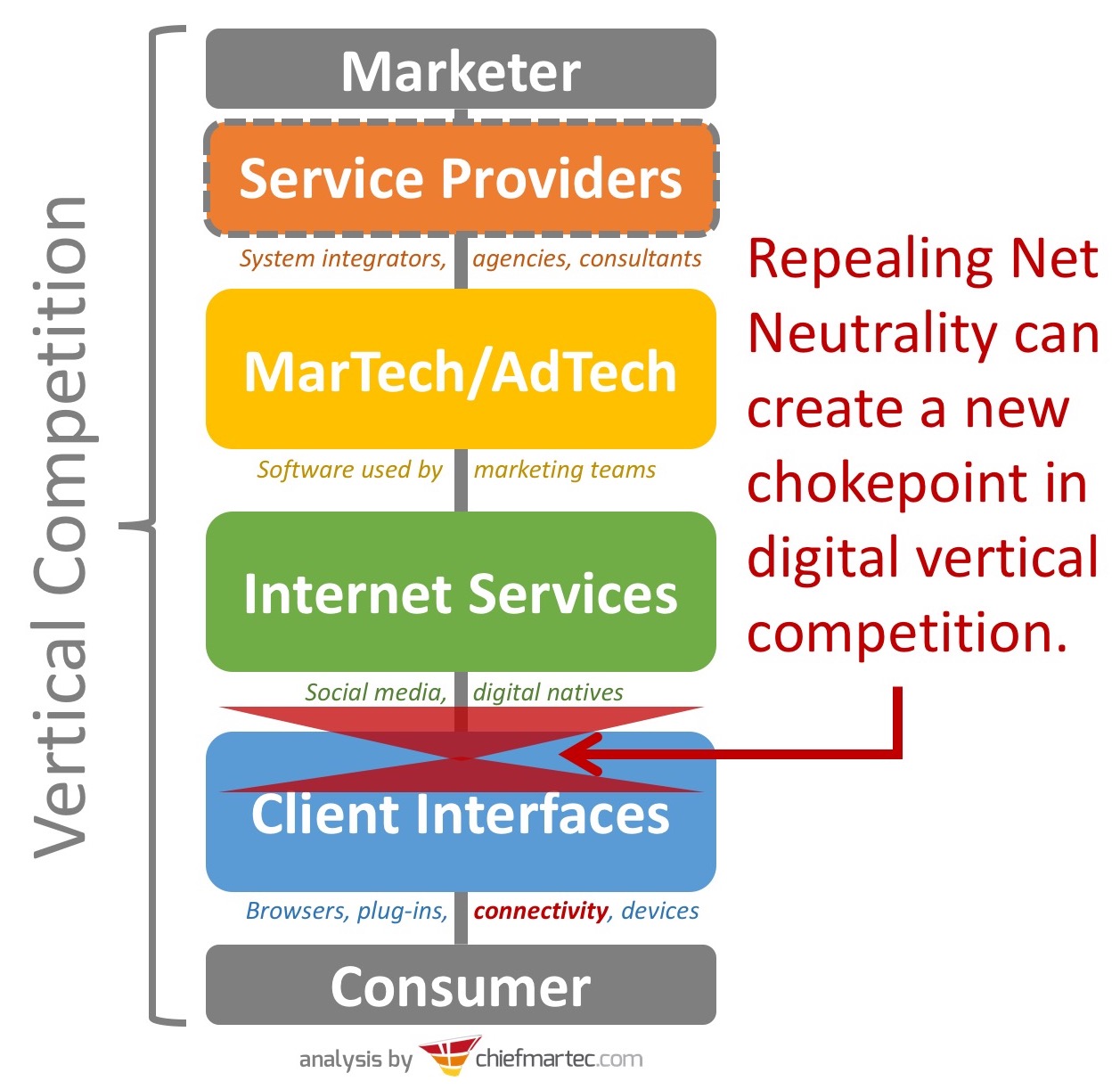
I have been writing about vertical competition in digital marketing for several years: how companies at different points along the pathway between the marketer and the customer exert power and extract value.
The most powerful “competitor” in vertical competition is one who has an exclusive gateway to the customer. If you want to reach customers through their channel or touchpoint, you must agree to their terms — or forgo access.
I think it’s one of the most disruptive force in business today, in part because companies are less likely to see it coming. It’s easy to see Oracle and Salesforce as competitors in martech (they’re horizontal competitors vying with each other at the same stage of the channel). It’s less easy to see Facebook, Amazon, or Verizon as “martech” competitors to Oracle and Salesforce — but in the big picture of vertical competition, they are.
However, here in the US, we’re seeing vertical competition on the Internet grow too.
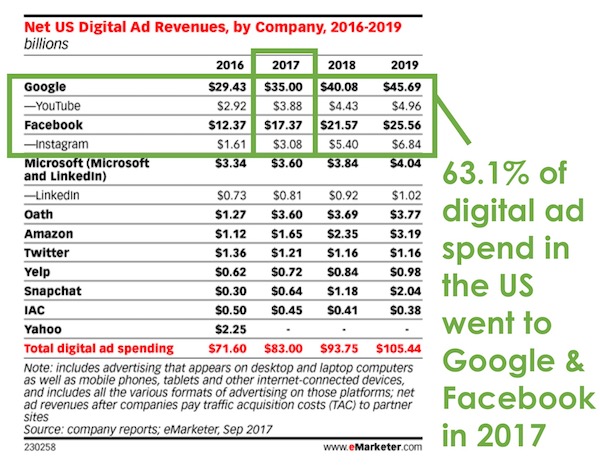
The most common example is the duopoly of Google and Facebook in digital advertising. 63.1% of all advertising dollars in the US went to those two companies — and their portfolio of sites, such as YouTube and Instagram.
They wield enormous power because there are few substitutes for reaching their audiences. If you’re unhappy with Google’s search advertising prices and policies, what are you going to do? Move your search spend to Bing? (Sorry, Microsoft — I love you.)
Same with Facebook and Instagram. Snap and Pinterest might be competitors, but they’re not really substitutes.
This is why, despite vocal resistance from major advertisers such as Proctor & Gamble over measurement and visibility issues, Google and Facebook have each been able to hold on to their dominance. Third-party adtech vendors aren’t able to be of much help, as they don’t have a lot of weight against Facebook or Google to force their way into those walled gardens.
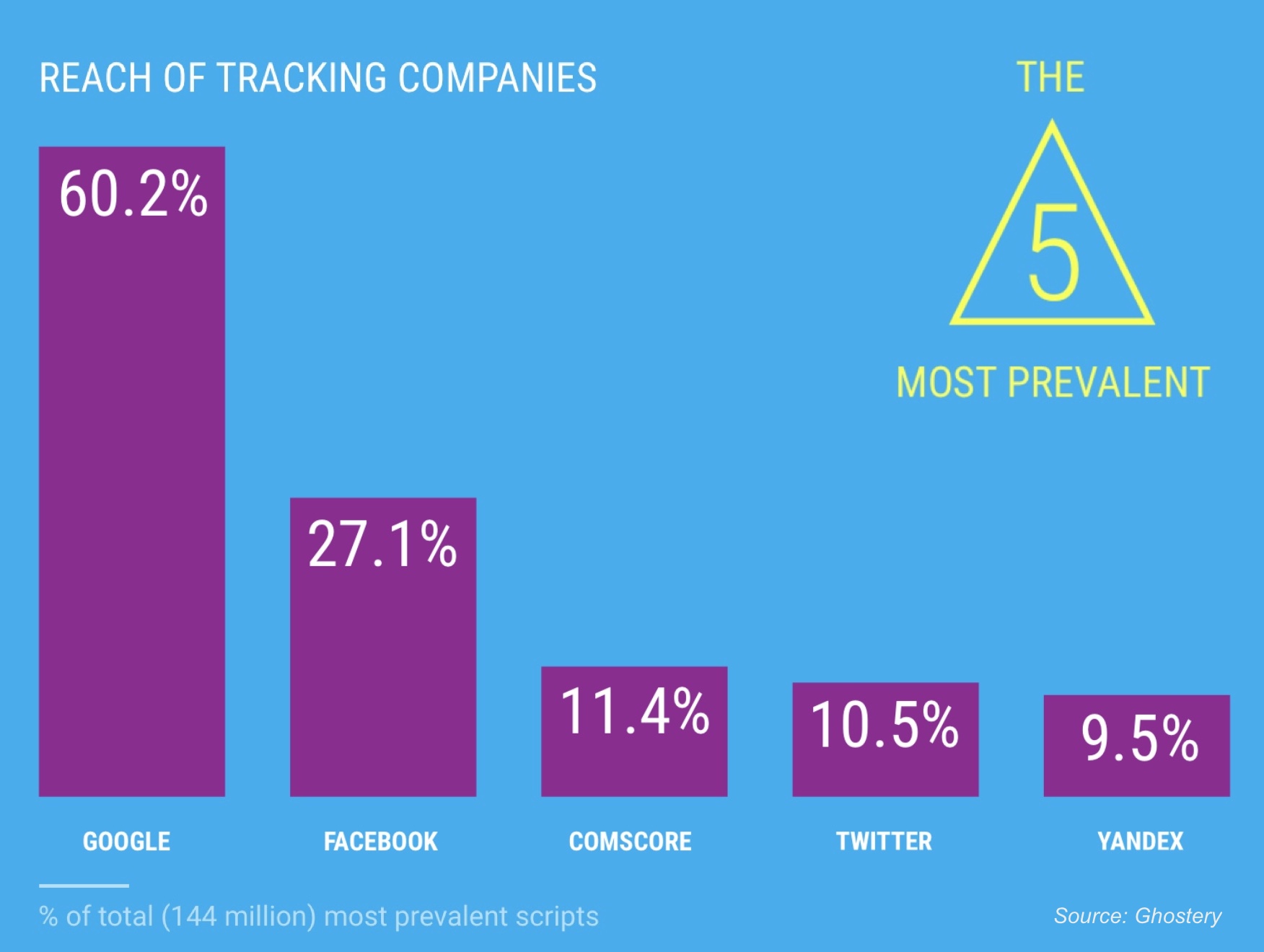
And the strength of Facebook and Google reach beyond their walled gardens. They’ve been highly successful at having independent websites install their “tracking” scripts — whether it’s for Google Analytics or Facebook Connect.
The latest Tracking the Trackers study conducted by Ghostery found that Google had its scripts on almost half of the pages they found on the web; Facebook has its on more than a fifth.
But the Facebook-Google digital ad duopoly is only one example of vertical competition.
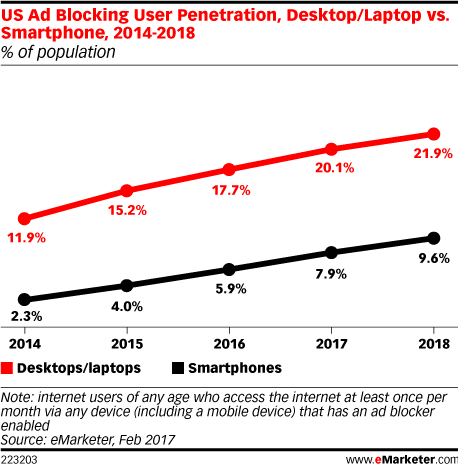
In the battle for digital advertising, ad blockers are another kind of vertical competitor that have continued to grow in 2017.
When a user has installed an ad blocker on their computer or mobile device — that “last mile” between the marketer and the consumer — much of the power of adtech vendors (and even Internet service juggernauts such as Google and Facebook) can be diminished by these client-side players.
In fact, it’s at the client stage — the touchpoint used by the consumer and how it is connected to the Internet — that the biggest struggles in vertical competition are emerging.
Web browsers were relatively weak vertical competitors because they were effectively commoditized. But now, we have an explosion of new proprietary devices and apps that have more power as exclusive touchpoints to select audiences.
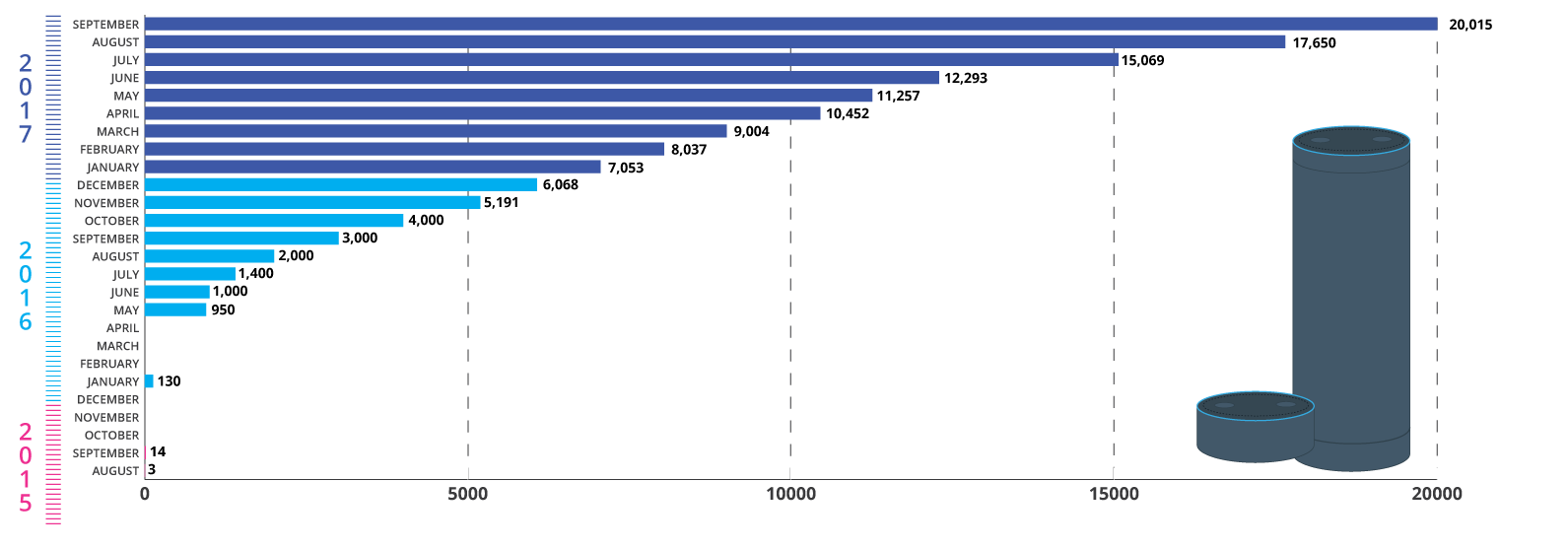
Amazon Alexa is a great example of a proprietary client. It’s estimated that there are over 20 million Alexa devices out in the world. In people’s homes, they essentially “own” the ambient voice command interface. Their nearest competitor is Google Home, with approximately 7 million devices sold.
If you want to engage with Alexa owners through their smart speakers in their living rooms, kitchens, bedrooms, etc., you have to do so by Amazon’s rules. As a result, there have been over 20,000 custom skills created for Alexa, many by brands looking to reach their audience through that proprietary touchpoint:
This creates powerful network effects for Amazon — more consumers buy Alexa devices because they offer more skills, and in turn, that larger audience incentives more brands to build skills for Alexa, and so on into a virtuous cycle.
Earlier this year, when Amazon acquired Whole Foods, you could argue (or, well, actually I argued) that this network of physical stores becomes another proprietary touchpoint between brands and marketers.
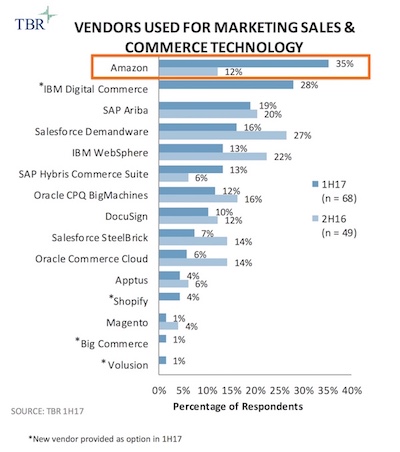
What makes Amazon such a formidable vertical competitor in the martech space, however, is that they have much more than these exclusive client interfaces.
Their greatest strength as a martech/adtech player is their unique channels and touchpoints and the exclusive data they have on all the buyers on Amazon.com.
Now, while popular and proprietary client interfaces can have a lot of power in a vertical competition chain, they don’t necessarily have all the power. The power accrues to the vendors that are marketers or consumers — the two end-points of that chain — are reluctant to, unwilling to, or simply unable to substitute.
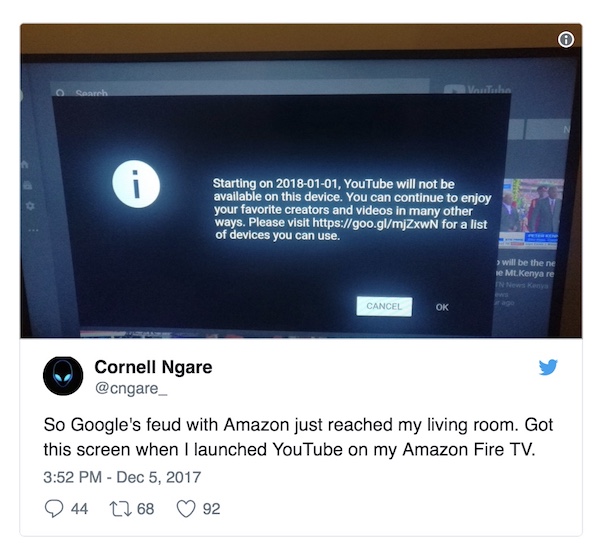
For an example of this, consider the feud between two of these giants, where YouTube is blocking Amazon Fire TV and Echo Show devices. Amazon refuses to sell certain Google products in their store — Nest Secure, Chromecast, Google Cast — so Google now prevents a number of Amazon devices from being able to access YouTube. (hat tip to David Raab for alerting me to this story)
This is hardball vertical competition between an Internet service (YouTube) and a client device (Echo Show): will consumers stop using YouTube or move to a different device other than the Echo Show? It depends on which they value more.
And, by extension, which one will brands value more.
Google is setting a disappointing precedent by selectively blocking customer access to an open website. – Amazon spokesperson
But it’s not just the giants that are playing with vertical competition. Earlier this month, Zeta Global — a growing marketing cloud provider that competes with the likes of Adobe and Oracle — acquired the popular blog commenting service Disqus.
Just as Facebook Comments lets Facebook “own” an exclusive touchpoint on any blog that adopts it for their commenting system — nice for the blogger to have comments only from identified Facebook users, but also very nice for Facebook to have access to all the data of those interactions — Disqus gives Zeta proprietary reach to consumers and their data beyond its back-office martech software.
But arguably the biggest news in vertical competition at the end of 2017, at least here in the US, was the FCC repealing net neutrality.
All of a sudden, this gives the connectivity providers on the client side — AT&T, Comcast, Verizon, etc. — tremendous power in pretty much every vertical competition chain on the Internet.
They used to have relative little power, essentially as commoditized as web browsers. But now, they can block — or effectively block by throttling bandwidth — any site or service on the Internet.
They now control a chokepoint between marketers and consumers in the digital world.
How exactly this will play out remains to be seen — and indeed, legal battles and legislative countermeasures may yet intervene. But there are well-founded concerns that this will impact not only digital advertising and adtech, but also freemium and content marketing models, and potentially every digital marketing tool that has a direct touchpoint with the consumer.
It’s also a testament to how disruptive governments can be in vertical competition.
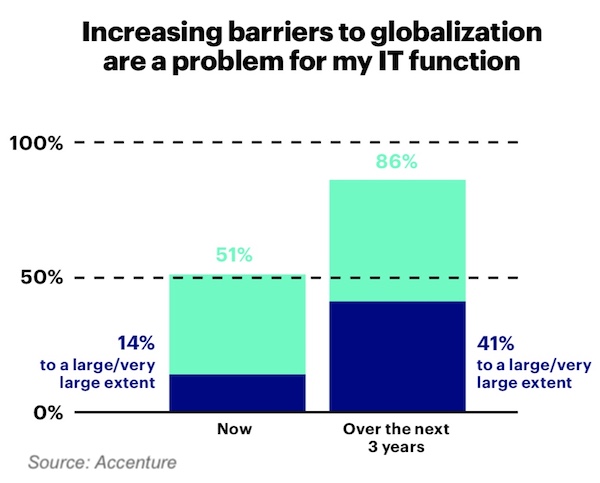
We see this the Great Firewall of China, the European Union’s GDPR (where data is not just an asset but a liability), and now the repeal of Net Neutrality here in the US. Depending on where your service is located — or where your audience is located — you can be subject to different rules and, as a result, different vertical competition dynamics.
A new Accenture report on digital fragmentation warns that the growth of national digital barriers is making the digital environment increasingly complex and risky for businesses.
Between the power of the Internet giants, an explosion of proprietary touchpoints, and the rather disjointed and unpredictable rules of digital engagement being enacted by different governments around the world, “digital strategy” is going to be harder ahead.
4. DIGITAL EVERYTHING
For the first half of the Internet revolution, “digital” meant the web. Email was there from the beginning too, but it’s never gotten much respect as a transformational medium. (Mostly, in my opinion, because the pain-to-pleasure ratio of email in people’s lives doesn’t feel like a net win — with a fistbump out to M.G. Sielger.)
But then the Hyrda-like headsof digital touchpoints began to multiply.
Social media was something different than the web.
Then the mobile and the “there’s an app for that” movement arrived.
(I, for one, would like to welcome our new robot overload readers to this blog.)
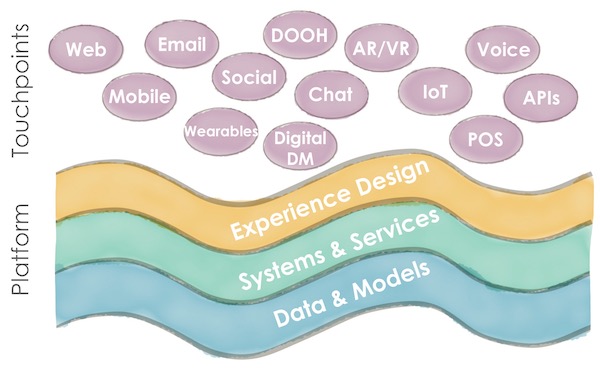
As I mentioned in last year’s post on digital everything, this explosion of new and different kinds of digital touchpoints — which shows no sign of slowing down — requires us to think more holistically about how we manage “digital” capabilities.
The old approach of splintering off different specialist groups for each digital touchpoint, each with their own systems and data repositories, each with their own view of the customer journey, is a recipe for internal chaos and external incoherence. It is the blind men and an elephant parable.
While every touchpoint clearly has its own characteristics and requires its own expertise — a website is a very different experience than a chatbot on Facebook Messenger — there needs to be a common foundation underneath them all:
Experience Design — concepts and principles that span all touchpoints for the brand
Systems & Services — common functionality and orchestration across all touchpoints
Data & Models — underlying data, normalized for customers and business operations
“You mean omnichannel?” you might ask. “We’ve been hearing about that for a while.”
Yes, omnichannel is one way of looking at this. But many omnichannel discussions tend to focus on the “channel” part of that rather than the “omni” — delving into how specific tactics should be orchestrated together (e.g., how to synchronize display ads with email campaigns).
Those are great ideas, and indeed, we have a lot to learn about how to execute campaigns and customer experience sorties across multiple channels in a way that delights — and doesn’t annoy — our audience.
But it’s the levels below the delivery layer that generally need more attention.
To me, this is more about platform thinking. Platforms in the sense of common technology foundations and organizational principles that many different things can be built upon, rather than platforms in the two-sided market sense of the term (e.g., Uber or AirBnB). (Although there are some fascinating ideas about two-sided markets inside a company, with producers and consumers exchanging value in a non-hierarchical corporate structure. But I digress.)
I’m not talking about platforms as simply software provided by major martech companies either (especially in a post-platform world). Although such products certainly play an important role in this, especially at the systems and data level, the kind of “platform thinking” that I am advocating for is about constructing the marketing department’s overall architecture and governance of its operations and technology.
Think of your entire marketing department as a kind of organic super-platform.
In a world where individual customer experience touchpoints appear and evolve at a frenetic pace, the value of an organizational platform that supports and adapts to those touchpoints in a fast and coherent manner is immense. In fact, the more dispersed and fragmented the digital world becomes — see the previous post on vertical competition to understand why we’re likely to see more fragmentation ahead — the more valuable an organizational platform becomes.
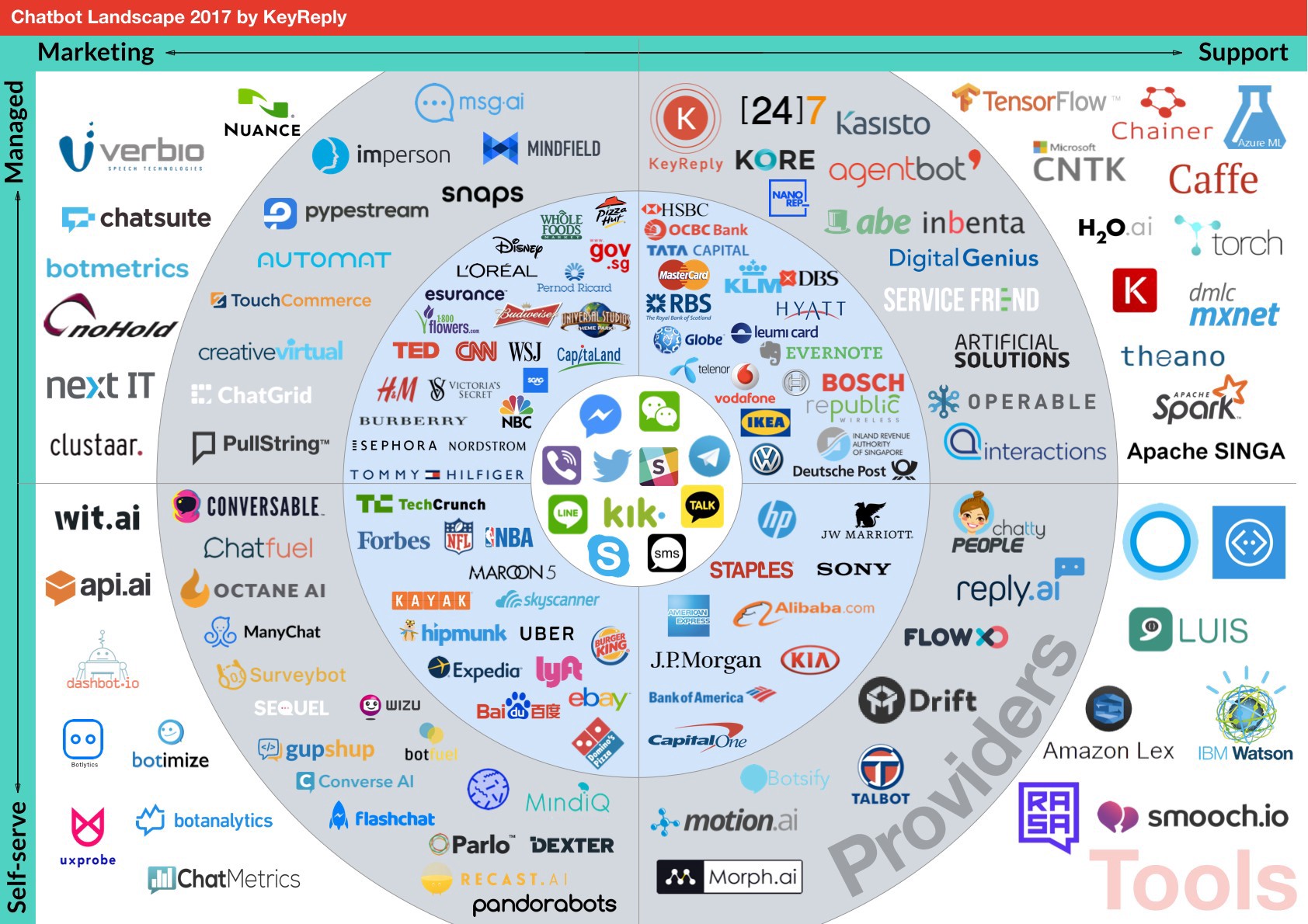
This “touchpoint explosion” — and the need to bring platform thinking to the challenge of managing it — is not hypothetical. It’s very real. And for the clearest evidence of that, look to the incredible innovation happening around chatbots.
2018: The Year of the Chatbot
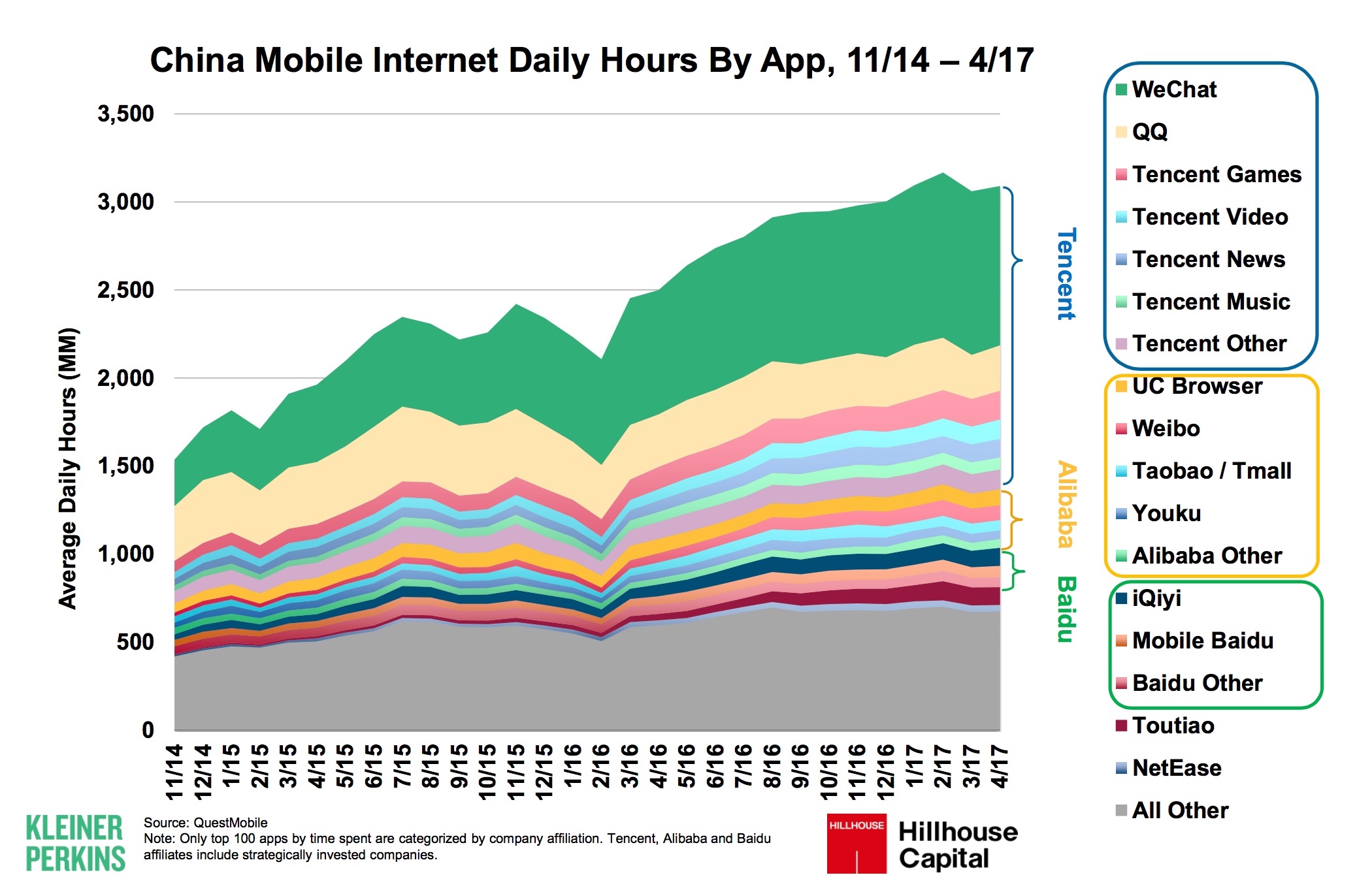
Part of the exponential growth in chatbots this past year is the result of the explosive growth of messaging platforms, such as Slack and Facebook Messenger — and in China, WeChat and QQ. Where the audience goes, marketing will follow.
Consumers are increasingly spending their time in these messaging platforms, so naturally businesses want to reach them there.
What’s interesting is that chatbots are a much more functional kind of marketing — offering consumers service and utility — as way to reach consumers, rather than advertising, which is generally viewed as low or negative value in the eyes of the consumer.
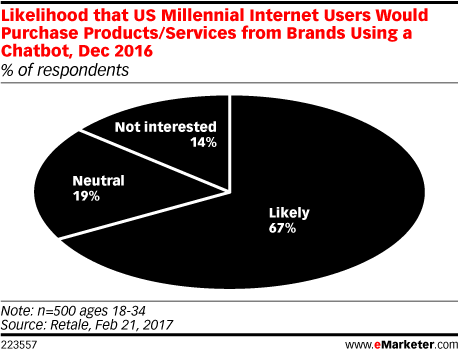
But a good chatbot makes it easier for consumers to get what they want from a business on demand — information, support, and increasingly even purchases. Indeed, 2/3 of US millennials say that they are likely to purchase products or services using a chatbot.
While the design practices of conversation interfaces are still a work-in-progress — and the features available across different messaging platforms are evolving rapidly — there are a number of advantages to chatbots that make them highly compelling touchpoints:
Persistent — when you’re in a “conversation” with a bot, you can stop and start at anytime, and pick back up where you left off, minutes or days later; it’s not like closing your web browser or hanging up the phone
Threaded — each bot conversation is maintained in its own thread, so you can easily keep track multiple conversations simultaneously (and bot operators can keep track of many customer conversations in parallel too)
Responsive — chatbots are quick to respond, 24/7, and because they are generally low-bandwidth interactions, they’re fast on almost any device and on any connection
Cross-device — chatbots work great on laptops, desktops, tablets, smartphones, and, in many cases, also voice-interface systems such as Amazon Alexa and Google Home
Cross-channel — they’re available on websites, but also on messaging platforms such as Facebook Messenger, WhatsApp, Slack, WeChat, Twitter, Skype, SMS, Kik, etc.
Intuitive — you don’t need to learn any special interface to use a chatbot: just talk/type using natural language, and it responds conversationally (this is one of the big wins for modern AI)
Semi-automated — chatbots are automations, with all the efficiencies and scalability that enables, yet they can also seamlessly transfer a conversation to a human operator as an “escape hatch” when necessary
Push notifications — on most platforms, a chatbot can send follow-up messages to a user, to recover an abandoned conversation or offer a friendly reminder in the context of the original dialogue
Contextual personalization — the nature of chatbot dialogues, their persistent memory, and the directed nature of user requests lets chatbots truly personalize interactions, explicitly and implicitly, much better than what we’ve seen on websites and in email
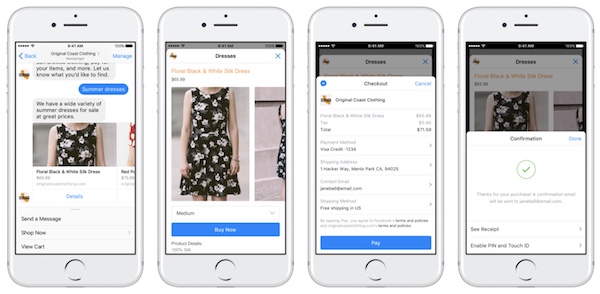
Payments — increasingly chatbots can accept payments (“conversational commerce”), some smoothly integrated into the interface of apps, such as Facebook Messenger’s buy button, as shown below
At the very least, you should be experimenting with chatbots to develop some organizational capital around these new touchpoints. But the greater opportunity in 2018 is to use chatbots as the catalyst to develop an organizational platform as we discussed above.
“Bots are more granular and closer to microservices, whereas mobile apps are usually a one-size-fits-all customer-facing view of your complete (and often bloated) set of offerings. Bots will potentially disassemble the different services and offers of companies, leading to increased benchmarking and competition.”
App fragmentation generated a need for order, trusted third parties, and distribution channels. Bots will not be an exception, and the competition is already heating up.
Don’t be caught off guard here. You’re going to want to pay attention to chatbot ecosystems and the presence your business (and your competitors) have in them.
But while chatbots will be the fastest growing new category of digital touchpoints in 2018, they aren’t the only kind of digital touchpoint innovation you can expect to see mainstreamed in the year ahead.
Closely related to chatbot functionality is the rapid development of voice interfaces and services, whether accessed through a device like an Amazon Echo, a voice assistant in your smartphone like Siri, or simply through an old-fashioned phone call.
For instance, just as classic search engine optimization (SEO) was all about managing how your business appeared inside Google’s search results in a web browser, you now need to also be optimizing for voice search too. When people ask Alexa, Siri, or “OK, Google” a question related to your business, what answers come back?
Voice technologies will also revolutionize how things operate inside your company. Imagine: you’re in a quarterly review meeting, and the CEO has a question about the performance of a social media influencer campaign. Instead of scrambling around in reports on your laptop — or dodging with, “um, I’ll get back to you” — you simply ask the Alexa device on sitting on the conference table. She’s connected to your business intelligence system via a new Alexa for Business skill, and she tells you the answer immediately.
The team at Point Nine Capital put together this excellent landscape of 150 B2B voice tech startups, which gives you a sense of the intense amount of innovation underway in this space:
But, wait, there’s more.
Augmented reality (AR) and virtual reality (VR) are rapidly moving beyond games and fringe applications into more mainstream use cases, especially in retail, from furniture (Ikea) to fashion (Sephora). Apple’s ARKit, released last year, is inspiring a wave of AR-enabled apps that will appear over the next 12 months. Further out, you have things like Amazon’s Blended-Reality Mirror.
While AR/VR will likely still be in the “emerging” stage for most businesses in 2018, you should take a look at how you might be able to apply those technologies as their adoption spreads and factor it into your digital transformation thinking.
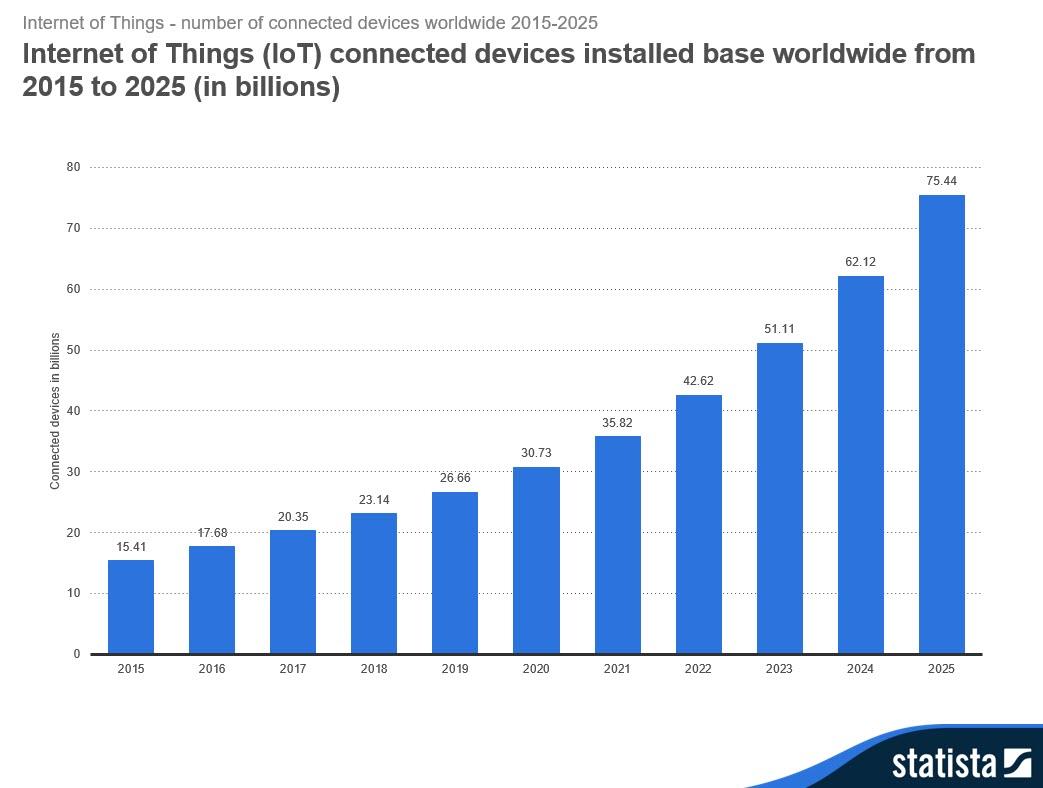
Finally, when we say “digital everything,” we really do mean everything as the Internet of Things (IoT) grows. It’s estimated that there are around 20 billion devices connected today, which will grow to more than 75 billion by 2025:
One place you can see this happening is in the burgeoning home automation market: smart TVs, smart lights, smart thermostats, smart locks, smart doorbells, smart cooking, smart cleaning, and so on.
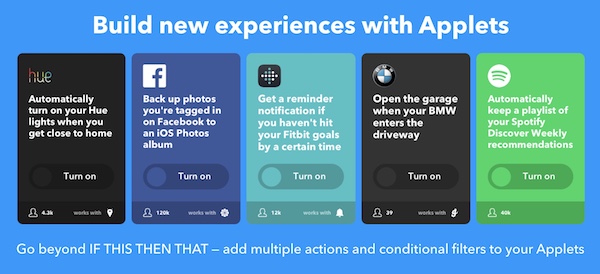
By the way, circling back to the idea of “citizen integrators” mentioned at the beginning of this series, if you question the viability of such non-technical professionals designing their own workflows of data and actions across dozens of different applications, you really should look at what’s happening in the home automation space with IFTTT:
If mere consumers can master “coding” cross-application and cross-device automations, it’s hard to deny that the ability to orchestrate a kaleidoscope of applications and devices is becoming widely democratized in a “digital everything” world.
5. ARTIFICIAL INTELLIGENCE
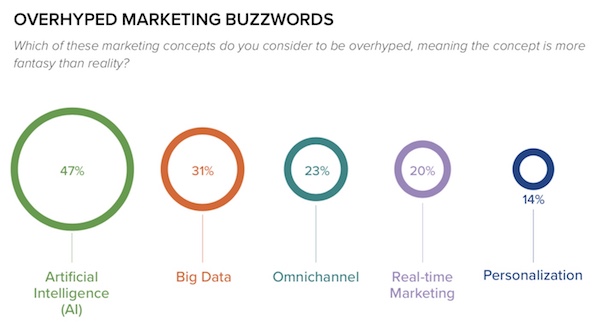
A recent study by Resulticks found artificial intelligence to be the most over-hyped term in marketing today. And that was with stiff competition from the buzzword bingo of big data, omnichannel, real-time marketing, and personalization.
(You just know there’s a company somewhere promoting “omnichannel, real-time marketing personalization using big data and AI.”)
So it’s easy to be skeptical of the term. In Gartner’s hype curve, I think AI in marketing is already starting to peak, with disillusionment arriving quickly. I actually believe that, in general, the frequency of Gartner hype curves are increasing — you can go from the peak of hype to the trough of disillusionment within a year. But that’s an article for another time.
AI is not going to do your marketing for you. (And thank goodness, or you’d be out of a job.) There is no Alexa-voiced oracle that will magically reveal to you the right marketing strategy. The vision of a “general intelligence” AI that acts as a sentient being with a big brain is still a thing of science-fiction. In fact, it’s arguable if it could ever exist, as reasoned eloquently by François Chollet:
“There is no such thing as ‘general’ intelligence. On an abstract level, we know this for a fact via the ‘no free lunch’ theorem — stating that no problem-solving algorithm can outperform random chance across all possible problems. If intelligence is a problem-solving algorithm, then it can only be understood with respect to a specific problem. In a more concrete way, we can observe this empirically in that all intelligent systems we know are highly specialized. The intelligence of the AIs we build today is hyper-specialized in extremely narrow tasks — like playing Go, or classifying images into 10,000 known categories. The intelligence of an octopus is specialized in the problem of being an octopus. The intelligence of a human is specialized in the problem of being human.”
But here’s the irony: as much as the hype has overstated what AI might do for marketing in the next 12-24 months, the reality of how AI is already working in marketing today is often under-recognized.
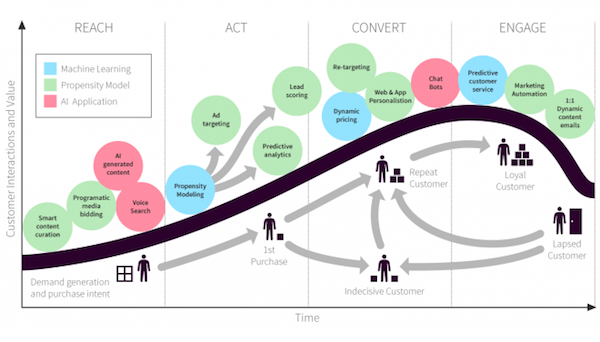
One of my favorite articles from last year was Dave Chaffey’s and Robert Allen’s brilliant 15 Applications of Artificial Intelligence in Marketing article, listing a bunch of cases where “AI” already works, as shown in this graph:
Most of the use cases they describe are powered by one of three kinds of AI:
Machine learning
Propensity modeling
Natural-language processing (NLP)
None of these are the kinds of AI supermachines you see romanticized in the movies.
They’re mostly statistical algorithms that find and match patterns and then extrapolate them to make predictions.
You know, auto-complete.
It’s math, not magic.
But that’s not a knock against these AI applications though. With today’s data volume and processing speed, these algorithms are highly effective at what they do. For instance, in lead scoring, machine learning and propensity modeling is beating humans and hard-wired, rules-based heuristics pretty regularly these days (here’s one case study that saw a 27% increase in sales as a result).
In a manner of speaking, machine learning is simply statistics at speed and scale. But that’s powerful. As Tomasz Tunguz, a venture capitalist at Redpoint Ventures (and one of our groovy speakers at the upcoming MarTech conference), recently wrote in an article on How To Identify A SaaS Market That Machine Learning Will Disrupt:
“By and large, the most frequent applications of machine learning in SaaS today are efficiency applications – automating the high-volume rote processes and reducing costs. Consequently, if you looking to build a machine learning based SaaS company, find a really expensive internal process and automate it.”
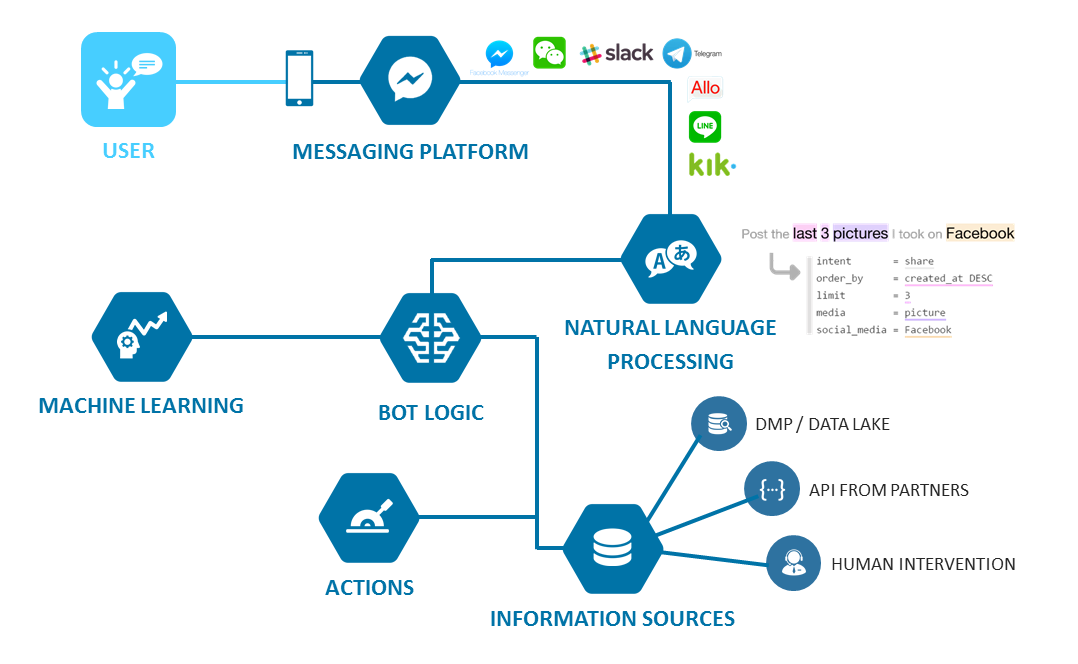
Similarly, natural-language processing (NLP) is undoubtedly cool — it powers the conversational interfaces of chatbots and voice-assistants — but it’s become relatively mundane software technology under the covers. Here’s a great visual from an article in Chatbots Magazine that explains the tech stack behind most “AI chatbots”:
The “natural-language processing” component and most of the algorithms applied in the “machine learning” piece are now at everyone’s disposal: built into messaging platforms, rentable in the cloud for pennies, or simply available as open source toolkits.
Where things get interesting with chatbots — their differentiation and competitive advantage — is in the “actions” and “information sources” pieces of the equation. What data and services are unique to your business? That’s where AI shines.
This can’t be overemphasized: good AI depends upon good data.
This is the single biggest challenge in AI applications in marketing today.
Unfortunately, data quality in most marketing systems still isn’t very good.
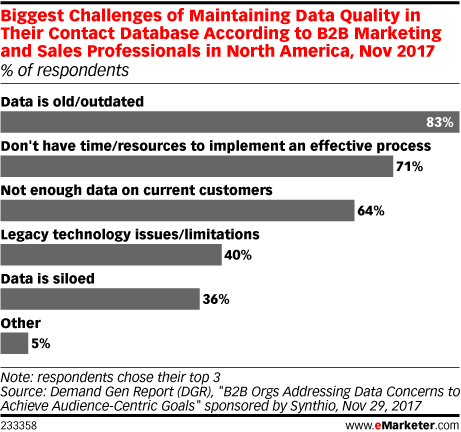
Just a couple of months ago, 83% of B2B marketers in a Demand Gen Report complained that their data is old and outdated.
And 71% don’t have time or resources to implement an effective process to improve their data quality — so it’s not getting any better for them any time soon. Feeding that bad data into a good machine learning algorithm won’t give the right answers. And without opening up the black box of the machine learning algorithm, you might not have any idea that those answers are wrong. Other than the poor outcomes you’re getting from it.
(It’s interesting to note that only 36% now report that their data is siloed. Linking back to Part 2: Microservices & APIs, systems are increasingly connected and sharing data. But if the data isn’t good, such easy integration is like sending your child to school with the flu — easy enough to put on the bus, but unfortunate for everyone else.)
Bad data in AI isn’t a problem limited to marketing either.
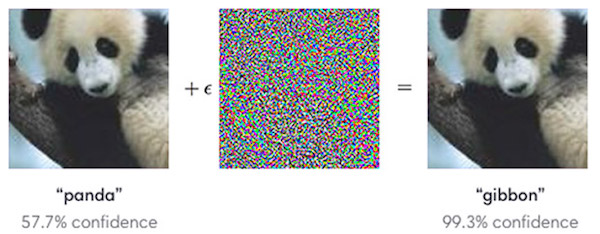
In fact, it can be helpful to read some of the latest writing from AI experts and data scientists about the flaws and risks of bad data — in some cases, intentionally bad data — acrosss the field more broadly.
Another article by Rhaul Bhargava, a research scientists at the MIT Media Lab, digs into this further with The Algorithms Aren’t Biased, We Are. He explains why, in machine learning, “the questions that matter are what is the textbook and who is the teacher” for the learning that the machine is doing.
One starts to realize that data quality and data security will both be intertwined challenges for marketers. Not just data security in the sense of preventing bad actors from stealing your data. But also data security in preventing bad actors from seeding bad data into your systems to knowingly mislead your machine learning marketing systems.
It’s all about the data.
Well, it’s mostly about the data. One other factor that we need to keep in mind with machine learning — and frankly, algorithmic marketing of any kind — is the exponentially accelerating speed at which these functions operate. It’s mind-bending.
As Alistair Croll recently wrote in It’s the Automation, “We conflate AI and automation at our peril. The power of automation isn’t the algorithm. It’s the relentless, parallel attention.” In talking about how an AI system learned to beat a popular chess software program in a matter of hours — and how — Alistair notes:
Don’t be surprised that an AI beat chess software. Be surprised that it played 1,228,800,000 games in 4 hours.
This completely changes the speed and scale of optimization and simulation applications.
For a real-world example in marketing, consider MarketBrew, an artificial intelligence platform for SEO teams. Normally, SEO professionals would make changes to a website and have to wait up to 60 days to see how those changes reflected rankings on Google.
MarketBrew’s AI engine, however, crawls the web on its own and creates a parallel “Google.” It uses machine learning to develop a fairly accurate model of how Google ranks sites. It can then constantly update this model to reflect changes in Google’s algorithms. As a result, an SEO professional can submit a proposed change to a website to MarketBrew, which is able to give a predicted answer on the impact it will have on rankings within 90 minutes. That’s impressive.
Yet still, the model is not reality. Just a good approximation of it.
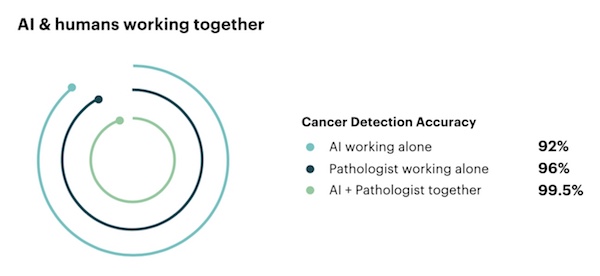
Ultimately, this is why there is so much excitement around AI-and-human partnerships. Humans working in tandem with AI algorithms often produce better outcomes than either one on their own. Here’s just one example from an Accenture Fjord report about the accuracy of cancer detection by machines, humans, or the two together:
Humans bring context and “common sense” that still elude machine learning algorithms. On the other hand, AI brings greater mathematical accuracy and expontential computational horsepower to bear on problems than our own minds can offer.
Together, human and machine are powerful collaborators. One of the biggest disruptions to marketing over the next several years will be learning how to manage those collaborations to their fullest potential.
Netflix is the brand most loved by millennials, according to YouGov BrandIndex.
In January, Netflix announced that they would increase their marketing budget by 54% from $1.3 billion to $2 billion in order to “amplify the value of the content,” according to The Wall Street Journal.
Netflix has an abundance of data about its customers and their viewing habits, which will help them tailor their marketing strategies and amplify personalization down the road. Netflix’s software tailors content recommendations to its users based on what they watch, and how they watch it. This goes beyond the genres users lean towards. Is the user a binge-watcher? Do they watch on a laptop or a television screen? Do they use subtitles? Do they save series for offline viewing and watch them on the go?
Netflix is actively monitoring when, where, and how people consume their series and movies and now focuses on how their habits are changing. A data set released in November 2017 claimed that 67 percent of Americans now watch Netflix outside of their homes, a figure that, according to Eddy Wu, Netflix’s director of product innovation, conveys that “Netflixing in public has become a social norm.” If people are seen using the service in public of their own accord, they essentially become an advertisement to prompt others to do the same, which contributed to the practice becoming so common so quickly.
As a result, Netflix does not need to rely on agencies, and in particular data-driven agencies, to guide its marketing. With an in-house approach, the increased marketing spend is still dwarfed by the $8 billion it plans to spend on content — including 80 new original films — in 2018.
Netflix declined to discuss its marketing strategy, but analysts and agency executives believe Netflix’s marketing budget increase aligns with its content strategy, and they expect most of Netflix’s ad dollars to go to digital, especially programmatic, as well as to offline events to generate earned media. The streaming service is known to handle most media buys in-house, although MEC is Netflix’s major media shop, they said.
“Netflix is a performance marketer. Data is everything, with which Netflix makes marketing less subjective,” said Brian Wieser, senior research analyst for Pivotal Research Group. “I think Netflix will spend its increased marketing budget mostly on digital media. But keep in mind, most of its growth is international, so I’m sure there will be different [media-buying] choices by market.”
Programmatic is an area in which Netflix is likely to keep spending more. In a letter to shareholders last April, Netflix said it was investing more in programmatic as part of its $1 billion-plus marketing spend, with the goal of improving its ability to “do individualized marketing at scale and to deliver the right ad to the right person at the right time.” Speaking on condition of anonymity, one major ad exchange said Netflix has been among the top 10 brand spenders on the exchange over the past three years, and the streaming service will maintain that position based on its buying patterns. Netflix primarily uses Google DoubleClick Bid Manager to buy media programmatically, according to the exchange.
Netflix’s hands-on approach is not limited to programmatic. Since the streaming service is a tech-centric company, it has developed its own marketing model and is used to processing internal data on its own. Because of that, media agencies are usually only responsible for campaign execution, instead of developing strategic media planning for Netflix, according to Wieser. “Netflix works with media agencies on something that it can’t do efficiently on its own, like buy TV or out of home,” he said.
Netflix has even brought some creative work in-house. Robert Green, chief creative officer for Ripple Collective, has worked on ad campaigns for Netflix before and said the company is unique because it lets a group of marketers run advertising in-house. “That means you have people who are focused on outcomes helping to craft and create campaigns, rather than having more purely creatives at that stage of the work,” said Green. “And also uniquely — though this is changing more and more — the majority of the campaigns would [take place] on the Netflix platform itself, with some outdoor to augment but very little else in the way of media buys.”
As Netflix plans to create more original films, Green believes the company will need to spend more on TV, out-of-home and digital series to promote its movies, just like other movie studios. Lauren Tetuan, evp and media director for Deutsch, thinks that as a performance marketer, Netflix has developed — and will continue to develop — innovative marketing strategies, from social media to events marketing to offline installations, to reach a broader audience.
“It is a balance of maintaining and attracting new subscribers with driving viewership of new content,” said Tetuan. “Netflix is now competing with the major studios, not just Hulu and other streaming services, so a big piece of the plan is orchestrated around getting people to watch its growing portfolio of original content.”
Automation, robotics, artificial intelligence … the biggest question I get asked is how will this affect the workplace of today. Is my job at risk? And what should I do? Which are the jobs of the future? And what should I suggest my kids study?
Change is inevitable. Look at the industrial revolution, as a small comparison. From the fields to the factories, we shifted rapidly from an agricultural to industrial society, driven by the human demand for progress, both in terms of better products and lower prices. Machines, production lines, automation and efficiency transformed our lives and landscapes, our jobs and wealth.
A similarly dramatic shift is likely over the coming decade. And whilst it will similarly drive the demise of old ways of working, it will also create new opportunities – not just for the technologies, but for people too – to be more creative, and to be more human.
For those in the workforce – or for those like my children entering their final years of full-time education and thinking what they want to do in the world of work – the big question is: what skills are needed to navigate this monumental shift in the economy? How will humans create value in an increasingly automated world?
Guthrie Jensen has summarizes the skills needed in 2020 and beyond to take advantage of the shifting landscape of work. In short, for those looking to future proof their careers, building competencies in areas that machines will be unlikely to tackle effectively (i.e. complex problem solving, creativity) is likely the best recipe for success.
It can be daunting to think about automation’s role in the future – but if you’re a bookkeeper, legal secretary, insurance underwriter, credit analyst, or any other person in a job with high automation potential, it would be prudent to be thinking long and hard about what you can offer beyond your existing set of skills and competencies.
Here’s just a quick look at automation potential of select positions, according to a study by Oxford University:
Position
Chance of Automation
Position
Chance of Automation
Telemarketer
99%
Physician
0.4%
Tax Preparer
99%
Dentist
0.4%
Insurance Underwriter
99%
Computer Systems Analyst
0.7%
Bookkeeping Clerk
98%
Registered Nurse
0.9%
Legal Secretary
98%
Teacher
1.0%
Credit Analyst
98%
Microbiologist
1.2%
Loan Officer
98%
Pharmacist
1.2%
Real Estate Broker
97%
Sales Manager
1.3%
Payroll Clerk
97%
Engineer
1.4%
Accountant
94%
CEO
1.5%
Budget Analyst
94%
PR Manager
1.5%
Pharmacy Technician
92%
Architect
1.8%
So how do we set ourselves up for future success in a world where even real estate brokers are likely to be automated?
There are many considerations for career success during a time of significant change.
However, there’s a good case that skills – especially soft skills – are the most important foundation to build upon. These include things like the ability to communicate and work well with others, solve problems, and think outside of the box, as well as other aspects of emotional intelligence.
https://www.youtube.com/watch?v=M908RNjj0n8
Here are some skills that experts say should be prioritized:
1. Complex Problem Solving
It’s true that AI can solve problems that humans cannot – but it also goes the other way. When problem solving needs to span multiple industries or when problems are not fully defined, humans can work backwards to figure out a solution.
2. Critical Thinking
Machines are getting better at aspects of critical thinking, but humans are still able to to connect, interpret and imagine concepts in a world full of ambiguity and nuance. A lawyer can pinpoint the exact positioning to make a case for a client, or a marketer can figure out an overarching message that can resonate with consumers.
3. Creativity
Creativity requires a degree of intuitive randomness that can not yet be imitated by AI. Why did the architect design the building a certain way, and why did the musician improvise by playing a chord out of key? It’s hard to explain why to a computer – it just feels right.
Disruptive technologies are advancing healthcare at an extraordinary pace.
By 2020, there will be 50 billion devices connected to the internet, and many of these devices will be tracking the health data of individuals. This will empower consumers in an exciting way, but it will also fundamentally shift how healthcare companies work and interact with their customers.
The smartphone boom has changed the consumer experience in practically every industry, and it is now cascading into the healthcare market:
Commoditized … 76% of consumers expect pharma/healthcare providers to provide services that help them manage their health.
Connected … 59% of consumers expect their healthcare customer services to be as good as Amazon’s.
Quantified … 76% of consumers expect pharma/healthcare to understand their individual needs.
In other words, the traditional healthcare model no longer aligns with the consumer mindset.
6 forces driving transformation in healthcare
Here are six transformative forces that healthcare companies must address to gain a competitive edge:
1. Data Activation
Data reveals truths. A robust data strategy fundamentally shifts how company manages their brands.
2. Workflow-Empowered Solutions
The patient experience will be at the center of a seamlessly connected workflow of information, with integrated electronic health records (EHR) that document more than just visits to the doctor. The proliferation of EHR opens new opportunities to service healthcare professionals and patients.
3. Content Strategy
Consumers want their healthcare information and insights delivered in a personalized, engaging, accessible, and dynamic format.
4. Intelligence Services
Consumers want the healthcare industry to “find, know, and help” them, using past behaviors and AI to anticipate their current and future needs.
5. Clinical Trial Recruitment
Finding the right patients remains a major challenge for pharma. New technologies and patient engagement strategies are greatly reducing the time and inefficiencies of clinical trial recruitment.
6. Sales Model Transformation
As AI takes hold and directs more automated Rx decisions, it will be more than just about relationships but also about relevant skills to make use of the new tools, while preserving the need for human touch.
Together, these forces build the transformative foundation to better performance, customer experience, and health outcomes.
This infographic from Publicis Health captures the transformation visually:
Our Vision
Danone, One Planet. One Health
In 2017, Danone unveiled a refreshed logo and its very first company signature: One Planet. One Health. These words reflect our vision that the health of people and the health of the planet are interconnected. It is a call to action for all consumers and everyone who has a stake in food to join the food revolution: a movement aimed at nurturing the adoption of healthier, more sustainable eating and drinking habits.
RECONNECTING PEOPLE WITH THE FOOD THEY EAT
“ CONSUMERS ARE CRAVING CHANGE. THEY EXPECT LARGE ORGANIZATIONS LIKE DANONE TO BRING OUR SCALE OF IMPACT TO CHANGE THE WORLD FOR THE BETTER.”
Emmanuel Faber, Chairman & CEO
At Danone, we believe that each time we eat and drink, we can vote for the world we want to live in. This powerful idea is at the heart of the ongoing food revolution, a movement inspired by people who care about where their food comes from, how it was grown, how it arrived on their plates and how it impacts their health and the health of the planet. We call those people the food generation.
At Danone, we believe that global food and retail companies can play an important role in this revolution through a transformation of their business models, moving away from standardized food systems to new models based on local diets and leveraging local sourcing. We believe a healthy body needs healthy food. And healthy food needs a healthy planet. All with healthy ecosystems and strong, resilient social structures. We believe in a food and water ecosystem that works in harmony with people, communities and the environment. Our dream is to make the Danone logo a symbol of positive change to build a healthier world through food. With our company brand idea, we can bring together our mission, values, brands and social initiatives.
The Danone company brand will allow us to demonstrate our uniqueness into a driver of growth and add extra equity to our brands, to build consumer trust.
“ONE PLANET. ONE HEALTH IS A RALLYING CALL TO EVERYONE TO JOIN THE FOOD REVOLUTION. AND WE AIM TO MAKE THAT REVOLUTION A REALITY FOR AS MANY PEOPLE AS POSSIBLE, ACROSS THE WORLD.”
Build a balanced model of Growth
Danone has set its goal to build a balanced, profitable and sustainable growth model.
Growth, at the core of the business model
Positioned in the most dynamic categories of the food and beverage industry, Danone has a strong leadership position in all its markets.
The Company relies on a unique portfolio of strong brands, solid execution capabilities in terms of innovation, brand activation and the development of new distribution channels.
Generating profitable growth
In an increasingly volatile and complex environment, Danone strives to strengthen its model of growth through disciplined resource allocation, efficiency gains and cost optimization with a permanent balance in managing the short, mid and long-term horizons.
The company therefore favors strategic growth opportunities that create long-term value over tactical short-term allocations.
Launch of an efficiency program: generate cost savings to fuel growth
In that context, Danone launched an efficiency program called Protein on its selling, general and administrative expenses. The program aims to strengthen the Company’s competitiveness by generating cost savings of €1 billion by 2020. The program consists of incorporating sustainable efficiency into the Company’s business model, and creating the best conditions to spend better, buy better and work more efficiently. Danone will reinvest a significant portion of the gains in growth to support the implementation of its strategy and mission.
Responsible business stewardship: continuing the dual economic and social project with B Corp
Collaboration with the international non-profit organization B Lab to receive B Corp certification represents a major new milestone in Danone’s dual economic and social project, first expressed by Antoine RIBOUD in his 1972 speech in Marseille.
As part of this approach, which creates value for consumers and shareholders, Danone is transforming the way in which the food and beverages of its flagship brands are designed and produced, notably by reducing the number of ingredients, and proposing new organic and non-GMO product lines. The Company also commits to promoting sustainable agriculture, encouraging the circular economy, conserving water, reducing waste, reducing its carbon footprint, promoting animal welfare and investing in the community.
A new approach to management of strategic resources
As a further example of its approach to act as an engaged and responsible company, Danone is transforming the upstream of its business (environmental management, raw materials supply and manufacturing processes and logistics) to optimize its costs, protect the lifecycles of its strategic resources and create a lever for value creation and differentiation from competition.
One of Danone’s key strategic orientations is therefore a new approach for managing its strategic resources (milk, water and plastic). These resources are essential for Danone, not just from an economic but also from an environmental and social standpoint. Danone’s key raw materials come from nature and must therefore be protected by creating and sharing value for ecosystems and communities where Danone operates. These resources are therefore managed as cycles in order to ensure their long-term viability, limit their volatility and, lastly, gain a true competitive advantage.
The Danone Story
It’s the story of the Carasso family who chooses to leave the war-torn Balkans, on the eve of the First World War, to settle in Spain, the land of their ancestors. In Barcelona, numerous children are suffering from intestinal problems. Isaac Carasso decides to innovate, and in 1919 he develops a healthy and simple product, still fairly unknown in Spain, yogurt. He calls it Danone, after the nickname of his only son, Daniel. It’s the story of Daniel, who leaves home at the age of 18. He continues his studies in Marseille, discovers France and secures an internship with the Institut Pasteur in Paris. Convinced that Danone can also meet the needs of the French, the young Daniel sets up in 1929 the “Société Parisienne du Yoghourt Danone” which for the first time in France, offers a yogurt made from pure, lactic ferments. It’s the story of an American dream. As WW2 rages across Europe, Daniel leaves occupied Paris and flourishing company to start from scratch in New York. Driven by his father’s pioneering spirit, he acquires an artisanal yogurt shop in the Bronx and sets up “Dannon Milk Products” in 1942. It’s the story of a return to Europe where everything must be rebuilt after the war. There, Daniel continues to pursue the dream he shares with his father: to meet people’s nutritional needs and to innovate for the health of everyone.
It’s the story of Isaac Carasso’s passion for the research of Professor Elie Metchnikoff. The Nobel prize-winner for medicine is convinced of the benefits of lactic bacteria for the intestinal flora. Drawing on his discoveries, Isaac mixes raw milk with pure lactic ferments from the Institut Pasteur to create Danone yogurt. It’s the story of a sketch that changes everything. Daniel Carasso, now living in the United States, meets Raymond Loewy, the famous French designer and graphic artist. Loewy, charmed by the drive of this young entrepreneur from Europe, advises him to americanize the name of his company and designs a new logo for the business. “Dannon Milk Products” is born. It’s the story of a genuine friendship and a shared ambition between Daniel Carasso and Antoine Riboud. The two entrepreneurs share the dream of creating a global brand. They merge their two businesses to create in 1973 the company that would become Danone 20 years later. Together, they expand to new territories: South America, Asia, Eastern Europe, and give a new dimension to the company.
It’s the story of a firm belief. Isaac Carasso, sure of having a unique, strong value-added product, decides to sell his yogurt in pharmacies in Barcelona. Recommended by doctors, as of 1923 it is recognized as a “healthy, natural product, beneficial for health”. It’s the story of an intuition. Daniel Carasso makes Danone yogurt a product of pleasure sold in dairy shops as of 1929. He adds fruit to it, explores new yogurt flavors, that he sells in the U.S. and then in Europe. It’s a huge success on both continents. It’s the story of a visionary speech in 1972. — Antoine Riboud — «It is not possible to accept that growth leaves so many people behind, especially workers. It is a matter of collective conscience.» In Marseille, Antoine Riboud lays the foundations of the “Dual Project” which is an essential part of Danone to this day. He advocates for business to be at the service of humanity, with a company whose mission is both economic and social. Because “Corporate responsibility does not end at the factory gate or the office door.” And because “There is only one Earth. We only live once”. It’s the story of a mission. Franck Riboud gives Danone a new dimension: “Bringing health through food to as many people as possible” with a company that constantly anticipates and innovates, to make its products accessible to everyone, on all continents. It’s the story of a world in which our health and that of our planet are interconnected One of the world leaders in food and beverages with a unique health-focused portfolio, present in over 120 countries, Danone and its 100,000 employees are today pioneering the food revolution with a clear and forward-looking vision: One Planet. One Health. — Emmanuel Faber —- When Daniel Carrasso meets Antoine Riboud, he says «we had a dream together». So vision is what starts everything at Danone. The vision on health by Isaac, the vision about brands by Daniel, the social and environmental vision of Antoine and then Franck reconciling both by choosing «health through food» for Danone and pushing into emerging countries to create a global company. So we are like 20 years later now. We have decided, facing the food revolution, to summarise this vision into 4 words : «One Planet. One Health». The health of the planet, the health of people are both interconnected, entirely. The most important part is the fact that beyond this vision, we need everyone at Danone to hold and be owner of that vision. People are now building the brands, not the contrary. And therefore the initiative that we have started, «One Person, One Voice, One Share» is fundamental to create a governance for the future of companies that, as Danone, will win through the food revolution in the future.
2020 OBJECTIVES
As part of its transformation plan aimed at ensuring a safe journey to deliver strong, profitable and sustainable growth, Danone set objectives for 2020 that include like-for-like sales growth between 4% and 5%, which include the following performances at the Reporting entity level:
• strong like-for-like growth above 5% for EDP Noram, Specialized Nutrition and Waters; and
• like-for-like growth of between 3% and 4% for EDP International.
Danone aims for a recurring operating margin of over 16% in 2020, driven primarily by:
• a structural improvement of margin in all categories, via more discipline and a stricter resource allocation process to guarantee profitable growth;
• the Protein program, which will generate over €1 billion savings by 2020, with at least €300 million net of reinvestment falling through into margin expansion by 2020 (€100 million per year from 2018);
• a $300 million synergies program generated in 2020 at recurring operating income level through the acquisition of WhiteWave.
Finally, Danone will continue to focus on growing its free cash flow, which will contribute to financial deleverage with an objective of a ratio of Net debt/EBITDA below 3x in 2020. Danone is committed to reaching a ROIC level around 12% in 2022.
Towards B-Corp certification
In this increasingly complex world, big brands and companies are fundamentally challenged as to whose interests they really serve. At Danone, we are convinced that addressing this issue in straight and simple terms is the best way for our brands and our company to reinforce trust with employees, consumers, partners, retailers, civil society and governments. That is why we joined the B CorpTMmovement.
Certified B Corporations are leaders of a global movement of people using business as a force for good. They meet the highest standards of overall social and environmental performance, transparency and accountability and aspire to use the power of business to solve social and environmental problems.
Our ambition to obtain this certification is an expression of our long-time commitment to sustainable business and to Danone’s dual project of economic success and social progress.
It is a significant step toward making sustainable business mainstream—and which we believe to be the future.
A rigorous B Corp™ Certification reflective of core commitments
B Corp Certification is a mark of trust: a promise that a company is doing business in a way that meets rigorous standards of social and environmental performance, transparency and accountability and is certified by B Lab, a third-party non-profit.
To obtain B Corp certification, a company must complete a B Impact Assessment and earn an audited minimum score of 80 out of 200 possible points and recertify – with the aim to continuously improve – every two years.
Since 2015, Danone has partnered with B Lab to help define a meaningful and manageable path to certification for multinationals and publicly traded companies, as well as accelerate growth of the B Corp movement into the mainstream.
17 certified entities
A total of seventeen Danone entities have now earned B Corp™ Certification, including dairy subsidiaries in France (Les Prés Rient Bio), in Spain, in the UK and in Ireland, plant-Based brand Alpro, organic baby food brand Happy Family in the U.S., Aguas Danone de Argentina, AQUA in Indonesia, Danone North America, Danone Canada, Danone Egypt, baby food brand Blédina in France, Nutricia Bagó in Argentina, Danone Manifesto Ventures, Grameen Danone Foods Ltd, Danone Waters of America, and Danone Waters Spain.
As a result, over 30% of Danone’s global sales are now covered by B Corp™ certification, marking significant progress towards Danone’s ambition to become one of the first certified multinationals.
What is B Corp™?
B Corp is a sustainable business certification launched in the U.S. in 2006 that has been gaining momentum around the world. In line with Danone’s vision, the B Corp movement works to drive a cultural shift to redefine business success. Today, there are more than 2,300 B Corps in 50 countries.
B Lab, a non-profit organization, accredits B Corp certification to for-profit companies that demonstrate high standards of social and environmental performance. Danone’s ambition is to be among the first food multinational companies to obtain a global certification. We are partnering with B Lab to build the roadmap toward this goal.
Danone Goals by 2030
SERVING A FOOD REVOLUTION BY 2030
We firmly believe that the health of people and planet are interconnected. Both need to be nourished and protected. At the same time, the world over, people are reinventing how to eat, drink and socialize over food.
In line with our ‘One Planet. One Health’ vision and to adequately respond to the challenges and opportunities of the ongoing food revolution, we have defined our Danone 2030 Goals.
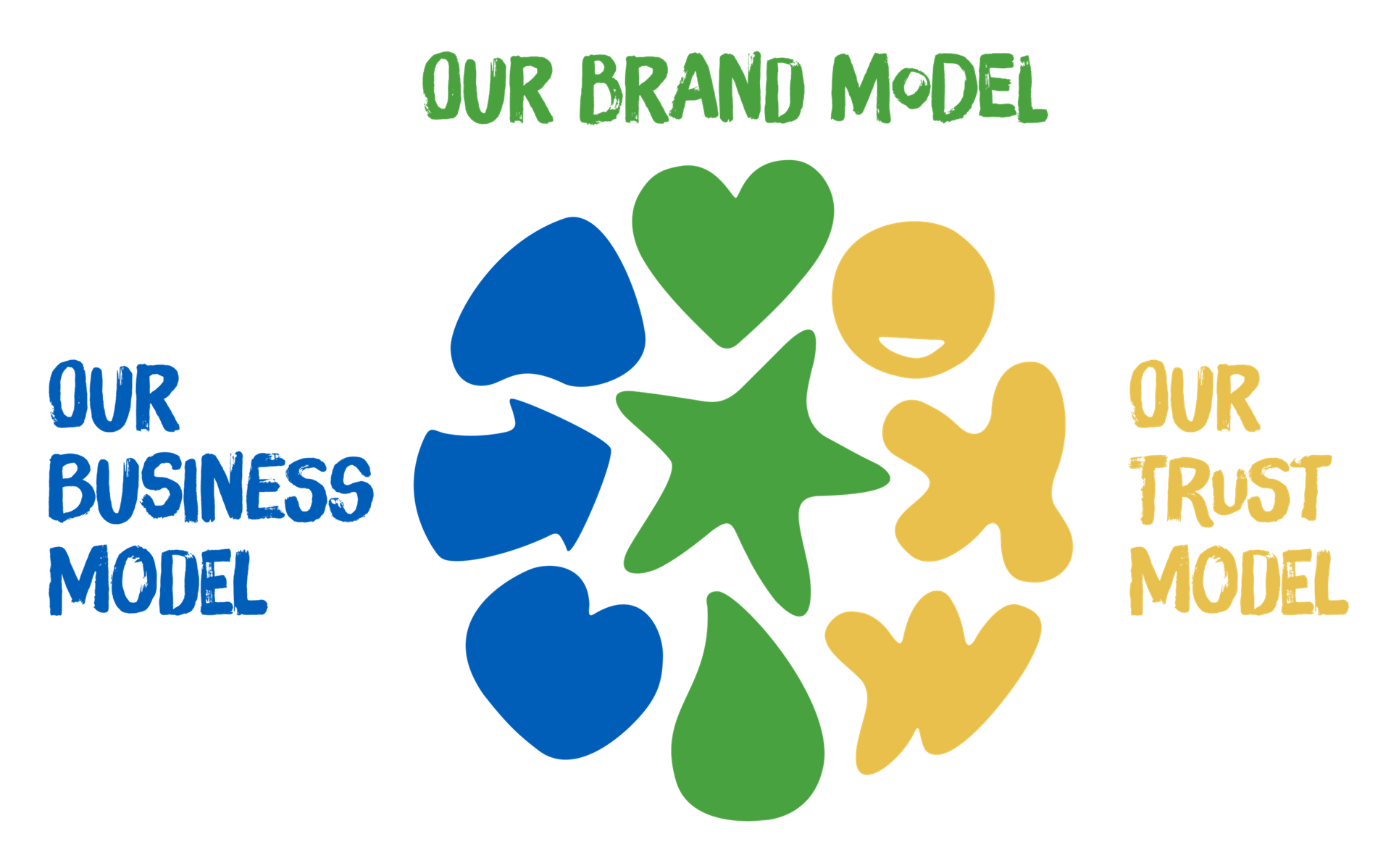
The integrated set of 9 long-term goals embeds Danone’s business model, brand and trust models. The Danone 2030 Goals are aligned with the 2030 Sustainable Development Goals of the United Nations, thus adopting a language that is universally understood.
To learn more about how Danone contributes to the UN’s Sustainable Development Goals, click here.
OUR BUSINESS MODEL
We will grow as a B CorpTM, innovating to offer superior food experiences.
OFFER SUPERIOR FOOD EXPERIENCES AND INNOVATE, ALWAYS
We commit to the highest quality and food safety standards. We stand for sustainably sourced ingredients; for naturality and transparency; and for simple recipes and clean labels. Supported by strong innovation capabilities, we believe these are key fundamentals to create superior food experiences for people, as this will remain the first driver of healthier and more sustainable choices.
DELIVER SUPERIOR SUSTAINABLE PROFITABLE GROWTH
Our ambition is to be the best at embracing the food revolution. We build on a unique health-focused product offering in some of the fastest growing categories, responding to today’s and tomorrow’s eating and drinking trends. And we build on a strong strategic roadmap around three priorities: accelerate growth, maximize efficiencies and allocate resource with discipline.
BE CERTIFIED AS A B CORP
Our ambition to become a Certified B Corp expresses our long-term commitment to create and share sustainable value for all, in line with our dual economic and social agenda. In today’s world, big companies and their brands are fundamentally challenged as to whose interests they really serve. B Corp certification is a mark of trust for companies demonstrating high standards of social and environmental performance.
OUR BRAND MODEL
We will grow what we call Manifesto brands to protect and nourish both the health of the people and the health of the planet.
IMPACT PEOPLE’S HEALTH LOCALLY
Our mission is to bring health through food to as many people as possible. We have created a unique portfolio of healthy products to complete this mission, and we strive to continuously optimize their nutritional profile. Also, we build on our in-depth knowledge of local food cultures, food habits and public health challenges to innovate and actively promote healthier alternatives for better choices. Beyond products, we will accelerate on current and new initiatives (programs and services) with partners to impact dietary habits positively.
GROW MANIFESTO BRANDS
People are craving change when it comes to their food. At Danone, we believe that each time we eat and drink, we can vote for the world we want. That is why we aim to build purpose driven brands – what we call Manifesto brands – that will act as true activists towards their point of view, not only delivering an exciting experience to people, but also committing to create a positive impact on health and planet.
PRESERVE AND RENEW THE PLANET’S RESOURCES
We strive to be a game-changer to foster positive solutions for the planet. We commit to sustainable sourcing for all our ingredients and to enhance the circular economy of packaging. We will protect soil health through regenerative agricultural practices co-developed with partners and we will even amplify our ambitious water stewardship journey. We play our part in the fight against climate change by implementing carbon positive solutions and aiming to achieve carbon neutrality by 2050.
OUR TRUST MODEL
We will grow in an inclusive way, empowering our people and working with partners to create and share sustainable value.
ENTRUST DANONE’S PEOPLE TO CREATE NEW FUTURES
Building on our unique social innovation heritage, we will allow each of our employees to co-own our agenda and our Goals, both at global and local level. This will lead us into a new, healthy future for our company, our employees and for our communities.
FOSTER INCLUSIVE GROWTH
We will continue to invent pioneering ways to foster inclusive growth for vulnerable partners in our food chain across the world, including family farmers, street vendors and waste pickers. We will keep building sustainable solutions for access to nutrition and safe drinking water for low-income communities. And we will maximize the impact of our social innovation funds through scale and transformation of business practices starting with Danone Communities, the Danone Ecosystem Fund and the Livelihoods funds.
SERVE THE FOOD REVOLUTION WITH PARTNERS
A food revolution is happening and we choose to serve it. However we cannot do it alone: to change the way food is grown, produced, marketed, distributed, sold and consumed, we need to co-create solutions with others, leveraging their expertise. To do so, we are building on decades of partnership experience to work hand in hand with Danone employees, farmers, suppliers, retailers, consumers and partners as well as civil society, governments and public health professionals. Altogether, we want to be remembered as a driving force of the food generation.
“ONE PERSON, ONE VOICE, ONE SHARE”: INNOVATIVE GOVERNANCE & EMPLOYEE ENGAGEMENT MODEL
The realization of the goals will build on an innovative new governance framework which seeks to further foster company-wide engagement and action. This framework will give our more than 100,000 Danone employees the power to co-own our company agenda.
Participative ‘one person, one voice’ program to empower employees to co-own our company agenda
By the end of 2018, each of Danone’s 100,000 employees will have been invited to actively engage and participate in shaping the future towards the Danone 2030 Goals and implementing them to co-create new futures.
To uniquely equip them to do so, the ‘One Person, One Voice’ program will develop an internal platform with extensive sharing and learning resources related to the company vision and goals. This will include content derived from collaboration with like-minded partners such as the United Nations Institute for Training and Research (UNITAR). All Danone employees will have the opportunity to learn more, better understand and build on the issues, challenges and opportunities that come with the goals.
Even more, starting this year, they will give voice to their point of view on both our company agenda and the definition of the 2030 Goals roadmaps, at local and global level.
In the future, we intend to link our new participative employee governance model with our Board of Directors, to fully leverage the richness of its content and recognize its importance in the company’s governance.
‘One person, one share’: each employee to receive one Danone share to deepen the ownership mindset
Complementing ‘One Person, One Voice’, every Danone employee will participate in the ‘One Person, One Share’ program. By next year, each of our employees will be granted one Danone share, in combination with an annual, amplified dividend-based incentive scheme.
In addition, a mechanism similar to our current French employee company investment fund will be implemented globally over the next few years. This will provide employees a further opportunity to invest in the company at a discounted price and increase a sense of ownership.
Our Brand Model
Today, people want to have a vote in the world they live in. Each time they choose a brand they exercise their right to vote. They want that brand to be transparent, meaningful and responsible. Still, they also want the brands they choose to be playful, innovative, relatable, emotional and engaging. As a result, there is a new paradigm at play today: brands only exist through the power of people.
Danone’s brands are the means by which we engage in the food revolution. Some of them are called Manifesto brandsas they have a clear brand model that drives each of their action. Some of them are not yet Manifesto brands but we have the ambition to grow every Danone brand into a Manifesto brand.
To bring this ambition to life, we’ve defined the Manifesto brand model, which is a framework to define, position and activate our Manifesto brands.
This brand model has as its unique starting point the focus on people, identifying the tension between a relevant insight and confronting it to the reality in which we live. This makes it possible to identify the legitimacy of the brand to operate in this environment.
But it also takes the following to make up a Manifesto brand:
a strong point of view and purpose that justify its existence in the world and relevancy for people,
a commitment to help improve the health of people, as well as to help protect our planet.
With One Planet. One Health being the backbone of every Manifesto brand, we now have in our portfolio a wide variety of brands bringing this signature to life.
So far, the movement is well under way with 40 brands already engaged in their Manifesto journey.
Our ambition is that each Danone Brand will become a Manifesto Brand, powering the food revolution, and driving profitable, sustainable growth. This is how Danone’s brands will differ from others.
Working through our Ecosystem
At Danone, more than 100,000 people are united by a single mission: bringing health through food to as many people as possible. Across the world, our employees, whatever their role, are passionate and committed to leading the change to encourage more sustainable and healthier eating and drinking practices.
Food-related challenges are increasingly complex. To meet them, Danone is working with a wide range of partners, designing and deploying sustainable solutions with researchers, consumers, NGOs, health professionals, famers, suppliers, retailers and government agencies.
Strengthening and managing these diverse alliances has become a strategic necessity as well as a measure of our effectiveness and credibility.
When we build a more sustainable future together with our partners and entrepreneurs who share our vision, we put our belief in social progress and economic growth into action, creating value in local communities and centering the environment at the core of our business.
We’ve all read the hype of blockchain, most often dominated by Bitcoin. Whilst that cybercurrency is unlikely to change the world, its successors – both in terms of finance and other sectors – are likely to become significant innovators, shaking up markets and enabling new possibilities.
Singapore-based fintech innovator Change is just one example.
Capitalising on the demand for more streamlined online transactions, it is positioning itself as a one-stop “digital wallet” and has the potential to become the “PayPal of cryptocurrency”. Change is developing a “multi-asset blockchain wallet” that not only supports the trade of a large (and constantly expanding) range of digital currencies but the system is moving towards also allowing users to make payments for goods and services using traditional currency. The company’s community-led financial services platform supports a range of everyday transactions, and with plans to develop a banking card and mobile app on the back of a recent $17.5 million token sale, Change has the potential to make it possible for users to control all of their finances with a few taps on their smartphone.
Here are just a few of the practical examples of innovation that builds on blockchain technology:
Entertainment
KickCity—Platform for event organizers that enables them to pay only for what they get, and rewards community members by sharing those events. Their products generate around $50k monthly with more than 70k users and 300 event hosts.
B2Expand—Based on the Ethereum blockchain they create cross-gaming video games. Their first video game “Beyond the Void” got into Ubisoft’s startup program and they’re the first gaming company on Steam with a crypto economy.
Spotify—When Spotify acquired blockchain startup Mediachain Labs it was to help develop solutions via a decentralized database to better connect artists and licensing agreements with the tracks on Spotify’s service.
Guts—A transparent ticketing ecosystem that uses blockchain technology to eliminate ticket fraud and the secondary ticket market.
Social Engagement
Matchpool—“Matchmakers” are rewarded for making successful matches whether it’s dating to freelancing to Uber and Airbnb.
Retail
Warranteer—A blockchain application that allows consumers to easily access info regarding the products they purchased and get service in the case of product malfunction.
Blockpoint—Simplifies the creation of payment systems and allows mobile wallet, loyalty program, gift cards and other point-of-sale functionality.
Loyyal—Powered by blockchain and smart contract technology, this loyalty and rewards platform creates more customized programs that even allow for multi-branded rewards.
Exotic Cars
Bitcar—Fractionalized ownership of collector cars made possible by a BitCar token.
Supply chains and logistics
IBM Blockchain—Knowing the status and condition of every product on your supply chain from raw materials to distribution is critical. Blockchain for supply chains allows transparency with a shared record of ownership and location of parts and products in real time.
Food industry—The food industry’s complex network from farmers to grocers makes tracking down food-borne illnesses challenging. Blockchain can improve the transparency and efficiency of finding out what food might be contaminated and where throughout the supply chain.
Provenance—Consumers are increasingly demanding transparency regarding the products they purchase and consume to ensure the sourcing of materials and production of products adheres to their individual values. Provenance uses blockchain to provide chain-of-custody and certification of supply chains.
Blockverify—With a claim to “introduce transparency to supply chains,” Blockverify focuses on anti-counterfeit solutions using blockchain to verify counterfeit products, diverted goods, stolen merchandise and fraudulent transactions.
OriginTrail—Already in use in the food industry, more applications are planned for OriginTrail, a platform that lets consumers know where their purchases came from and how they were produced.
De Beers—De Beers mines, trades and markets more than 30% of the world’s supply of diamonds. The company plans to use a blockchain ledger for tracing diamonds from the mine to the customer purchase. This transparency will help the industry and anybody who wishes to verify, confirm diamonds are free from conflict. Fura Gems also plans to use blockchain in its supply process of emeralds, rubies and other precious stones.
Insurance
Accenture—With goals to boost efficiency and productivity within the insurance industry, Accenture builds blockchain solutions for its insurance clients. They translate key insurance industry processes into blockchain-ready procedures that embed trust into the system.
Proof of insurance—Nationwide insurance company is currently testing a blockchain solution to provide proof-of-insurance information called RiskBlock. Ultimately, when this tool is fully deployed it will help law enforcement, insured and insurers verify insurance coverage in real time and accelerate claims processing.
Healthcare
MedicalChain—The first healthcare company using blockchain technology to facilitate the storage and utilization of electronic health records in order to deliver a complete telemedicine experience. They are real practicing doctors in the UK healthcare structure and want to change the system from within.
MedRec—In order to give any medical provider secure access to patients’ records, MedRec uses blockchain to save time, money and duplication in procedures between a variety of facilities and providers. Patients could also grand access to their anonymous medical records to be used for research.
Nano Vision—Looking to catapult medical innovation away from traditional data silos and incompatible records systems, Nano Vision combines the power of blockchain with artificial intelligence (AI) to gather molecular-level data on Nano Tokens. AI then sifts through the data to find trends and analyze connections that will lead to medical breakthroughs.
Gem—With a goal to give patients control over their medical records and genomic data by using a blockchain solution, Gem has also partnered with Centers for Disease Control and Prevention to experiment with using blockchain to monitor infectious diseases.
SimplyVital Health—This platform sits on blockchain technology that empowers providers and patients to access, share and even move their healthcare data.
Real Estate
BitProperty—Using blockchain and smart contracts, BitProperty wants to democratize opportunity and create a decentralized society by allowing anyone anywhere in the world (except the U.S. and Japan due to regulatory concerns) to invest in real estate.
Deedcoin—Rather than a typical 6% real estate commission, Deedcoin runs on 1% and hopes to be the new way for home buyers and sellers to connect with real estate agents who accept a lower commission.
Ubiquity—This Software-as-a-Service (Saas) blockchain platform offers a simpler user experience to securely record property information to ensure a clean record of ownership.
Charity
BitGive —This gloabal donation platform leverages Bitcoin and blockchain technology to provide greater transparency to donors by sharing real-time financial and project information. Save the Children, The Water Project and Medic Mobile are a few of the charities working with BitGive.
AidCoin—Since research shows 43% of people don’t trust charities, AidCoin hopes to improve that trust with distributed ledgers, smart contracts and cryptocurrencies and make the nonprofit sector more transparent.
Utopi—A lack of transparency has plagued charitable giving, but Utopi hopes to improve transparency in nonprofits. When donors give using the Utopi platform they can see exactly how every penny is spent.
Financial Services
Bitcoin Atom —A new fork of Bitcoin that allows everyone to easily exchange cryptocurrencies without any trading fees and no exchange hacks, making Bitcoin truly decentralized again. The technology is based on atomic swaps—an invaluable tool for exchanging one cryptocurrency with another (e.g. 1000 BTC with 56500 LTC) and no need for a trusted third party. But currently, widespread adoption of atomic swaps has been prevented because they require highly technical skills; something Bitcoin Atom will solve.
Securrency—This is a trading platform for cryptocurrencies and any kind of asset including traditionally illiquid assets to be exchanged through Securrency tokens. This allows cryptos to be traded outside of their dedicated exchanges.
Ripple—Ripple aims to be a global payment solution provider by connecting banks, payment providers, corporations and digital asset exchanges to allow instant, on-demand settlement globally.
ABRA—A global app and cryptocurrency wallet that allows you to buy, invest and store 20 crytopcurriences including Bitcoin, ethereum, litecoin and more.
Aeternity—This highly scalable blockchain platform can be used for any application that requires high transactional speed including smart contracts that are created off chain and nano and micro payments.
Smart Valor—With a mission to make global investments simple, fair and accessible to everyone, Smart Valor democratizes access to global wealth and investment opportunities.
Digital technologies are challenging and enabling organisations to make huge change – in order to survive and respond to the disruptive strategies of others, and to drive innovation and growth in new and potentially exponential ways.
Whilst the transformation is about the whole business – its vision and strategy, its organisation and processes, its people and culture – the driving forces are most frequently, digital technologies.
Microsoft, with both its deep expertise and toolkits in technological change, but also with a installed base across most of the world’s organisations, is in the perfect place to be a driving and guiding force in helping companies achieve more effective digitally-enabled business transformation.
Microsoft’s Digital Advisory team has developed an interactive approach with business leaders, based around research and workshops, called “The Book of Dreams” . It is based on digital transformation patterns and practices derived from hundreds of customer engagements across industries. Through examples and discussion, this session will inspire you to identify opportunities and lead others in change to realize your digital aspirations.
The approach described in the book is based on three phases: Dream, Design and Deliver:
Creating the Book of Dreams starts be exploring trends, then explores the potential vision and journey including future scenarios, which are then articulated as narratives and into potential value impact. A roadmap for transformation the emerges:
As an example, a key part is to explore how technologies can enhance or reinvent business processes such as marketing and sales, customer service and support. Cloud, AI, social media and related tools, all contributed to addressing the key challenge is to reimagine the customer experience, and how that can then be enabled through business-wide transformation:
As an example, here is how it worked for Metro Bank, the UK-based banking disruptor. By understanding how to embrace fast and proven technologies to transform aspects of its business, the bank was able to quickly deliver benefits around creating a faster, easier, and more personal customer experience.
Orange, the mobile phone brand of France Telecom, recently launched its new banking proposition in mainland France. The 100% mobile-based offer is provided by Orange Bank and will be the only French bank to offer a free service that provides real-time balances, mobile payment, innovative uses and a virtual adviser that is available 24-hours a day, 7-days a week.
Telecoms brands have become increasingly questionable in a convergent world of brands and technologies. Their focus on price to the consumer, and infrastructure as asset, have created an every more commoditised brand, and utility nature to the business. What will their role be in the future? Will they be invisible in the fast-evolving tech infrastructure of our lives.
Whilst new voice-driven interfaces like Amazon’s Alexa have the power to reengage consumers more deeply, and to make many brands irrelevant, telecoms tends to have ignored its potential role to do more. Additionally, telecoms have incredible consumer networks – millions often billions of people all connected together. In a C2C, collaborative economy, the power of this network, and specifically the connections between people, could be immense. But most telecoms providers keep doing the same thing, focused on minutes and tariffs, and little more.
Orange’s bank is therefore a interesting step forwards. Of banks themselves suffer many of the similar challenges just described, but together perhaps “connected finance” could provide a useful platform to engage consumers, and with the support of a diversity of other services, provide a useful role in people’s lives again.
With Orange Bank, Orange has not simply transferred traditional banking services onto a digital platform: it has designed them from the outset for use on a mobile phone. In this way, with Orange Bank, 100% of all operations and interactions between the customer and the bank can be carried out using a mobile phone.
Pay either with their bank card or their mobile (2);
Send money by SMS (3);
Temporarily deactivate their card, and reactivate it again if the card is retrieved (4);
Check their bank balance in real time (5);
And, by interacting with the virtual advisor, get answers to requests 24/7.
For customers who prefer some form of human contact, Orange Bank also relies on the strength of Orange France’s network of stores with its 890 specially trained IOBSP (Intermediaries in Bank Operations and Payment Services) employees in 140 authorized stores in France. From launch, these employees are fully mobilized to accompany customers who wish to open a bank account as they subscribe using the digital interface of the Orange Bank application.
Even if the virtual advisor is able to answer a large majority of questions, customers can also contact one of the advisors of Orange Bank’s customer relations centers in Montreuil and Amiens.
From the outset, Orange Bank offers all the attributes of a traditional bank: a current account, a bank card, an authorized overdraft, a free complementary insurance package, a savings account remunerated at 1% interest. The offer will gradually be enriched with services such as personal loans or mortgages. Each new feature will be proven, measured and improved based on customer feedback. The virtual advisor will eventually be able to perform tasks at the request of customers, such as making transfers or saving.
This is how Patrick Jenkins at the FT sees the Orange Bank launch:
“Think dreamy brands and French telecoms group Orange might not leap to mind. Last month its boss Stéphane Richard discovered he would be tried in a long-running fraud scandal dating from his time as a civil servant. Nor does Orange, 29 per cent controlled by the state, stand for the kind of iconoclasm that has helped the world’s biggest technology groups make aggressive incursions into new sectors, including the fringes of finance. And yet it is Orange that has launched one of the most audacious attempts to break into mainstream banking and challenge tarnished incumbents.
A couple of months ago Orange Bank was launched with a mission to attract 2m clients and shake up the staid world of French finance. The premise is simple. The shift to smartphone banking should put telecom operators, handset makers and the big technology groups in a strong position to go head to head with the traditional banks. In Europe in particular, they will be aided by legislative change. This month, the EU’s Payment Services Directive 2 came into force. Arcane-sounding, perhaps. But it could be the revolutionary spur for consumer banking to gravitate towards our favourite consumer brands.
One of the most surprising legacies of the 2008 financial meltdown is that banks have successfully hung on to their customers despite a decade-long reputational drubbing, caused by crisis, scandal and poor service. Sure enough their brand values have slumped. Back in 2007, before the crisis took hold, there were three banking names in the Brandz global top 20 (Citigroup, Bank of America and Wells Fargo). By 2017, only Wells was left in this report that measures brand value (Citi was down at 59, BofA at 87) and the tech groups were dominant. Asian technology groups such as Alibaba and Tencent have exploited dissatisfaction with traditional finance, hoovering up large chunks of market share.
By comparison the incursions made into financial services by US Big Tech are limited. Google, Apple and Facebook have moved into payments. Amazon has a booming SME loans business. But so far none of them has used its brand popularity as a launch pad into banking proper. Conventional wisdom is that the wall of regulatory demands heaped upon the banks in the wake of the crisis will be sufficient to deter tech companies from a full-on assault on banking. The spoils just are not that attractive. Apple’s return on equity is consistently above 30 per cent, compared with a typical bank RoE of 5 to 10 per cent. Of course, banks are still braced for trouble. The more bits of the value chain that tech companies large or small steal from the banking groups, the more those banks will be reduced to the “dumb pipes” of the financial system.
But Orange has breached the barricades — with some early signs of success. If the client accumulation rate of its first 10 days of operation in November has been maintained, it will have amassed some 200,000 customers by now — double expectations — and be on its way to a target of 2m, even before it has expanded its product range from the basics. Consumer loans and insurance are due to be added to payments and savings this year. Mortgages will follow at a later stage. “Orange Bank has what it takes to disrupt in our view, including a strong brand and already 28m mobile customers,” UBS analysts wrote in a note to clients.
Our obsession with smartphones has helped Orange to number 62 in the latest Brandz ranking — far behind Apple or Facebook, but there is no French bank in the top 100. For Orange, this is predominantly about client retention. The EU’s second payment services directive (PSD2), and the transparent architecture and greater competition it should foster, will prise open the traditionally long-term relationships between banks and their customers.
Turning clients into combined phone and bank customers through financial inducements and other means should help Orange cement them for the long term. And the combined (phone) location and (bank) spending data will help them cross-sell other products effectively. Buttressed by existing payments operations in Africa, Orange’s banking business should make €400m of revenue in 2018, although it is expected to be lossmaking for at least five years. Orange’s move into banking clearly is not founded on a trailblazing economic rationale that other tech and telecoms operators will inevitably want to copy. But if it succeeds in winning custom, it may establish a new model for long-term disruption.”
We all know that innovation is important, if a company is to survive and thrive in today’s world
Creativity, as a source of problem-solving and ideas generation is fundamental to opening our thinking, whilst Innovation is about making the best ideas happen successfully.
Some organisations still seek to closet innovation in a box called product development, often in a discrete department of the organisation. They are wrong of course, in that innovation should be applied to every aspect of business, and a core attribute of every person and project.
Ultimately, we should align innovation with growth. It is not innovation we seek, but the means to sustain and improve growth. Profitable growth.
But we also know that innovation is not easy. 3M likes to say that it takes 2000 ideas to create one successful innovation that is commercially successful. Jay Doblin, similarly quotes that 96% of corporate innovations fail.
So innovation needs discipline, structure, facilitation to ensure that is more likely to succeed. Here are some of the most useful tools that I have come across in 30 years of business – from developing flat beds for airlines to cafes in banks, simplified diagnostics in healthcare or new offerings in technology.
10 Types of Innovation
Doblin’s framework for evaluating what various types of innovations your company is currently trying out. Based on research of more than 2000 innovation projects by Doblin which is now part of Deloitte, they defined ten distinct ways that a company can innovate, which are:
Profit Model: How you make money
Network: How you connect with others to create value
Structure: How to organise and align your talent and assets
Process: How you use signature or superior methods to do your work
Product Performance: How you develop distinguishing features and functionality
Product System: How you create complementary products and services
Service: How you support and amplify the value of your offerings
Channel: How you deliver your offerings to customers and users
Brand: How you represent your offerings and business
Customer Experience: How you foster compelling interactions
The research also showed the impact of companies trying more than one type of innovation. While most companies innovate by improving the performance of their product (type 5), those companies which tried to add value by innovating in several ways were consistently more successful, with their innovations more likely to make a return on investment. To see the full impact of trying out more than one type of innovation, check out this graph from Doblin which analyses the number of different types of innovations the companies were attempting and how they performed against the stock market:
As you can clearly see, the companies which attempted more types of innovation consistently outperformed the market.
In conjunction with portfolio management, design thinking and a number of other frameworks on this list, the Ten Types of Innovation framework gives an excellent basis for evaluating whether or not there are additional ways that your company could try to add value or different ways to approach a challenge. For example, you can set yourself the challenge of trying to innovate without changing the product performance at all and using just the 9 other types of innovation. Additionally, it is extremely powerful to evaluate your current portfolio of innovation projects against the matrix of the Ten Types of Innovation, since then you will be able to see potential gaps in your own list of projects, as well as potential gaps in the market which nobody is currently exploiting or exploring.
Three Horizons of Growth
The framework is based on McKinsey’s Three Horizons of Growth, but used to determine how well your business offerings will be able to deliver value and fit into your overall strategy as time goes on. The horizons in an innovation context are as follows:
Horizon 1: exploiting your current offerings (core business activity and incremental innovations to improve current offerings)
Horizon 2: extending the business with new offerings which build on the core but provide new value
Horizon 3: exploring new future offerings that could change the company but aren’t ready yet
As time goes on, companies will notice that customer tastes, technology, competition and the whole market will change, often making their current offerings less valuable (and therefore less strategic) and will eventually require more innovative offerings to take their place. When these moments happen, they are disruption points where one horizon is replaced by another, as outlined in this image:
The Three Horizon Framework is usually applicable at CXO / Executive level discussions within companies to ensure that leadership have an overall view of the need for various types of innovation activity. Therefore it enables company leadership to become aware of the need to prepare for future change, and to invest in a variety of innovations that may not currently be viable but which could become the most important offerings for the company in the future. This is important for looking into the future market scenarios to adjust your strategy, and to balance your innovation portfolio accordingly.
Portfolio Management
Portfolio management is the selection, prioritisation and control of an organisation’s projects and programmes in line with its strategic objectives and capacity to deliver. The goal is to balance innovation programmes, change initiatives and business-as-usual while optimising resource usage, risk and return on investment. In my view, this is one of the most fundamentally overlooked frameworks for improving the success rate of innovation projects and every company should put more emphasis on it. Traditionally, portfolio management (if it happened at all) would be handled by the central team covering the programme management of various projects in a company, often called a Programme Management Office (PMO), and it would help evaluate which projects should be invested in, plan them, track progress and handle risks and issues.
If Programme Management is about doing projects right, then Portfolio Management helps to do the right projects
Incorporating innovation projects into a programme portfolio can be tricky, but can also reap huge benefits when done correctly:
It helps evaluate which innovation projects fit the company’s overall strategic goals
It is vital for incorporating innovation projects back into the core business (see point 11 about Ambidextrous Organisations)
It helps determine potential bottlenecks and dependencies between innovation projects that individual team members may not realise (for example, the availability of specific people who might otherwise be pulled in various directions)
It can help see how projects fit together across various sites, territories and countries
It can spot and reduce duplication of effort and reduce overall costs
It can help sequence activity and resources between projects and teams
It can distinguish differences between types of projects and determine the best management methodology / principles for each instead of a “once size fits all” approach (for example, there are big differences between the ability to create a full business case for an 18-month IT transformation, compared to a short-term initial MVP build for a new offering)
It can be used to “balance” the portfolio budget and resources between projects which build out the core business, build related new innovations and also more radical innovations (see point 3 about Three Horizons)
It can be used to spot gaps in the overall list of projects and types of innovations you are developing (see point 2 on Ten Types of Innovation)
It can significantly reduce the perceived risk associated with doing innovation projects
It can give leadership a clearer idea of the direction the company is travelling, what customers are demanding and innovations they are developing to address that demand
Every company which is running multiple projects simultaneously, as well as those developing new innovations, should have a portfolio view of everything that is going on in the company.
Jobs to be Done
The “Jobs to be Done” concept promoted by Clay Christiansen states that instead of thinking about what features or benefits a customer would want to buy, an innovation should instead try to find out what job/activity/outcome a customer is trying to accomplish, and then develop something which helps them achieve that.
As Theodore Levitt said, “people do not want a quarter-inch drill, they want a quarter inch hole.”
This way, you can develop an offering that a customer can “hire” to complete their job. Office workers hire word-processing software to create documents. Surgeons hire scalpels to dissect soft tissue. But few companies keep this in mind while searching for ideas for breakthrough offerings, and simply asking people what jobs they have is unlikely to result in any insightful answers, as people themselves often don’t realise or can’t verbalise what is frustrating them or what they are trying to accomplish. What companies really need are insights, not opinions.
The Jobs to be Done framework helps companies get the true insights from real people about the challenges and frustrations they are facing. By segmenting these people, it may be possible to find an innovative solution to meet a number of the challenges which together mean a product could do the entire “job”, and therefore make it much more appealing to a customer.
Any innovation project which your company is starting should aim to investigate the potential jobs to be done for a customer. It is most effective at the early stages of a project when a team should be going out and investigating how things currently run. This involves going out and meeting real people, observing them in a neutral and unbiased way and trying to get insights by learning about their behaviour and frustrations, rather than their opinions.
Design Thinking
One of the most popular but misused terms going through the business community today is Design Thinking. Design Thinking is a methodology used by designers to solve complex problems and find desirable solutions for clients. A design mindset is not problem-focused, it’s solution focused and action oriented towards creating a preferred future. Usually, it involves a company spending time with users to find out what their current everyday experiences are, and use those to find insights into what the real underlying challenges are and how they might be addressed.
Contrary to what some people say, it is not just about the “design stages” of product development (initial sketches, graphic design, prototyping etc). Instead, imagine it more as a collection of processes which lead to a better understanding of the needs of a user and ways to find solutions to those needs.
Christoph Meinel and Larry Leifer, of the HPI-Stanford Design Thinking Program, laid out four principles for the successful implementation of design thinking:
The human rule, which states that all design activity is ultimately social in nature, and any social innovation will bring us back to the ‘human-centric point of view’.
The ambiguity rule, in which design thinkers must preserve ambiguity by experimenting at the limits of their knowledge and ability, enabling the freedom to see things differently.
The re-design rule, where all design is re-design; this comes as a result of changing technology and social circumstances but previously solved, unchanged human needs.
The tangibility rule; the concept that making ideas tangible always facilitates communication and allows designers to treat prototypes as ‘communication media’.
The methodology is especially useful in finding solutions to so-called wicked problems, where the challenge itself is ill-defined or tricky, as opposed to challenges where you can often find a solution based on experience or technical knowledge. This is what makes it such a useful aspect of any innovation framework, where you ultimately are trying to find a solution which adds value to the end customer, but you first need to find out what is causing the challenge for the customer.
Business Model Canvas
The Business Model Canvas is a great tool to describe, design, challenge, and pivot your business model and test out new business models, vital when developing innovations. Developed by Strategyzer co-founder Alex Osterwalder, it enables you to succinctly lay out the various aspects of a new offering and determine how the components will fit together to form a business model. This allows you to see potential hurdles which need to be overcome, gaps in the offering or even potential gaps in the market. Often this can provide a much clearer overview of an offering than other summaries, like traditional business cases.
Use it at the initial stages of any project when you need to look at the overall picture and how a business model might fit together, mapping out the existing business, and the potential changes and how they interplay. The starting point should be the customer, and the proposition to them. Because of this, I tend to draw the canvas the opposite way around, with the customer on the left.
Lean Innovation Management
Inspired by a number of Lean Startup principles along with aspects of Design Thinking and Agile Development, Lean Innovation Management is a framework to manage innovation projects in a more agile way than traditional project management. For example, instead of asking managers to develop a full business case with lifetime costs and risks to ask for budget for a full project (which is often highly inaccurate and purely guesswork for innovation projects), a manager might only be required to ask for budget to do an initial set of experiments to test the market for an idea. This can lead to a much larger number of innovations being tested much more quickly, for a lower cost and at a lower risk than traditional management methods.
Some of the aspects of Lean Innovation Management include:
Encouragement of lots of small scale, cheap experiments instead of full launches
Allocating small initial budgets to get to the next stage in a lifecycle early on (e.g. to test the market), instead of asking for a full project budget with a business case
Incorporating feedback from multiple parties throughout the design and development process
Building of “Minimum Viable Products (MVPs)” and prototypes and testing these with real people
Iterating and changing direction (“pivoting”) if the feedback suggests you are going in the wrong direction
Any company which has a limited budget of money and pool of resources to work on innovation projects could greatly benefit from a Lean Innovation approach.
Disruptive Innovation
One of the most important theories of innovation, but one which is usually completely misunderstood. Brought to prominence by Clay Christensen’s book The Innovator’s Dilemma, this important theory provides an explanation as to why large, established companies eventually get overtaken by smaller ones, and it introduced the concept of disruptive innovation.
Put simply, it theorises that small companies can disrupt the market of large companies by releasing a new version of an offering which appeals more to a subset of the customers. In many cases (especially those listed in the book, such as Computer Storage, Department Stores and Construction Equipment), the small company releases a new technology which is inferior in quality or performance to that of the large company, but makes up for it in another way, like a lower price or convenience. Over time and iteration, this new technology will begin improving to handle more demanding uses.
The important aspect of the theory which most discussions ignore though is that while it is happening, management at the established companies think they’re making the right decision to let the new companies take over the low-end of the market. The reason: The low end of the market is often the least profitable, and by removing it from your customer base, the large companies are actually becoming more profitable (although not necessarily making more profit). Since company leaders have often been taught that increasing profitability is the holy grail of management, it makes perfect sense to allow someone else to take over the low market.
Open Innovation
Going by many names, this is the process by which a company can set a challenge that they want ideas for, and gather ideas from hundreds, thousands or hundreds of thousands of people, both within their organisation and externally. Historically, companies may have used systems like suggestion boxes or an email address where people could send their ideas, but more often than not, the ideas sent in didn’t go anywhere, leading to frustration in both the leadership (who could not organise and evaluate ideas) and the people who submitted them.
However, recently there have been a number of startups providing a software solution to enable companies to set up innovation challenges, have thousands of people submit their ideas, and then evaluate and manage these ideas in a more structured way. Whether you call it Open Innovation, Idea Management, Innovation Management Systems or Crowdsourcing, the concept is pretty similar.
There are various types of companies which will benefit the most from Idea Management. Here are a few:
Companies which have stubborn challenges for which an outsider’s perspective could provide a breakthrough (e.g. ones where traditional experts in a field have not been able to solve a challenge with existing methods)
Companies which want to solicit feedback and ideas from a large number of internal employees (e.g. bringing to light inefficiencies which leadership would not be aware of)
Companies which want to get feedback on early prototypes or ideas from the marketplace (e.g. to beta test multiple variations of an offering to see if / which one proves to be popular)
Companies which want a structured system to manage a funnel of ideas and projects (e.g. when thousands of potential ideas need to be evaluated and budgets/resources need to be assigned)
Companies which want to allow external parties/consumers to suggest improvements to existing products or entirely new products (e.g. like P&G’s Connect and Develop platform)
Importantly, it should be noted that there are times when this system could be overkill, such as for start-ups which are working on a single product and are very early in their journey. Typically, more established companies will gain more benefits from a system like this. Additionally, software systems like this do not replace people in the innovation process and cannot automate its management.
Ambidextrous Organisations
One of the most challenging aspects of innovation for most companies is not the generating of ideas, or the development of new innovations. Instead, it is integrating new innovations into the business without affecting the performance of core business operations negatively. This is something a large number of companies struggle with. Even if they have agreed on the importance of innovation and have set up teams or departments to develop new value-adding, innovative products and services, these products may end up never being launched because nobody in the existing business units will take responsibility and take the risk of launching them. They can cite a number of seemingly valid reasons for this, including:
My team hasn’t got the time to resources or time to take ownership of this new thing
My team doesn’t have the skills to understand or support it if something goes wrong
I don’t want to risk showing this to our customers and them not liking it
It might take sales away from our current offerings
I’m not putting my neck and job on the line to promote something which I wasn’t involved with developing
If this doesn’t work, it is going to make me look bad
Ambidextrous Organisations on the other hand are companies which have set themselves up to do three things:
Effectively run their core business
Develop, test and validate innovations outside of their core business
Integrate a number of the best innovations back into the core business in a reliable manner
The process of making this happen is what Scott Anthony calls “Dual Innovation”, and builds the skills, capabilities and processes within a company to make the transition of innovations into the core business more likely to take hold.
Creative techniques, like TRIZ
TRIZ is a problem-solving, analysis and forecasting tool derived from the study of patterns of invention in the global patent literature. The TRIZ acronym comes from it’s original Russian name, and in English it is often referred to as a “theory of inventive problem solving” or TIPS. At its core, the framework is a collection of strategies and tools for finding inventive solutions to difficult problems.
By analysing thousands of patents which successfully solved problems, researchers determined that there were approximately 40 inventive principles which underlined the majority of these successes. TRIZ suggests that by looking at whatever problem you are facing and comparing it to the 40 principles, you will find a number of ways to approach the finding of a solution.
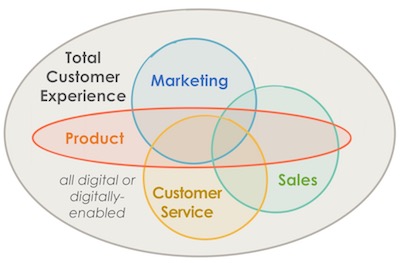

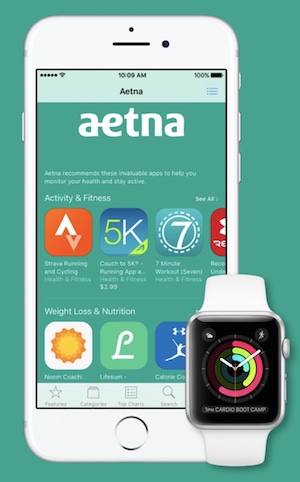
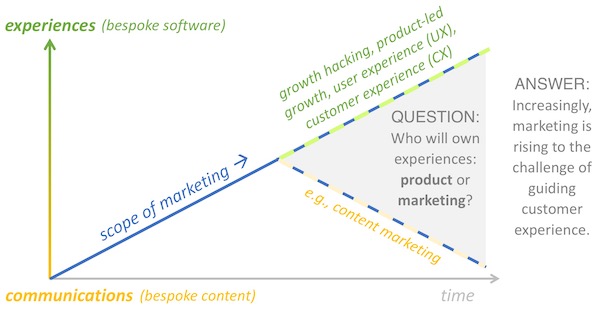
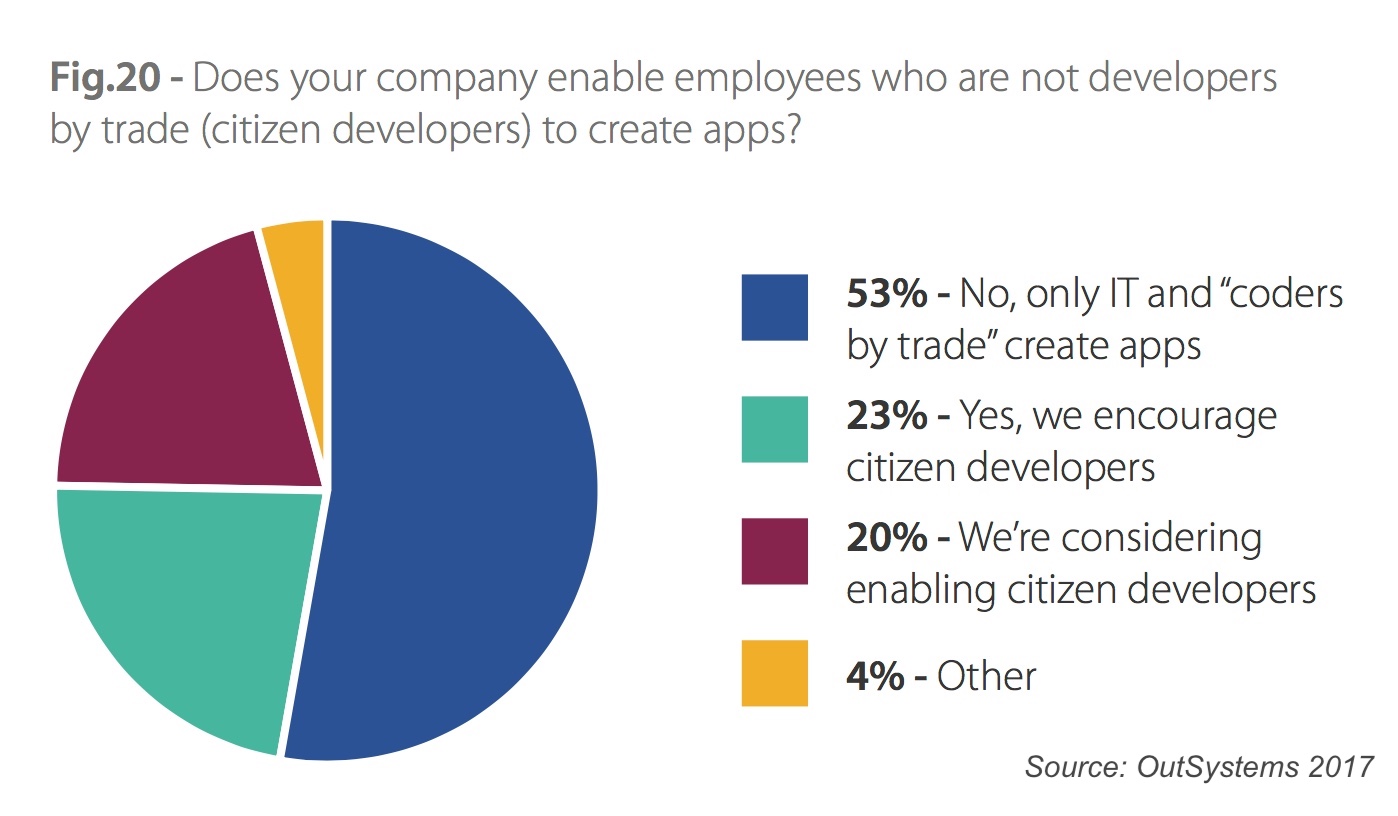
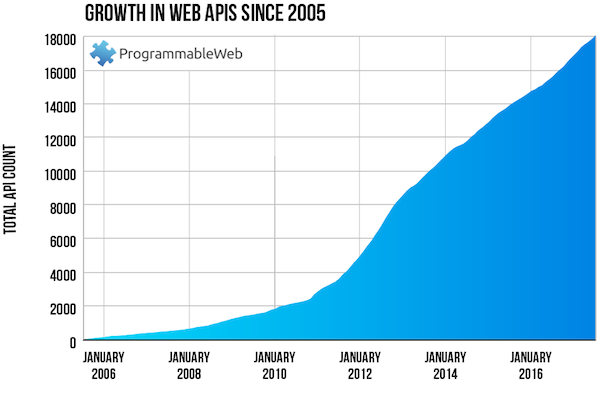 In addition to allowing different applications and businesses to cross-connect, the advantages of cloud-based APIs have changed how core applications themselves are designed and built. Increasingly, they are