2.2 billion hectolitres of beer are consumed across the world each year. Whilst the Germans drink more than anyone, 110 litres per person each year, it is China that boasts the world’s biggest selling beer. Snow Beer, cheap and decidedly watery, is produced in a joint venture with SAB Miller, and has 5% of the global market. This is a market dominated by big breweries, and big brands … Wrong! The beer market, like most markets, is fragmenting rapidly. Craft beers made in microbreweries, serving local or niche audiences, delivering quirky products and in new contexts. This new market diversity changes attitudes – price becomes premium, products becomes experiential, from repetition to exploration.
Beer symbolises the shift from markets of “average products for average people”, to markets of discerning individuals, seeking difference and relevance.
So how do you win in this new world? Last month I was at IMD Business School, on the banks of Lake Geneva exploring how to “change the game” of beer with one of Europe’s leading brewers. To spark our creativity, we sought to apply ideas from other sectors … to give it away free (then find a new way to make money, like Metro newspapers), or build a subscription model (like Nespresso with its coffee pods), or connect users around a shared passion (like Nike+), or pay as you go (like Psonar selling music for a penny a track), or build a network of branded spaces (learning from Tesla’s Supercharger network).
Using the Gamechanger framework from my new book, we explored some recent beer innovations. Change the who … Lululemon, the women’s sportwear brand from Canada, has just launched its Yoga Beer, with 77 calories plus added nutrients to aid your post work-out recovery. Change the why … Problem Solver Beer from the Denmark promises to boost your brain, by helping you think bigger, different and make new connections. Change the what … Moa Beer, perhaps the world’s best beer, made in the finest New Zealand wineries, offers ultra-premium brews and packaging, starting at breakfast time. Change the how … Scotland’s Beer52 offers an annual subscription for a crate of mixed craft beers delivered to your door each week, adding surprise and exploration to my beer.
Nobody is average, and neither should any business. Consider then how you could “change the game” in your market – the who, why, what and how – reaching out to new audiences, with new purpose, redefining your competitive set, getting out of a downwards price spiral, and delivering more distinctive and relevant brands and experiences. It might just become your new compass for profitable growth!
Maranello, Italy
The home of Ferrari is certainly a place of extremes. The roar of over-tuned engines, and blur of de rigour red sports cars, seem at odds with the tranquil countryside. Enzo Ferrari always called his factory an innovation lab, always looking to push the boundaries. He described “extreme technology, beauty of design, and the emotion of driving” as the three enduring keys of the Ferrari brand.
With the cheapest model, the 458 Italia starting at $234,000, the sound of that perfectly roaring engine will still be the closest the majority of us will ever get to the Ferrari experience. Which is why brands like Ferrari are looking to innovate in new ways. The Brand Innovation Lab is all about innovation though the lens of the brand. The more the brand is about human aspirations, rather than product functionality, the more opportunity there is to innovate – both within and beyond the category, to enhance the customer experience, and to reach new audiences for profitable growth.
https://youtu.be/0-_XpW_mfDQ?list=PLrq1QRGfqfN91hidWYSlufZTGOP1vv2sm
“Future Brain” is the busy professional’s secret weapon for boosting mastery, efficiency, and productivity to gain that coveted competitive edge — in business and in life. Designed to be implemented at the individual, team, or organisational level, this in-depth, step-by-step framework leverages neuro-scientific principles to help you develop a solid, habit-changing plan for building and maintaining brain fitness and healthy behaviours.
Author Dr. Jenny Brockis will help you develop your thought processes and your regular routine to get more done with less effort and time. Based on the idea of neuroplasticity, these daily practices improve focus, creativity, and effectiveness to help you stay relevant, competitive, and way ahead of the pack.
You already have a magnificent brain, but you probably take it for granted; we often develop “survival techniques” that force our brain to work with an incompatible “operating system” in an effort to keep up with the ever-increasing velocity of change and information overload. This book helps you beef up your brain awareness so you can take advantage of the built-in features and native capabilities that make the human brain a truly awesome machine.
- Reduce stress and avoid stress-related illnesses
- Foster healthy thinking habits to boost efficiency
- Build your expertise with renewed focus and stamina
- Drive innovation through productive collaboration
A brain that can change, adapt, lead, and collaborate to operate with a high level of flexibility, agility, and creativity is a brain that will serve you well now and into the future. Future Brain turns neuroscience into actionable steps, helping you to train your brain to achieve high-performance in all areas of life.
https://www.youtube.com/watch?v=EaodhvAh16E
Free download of the First Chapter
The brain is plastic, it can be shaped to your advantage … change your brain, change your game!
We know that marketing has fundamentally shifted from a landscape where marketers can utilize mass media to speak at consumers, to one where marketers are simply part of the crowd themselves. The bullhorn of radio, television, printand other one-way interruptive marketing approaches are quickly losing efficacy. So how do you get your brand noticed?
A recent article by Mitch Joel argues that brands must publish more content, that the old standbys of frequency and repetition that worked so well in decades past are still worthwhile today. Truth be told, he’s right. Publishing more content, even if the content isn’t viral or noteworthy, can be a great way to maintain or even grow existing large audiences.
But what if your brand or company doesn’t have an active audience of avid content consumers already?
In this case, piles of mediocre content certainly won’t do the trick. If you don’t already have a large built-in audience, you must attract them from elsewhere. Viral marketing is hands-down one of the best ways to do this.
https://www.youtube.com/watch?v=twh5Dukvrw8
Successful viral campaigns regularly produce 1 million+ impressions, with standouts garnering 10x to 100x that number, often crossing over into the mainstream, and picking up free exposure on television and radio and in print media. For instance, in 2012, the viral campaign “Kony 2012” for the Invisible Children organization garnered nearly 100,000,000 views, and was covered by most mainstream news organizations. The campaign has more than 2,000 results in Google News.
When Dove’s Real Beauty sketches campaign went viral, it garnered nearly 30 million views in ten days. Additionally, it single-handedly added more than 15,000 YouTube subscribers to Dove’s channel over the following two months, not to mention substantial increases in followers on Twitter and Facebook as well.
Robert Plutchik’s comprehensive Wheel of Emotion offers some advice:
1. Negative emotions were less commonly found in highly viral content than positive emotions, but viral success was still possible when negative emotion also evoked anticipation and surprise.
2. Certain specific emotions were extremely common in highly viral content, while others were extremely uncommon. Emotions that fit into the surprise and anticipation segments of Plutchik’s wheel were overwhelmingly represented. Specifically:
- Curiosity
- Amazement
- Interest
- Astonishment
- Uncertainty
3. The emotion of admiration was very commonly found in highly shared content, an unexpected result.
The Dunning-Kruger effect is a type of cognitive bias in which people believe that they are smarter and more capable than they really are. Essentially, low ability people do not possess the skills needed to recognize their own incompetence. The combination of poor self-awareness and low cognitive ability leads them to overestimate their own capabilities.
The term lends a scientific name and explanation to a problem that many people immediately recognize—that fools are blind to their own foolishness. As Charles Darwin wrote in his book The Descent of Man, “Ignorance more frequently begets confidence than does knowledge.”
This phenomenon is something you have likely experienced in real life, perhaps around the dinner table at a holiday family gathering. Throughout the course of the meal, a member of your extended family begins spouting off on a topic at length, boldly proclaiming that he is correct and that everyone else’s opinion is stupid, uninformed, and just plain wrong. It may be plainly evident to everyone in the room that this person has no idea what he is talking about, yet he prattles on, blithely oblivious to his own ignorance.
So what explains this psychological effect? Are some people simply too dense, to be blunt, to know how dim-witted they are? Dunning and Kruger suggest that this phenomenon stems from what they refer to as a “dual burden.” People are not only incompetent; their incompetence robs them of the mental ability to realise just how inept they are.
Incompetent people tend to:
- Overestimate their own skill levels
- Fail to recognize the genuine skill and expertise of other people
- Fail to recognize their own mistakes and lack of skill
Dunning has pointed out that the very knowledge and skills necessary to be good at a task are the exact same qualities that a person needs to recognize that they are not good at that task. So if a person lacks those abilities, they remain not only bad at that task, but ignorant to their own inability.
https://www.youtube.com/watch?v=7pDxQPWD3L4
Think about Moore’s Law.
Intel’s chips have improved performance a factor of 3,500 since they were introduced, he said, reflecting a 90,000-times improvement in energy efficiency and at one-60,000th of the cost.
Were a 1971 Volkswagen Beetle to undergo the same transformation, he said, it would travel at 300,000 miles per hour, achieve 2 million miles per gallon, and cost four cents.
That was how Brian Krzanich, CEO of Intel, opened an evening to celebrate 50 years since Gordon Moore articulated his “law”, and seeking to put it into perspective.
At the age of 86, Intel co-founder Gordon Moore is still very much around to remind people of the scientific and commercial breakthrough he made 50 years ago when he explained to the technical community how semiconductors would develop.
https://www.youtube.com/watch?v=zt-gD5e83BY
Moore’s Law began as a technical article in an electronics-industry trade publication. Moore, while still at Fairchild Semiconductor, posited that the number of transistors on a semiconductor would continue to double every year, a figure he revised to every two years. Moore noted that his prediction, which he had no idea would be “relatively precise,” was an economic observation as much as a scientific one. It took considerable engineering effort, by Intel and others, to make his “law” come true.

Moore also said he tried to get out of the prediction business as quickly as he got into it. “Once you’ve made a successful prediction you avoid making another one,” he said.
Moore’s Law became a guiding light for an industry. His original article also envisioned a future for cheaper, more powerful semiconductors. He envisioned PCs, cell phones, self-driving cars, and electronic wristwatches—all powered by ever-improving chips.
Moore himself didn’t coin the expression Moore’s Law, and he avoided it for decades. “For the first 20 years I couldn’t utter the words Moore’s Law,” he said. “It was embarrassing.” Over time he relented and embraced his accomplishment. Asked by Friedman if he knew which Google search would elicit more responses, Moore’s Law or Murphy’s Law, Moore responded that Moore’s Law would win hands down.
The promise of business-model innovation has long captivated the sustainability field, generating plenty of hype. But all the talk has yet to yield many real business-model changes.
You might not know it to hear companies talk. Any business change can end up being classified as “business model innovation”. In a BCG and MIT survey of executives and managers earlier this year, nearly half of the respondents said their companies had changed their business models as a result of sustainability opportunities. However, the majority of innovations we see involve changes in companies’ processes and/or products, not underlying business models.
This raises the question: What exactly is a business model? The most succinct definition, based on a search across a range of consultancies and researchers, comes from the book Business Model Generation. It defines business models as the “fundamental structures for how companies create, deliver and capture value”. Often, it’s not the product or service alone that determines business success, but the entire value structure around the offering.
SustainAbility and GlobeScan’s report, Changing Tack, reveals an urgent need for fundamentally different approaches to creating, delivering and capturing value. Here are a few important reasons to focus on true business-model innovation.
1. Process and product innovation alone aren’t enough
Incremental process and product innovations have certainly brought us cleaner, more efficient, more socially conscious products and services but as the report points out, “for the most part they’ve failed to grow beyond a premium-priced or green-lifestyle niche”. The vast majority of consumers and companies remain unwilling to pay a premium for such advances. Alternatively, many novel or even radical new process or product innovations have fallen short of their potential because they were unable to compete within the constraints of an existing or traditional business model.
One useful illustration of the power of business-model innovation comes from LifeStraw, which has gained a growing foothold in the developing world. LifeStraw’s product – a personal-use straw designed to remove 99.9% of all waterborne bacteria and parasites – is certainly innovative. But the product is only successful if it reaches those who need it, particularly in countries with less access to clean water. The business model that’s driven the company’s success relies on a unique approach to distribution and financing. The company uses a carbon-offset system to earn families income, via carbon credits, for using the straw instead of cutting down trees for firewood to boil water.

Meanwhile, a Stanford University-based startup, re.source, produces low-cost portable toilets for urban slum residents who don’t have access to hygienic sanitation services. The business model that supports the product innovation includes offering an affordable monthly membership, providing waste-collection services and processing the waste into useful products such as organic fertilizers and energy.
2. New business models can transform industries
The biggest reason for companies to embrace business-model innovation is the threat that current models will ultimately slip or even fail. Examples of business models that have quickly transformed – or even become obsolete – abound across sectors: media (the decline of print), retail (the rise of online shopping and the sharing economy), education (the growth of online degree programs), music (the boom in digital music services such as Spotify and iTunes), telecommunications (the proliferation of smart devices and associated services) and even finance (the creation of peer-to-peer lending).
Many traditional business models that still remain viable today may rely on mispriced resources and other market distortions that make them more competitive than they would otherwise be. As sustainability trends and challenges – including energy and commodity price fluctuation, supply insecurity or demands for transparency – continue to shift the foundations of our current business models, incremental innovation will become less and less effective in enabling companies to adapt and succeed.
Rewards await those who can do it right. In health care, Narayana Hrudayalaya Hospitals, winner of a Financial Times’ Boldness in Business award in 2013, provides a good example. The hospital uses innovative process efficiency, revenue generation, cost structure and financing to make a profit while providing both rich and poor access to vital health care services. The company, along with others such as Aravind Eye Care, is changing the way medical providers in India think about the cost, quality and reach of their services. At Narayana Hrudayalaya, the average open-heart surgery costs less than $2,000, compared to well over $100,000 in the US.
3. Business-model innovation catalyzes broader systems change
According to a 2012 paper from MIT, it’s important to innovate in areas where the competition is unable or unwilling to act – and to involve an entire “activity system” in a way they might find it difficult to replicate. The classic example is the Apple iPod, which wouldn’t have been the game changer that it was without the iTunes ecosystem. That combination dramatically changed how we acquire, store and listen to music.
To innovate within systems, companies need to be able to see and adapt to shifting market conditions and other changes by identifying trends and engaging stakeholders. Leaders must respond to, but also create, systemic change to build new markets while protecting themselves from any dramatic systems shifts that could present a risk. To do all this, companies must be willing to see beyond the obvious, short-term business case.
The demise of Better Place earlier this year provides a cautionary tale that illustrates the need for larger systems change. The electric car venture, based on an innovative battery-swapping technology, sold only 750 cars, while amassing losses of more than $500m. Ultimately, the success of Better Place depended on broader systems changes that never materialized, including tax and/or subsidy support, local government approval in building battery-switching stations and automaker design partnerships.
None of this is to say that process and product innovation aren’t needed. But it isn’t enough for companies to fully capitalize on the much-hyped promise of “sustainable innovation”. Along with product and process innovation, we urgently need to make fundamental changes to business models – and the systems that support them – to meet our current and future sustainability challenges. Companies have the opportunity to use their unique foresight and influence to improve their own competitive positions and lead the way to better business models for others.
This article first appeared in The Guardian
“For the good influencers of today and tomorrow, the secret lies in understanding we cannot change people’s minds. But we can influence their behaviour when we learn how the mind works.”
Zoe Chance helps great people become more influential. As an assistant professor of marketing at Yale School of Management, she teaches a popular elective called Mastering Influence and Persuasion, aka “Doing Uncomfortable Things That Make You a Better Person.”
Her research has been published in top academic journals like Proceedings of the National Academy of Science andPsychological Science, and covered in media outlets like The New York Times, The Wall Street Journal, The Economist and the BBC. She has appeared on CNN and written for Harvard Business Review and Psychology Today. Google uses her behavioral economics framework as the basis for their global food policy. Zoe speaks internationally for Fortune 500 firms and leading NGOs, and her TEDx talk, How to Make a Behavior Addictive, has over 500,000 views. In 2017, Thinkers50 named Zoe a top global management thinker to watch.
Prior to Yale, Zoe managed a $200 million segment of the Barbie brand at Mattel, acted on stage and film, and earned her bachelor’s from Haverford College, MBA from USC, and doctorate from Harvard Business School. She’s writing a book tentatively titled, “Influence for Nice People: The New Science of Getting Your Way,” to be published by Random House as a lead title in Spring 2020.
Dubai hosts the World Expo 2020, and the UAE government has declared 2015 the year of creativity. Whilst the nation’s rapid wealth has come from oil and tourism, it knows it needs to move beyond this, to become a Singapore-like hub of knowledge, business and finance.
This is not just about ideas and innovation, but about thinking differently. In fact we will soon be launching a new Gamechangers competition to find the best innovators in the Middle East, innovation labs to drive action, and an online showcase of winners.
One of the most effective innovation tools is to “reframe” what you do. Working with the UAE’s financial services authority this week, we initially talked about rules and regulation of its two growing stock markets in Abu Dhabi and Dubai. However it was only when we started thinking about what stakeholders really wanted, from investors to government, that we saw the opportunity to innovate – to attract new investors, to build a more vibrant market, and to drive growth in the national economy.
Emirates, the airline, is a shining example of this, reframing from a regional airline built on Dubai as a destination, to the city as the global hub of international air travel. Not just an ambition, already a reality – growing from 40bn to 200bn RPKs (revenue passenger kms) in the last 10 years, and now twice the size of old market leaders like British Airways and Lufthansa. Incredible.
Explore my best-selling creativity and innovation book, with extracts and downloads Creative Genius
What makes Chinese mandarin and Japanese kanji so distinctive and beautiful are its logograms, a written character that represents a word or phrase, in a similar way to the Egyptian hieroglyphs.
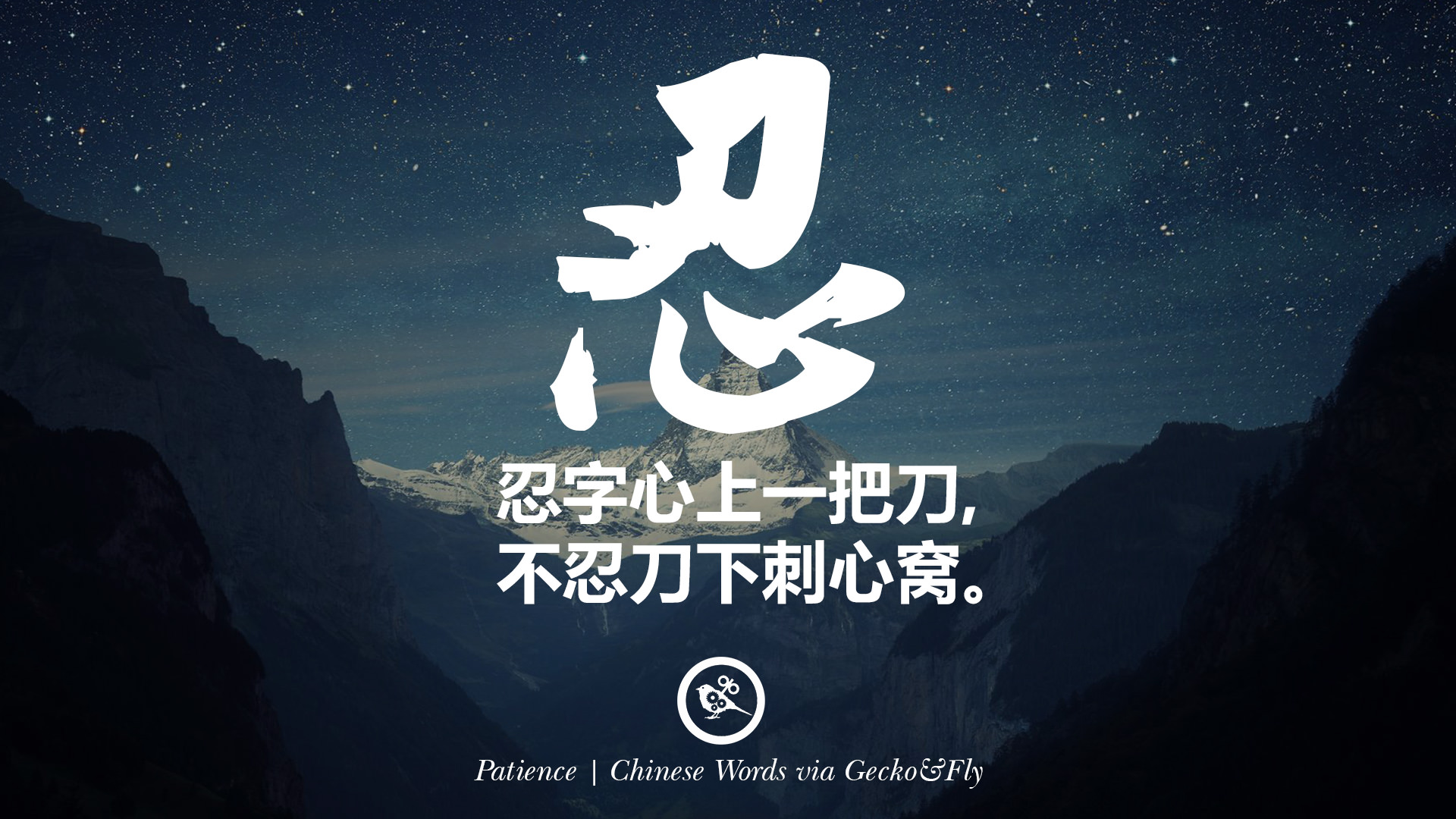
忍字心上一把刀, 不忍刀下刺心窝。
The Chinese word (also Japanese Kanji) for patience is 忍, it consist of 2 other Chinese characters, they are 刀 (Knife) and 心 (heart). The idea is that one must always be patience, if we failed to do so, we shall be punished by our anger. This can be seen where the knife 刀 will fall and pierce our heart 心, subsequently wounding ourselves. Confucius once said, before you embark on a journey of revenge, dig two graves.
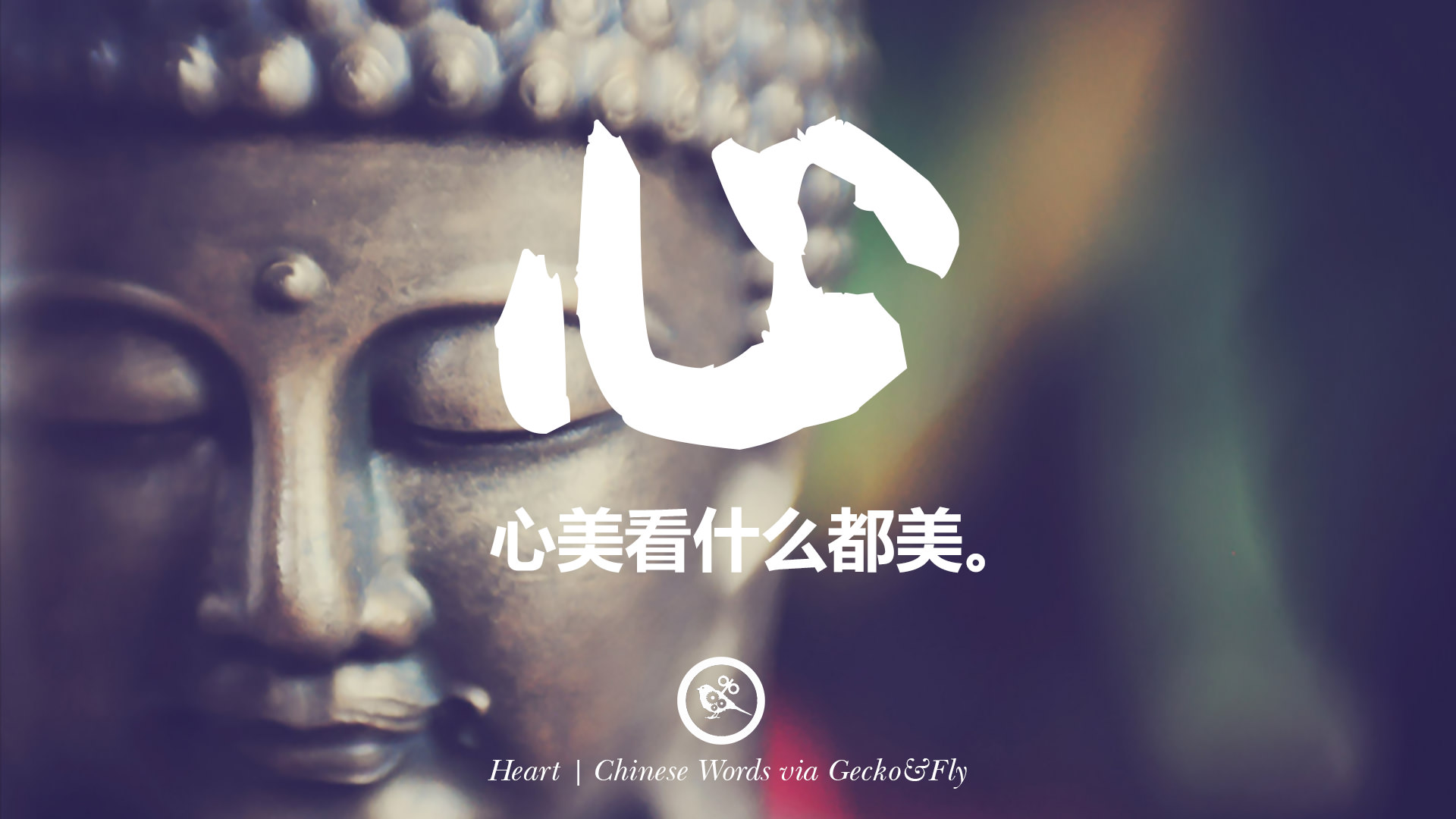
心美看什么都美。
心 is a very simple Chinese word. Life is simple, if we choose to see things in a positive way, life will always be positive. Confucius once said, “Life’s really simple, but we insist on making it complicated.”

飯後一根煙, 快樂似神仙。 明知火燒西土, 為何还要抽煙?
Written in the Traditional Chinese – 煙 consist of 3 character, 火 (Fire), 西 (West), and 土 (Land). Based on the Chinese Legend 西游记 (Journey to the West), when 西 and 土 combined, it means Heaven or Afterlife. On the other hand, when all 3 combined, it reads as Smoke or Smoking. Why in the world would someone smokes knowing that the action of smoking means to burn heaven?
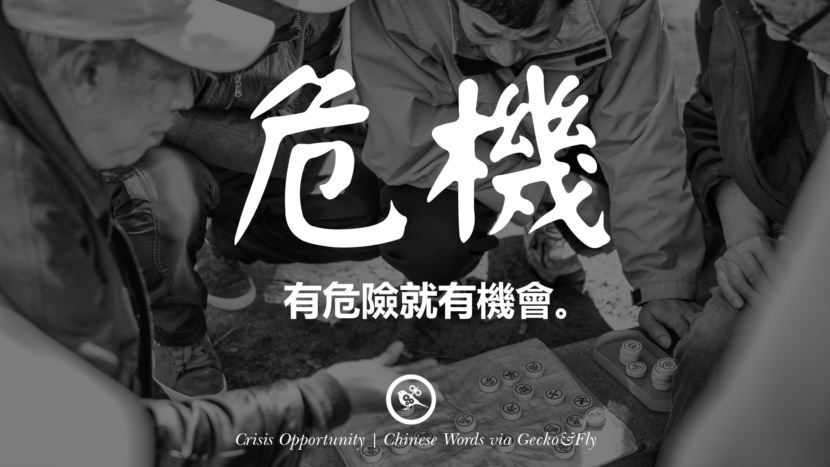
有危險就有機會
危機 is composed of two words. One represents danger and the other represents opportunity. It was beautifully misquoted by President JFK in one of his speeches, unfortunately, it doesn’t mean Opportunity in Crisis, it simply means ‘In Time of Danger’.

愛字里, 一顆心。 没有心, 如何愛?
愛 (Love in Traditional Chinese / Japanese kanji) has another Chinese character within it, that is 心 (Heart). Therefore how can a person loves when he or she loves without a heart?
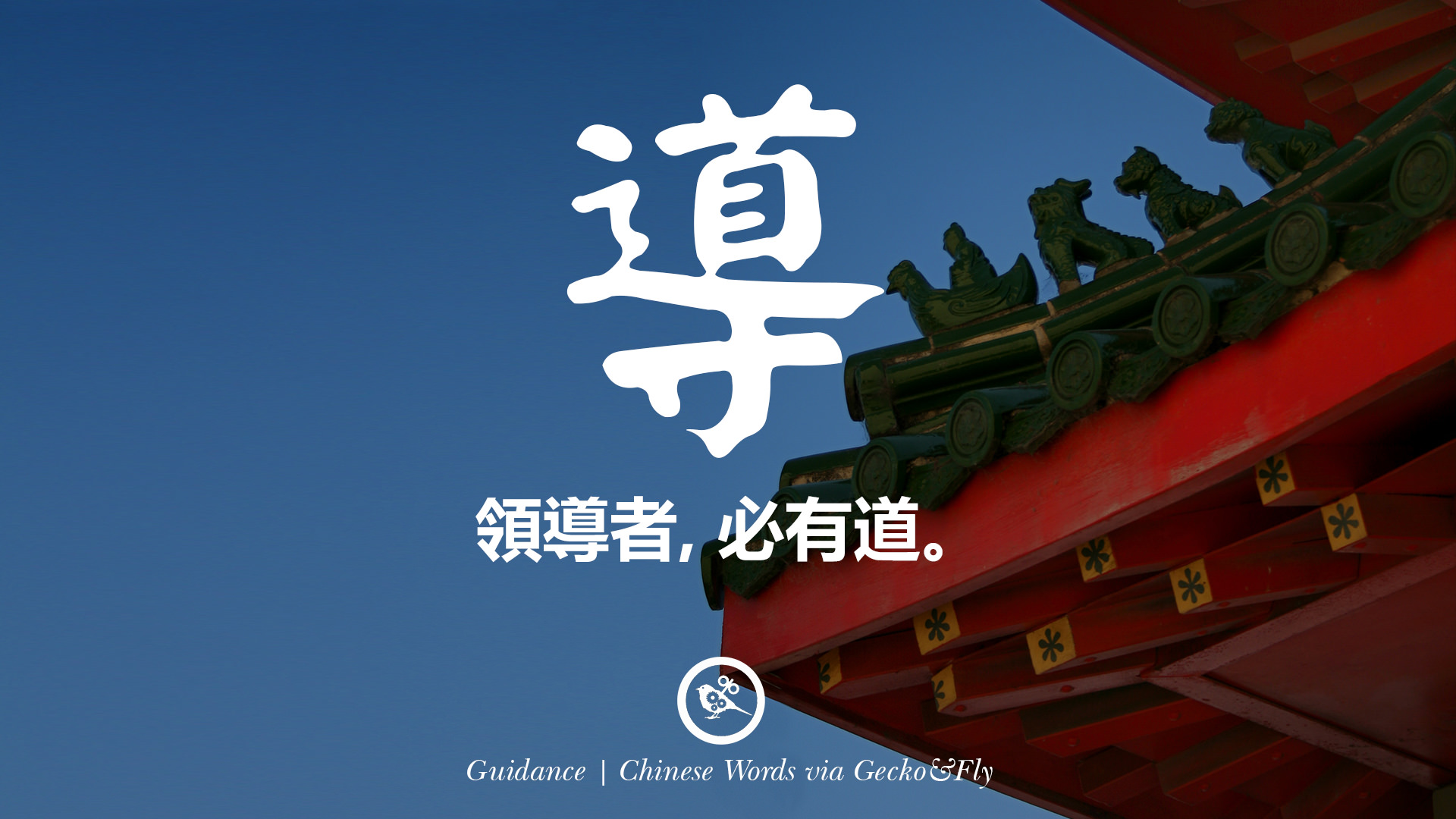
領導者, 必有道。
導 (Guidance) is made up of 2 characters, the top part consist of 道, which means moral values. How can a person guide and lead a team when he or she lacks moral (道) values?
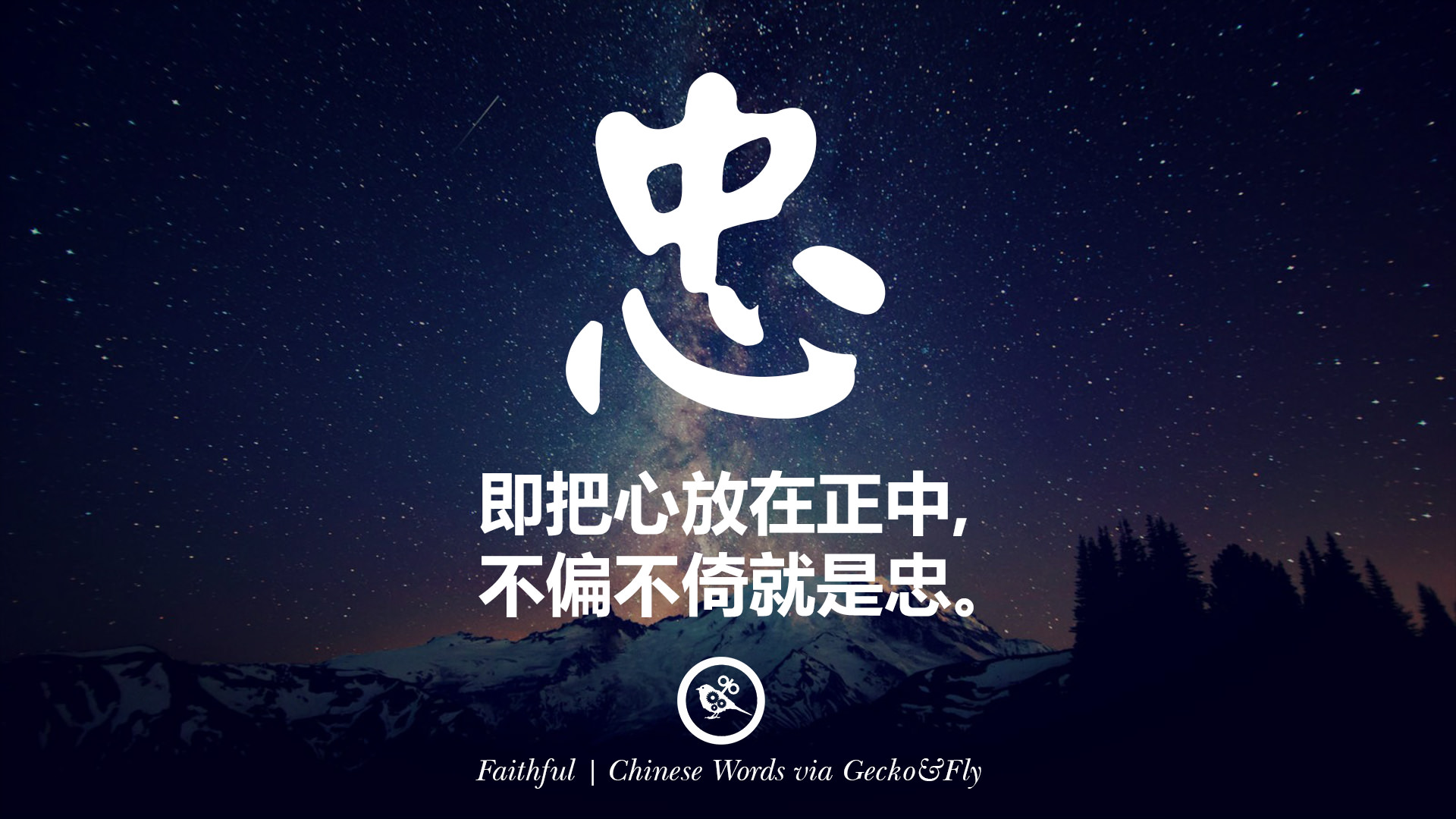
即把心放在正中, 不偏不倚就是忠。
忠 means faithful or loyalty, it too consist of 2 characters, which is 中 (Middle) and 心 (Heart). We must always remain faithful and not veer towards the left or right.
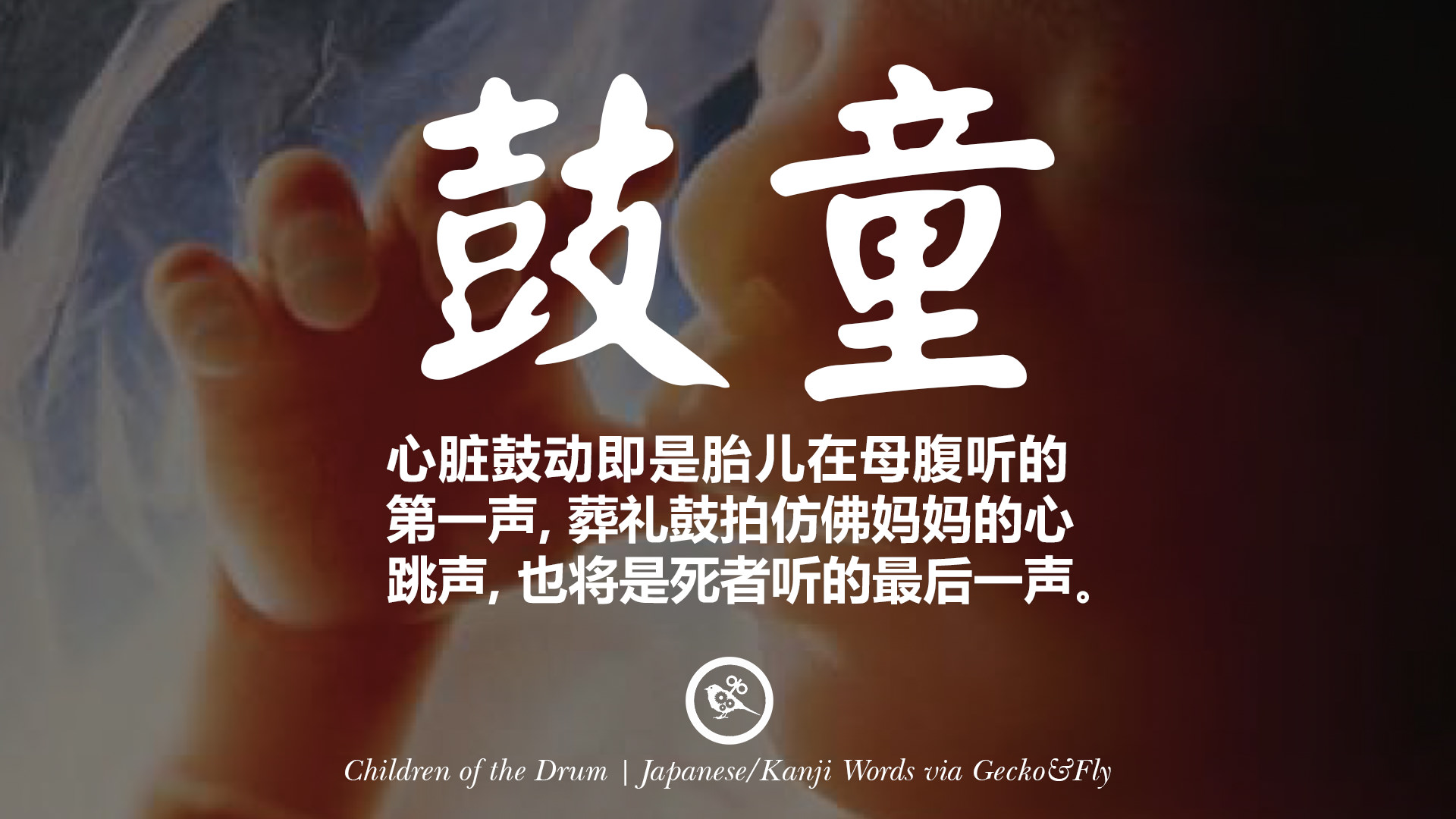
心脏鼓动即是胎儿在母腹听的第一声, 葬礼鼓拍仿佛妈妈的心跳声, 也将是死者听的最后一声。
In Japanese Kanji (Chinese words used in the Japanese language) the word 鼓童 (Kodō) conveys two meanings – “heartbeat” the primal source of all rhythm and, read in a different way, the word can mean “children of the drum”.
The belief is that the first sound every humans heard is the beating of their mother’s heart, therefore in traditional Asian funeral possession, there will be drums playing from the start of the possession until it reaches the final resting place, in hope that the last ‘heartbeat’ sound generated by the drum’s vibration vibrates through the deceased for the last time – the rhythm of life.

九龍北部的八條山脈亦即為龍脈, 再加上皇帝自己, 便是九條龍脈
9th Dragon, also known as Kowloon in Cantonese. The name Kowloon is made up of two Cantonese words (a Chinese dialect), ‘Kow’ meaning nine and ‘loon’ meaning dragon. Legend has it that a boy emperor who once lived here noticed there were eight hills so he called them the ‘Eight Dragons’. An adviser quickly pointed out that the emperor was wrong and the place should be known as ‘Nine Dragons’, for these are 9 dragons since the emperor himself is considered to be a dragon. In life, be the 9th dragon.