“Changing World, Leading Change” with Pasha Holding
December 2, 2025 at IE Business School, Madrid, Spain (invitation)

- Summary of Changing World, Leading Change by Peter Fisk
Incredible technologies and geopolitical shifts, complex markets and stagnating growth, demanding customers and disruptive entrepreneurs, environmental crisis and social distrust, unexpected shocks and uncertain futures.
How do you make sense of today’s rapidly changing world? How will you succeed in tomorrow’s world?
We live in an age of extraordinary acceleration. Technologies evolve faster than companies can adapt. Markets shift as new generations, new economies, and new expectations reshape what matters. The world is more connected, more complex, and more unpredictable than ever — and yet, never more full of possibility.
This senior executive workshop is designed for leaders who want to rise above disruption and actively shape what comes next. It’s a fast-paced, thought-provoking, and deeply practical exploration of the forces redefining business — and the mindsets, strategies, and leadership needed to thrive in them.
Across 5 sessions, we move from global foresight to strategic reinvention, from technological innovation to the human dimensions of leadership in an AI-empowered age. The journey is about seeing differently, thinking systemically, and leading boldly — turning change into opportunity, and vision into reality.
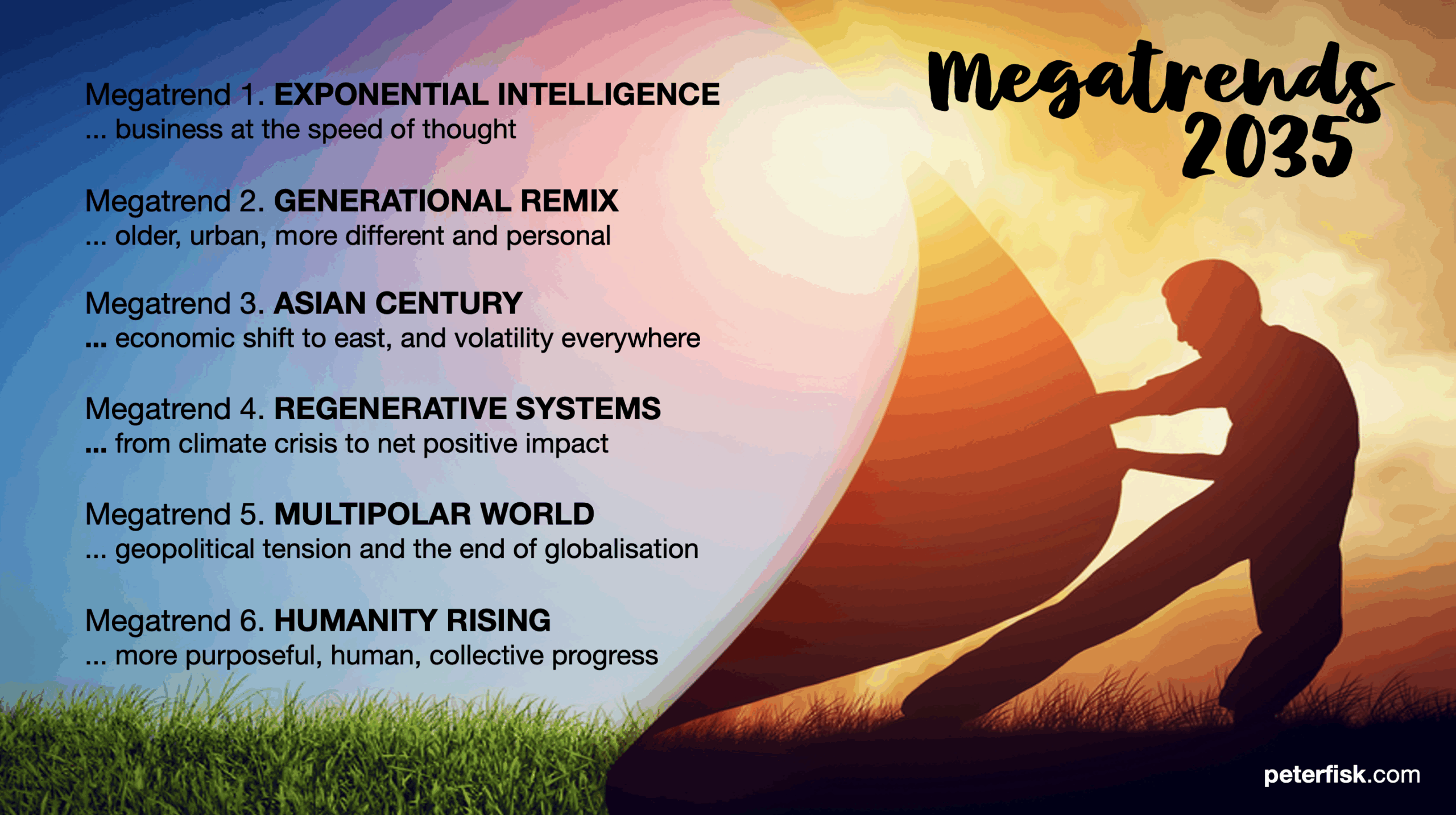
Session 1: Megatrend Futures
Objective: To develop a future-ready leadership mindset that anticipates change and translates disruption into the best new opportunities.
Key Topics
- Future Shaping, Foresight and Sensemaking
- Change Drivers and Megatrends
- Profitability, Growth and Value Creation
Future-shaping leaders don’t just explore the future, but shape it their advantage. Companies like Apple and Nvidia have turned megatrend mastery into strategic advantage: Apple’s multimodal AI ecosystem shift, Amazon’s logistics-with-intelligence transformation, and NVIDIA’s dominance in AI infrastructure all stem from reading technological and societal waves earlier and better than others. Meanwhile, L’Oréal has harnessed demographic shifts and the beauty–tech convergence to drive another wave of premium global growth powered by augmented beauty diagnostics and personalised product ecosystems.
Legacy companies that reinvented themselves through trend sensitivity—such as Fujifilm moving into bio-materials and medical devices, DSM transitioning into precision nutrition and biosciences, and Lamborghini investing in electrified high-performance engineering—highlight how megatrends can unlock entirely new value pools. Even fast-growth challengers such as Xiaomi and BYD continue to outperform because their strategies originate not in their categories, but in megatrends: hyper-connected living, electrification, and digital lifestyles. Their success demonstrates that megatrend intelligence is no longer optional—it is the strategic OS for reinvention.
Takeaway: Leaders must look forwards not backwards, shaping not waiting for the future, to succeed in a world where advantage who understands and shapes the future best.
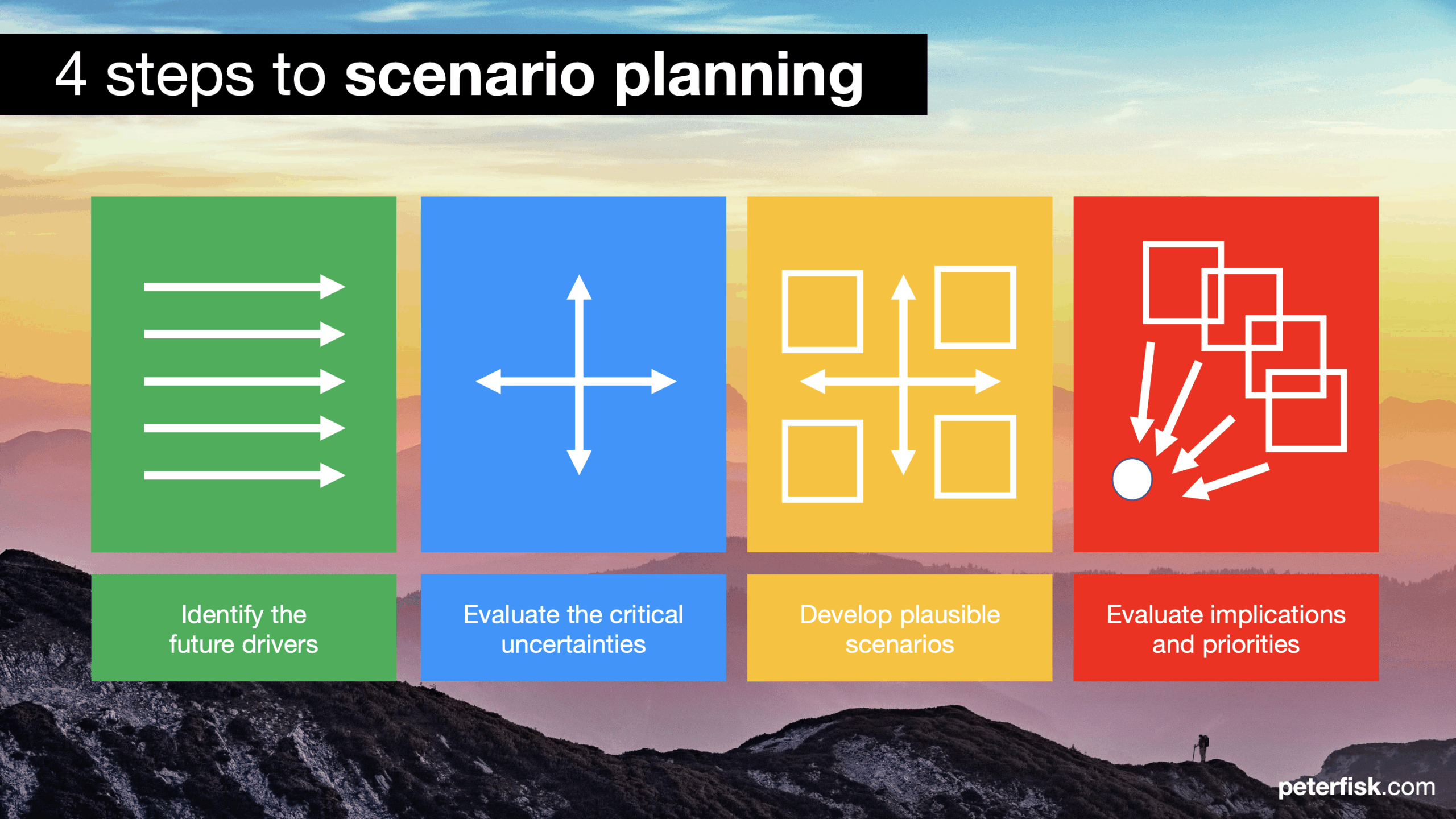
Session 2: Future Scenarios
Objective: To explore multiple futures and building strategic options around disruptive technology and dynamic markets.
Key Topics:
- Market Disruption and Continuous Reinvention
- Data and AI, Networks and Technologies
- Scenario Planning and Future Options
Disruption has become multi-dimensional: AI, robotics, bio-innovation, Web3, and climate technologies are reshaping every sector simultaneously. Frontier innovators like ASML, Waymo, and Rocket Lab demonstrate how S-curve transitions are accelerating. ASML’s 2025 delivery of next-gen High-NA EUV systems is setting up entirely new semiconductor performance curves. Waymo’s autonomous ride-hailing networks are scaling in Phoenix, LA, and Austin, forcing leaders to imagine city mobility futures. Illumina’s breakthroughs in low-cost whole-genome sequencing redefine possibilities for precision medicine. Even Insilico Medicine is reshaping drug discovery by designing molecules and testing candidates using AI-first pipelines.
Disruption is not only deep tech. Cultural disruptors like Liquid Death, fast-growth platforms like Rappi, and climate-innovation ecosystems like KlimaDAO show that scenario thinking must address behavioural and societal shifts just as much as technological curves. Companies like BYD, NIO, and Xiaomi illustrate how new entrants ride emerging S-curves—electrification, autonomy, software-defined mobility—to leapfrog incumbents. Scenario planning today requires leaders to understand dual disruption: exponential tech + exponential expectations.
Takeaway: Leaders don’t see disruption as a threat and instead use scenarios to build agility,to ride the waves of change, and create their preferred future, before they have to.

Session 3: Dynamic Strategies
Objective: To develop adaptive, purpose-driven strategies and ecosystem business models fit for volatile markets.
Key Topics:
- Strategy in Uncertainty, Purposeful and Adaptive
- New Business Models in Banking and Beyond
- Platforms and Ecosystems, Organisations and Cultures
The world’s most adaptive companies build strategy as a living system. Shopify, Amazon, and Disney all demonstrate this shift: Shopify’s expansion into AI-powered commerce automation, Amazon’s move to ambient intelligence and “commerce-everywhere” APIs, and Disney’s pivot to a unified streaming-plus-parks ecosystem illustrate how strategy becomes dynamic when customer value—not internal planning cycles—sets the pace. Xiaomi and Apple reinforce the same principle through platforms: their ecosystems thrive by combining hardware, software, and services into self-reinforcing value loops.
Financial services provides some of the most striking examples. DBS, Nubank, and Lemonade Insurance have reinvented traditional banking models with AI-driven credit, real-time personalisation, and ecosystem services. Schneider Electric and Unilever extend this thinking into adjacent “finance-enabled” capabilities—energy-as-a-service, digital performance contracts, and integrated ESG-value strategies. These organisations prove that adaptive strategy requires three capabilities: platform thinking, continuous reinvention, and cultures that reward experimentation over certainty.
Takeaways: Leaders realise that rigid, multi-year strategies are no longer fit for purpose. They must build ecosystem-ready, adaptive strategy systems that evolve as fast as the environment.
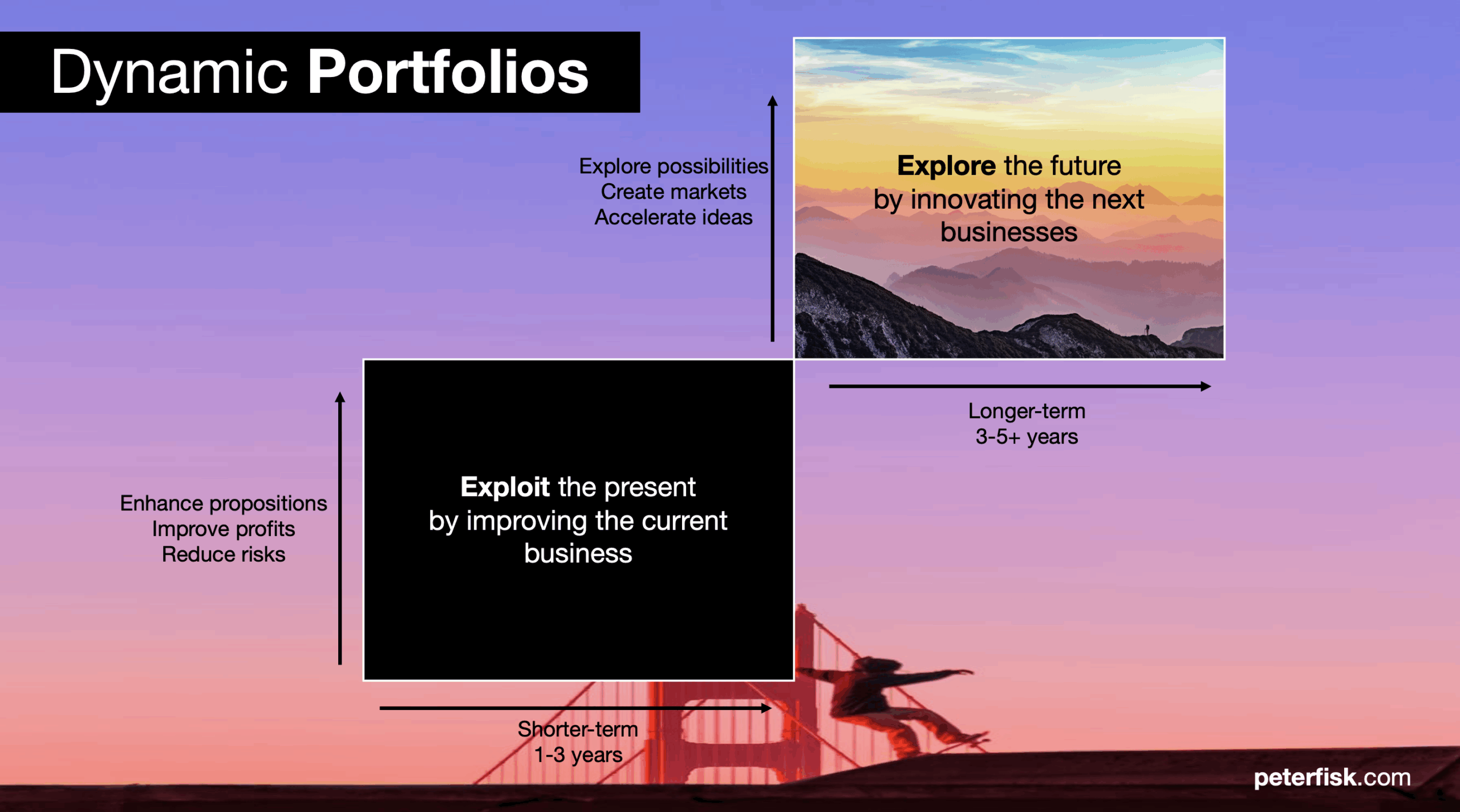
Session 4: Strategic Innovation
Objective: To recognise innovation as solving problems, balancing business optimisation with bold exploration, building innovation portfolios that accelerate reinvention.
Key Topics:
- Problem Solving and Experimentation
- Harnessing Ai and Tech to Innovate Smarter and Faster
- Innovation Portfolios to Exploit Today and Explore Tomorrow
The most innovative organisations combine operational excellence with “future bets.” PingAn, the world’s largest insurer is a great example, moving to healthcare, mobility and real estate. Patagonia continues to lead with regenerative materials and circular models while scaling profitable mission-driven growth. Disney blends creative innovation with technological advancement through immersive experiences, robotics, and AI-generated production tools. Amazon, Shopify, and DBS provide global benchmarks for structured experimentation at scale—building mechanisms to test, learn, iterate, and industrialise ideas rapidly.
Industrial and sustainability innovators provide equally powerful lessons. DSM and Schneider Electric show how innovation drives impact and commercial advantage simultaneously: DSM’s precision fermentation platforms, Climeworks’ direct-air-capture scaling, and Schneider’s AI-powered energy-management systems are now industry-moving innovations. BYD exemplifies rapid scaling—from batteries to EVs to global manufacturing—demonstrating how innovation portfolios can be leveraged across multiple high-growth verticals. These companies reveal that innovation is not a department—it is a system.
Takeaway: Innovation becomes a true differentiator when leaders treat reinvention as a capability, a continuous strategic activity, not a one-off change project.
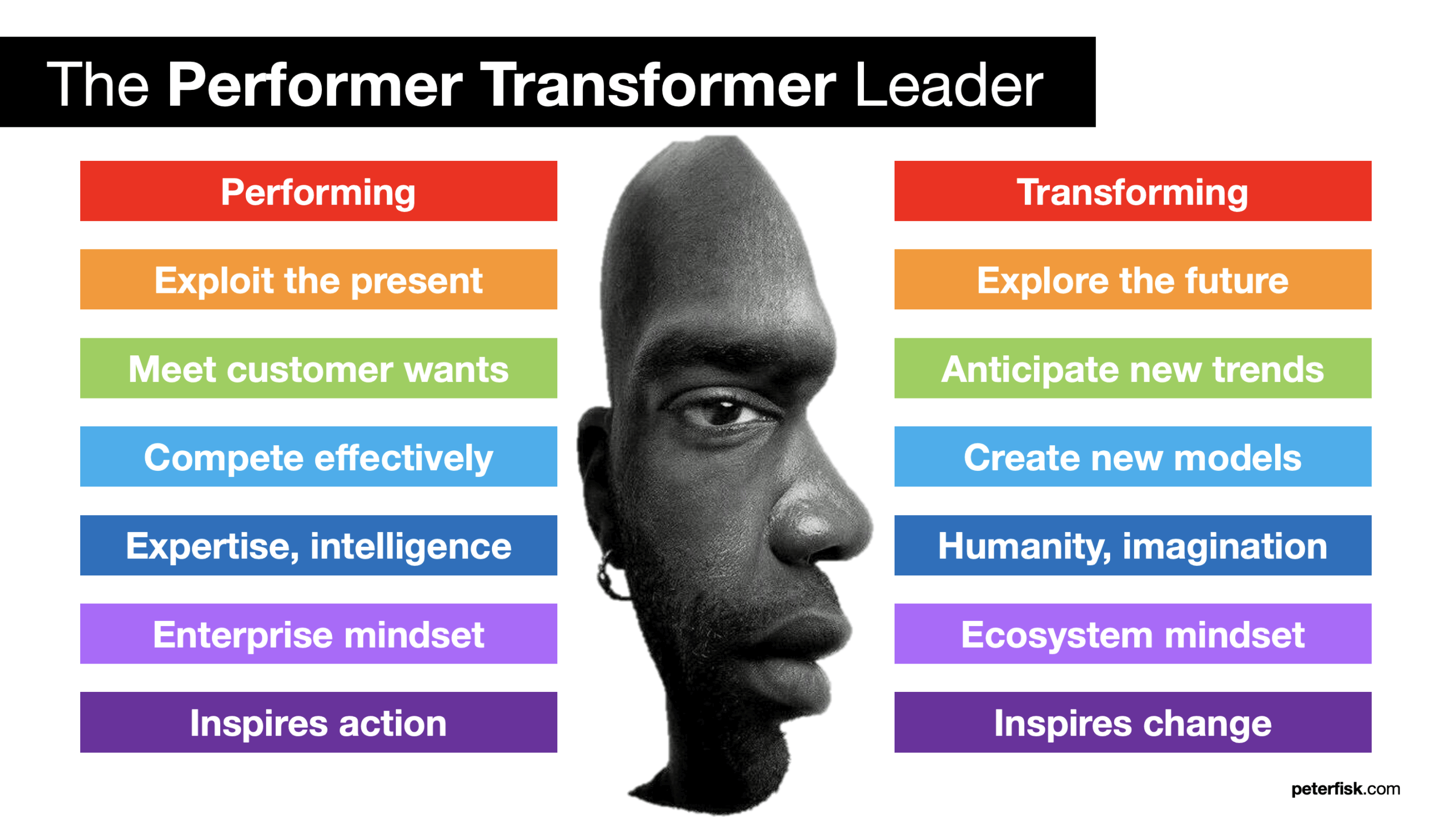
Session 5: Leading Futures
Objective: To develop the leadership DNA required to inspire all stakeholders, to envision a better future, and simultaneously deliver success today, and tomorrow.
Key Topics:
- Leading Change, the “Performer Transformer” Leaders
- Business Transformation, the New Leadership Superpower
- Growth Mindset: Curiosity, Creativity and Courage
Future-ready leadership requires dual capability: driving execution while inspiring reinvention. Companies like Unilever, Ping An, and Schneider Electric show how purpose-led leadership can mobilise entire organisations toward sustainable growth. Patagonia continues to redefine stewardship leadership with its “Earth is our only shareholder” ethos. Meanwhile, DBS and Amazon exemplify cultures where curiosity, bold thinking, and disciplined experimentation permeate daily decision-making.
Courageous leadership is equally evident in companies navigating radical transformation. Disney is redesigning its storytelling and experience engines, BYD is reshaping global EV markets, and Nubank is redefining inclusive financial access for emerging economies. Rocket Lab and Climeworks remind leaders that moonshots—literal or environmental—require resilience, optimism, and a bias toward action. The next generation of leaders must embrace ambiguity as fuel, not friction.
Takeaway: The leaders who win next are those who can perform and transform—dual thinkers with curiosity, courage, and reinvention in their DNA.

From Insight to Impact
Each session builds from foresight to strategy, from innovation to leadership — empowering participants to connect the global and the local, the technological and the human.
By the end of the programme, leaders will have:
-
A deep understanding of the six megatrends reshaping their world.
-
A new approach to dynamic strategy — continuous, adaptive, and purpose-led.
-
Practical tools to innovate through AI, ecosystems, and customer insight.
-
A leadership mindset built on curiosity, courage, and collaboration.
Above all, they will be ready to lead the future — to transform their businesses, their industries, and themselves.
Because in an era of incredible change, the greatest advantage is not technology or scale, but imagination — the ability to see what could be, and the courage to make it real.