Future Book Forum 2025: Reinventing Publishing Ecosystems
November 12, 2025 at Munich, Germany (2 days, 12-13 November)
Hosted by Peter Fisk | Organised by Canon | Shaping the future of publishing
- The Future of Books: How megatrends will transform publishing
- The Infinite Page: how AI is reinventing publishing
- Megatrends 2035, the 6 Future Drivers
- The Wisdom of Nature, Learning from Ecosystems
- Ecosystems Inc, from Music to Publishing
- The Spotify of Books, the Gelato Story
- The Nexus Effect, The Power of Connections
For more than a decade, the Future Book Forum has been where the publishing world looks beyond the horizon — a unique meeting of visionaries, creators, and technologists reimagining what books can be, and what publishing can become. Each year, it has pushed boundaries: from digital transformation and sustainability, to creativity, personalization, and now, the power of ecosystems.
This year, the Forum explores how publishing is moving beyond traditional books into dynamic ecosystems that connect creators, technology, communities, and business models. The sessions are designed as a journey: from rethinking publishing at a strategic level, through inspiration from nature, to technology-driven transformation, talent development, and sustainable innovation.
With the theme “Beyond Books: Unlocking the Power of Ecosystems,” the Forum explores how publishers, printers, creators, and platforms can thrive together — not as isolated players, but as connected partners creating shared value. Inspired by nature’s ecosystems, the Forum delves into new ways to co-create, distribute, and sustain value — for readers, authors, brands, and the planet.
As host, bestselling author and business futurist Peter Fisk opens the two-day event, he invites participants to think not just about products, but about connections: networks of people, technologies, and ideas that can unlock entirely new worlds of opportunity. And fundamentally, those connections are human, and innovatively enabled by AI and ecosystems. This becomes the big new opportunity to do more for people. And to look beyond the book.
Agenda, Day 1 : Rethinking value through connections
Reinventing Publishing Ecosystems … Peter Fisk, GeniusWorks
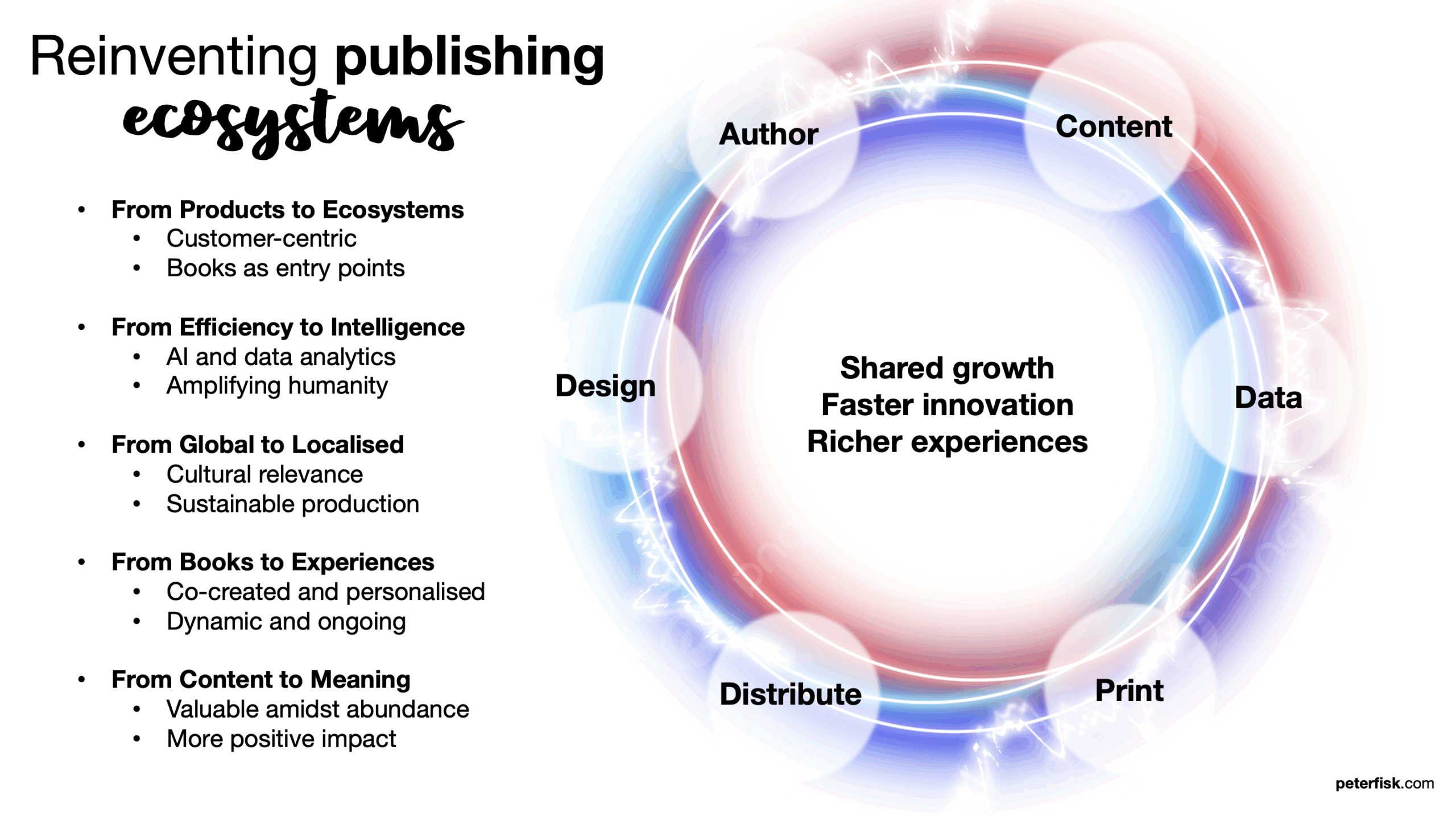
How can book publishers and printers achieve more together? How can they evolve from product-centric to ecosystem-centric strategies. Takeaway: Publishing thrives when networks of creators, technology, and communities converge beyond boundaries.
Peter Fisk is a scientist, strategist and storyteller. After beginning his career in a physics lab, he managed the Concorde brand for British Airways before founding GeniusWorks, a strategy and innovation business that helps leaders reinvent their organisations for a fast-changing world. He has worked with over 300 companies in 50 countries, and also leads executive programs at IE Business School in Madrid. He is bestselling author of 10 books including Gamechangers and Business Recoded. His work explores how purpose, creativity, and technology can power more profitable progress. He is known for combining analytical rigour with human insight, inspiring companies to think bigger and act bolder.
Ecosystems Inspired by Nature … Saskia van den Muijsenberg, Biomimicry NL
How nature’s 3.8-billion-year-tested systems can inspire resilient, regenerative publishing ecosystems. Takeaway: Biomimicry teaches that adaptability, interconnection, and resource efficiency are critical for sustainable innovation.
Saskia van den Muijsenberg is co-founder of BiomimicryNL, based un Utrecht, helping organisations innovate by learning from nature. A pioneer of biomimicry in Europe and the first Certified Biomimicry Professional in the Netherlands, she has guided companies and governments toward more regenerative strategies. With roots in change management and marketing, she translates the intelligence of ecosystems into business design. Apparently, she is as comfortable discussing beetles’ water-harvesting shells as she is corporate innovation frameworks. Her mission: to replace extraction with emulation, showing that nature doesn’t just inspire beauty, but smarter and more sustainable business.
Business Ecosystems Defined … Julian Kawohl, HTW Berlin & Ecosystemiser
Defining a business ecosystem and how it links to corporate strategy, showing how publishing can operate like platform businesses. Takeaway: Understanding value flows and partnerships transforms linear models into collaborative networks.
Julian Kawohl is a professor of strategic management at Hochschule für Technik und Wirtschaft Berlin and co-founder of Ecosystemizer, a platform that helps traditional companies think and act like digital ecosystems. A former head of strategy at AXA Germany, he now focuses on the shift from linear business models to interconnected networks. His “Ecosystem Strategy Map” is used by companies to find their role in emerging value webs. He blends academic clarity with entrepreneurial practice, often reminding executives that “industry boundaries are dead.”
How Adidas Uses Ecosystems … Christian Koeber, Adidas
Adidas is using ecosystems in current and innovative business models, from suppliers and retailers to athletes and events, creating a system of shared value. Takeaway: Ecosystem thinking drives agility, collaboration, and consistent brand experience.
Christian Koeber leads the Global Brands Project Management Office at Adidas, where he orchestrates complex brand and strategy programmes across regions. With a background in corporate strategy, leadership development and agile transformation, he plays a central role in translating big ideas into actionable initiatives. Previously a lecturer in business management, he is fascinated by how creative and operational worlds intersect. Colleagues describe him as a rare blend of disciplined planner and restless innovator — equally at home with Gantt charts and grand visions.
The New Print Revolution … Henrik Müller-Hansen, Gelato
The future of publishing is here. How print-on-demand networks can decentralise production, reduce waste, and empower creators globally. Takeaway: Localised production is a core enabler of agile, sustainable publishing ecosystems.
Henrik Müller-Hansen is the founder and CEO of Gelato, the global print-on-demand network that lets creators and businesses produce locally, anywhere in the world. The Oslo-based Norwegian entrepreneur and former CEO of Tele2 Norway, he served in his country’s Navy Underwater Demolition Team before diving into technology. His leadership style blends military precision with creative ambition. Gelato’s mission — “production as a service” — reduces waste, carbon emissions and cost, while empowering entrepreneurs globally. In 2021 Gelato was valued at just over $1 billion, a unicorn of the publishing world.
Agenda, Day 2: Building the ecosystem future
Unlocking Value Through Ecosystems … Dalia Ibrahim, Nahdet Misr
Explores how digital platforms and technologies can expand reach and monetize content in emerging markets, and specifically in the education sector. Takeaway: Ecosystem approaches unlock latent value in existing assets and communities.
Dalia Ibrahim is CEO of Nahdet Misr, one of the Arab world’s most influential education and publishing groups. She has transformed a century-old Egyptian print business into a digital learning powerhouse, spanning e-books, educational platforms and edtech ventures. Passionate about learning as liberation, she focuses on making quality education accessible to all Egyptians. She is also known to blend design thinking, behavioural science and storytelling in curriculum development — a true believer that curiosity, not conformity, drives progress.
Closing the Tech Skills Gap … Ayman Bazarra, Sprints
The talent challenge, showing how intensive training and deployment programs prepare the next generation of tech-enabled publishing professionals. Takeaway: Building ecosystems requires not just tools, but skilled people.
Ayman Bazarra is the co-founder and CEO of Sprints, an Egyptian startup that trains and employs young people in software development through a “hire-train-deploy” model. His mission is to close the region’s tech talent gap by providing guaranteed jobs after intensive, personalised learning journeys. A serial entrepreneur and former consultant, he brings sharp business discipline to an education challenge. His leadership style borrows from agile software methods — short sprints of progress, constant feedback and continuous learning. His vision is to turn Africa into a global tech talent hub, creating opportunity through skill and speed.
Booxite: A New Publishing Model … Hermann Eckel, Pagina
Booxite is an innovative publishing platform that harnesses ecosystem thinking to merge traditional and digital workflows, connecting everything together. Takeaway: New business models are key to sustaining publisher creativity and efficiency.
Hermann Eckel is Managing Director of Pagina, a digital and print production company serving publishers and cultural institutions. Formerly with Tolino Media and Holtzbrinck, he has been at the forefront of Germany’s digital reading revolution, helping traditional publishers embrace e-books and online platforms. Eckel combines a love of literature with a fascination for technology, advocating for open ecosystems and fair author models. He’s also a passionate musician and often draws parallels between jazz improvisation and creative leadership. His guiding idea: publishing’s future lies not in replacing print, but in harmonising the physical and digital.
The Digital Product Passport … Dominik Haacke, Mediaprint Solutions
Haacke explores traceable, data-driven publishing products that enable transparency and lifecycle management. Takeaway: Digitalised product data strengthens collaboration across the ecosystem.
Dominik Haacke leads Mediaprint Solutions, a company that specialises in innovative print marketing and distribution strategies. He has built a career around transforming print into a data-driven, personalised communication medium. Known for his curiosity and experimentation, he’s helped reinvent the perception of print in an increasingly digital world. He is also an enthusiastic collector of vintage printing tools, seeing them as symbols of craftsmanship in a high-tech age. His philosophy blends tradition and transformation — proving that in marketing, touch and texture can still be powerful forms of connection.
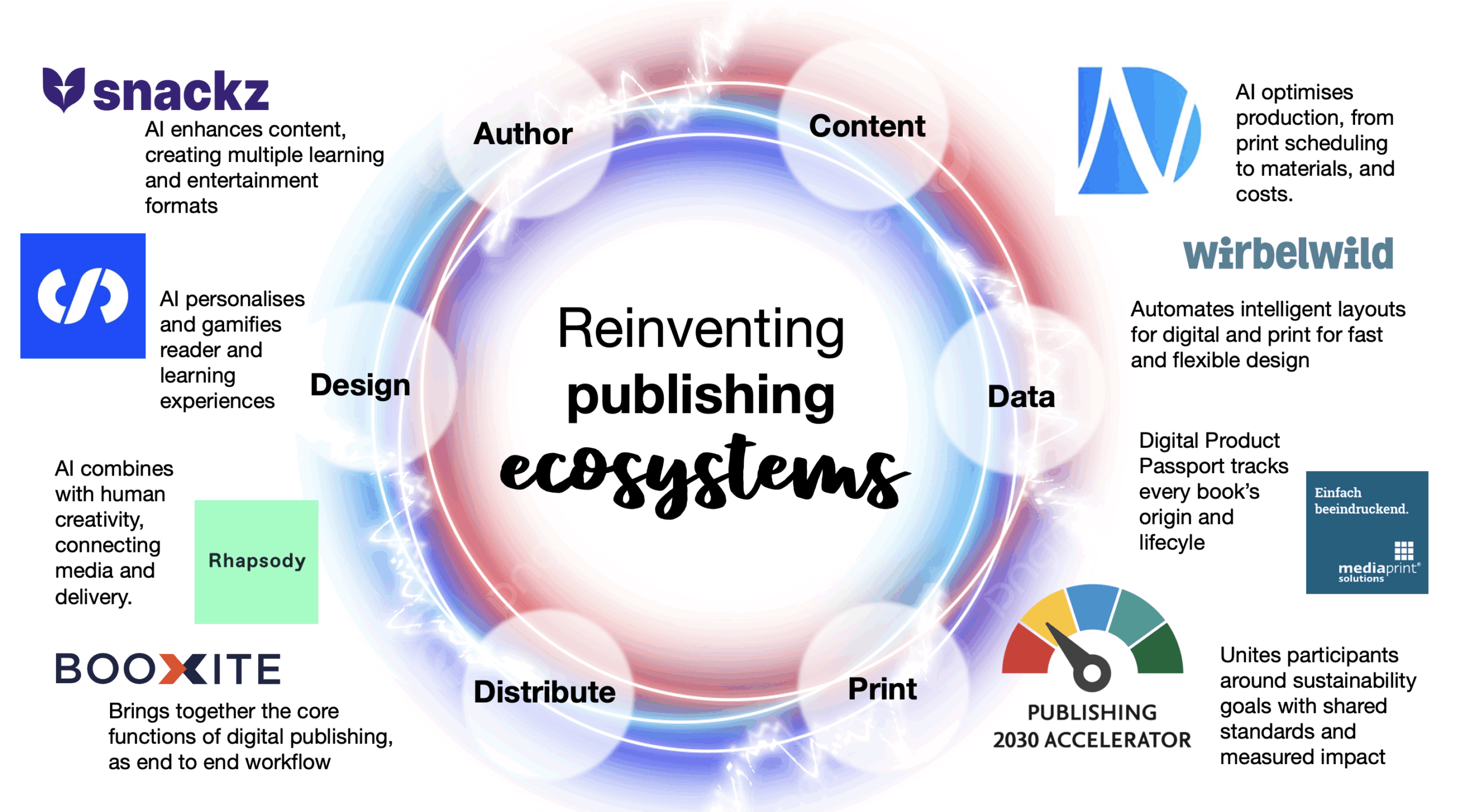
Content and the Power of AI … Laura Werle & Julia Claren, SnackzAI
How AI can transform content consumption into short, personalised learning “snacks”, or as they also call it, entertainment for busy brains. Takeaway: Intelligent content curation enhances engagement and scalability.
Laura Werle and Julia Claren are the co-founders of SnackzAI, a startup using AI to make learning content short, engaging and digestible, like intellectual “snacks.” Both have backgrounds in publishing and education, blending editorial sensibility with machine-learning innovation. Their platform helps professionals absorb complex information faster, turning knowledge consumption into a personalised, playful experience. Offbeat and bold, they describe SnackzAI as “edutainment for busy brains.” They are part of a new wave of founders who see AI not as a threat to learning but as its creative accelerator.
AI Applied to Book Printing … Ian Tomlin, Newton Day
Tomlin demonstrates AI-driven optimisations in print production, reducing cost and turnaround time. Takeaway: Automation complements human creativity, enabling faster experimentation.
Ian Tomlin is founder of Newton Day, a creative consultancy exploring how organisations can align purpose, brand and technology. A long-time strategist and systems thinker, he has worked across design, marketing and enterprise transformation. He blends creativity with practicality, advocating “evolutionary innovation” — progress through experimentation rather than grand plans. Known for his curiosity about how ideas spread, he is a prolific sketch-note artist, using visuals to make strategy human. He also collects obsolete tech gadgets as reminders that innovation is as much about what we leave behind as what we invent next.
AI and Print-on-Demand … Andy Berg, Rhapsody
Berg shows how AI improves the efficiency of custom print production while maintaining quality. Takeaway: Technology extends ecosystem capabilities without sacrificing creativity.
Andy Berg is CEO of Rhapsody, a creative production agency that merges technology, storytelling and automation for global brands. With roots in publishing, he’s led Rhapsody’s evolution into a hybrid content-tech company offering everything from creative automation to immersive brand experiences. Berg’s leadership is characterised by calm pragmatism and curiosity about how AI will transform creative work. He says “It’s not about replacing creativity — it’s about scaling it.” He’s also a passionate sailor, and compares leadership to navigating the wind — reading change, trimming sails and trusting the crew to find the best course.
Data and Next-Gen Layout Software … Deborah & Tobias Koengeter, WirbelWild
The duo presents tools that leverage data and AI to design adaptive layouts and experiences. Takeaway: Data-driven creativity is central to modern publishing ecosystems.
Deborah and Tobias Koengeter are the husband-and-wife team behind WirbelWild, a creative studio and sustainable children’s brand based in Stuttgart, Germany. They design playful, eco-friendly products that celebrate imagination, movement and mindfulness. The pair combine backgrounds in design and early education, turning family life into a creative laboratory. Offbeat and joyful, they describe WirbelWild as “chaos with purpose” — a space where design meets parenting and nature meets storytelling. Their work reflects a belief that small companies can have a big impact by keeping things simple, ethical and fun.
Sustainability and Publishing … Joerg Engelstadter, Canon
Engelstadter frames sustainability as a core principle for publishing’s future, and updates on the Publishing Accelerator 2030. Takeaway: Ecosystem thinking must balance innovation with social and environmental responsibility.
Joerg Engelstadter is a senior executive at Canon Europe, leading initiatives that merge imaging technology, digital transformation and sustainability. A long-time Canon innovator, he has championed the integration of AI, cloud and automation into creative workflows. Engelstadter’s background spans engineering and marketing, giving him a rare ability to connect product design with customer storytelling. Offbeat and reflective, he often compares the camera lens to the human mind — both capable of focusing, reframing and revealing unseen perspectives.
The Future of Book Publishing … Sonia Draga, Federation of European Publishers
Draga closes the Forum by highlighting policy, collaboration, and cross-border ecosystems. Takeaway: Let’s build a publishing future that is smarter, more sustainable, and more connected than ever before.
Sonia Draga is a prominent Polish publisher and president of the Federation of European Publishers. She is also head of the Draga Publishing Group, based in Katowice, which helped open Poland’s literary market to international authors. Known for her energy and cultural diplomacy, she champions freedom of expression and innovation in publishing. Draga has pushed for stronger digital rights and women’s leadership in the industry. Draga is also an avid cyclist, often describing long rides as her “creative reset.” Her mix of activism and entrepreneurship makes her one of Europe’s most dynamic cultural leaders.
More about the Future Book Forum
As Future Book Forum celebrates its 12th anniversary, it’s clear that publishing’s story is still being written. What began as a print innovation event has evolved into a global movement — exploring how books, technology, and ideas can intersect to create deeper human value.
“Beyond Books” is not about leaving the book behind, but elevating it — connecting the written word to wider worlds of creativity, learning, and impact. By unlocking the power of ecosystems, publishers and printers can help ideas travel further, faster, and fairer — turning stories into systems of value that enrich lives everywhere.
Author, Books, Printers, Bookshops, Readers
Each year, the Future Book Forum brings together the world’s leading publishers, together with other industry leaders, to explore what’s next in the world of books. To start, this is the current state of the industry:
- 2.4 million new books are published annually around the world, by around 100,000 publishers. And around 1.5 billion people read books regularly.
-
The global book market is valued at around $151 billion in 2024, and is projected to reach around $192 billion by 2030, growing at a compound annual growth rate (CAGR) of about 4.2% from 2025 to 2030.
-
The online books segment (digital distribution) is estimated at around $24 billion in 2024, rising to $26 billion in 2025 and forecast to reach $48 billion by 2034, with a CAGR of roughly 7.1%.
-
Print books remain resilient, with US unit sales rising slightly in 2024 to approximately 783 million units. E-books are about $14.9 billion in 2025. Audiobooks are growing rapidly, with a global market size of $8.7 billion in 2024, projected to reach $35.5 billion by 2030 (CAGR26.2%).
-
Digital formats (e-books, audiobooks, and online book services) continue to grow, while print remains strong. Online book services (subscription platforms, e-reading) are projected to grow from $23.4 billion in 2024 to $32.5 billion by 2030 (CAGR ~5.6%).
-
Emerging innovations include AI-driven content, interactive/enhanced e-books, augmented and virtual reality experiences, and data-driven print/production workflows. Self-publishing continues to expand rapidly, with over 2.6 million books self-published in 2023, and hybrid models combining professional services and author control are increasingly common.
-
Platforms such as Kindle Direct Publishing, Audible, Scribd, and subscription services continue to shape consumption patterns, and social media trends (#BookTok, #Bookstagram) are increasingly significant drivers of sales. North America represents about 33% of global book market revenue, while emerging markets such as India are among the fastest-growing.
This year’s Future Book Forum focuses on the theme of “ecosystems” built around the reader of the future, with multiple publishing, content and technology, distribution and retail partners working together to achieve more.
12 years ago Joerg Engelstaedter and I got together to help the book publishing industry reinvent its future. Each year we have progressively focused on crucial issues and opportunities by which we can all innovate and grow.
Back in 2014 we started by envisioning possible futures, which we then tested with consumer insights and emerging business models in the next years. In 2017 we sought to define the DNA of a book – from the physical form, to its content, and limitless deliveries. Growth became a key ananda, particularly smarter growth, fuelled by data analytics, consumer power, and sustainable innovation.

Ecosystem Thinking
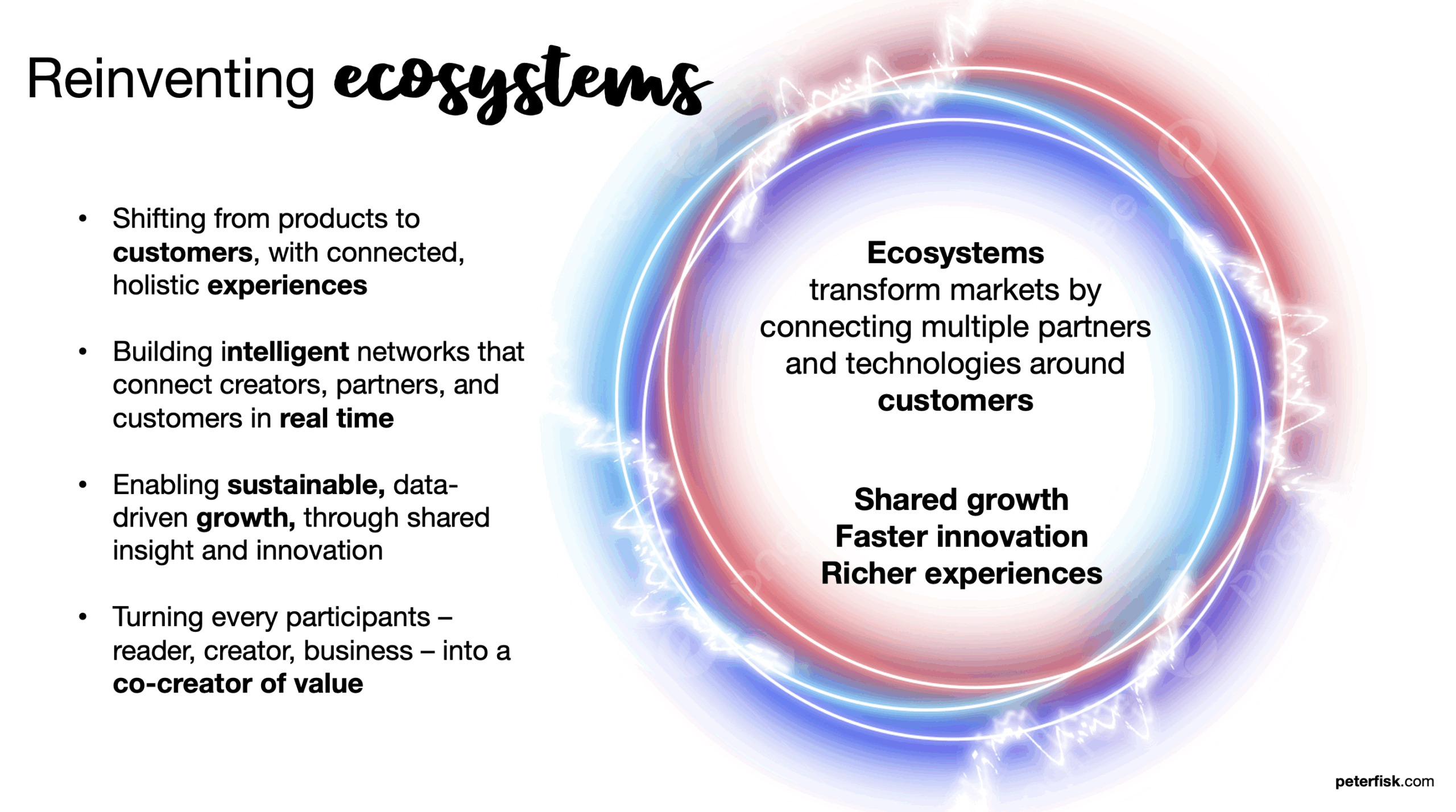
Ecosystems proliferate in every sector, typically built around customers rather than products, bringing together multiple partners and technologies, physical and digital, to do more for customers, and help every business to reach further, and grow faster.
Here are some standout examples of industries transformed by ecosystem business models, illustrating both new growth opportunities and enhanced consumer experiences:
Technology: Apple’s Ecosystem
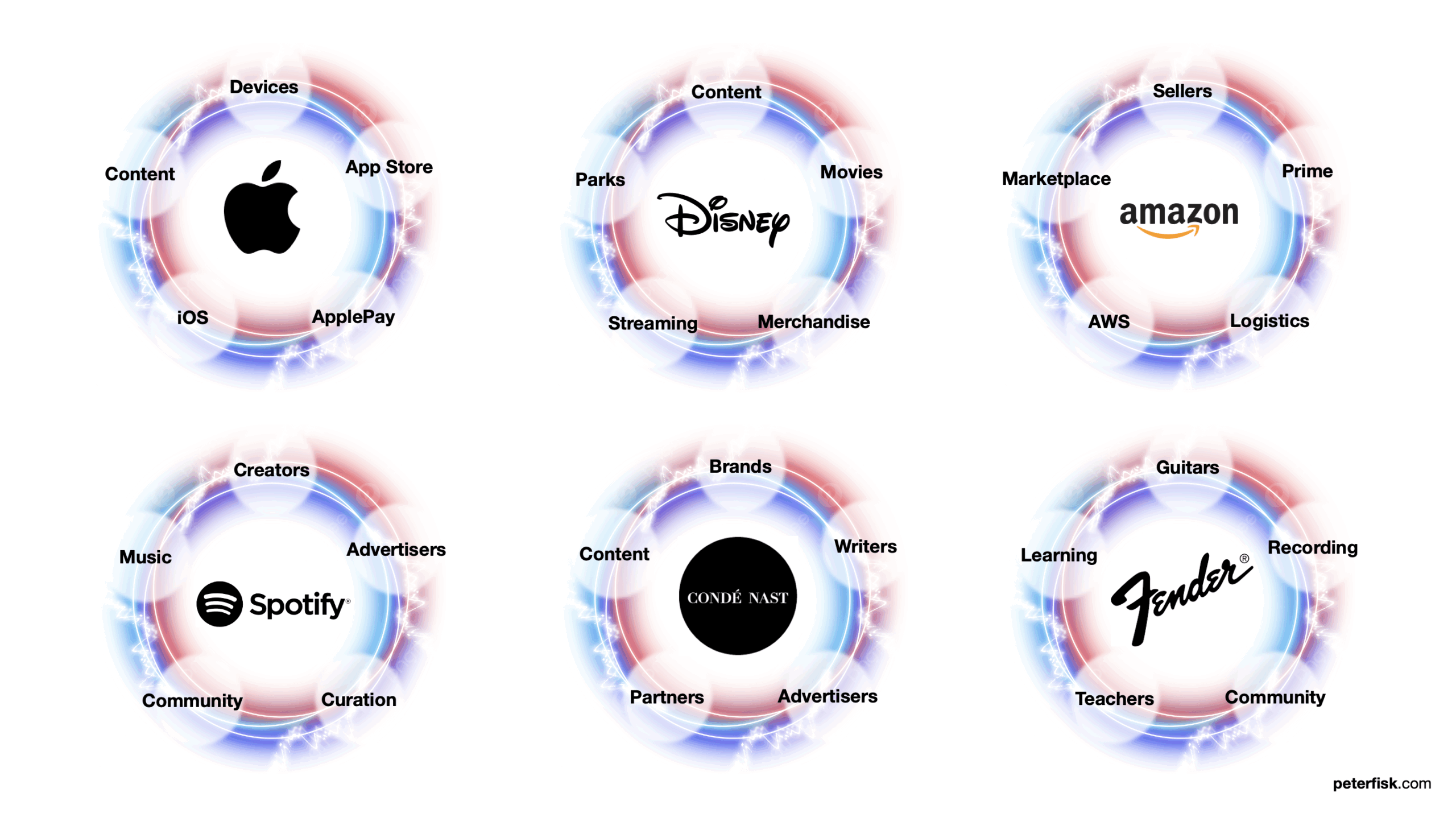
Apple’s tightly integrated ecosystem spans hardware, software, services, and retail. By creating seamless connections between devices like iPhones, iPads, and Macs, Apple ensures that consumers are locked into its ecosystem. Services like the App Store, iCloud, Apple Music, and Apple Pay not only enhance user experience but also generate significant recurring revenue streams. For instance:
- Consumers benefit from effortless synchronization across devices and personalized services.
- The App Store provides developers access to millions of users, creating new business opportunities.
Automotive: Tesla’s Energy Ecosystem
Tesla has redefined the automotive industry by expanding its ecosystem beyond electric vehicles (EVs). It includes energy solutions like solar panels, Powerwall home batteries, and charging stations. This ecosystem creates revenue streams through energy products and subscription services. Consumers benefit from:
- Access to sustainable, integrated energy solutions.
- Enhanced EV ownership experience with an extensive global charging network.
Entertainment: Disney’s Brand Ecosystem
Disney leverages its vast intellectual property portfolio across multiple platforms: movies, TV shows, theme parks, merchandise, and streaming services (Disney+). This interconnected ecosystem maximizes revenue potential by cross-selling products and services. For consumers:
- Disney provides immersive storytelling experiences across different mediums.
- Fans enjoy exclusive content and collectibles tied to beloved franchises.
Healthcare: Philips Connected Health Ecosystem
Philips employs an ecosystem model to integrate connected health devices, data analytics, and cloud platforms. Their strategy enables better patient care while generating recurring revenue through digital tools and subscriptions. For instance:
- Hospitals and healthcare providers benefit from real-time analytics and connected equipment.
- Consumers enjoy personalized healthcare solutions, such as wearable health monitors.
Retail: Amazon Marketplace and Prime Ecosystem
Amazon revolutionized retail with its marketplace, empowering businesses to sell products to a global audience while building consumer loyalty through services like Prime. Prime members receive benefits like faster shipping, exclusive deals, and streaming access. Key outcomes:
- Vendors tap into Amazon’s vast customer base and fulfillment services.
- Consumers experience convenience and exclusivity through integrated shopping and entertainment services.
These ecosystems show how interconnected networks, innovation, and customer-centric strategies can drive new revenue streams while enriching experiences for participants and users alike
Ecosystems in Book Publishing
Imagine an ecosystem model for the printing and publishing industry that seamlessly integrates technology, sustainability, and collaboration—transforming both the business of companies and the experience for consumers.
1. Business Transformation for Companies:
- Collaboration and Efficiency: Companies could form interconnected networks where data, resources, and expertise flow freely. For example, publishers, printers, and distributors could use shared digital platforms for better communication, leading to reduced production cycles and minimized waste. This enables cost savings and faster delivery.
- Localized Production: Leveraging decentralized, on-demand printing hubs globally minimizes shipping distances and reduces environmental impact. Gelato’s model is a great example of this.
- Digital-First Strategies: Embracing AI-driven predictive analytics helps participants understand consumer trends, optimize inventory, and launch tailored campaigns. Enhanced insights mean smarter decisions and greater market adaptability.
- Sustainability Goals: Companies could align with eco-friendly practices, such as recycled materials and low-energy production, appealing to environmentally conscious consumers.
2. Consumer Experience Revolution:
- Personalization: AI-driven recommendation systems allow consumers to discover books based on individual tastes, habits, or even social context. Snackz.ai’s approach demonstrates the power of personalization in enhancing engagement.
- Interactive Formats: Augmented reality (AR) or enhanced e-book formats could make reading more immersive and enjoyable, blending storytelling with multimedia experiences.
- Speed and Access: On-demand production ensures that consumers can receive their books and publications faster, with access to both mainstream and niche titles from anywhere in the world.
- Community Building: Platforms like Heloola demonstrate how fostering vibrant, global communities of readers can enhance the joy of sharing and discussing content—making reading social, dynamic, and interactive.
This model would create an industry ecosystem that champions innovation, values sustainability, and focuses on delivering delightful experiences to consumers while optimizing businesses.
Examples of Ecosystems in Books
The printing and book publishing industries have seen the rise of several ecosystem models that foster collaboration, efficiency, and innovation. Here are a few examples:
1. On-Demand Production Ecosystems
- Gelato: Gelato connects local printing hubs worldwide to produce and distribute customized products. This ecosystem reduces waste, shortens delivery times, and supports local businesses. Publishers can print smaller runs of books closer to their target audiences, minimizing inventory risks while consumers receive their orders more quickly and sustainably.
- Amazon Kindle Direct Publishing (KDP): KDP offers self-published authors access to on-demand printing and distribution networks, enabling writers to sell their work globally without upfront costs. It integrates seamlessly with Amazon’s marketplace, creating a comprehensive ecosystem for authors, printers, and readers.
2. Collaborative Platforms and Networks
- IngramSpark: This platform acts as a hub for authors, publishers, and retailers. It provides printing, distribution, and marketing services within a single ecosystem. Publishers and independent authors can reach thousands of booksellers and libraries globally through IngramSpark’s network.
- Wattpad: Wattpad is a storytelling platform that connects writers, readers, and publishers. Its ecosystem allows writers to share stories, get feedback, and even secure publishing or film deals. Publishers can discover fresh talent, while readers interact with stories in a vibrant, community-driven space.
3. Digital-First Ecosystems
- Snackz.ai: Leveraging AI, brings a tech-driven approach to publishing by optimizing book discovery. Authors and publishers can tap into its recommendation algorithms to increase their reach, while readers enjoy personalized suggestions tailored to their tastes.
- Scribd: Scribd offers a subscription-based ecosystem for accessing digital books, audiobooks, and other media. It integrates publishers, authors, and consumers into a single platform where content is monetized through recurring revenue streams.
4. Sustainable Ecosystem Initiatives
- PaperLabs: Focused on sustainability, PaperLabs integrates eco-friendly printing practices with collaborative supply chains. Publishers and print shops participate in a shared ecosystem that emphasizes reducing environmental impact.
- HP SmartStream Mosaic: This solution supports dynamic, digitally printed packaging and book covers. By connecting designers, printers, and publishers, it creates an ecosystem that enhances creativity and consumer appeal while minimizing waste.
Future Publishing Ecosystems
Book publishers have immense potential to innovate and thrive by adopting connected, intelligent ecosystem business models. Here’s how they could reinvent their operations to unlock new revenue streams and drive profitable growth:
1. Create Integrated Consumer Platforms
- Develop a reader-centric ecosystem that combines personalized book discovery (like AI-driven recommendations), book clubs (digital and physical), author-reader interactions, and exclusive subscription services. This fosters deeper reader engagement and loyalty, much like Amazon Prime.
- Add features like gamification, rewards for reading milestones, or interactive storytelling experiences to capture younger audiences and drive recurring revenue.
2. Form Strategic Alliances Across the Value Chain
- Partner with tech companies for smart publishing solutions that leverage data analytics to optimize production, marketing, and distribution.
- Collaborate with local printers for sustainable, on-demand production, reducing shipping costs and enabling hyper-localized service—similar to Gelato’s model.
- Expand partnerships with independent authors, offering flexible publishing agreements and shared royalties, creating value for self-publishers and diversifying revenue streams.
3. Incorporate Multimedia and Cross-Platform Experiences
- Explore multimedia formats like augmented reality (AR) books or enhanced e-books that integrate soundtracks, videos, and interactive visuals for immersive storytelling.
- Collaborate with film and gaming industries to create cross-platform ecosystems, adapting popular books into movies, games, or interactive apps.
4. Embrace AI and Big Data
- Leverage AI for consumer analytics to better understand reader preferences, forecast trends, and guide editorial decisions.
- Use AI tools to streamline marketing strategies, creating highly targeted campaigns and personalized content.
5. Build Community-Driven Models
- Establish platforms like Heloola that combine social features (online book clubs, discussion forums) with curated content. These ecosystems turn reading into a shared experience, boosting engagement and repeat purchases.
- Promote user-generated content and collaborations between readers and authors, creating a dynamic space where users feel like contributors to the ecosystem.
6. Focus on Sustainability
- Develop eco-friendly publishing ecosystems with recycled materials, carbon-neutral processes, and localized production hubs. Appeal to eco-conscious readers and meet growing sustainability demands.
7. Diversify Revenue Streams
- Offer educational content for schools and universities, such as interactive learning materials and access to exclusive libraries.
- Create tiered membership options, enabling subscribers to enjoy perks like early access to new releases, behind-the-scenes insights, or signed copies.
By creating a well-connected ecosystem, publishers can enrich the customer experience, strengthen relationships with authors and distributors, and seize opportunities to monetize creativity in new ways.
Expanding further on how book publishers can leverage ecosystem business models for transformation:
1. Global Ecosystem Partnerships
Publishers could create a global network of partners, integrating:
- Distributors: Collaborate with platforms like Amazon and local bookstores to ensure books reach a diverse audience.
- Printers: Utilize sustainable, localized printing hubs like Gelato to lower costs and environmental impact while reducing delivery times.
- Tech Innovators: Partner with AI companies for smart tools that optimize marketing, reader engagement, and production.
For example, publishers might form alliances with global e-learning companies to offer curated collections of books for educational courses, opening a lucrative revenue stream.
2. AI-Driven Consumer Insights
Investing in AI could help publishers analyze reader preferences, purchase patterns, and content engagement data. Here’s how:
- Trend Identification: Predict upcoming genres or themes that will resonate with readers.
- Targeted Marketing: Craft campaigns that speak directly to specific demographics, enhancing sales potential.
- Dynamic Content Creation: Generate tailored recommendations or customized book collections based on real-time insights.
This could lead to more meaningful connections between books and readers, boosting satisfaction and repeat purchases.
3. Community-Led Ecosystems
Publishers could foster reader communities to create a more interactive experience:
- Launch digital platforms like Heloola that host virtual book clubs, Q&A sessions with authors, and reader feedback opportunities.
- Offer rewards for community engagement, such as exclusive discounts, early access to upcoming releases, or custom editions.
These communities would strengthen customer loyalty and create advocacy, driving word-of-mouth growth.
4. Flexible Publishing and Distribution Models
- Develop an omnichannel publishing strategy that merges physical and digital offerings.
- Leverage blockchain technology for direct and transparent royalty payments to authors, encouraging talent acquisition and retention.
- Provide new subscription models, like unlimited access to niche genres or curated content bundles.
Publishers could also diversify into audiobooks and multimedia narratives, expanding formats to reach non-traditional readers.
5. Sustainable Practices and Branding
Sustainability is becoming an expectation rather than a choice:
- Adopt green printing technologies, recycled paper, and carbon-neutral processes to attract eco-conscious readers.
- Promote sustainability as part of the brand identity, turning it into a competitive advantage.
6. Ecosystem Monetization Opportunities
Through an interconnected model, publishers can tap into multiple revenue streams:
- Membership Fees: Offer premium tiers for content access and exclusive benefits.
- Data Analytics Services: Monetize anonymized insights from reader data to third-party marketers or libraries.
- Advertising Revenue: Create targeted ad spaces for related industries within digital reading platforms.
These strategies could help publishers evolve from a book-centric model into a value-driven experience provider, ensuring long-term profitability.
Future possibilities for book ecosystems
Here’s a vision of what the future of publishing could look like, powered by advanced ecosystems:
1. Personalized Reading Hubs
Imagine a platform called “LitConnect,” where readers have their own personalized dashboard:
- For Readers: Tailored book recommendations based on mood, interests, and social preferences, powered by AI. Integration with virtual reality (VR) lets readers explore immersive book settings (e.g., stepping into a fantasy world while reading).
- For Authors and Publishers: Advanced analytics show real-time reader engagement data. Authors can host live VR readings, generating revenue through ticket sales and merchandise.
2. Global Sustainable Networks
Picture a scenario where a reader orders a book through a platform like “EcoReads”:
- For Readers: The book is printed in a local printing hub using eco-friendly materials and delivered within hours. The cost is competitive, and buyers can track the production’s carbon footprint.
- For Publishers: A collaborative ecosystem with shared printing facilities lowers costs and allows publishers to maintain a sustainable and scalable distribution network.
3. Multimedia Story Ecosystems
Imagine a publishing company, “StoryVerse,” that specializes in turning books into interconnected multimedia experiences:
- For Readers: Books come alive with enhanced e-book features—integrated audio, visual, and even interactive puzzles. If a user enjoys a novel, they can unlock its companion AR game or an accompanying short film within the same ecosystem.
- For Publishers: Expanded monetization opportunities through subscriptions to the ecosystem and cross-selling formats like games, merchandise, and events.
4. AI-Curated Author Collaborations
Picture a platform called “AuthorSync” that connects authors worldwide:
- For Authors: Writers collaborate on stories curated by AI, which identifies complementary writing styles. These collaborations result in unique novels or anthologies published on-demand.
- For Readers: Fans participate by voting on plot developments or characters, creating a highly engaging, community-driven storytelling experience. Limited-edition copies, featuring fan-contributed artwork, become prized collectibles.
5. Education and Knowledge Ecosystems
Imagine “LearnBook”—a platform integrating books into learning systems globally:
- For Readers: Students and lifelong learners access curated reading lists tied to their educational goals, with interactive elements like quizzes or study groups.
- For Publishers: Partnerships with academic institutions drive steady demand for digital content. Publishers can offer premium access to archives, research tools, or virtual seminars with renowned authors.
These future scenarios illustrate how publishing could evolve into vibrant, tech-enabled ecosystems, making reading more interactive, sustainable, and profitable for everyone involved.
More detailed examples from other sectors
Apple Ecosystem
Core Idea: Seamless integration across products, services, and third-party developers.
- User-Centric Hub: Apple’s focus is on user experience across devices like the iPhone, iPad, Mac, Apple Watch, and more. The tight interconnection among products encourages brand loyalty.
- Partner Integration:
- App Store: Third-party developers build apps for iOS, creating value for users.
- Media & Subscriptions: Partnerships in content delivery (e.g., Apple Music, Apple TV+).
- Smart Home Devices: Apple’s HomeKit enables collaboration with IoT device makers.
- Health Partnerships: Integration with health tech and medical data tracking apps (e.g., fitness companies integrating with Apple Watch).
- Key Technologies: iOS, iCloud, Apple Pay, Siri, and advanced hardware & software interlinking.
Outcome: Apple retains users within its closed but high-value ecosystem. By building sticky user experiences and opening parts of its ecosystem to partners (while maintaining control), Apple has built one of the world’s most valuable business ecosystems.
Google Ecosystem
Core Idea: Use of data and services to create a ubiquitous ecosystem touching personal and professional life.
- User-Centric Hub: Free services like Google Search, Android OS, Gmail, YouTube, and Google Maps serve billions daily.
- Partner Integration:
- Google Play Store: Developers provide apps and games on Android, Google’s open mobile OS.
- Google Ads & Marketing Tools: Digital advertising partners monetize users across platforms.
- YouTube Creators & Advertisers: Content creators, brands, and marketers build thriving businesses within YouTube.
- Smart Tech: Nest products, Pixel hardware, and IoT devices connect with Google Assistant and smart partners.
- Key Technologies: Android (OS), Google Cloud, Ads, and AI capabilities (e.g., Google Gemini).
Outcome: Google connects users, partners, and developers through open platforms while creating sticky ecosystems driven by AI, advertising, and technological accessibility.
Condé Nast Ecosystem
Core Idea: A digital-first content ecosystem with global media brands driving fashion, luxury, and lifestyle culture.
- Content Hub:
- Platforms like Vogue, The New Yorker, Vanity Fair, and GQ produce high-quality content in fashion, culture, and lifestyle.
- Digital transformation enables mobile-first access to articles, video content, and social experiences.
- Partner Integration:
- Luxury Brands and Advertisers: Luxury fashion houses and brands leverage editorial and advertising collaborations.
- Fashion Events: Partnerships for experiences like Met Gala (Vogue) and major fashion weeks globally.
- Creators: Photographers, models, journalists, stylists, and content creators collaborate with Condé Nast.
- Key Technologies:
- AR/VR-based immersive content for editorial stories.
- Digital and data tools to create tailored content and advertising for readers.
Outcome: Condé Nast builds an ecosystem that ties together audiences, creators, luxury brands, and immersive content experiences to define fashion and culture globally.
Spotify Ecosystem
Core Idea: A music and audio platform with tools for creators, advertisers, and users to thrive.
- Content Hub:
- Streaming of music, podcasts, and audiobooks for listeners worldwide.
- Discovery tools (like playlists and “Spotify Wrapped”) drive user engagement.
- Partner Integration:
- Artists and Labels: Music producers, record labels, and independent artists share their music.
- Podcasters: Partnerships with creators to build an extensive podcast ecosystem.
- Technology Partners: Integration with smart devices (e.g., Alexa, Apple CarPlay) and tools for creators like Spotify for Artists.
- Key Technologies:
- Personalization: Algorithms for curated playlists and content discovery.
- Anchor: Tools for podcasters to create and distribute audio content.
Outcome: Spotify connects content creators (artists, podcasters) to users, allowing for monetization while providing advertisers and technology partners a space to engage users.
Disney Ecosystem
Core Idea: A vertically integrated content and entertainment powerhouse.
- Content Hub:
- Disney+: Streaming platform with Disney, Pixar, Marvel, Star Wars, and National Geographic content.
- Disney’s vast publishing (books, comics, merchandise) supports film, TV, and IP expansion.
- Theme parks, theaters, and retail are physical extensions of the content experience.
- Partner Integration:
- Content Collaborators: Film production studios, animation teams, and IP owners.
- Licensing Partners: Disney collaborates with fashion (H&M, Adidas), toy companies (LEGO, Hasbro), and publishers for product tie-ins.
- Tech Partners: Partnerships for streaming tech, AR/VR experiences, and games.
- Key Technologies:
- Disney+ platform for global content delivery.
- AR/VR innovation in theme park rides and Disney experiences.
Outcome: Disney’s ecosystem revolves around owned IP (e.g., Marvel, Star Wars), merging content, merchandise, publishing, experiences, and digital platforms into a cohesive business.
Vogue Ecosystem
Core Idea: Combining fashion, media, and business insights to connect luxury fashion with readers, brands, and partners.
- Content Hub:
- Vogue Business focuses on luxury fashion insights, sustainability, and consumer behavior analysis.
- Media platforms deliver reports, articles, and video content tailored to B2B fashion industry professionals.
- Partner Integration:
- Luxury Fashion Brands: Content sponsorship and campaigns for major fashion houses.
- Industry Events: Partnerships with trade shows, conferences (e.g., Copenhagen Fashion Summit for sustainability).
- Fashion Creators: Journalists, photographers, researchers, and designers collaborating for niche fashion content.
- Key Technologies:
- Data-driven tools to track industry trends (e.g., sustainability, consumer analytics).
- Multimedia content such as augmented fashion runway experiences.
Outcome: Vogue Business acts as a digital ecosystem connecting businesses, advertisers, creators, and readers with the future of luxury fashion.
Medium Ecosystem
Core Idea: A platform connecting content creators, publishers, and readers in an ad-free environment.
- Content Hub:
- Medium provides a publishing platform where writers, independent journalists, and organizations post articles and stories.
- Partner Integration:
- Writers and Publishers: Independent and professional writers create monetizable content.
- Readers: Subscription models for readers provide a steady revenue stream.
- Tools and Developers: Integrations for content writing, design, and distribution tools.
- Key Technologies:
- Paid subscriptions that allow direct creator monetization.
- AI-driven curation to deliver personalized content.
Outcome: Medium offers a collaborative ecosystem for creators to focus on producing quality content while leveraging readers for engagement and monetization.
Bandcamp Ecosystem
Core Idea: Empower independent music artists with tools to distribute, monetize, and connect with fans.
- Content Hub:
- Bandcamp allows musicians to self-publish and sell albums, tracks, and merchandise directly to fans.
- Partner Integration:
- Musicians and Bands: Direct-to-fan sales without label interference.
- Merch Partners: Seamless sale and shipping of artist merchandise.
- Discovery Tools: Curators and bloggers partner to spotlight music on Bandcamp Weekly.
- Key Technologies:
- Streaming, purchasing, and revenue-sharing tech to empower independent artists.
Outcome: Bandcamp enables an artist-focused ecosystem, giving musicians direct control over their revenue, distribution, and audience connection.
Wattpad Ecosystem
Core Idea: A platform connecting storytellers, readers, publishers, and media partners.
- Content Hub:
- Wattpad provides a space for writers to publish original stories that readers consume for free.
- Partner Integration:
- Content Creators: Aspiring writers and creators build audiences on Wattpad.
- Film/TV Studios: Stories from Wattpad often turn into screen adaptations (e.g., Netflix, Hulu).
- Traditional Publishing: Partnerships with publishers to adapt Wattpad stories into books.
- Key Technologies:
- Machine learning identifies popular stories with breakout potential.
- Social reading features drive engagement between writers and readers.
Outcome: Wattpad bridges the gap between amateur creators and professional media while building an interactive storytelling community.