Business futurist. Innovative strategist. Leadership advisor. Bestselling author. Inspiring speaker.
“Changing World, Leading Change” with Orascom Construction
June 2, 2025 at IE Business School, Madrid
Incredible technologies and geopolitical shifts, complex markets and stagnating growth, demanding customers and disruptive entrepreneurs, environmental crisis and social distrust, unexpected shocks and uncertain futures.
How do you make sense of today’s rapidly changing world? How will you succeed in tomorrow’s world?
We explore how businesses can survive and thrive, and move forwards to create a better future. How to reimagine strategy, to reinvent markets, to reenergise people. We consider what it means to combine meaningful purpose with superior profits, intelligent technologies with creative people, radical innovation with sustainable impact.
The old codes of business don’t work anymore. The most innovative companies – from Amazon and Anthropic, to Blackrock and Bytedance, Climeworks and Coupang, to DJI and Deepmind – succeed with new codes.
So what are the new ideas to win in a fast and dynamic world of Asian renaissance, entrepreneurial supremacy, social conscience and smarter machines? What can you learn from Jio’s revolution from petrochemicals to phones, and DBS’s transformation of banking? How can you be inspired by courageous leaders like 23andMe’s Anne Wojcicki, Haier’s Zhang Ruimin and Citigroup’s Jane Fraser?
Changing World, Leading Change
Key takeaways from the day will include
Start from the future back. The future is already here, just unevenly distributed. Leaders need foresight and imagination to make sense of changing markets, to address new agendas, to embrace the best new opportunities, and find purpose and direction in a world that might seem stagnant, chaotic and uncertain.
Innovate and transform. Businesses are platforms for change, to engage all stakeholders in exploring better. Innovation can take many different forms, from new business models to ecosystem design, to reframe markets and redefine business, typically enabled by sustained transformational change.
Step up to lead the future. Value creation in fast changing markets demands leaders to embrace new mindsets and approaches, to engage people in an inspiring future story, and to accelerate its delivery – exploiting the present and exploring the future – to be a performer and transformer at the same time – to be curious, creative and courageous
The executive team workshop explores the rapidly changing markets around the world, learning from other sectors and companies, and considers the strategic implications for their own business futures, and personal leadership:
Leading the Future
0930 – 1100 : Leading the Future: Seizing the Opportunities of Change
Change as opportunity, leading a business in permanent beta
Riding the s curves of reinvention, from mining to materials
Value creation, inspired by the world’s most innovative companies
Deepmind and DSM, Hilti and Holcim
1115 – 1245 : Leading the Future: The Future Wheel of Construction
Harnessing the change drivers, embracing the uncertainties
Exploring the future wheel for construction, from AI to decarbonisation
Considering the implications for strategy and innovation
Bjarke Ingels Group and Sidewalk Labs
Strategic Innovation
1345 – 1515 : Strategic Innovation: Moonshots to Change the World
Solving the biggest problems, harnessing radical new technologies
Having a 10x mindset to jump to the future, then work back
Building a future portfolio, exploit and explore
Climeworks and PingAn
1530 – 1700 : Strategic Innovation: Being a Performer Transformer
What does it take to create the future, and deliver today
Winning as an ambidextrous organisation, the leadership challenge
Inspired by the world’s best business leaders, bolder and braver
What could we do? What will you do?
Orascom Construction
Orascom Construction, a leading engineering and construction contractor primarily active in the Middle East, North Africa, and the U.S., faces a dynamic and shifting landscape. With its roots in Egypt and a footprint in major infrastructure and industrial projects, the company is strategically positioned—but also exposed—to regional, technological, economic, and environmental pressures.
Founded:1976 by Onsi Sawiris
Headquarters:Cairo, Egypt
Public Listings:Dual-listed on Nasdaq Dubai (Ticker: OC) and the Egyptian Exchange (Ticker: ORAS)
Employees:Approximately 60,000 globally
Global Reach:Operations in over 25 countries
Chairman:Jérôme Guiraud
CEO:Osama Bishai
Examples of Recent Projects
Saudi Arabia:Secured a $2.6 billion contract in a 50-50 joint venture with Técnicas Reunidas to develop a 3 GW combined cycle gas-fired power plant, including carbon capture infrastructure and a 380-kilovolt substation
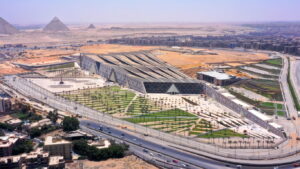
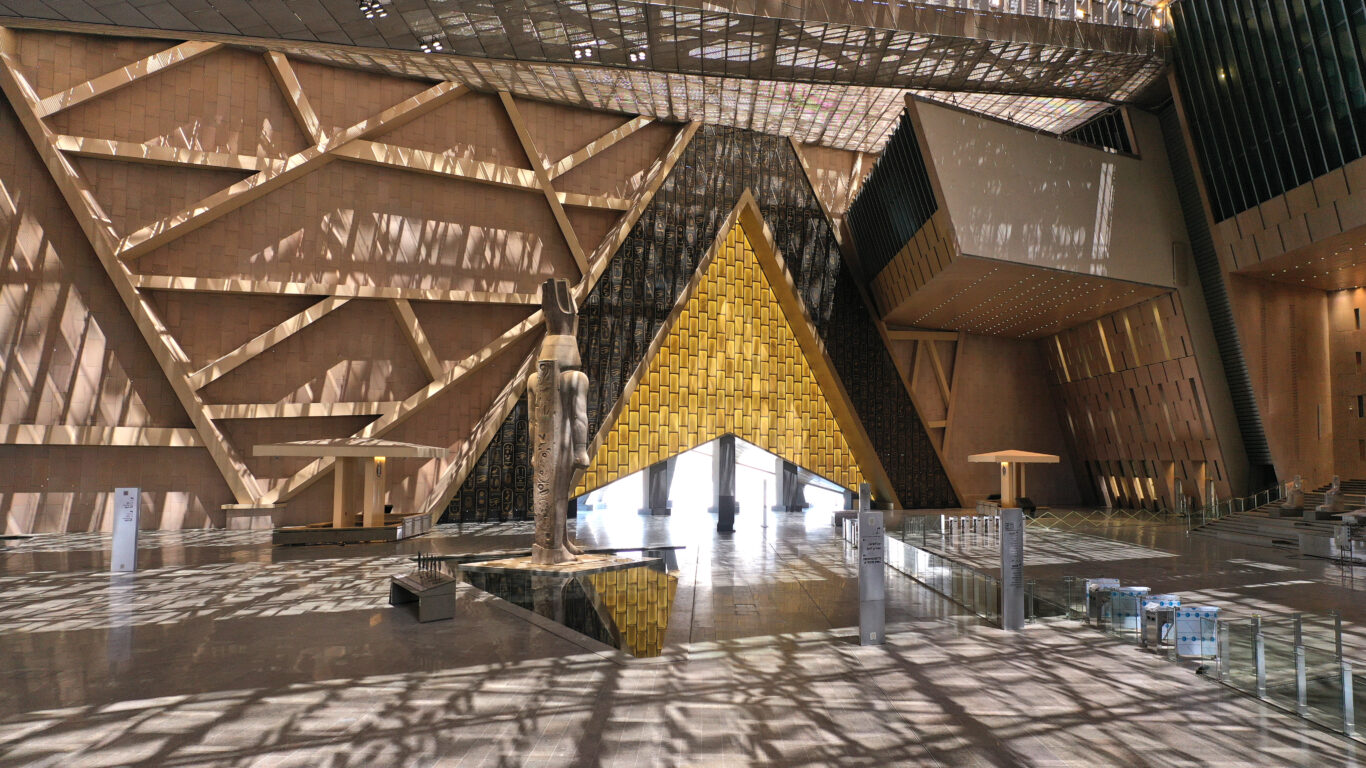
Egypt:Involved in the modernization of Line 1 of the Greater Cairo Metro, expansion of the Suez Canal Container Terminal, and development of the Grand Egyptian Museum’s walkway connection to the pyramids
United States:Executing four airport projects across Iowa, Arizona, and South Dakota, with a U.S. backlog of USD 1.6 billion in sectors such as data centers, aviation, light industrial, and commercial
United Arab Emirates:Undertaking a large-scale seawater treatment and water transportation BOOT project worth USD 2.2 billion for ADNOC in Abu Dhabi
Renewable Energy:Commenced commercial operations of a 306 MW expansion of a 650 MW Build-Own-Operate wind farm in Egypt, increasing the Group’s wind power capacity to 912.5 MW
Strategic Challenges
1. Geopolitical and Macroeconomic Volatility
Risk: Instability in the Middle East and North Africa (MENA)—including conflicts, political unrest, or currency fluctuations—can delay projects or impact profitability.
Example: Sudden changes in government priorities or budget allocations in Egypt or Gulf countries can stall infrastructure programs.
2. Inflation and Supply Chain Disruptions
Risk: Global inflation, rising construction material costs (steel, cement, fuel), and supply chain delays can erode margins, especially in fixed-price contracts.
Impact: Greater pressure on cost estimation accuracy and supplier diversification.
3. Sustainability and Environmental Pressures
Risk: Increasing global and regional regulation on emissions, energy use, and green construction standards.
Impact: Rising need to decarbonize operations and adapt to green building certifications, potentially increasing upfront costs.
4. Talent Shortages and Skills Gaps
Risk: Shortage of skilled engineers and construction professionals in Egypt and the Gulf.
Impact: Project delays, reduced quality, and higher labor costs.
5. Digital Disruption and Technological Lag
Risk: Failure to keep pace with digital construction technologies like BIM, AI, robotics, or modular construction.
Impact: Reduced competitiveness versus global contractors and rising expectations from clients.
Strategic Opportunities
1. Green Infrastructure and Renewable Energy
Opportunity: Large-scale investment in solar, wind, hydrogen, and water infrastructure across MENA and Africa.
Example: Egypt’s Green Hydrogen projects or Saudi Arabia’s NEOM region are major sources of opportunity.
Advantage: Orascom’s experience in power plants and desalination can be leveraged to lead in sustainable infrastructure.
2. Smart Cities and Mega Projects
Opportunity: Continued boom in mega projects—such as Egypt’s New Administrative Capital and Saudi giga-projects (NEOM, Qiddiya, The Line).
Edge: Orascom’s local expertise and past involvement in major urban and transport infrastructure give it a competitive edge.
3. Public-Private Partnerships (PPPs) and Concessions
Opportunity: Governments shifting toward PPPs to finance infrastructure creates a market for long-term, recurring revenue.
Example: Water treatment, transport infrastructure, and energy projects under BOT/BOO models.
4. Digital Construction and Prefabrication
Opportunity: Adoption of BIM, digital twins, and off-site manufacturing can reduce costs, increase speed, and enhance project control.
Strategic Move: Investing in digital transformation can unlock productivity and new business models.
5. International Diversification
Opportunity: Growth in construction demand in Sub-Saharan Africa, South Asia, and continued strength in the U.S. construction market.
Expansion: Further building on the U.S. presence through its subsidiary Weitz Company or forming alliances in emerging markets.
So what will you do?
We live in a time of great promise but also great uncertainty.
Markets are more crowded, competition is intense, customer aspirations are constantly fuelled by new innovations and dreams. Technology disrupts every industry, from banking to construction, entertainment to healthcare. It drives new possibilities and solutions, but also speed and complexity, uncertainty and fear.
As digital and physical worlds fuse to augment how we live and work, AI and robotics enhance but also challenge our capabilities, whilst ubiquitous supercomputing, genetic editing and self-driving cars take us further.
Technologies with the power to help us leap forwards in unimaginable ways. To transform business, to solve our big problems, to drive radical innovation, to accelerate growth and achieve progress socially and environmentally too.
We are likely to see more change in the next 10 years than the last 250 years.
Markets accelerate, 4 times faster than 20 years ago, based on the accelerating speed of innovation and diminishing lifecycles of products.
People are more capable, 825 times more connected than 20 years ago, with access to education, unlimited knowledge, tools to create anything.
Consumer attitudes change, 78% of young people choose brands that do good, they reject corporate jobs, and see the world with the lens of gamers.
However, change goes far beyond the technology.
Markets will transform, converge and evolve faster. From old town Ann Arbor to the rejuvenated Bilbao, today’s megacities like Chennai and the future Saudi tech city of Neom, economic power will continue to shift. China has risen to the top of the new global business order, whilst India and eventually Africa will follow.
Industrialisation challenges the natural equilibrium of our planet’s resources. Today’s climate crisis is the result of our progress, and our problem to solve. Globalisation challenges our old notions of nationhood and locality. Migration changes where we call home. Religious values compete with social values, economic priorities conflict with social priorities. Living standards improve but inequality grows.
Our current economic system is stretched to its limit. Global shocks, such as the global pandemic of 2020, exposes its fragility. We open our eyes to realise that we weren’t prepared for different futures, and that our drive for efficiency has left us unable to cope. Such crises will become more frequent, as change and disruption accelerate.
However, these shocks are more likely to accelerate change in business, rather than stifle it, to wake us up to the real impacts of our changing world – to the urgency of action, to the need to think and act more dramatically.
The old codes don’t work
Business is not fit for the future. Most organisations were designed for stable and predictable worlds, where the future evolves as planned, markets are definitive, and choices are clear.
The future isn’t like it used to be.
Dynamic markets are, by definition, turbulent. Whilst economic cycles have typically followed a pattern of peaks and troughs every 10-15 years, these will likely become more frequent. Change is fast and exponential, uncertain and unpredictable, complex and ambiguous demanding new interpretation and imagination.
Yet too many business leaders hope that the strategies that made them successful in the past will continue to work in the future. They seek to keep stretching the old models in the hope that they will continue to see them through. Old business plans are tweaked each year, infrastructures are tested to breaking point, and people are asked to work harder.
In a way of dramatic, unpredictable change, this is not enough to survive, let alone thrive.
Growth is harder. Global GDP growth has declined by more than a third in the past decade. As the west stagnates, Asia grows, albeit more slowly.
Companies struggle, their average lifespan falling from 75 years in 1950 to 15 years today, 52% of the Fortune 500 in 2000 no longer exist in 2020.
Leaders are under pressure. 44% of today’s business leaders have held their position for at least 5 years, compared to 77% half a century ago.
Profit is no longer enough; people expect business to achieve more. Business cannot exist in isolation from the world around them, pursuing customers without care for the consequence. The old single-minded obsession with profits is too limiting. Business depends more than ever on its resources – people, communities, nature, partners – and will need to find a better way to embrace them.
Technology is no longer enough; innovation needs to be more human. Technology will automate and interpret reality, but it won’t empathise and imagine new futures. Ubiquitous technology-driven innovation quickly becomes commoditised, available from anywhere in the world, so we need to add value in new ways. The future is human, creative, and intuitive. People will matter more to business, not less.
Sustaining the environment is not enough. 200 years of industrialisation has stripped the planet of its ability to renew itself, and ultimately to sustain life. Business therefore needs to give back more than it takes. As inequality and distrust have grown in every society, traditional jobs are threatened by automation and stagnation, meaning that social issues will matter even more, both globally and locally.
The new DNA of business
As business leaders, our opportunity is to create a better business, one that is fit for the future, that can act in more innovative and responsible ways.
How can we harness the potential of this relentless and disruptive change, harness the talents of people and the possibilities of technology? How can business, with all its power and resources, be a platform for change, and a force for good?
We need to find new codes to succeed. We need to find new ways to work, to recognise business as a system that be virtuous, where less can be more, and growth can go beyond the old limits. This demands that we make new connections:
Profit + Purpose … to achieve more enlightened progress
Technology + Humanity … to achieve more human ingenuity
Innovation + Sustainability … to achieve more positive impact
We need to create a new framework for business, a better business – to reimagine why and redesign how we work, as well as reinvent what and refocus where we do business.
Imagine a future business that looks forwards not back, that rises up to shape the future on its own terms, making sense of change to find new possibilities, inspiring people with vision and optimism. Imagine a future that inspires progress, seeks new sources of growth, embraces networks and partners to go further, and enables people to achieve more.
Imagine too, a future business that creates new opportunity spaces, by connecting novel ideas and untapped needs, creatively responding to new customer agendas. Imagine a future business that disrupts the disruptors, where large companies have the vision and courage to reimagine themselves and compete as equals to fast and entrepreneurial start-ups.
Imagine a future business that embraces humanity, searches for better ideas, that fuse technology and people in more enlightened ways, to solve the big problems of society, and improve everyone’s lives. Imagine a future business that works collectively, self-organises to thrive without hierarchy, connects with partners in rich ecosystems, designs jobs around people, to do inspiring work.
Imagine also, a future business which is continually transforming, that thrives by learning better and faster, develops a rich portfolio of business ideas and innovations to sustain growth and progress. Imagine a future business that creates positive impact on the world, benefits all stakeholders with a circular model of value creation, that addresses negatives, and creates a net positive impact for society.
Creating a better business is an opportunity for every person who works inside or alongside it. It is not just a noble calling, to do something better for the world, but also a practical calling, a way to overcome the many limits of today, and attain future success for you and your business.You could call it the dawn of a new capitalism.
More from Peter Fisk linked to these sessions
Next Agenda of best ideas and priorities for business