Brené Brown, research professor at the University of Houston known for her pioneering work on vulnerability, shame, and empathy, wrote Atlas of the Heart: Mapping Meaningful Connection and the Language of Human Experience to help people better understand and articulate the full spectrum of human emotions. Brown argues that our ability to name, distinguish, and communicate feelings is central to cultivating deeper connections, resilience, and well-being. She calls this process “emotional granularity”—the precision with which we identify and express emotions—and believes that without this skill, relationships and personal growth remain stunted.
The book is both guidebook and map. Brown organizes more than 80 emotions and experiences into distinct groups, exploring their nuances, common misconceptions, and how they show up in our lives. Using storytelling, research, and cultural references, she illuminates the often-overlooked differences between related emotions and why those differences matter for human connection.
Why Language of Emotions Matters
Brown opens with the premise that we cannot connect meaningfully without language. When people lack the words to describe their feelings, they tend to shut down, lash out, or misinterpret others. For example, confusing “stress” with “overwhelm,” or “envy” with “jealousy,” can lead to misunderstandings and fractured relationships. By expanding our emotional vocabulary, we expand our capacity for empathy, curiosity, and compassion.
Brown draws on research from psychology, neuroscience, and linguistics to show that language shapes emotional experience. People who can precisely identify their emotions are more adaptive, make better decisions, and navigate conflict with greater skill.
Mapping Emotions: The Main Categories
Brown organizes emotions into thematic chapters, each grouping together related feelings and experiences. Some of the most significant clusters include:
1. Places We Go When Things Are Uncertain or Too Much
This section explores stress, overwhelm, anxiety, worry, avoidance, and excitement. Brown highlights the importance of distinguishing between stress (an external pressure) and overwhelm (a state of being unable to function due to too many inputs). Anxiety is described as persistent uncertainty coupled with fear, whereas worry is the cognitive process of replaying possible bad outcomes.
Excitement is an important counterpoint: physiologically similar to anxiety, but framed with a positive outlook. Recognizing this difference helps us reframe fear-inducing situations into opportunities.
2. Places We Go When We Compare
Here Brown explores comparison, envy, jealousy, resentment, and admiration. She stresses that comparison is an almost automatic human process, but its impact depends on context: it can motivate growth or fuel shame.
Envy (wanting what others have) is distinct from jealousy (fear of losing something we already have). Brown also reframes resentment as unmet expectations poorly communicated, not just bitterness. By untangling these emotions, we can turn comparison into self-awareness rather than self-destruction.
3. Places We Go When Things Don’t Go as Planned
Disappointment, expectations, regret, discouragement, resignation, and frustration belong here. Brown describes disappointment as unmet expectations with an emotional punch, while regret is tied to personal responsibility for choices. Frustration emerges when obstacles block progress, while discouragement occurs when setbacks feel insurmountable.
This cluster underscores the human need to balance realistic expectations with hope, and to practice resilience when things fall apart.
4. Places We Go When It’s Beyond Us
This chapter focuses on awe, wonder, confusion, curiosity, and interest. Brown distinguishes awe (a mix of reverence and fear in the face of vastness) from wonder (an openness to mystery and possibility). Curiosity is portrayed as a superpower—driving learning, creativity, and connection—while confusion is reframed as a productive state, signaling that growth is possible.
5. Places We Go When Things Aren’t What They Seem
Surprise, expectations, disappointment, and curiosity appear here. Brown emphasizes the role of storytelling in how we make sense of surprises—whether delightful or disruptive. Our expectations shape whether a surprise feels like betrayal or discovery.
6. Places We Go When We’re Hurting
This section covers anguish, grief, despair, sadness, and hopelessness. Brown insists on normalizing grief as a natural process, not something to “get over.” She distinguishes grief (a multifaceted response to loss) from sadness (a more general emotional state). Hopelessness, she argues, is one of the most dangerous feelings because it robs people of agency and perspective.
7. Places We Go With Others
Here Brown explores compassion, empathy, pity, and sympathy. Empathy is defined as connecting with the emotions of another, without judgment or problem-solving, while compassion adds the motivation to alleviate suffering. Pity, by contrast, creates distance and hierarchy. Brown emphasizes empathy as foundational for trust and belonging.
8. Places We Go When We’re in Struggle
Vulnerability, shame, guilt, humiliation, and embarrassment reside here. Brown draws on her earlier research, showing that vulnerability is not weakness but courage—the birthplace of creativity, love, and belonging.
She carefully distinguishes shame (“I am bad”) from guilt (“I did something bad”), with shame being corrosive to identity and belonging, while guilt can be constructive in prompting change. Humiliation differs from shame in that it is undeserved and externally imposed, while embarrassment is fleeting and socially recoverable.
9. Places We Go When We Feel Connection
Belonging, fitting in, connection, disconnection, trust, and love form this cluster. Brown argues that true belonging requires authenticity—being accepted for who we are—whereas fitting in demands conformity. Trust is described as built in small, consistent moments, and love as a practice more than a feeling.
She emphasizes that connection is the essence of human life, and the lack of it leads to isolation, fear, and shame.
10. Places We Go When the Heart is Open
Love, joy, calm, gratitude, contentment, and hope live here. Brown stresses that joy is the most vulnerable emotion because it carries the fear of loss. Gratitude, however, is the antidote to that fear—anchoring us in the present. Hope is redefined not as a passive wish but as a cognitive process built on goals, pathways, and agency.
Key Themes
-
Emotional Vocabulary as Power
Brown argues that many conflicts and breakdowns in relationships stem from an inability to name emotions accurately. Expanding our vocabulary increases empathy, clarity, and resilience. -
Connection Requires Vulnerability
The courage to express what we truly feel is the foundation of meaningful relationships. Avoidance, numbing, or pretending block intimacy and growth. -
Nuance Matters
Distinguishing between similar emotions (like envy vs. jealousy, stress vs. overwhelm) creates new possibilities for understanding ourselves and others. -
The Role of Storytelling
Brown emphasizes that humans are “meaning-making machines.” We constantly craft stories around emotions, often with incomplete information. Becoming aware of these narratives—and challenging them—frees us from distortions. -
Language Shapes Identity
Naming emotions gives us agency. Without words, experiences feel chaotic or overwhelming; with them, we can process, communicate, and make choices.
Practical Applications
Brown offers tools and reflective prompts throughout the book, encouraging readers to:
-
Build a shared language of emotions within families, workplaces, and communities.
-
Practice curiosity instead of judgment when emotions surface.
-
Create space for grief, regret, and vulnerability rather than suppressing them.
-
Use gratitude practices to counterbalance fear of joy’s impermanence.
-
Foster empathy and compassion through precise listening and recognition of others’ feelings.
The book is both deeply personal and highly practical, inviting readers to navigate their emotional landscapes with courage and precision.
Atlas of the Heart
Atlas of the Heart is ultimately about reclaiming the power of language to deepen human connection. By mapping 87 emotions and experiences, Brené Brown provides a toolkit for living with greater clarity, authenticity, and compassion. She challenges us to embrace vulnerability, expand our emotional vocabulary, and engage with others from a place of empathy and courage.
Brown’s central message is simple but profound: if we want to build meaningful connections, we must first learn to accurately name and share what we feel. This is the true atlas of the heart—a map that guides us toward belonging, understanding, and love.
Walking around the great pyramids I marvelled at the ingenuity of their builders. Just to move these huge blocks of rock must have taken real innovation, let alone the ability to build thousands of blocks on top of each other.
But then I thought some more. Egypt gave us so many innovations. The sails on boats, originally to power those ancient Nile cruises. Or the bandage, used to treat wounds, and then of course to wrap mummies. The earliest form of birth control, acacia leaves with honey. Politics, postal service, Papyrus paper and Pythagoras. And so much more
Today, Egypt has become an increasingly vibrant hub for innovation, with a growing number of startups and established companies pushing the boundaries in technology, fintech, e-commerce, healthtech, and other industries.
Here are some of the most innovative companies in Egypt that I have come across both locally and internationally:
1. Fawry
Sector: Fintech
Fawry is one of Egypt’s largest and most innovative fintech companies, offering electronic payment solutions to businesses and consumers. The company operates a vast network of payment points across the country, providing services like bill payments, mobile top-ups, and e-commerce transactions. Fawry’s digital wallet and payment solutions have revolutionized how Egyptians conduct financial transactions, particularly in underbanked and rural areas.
2. Swvl
Sector: Transportation / Mobility
Swvl is an innovative tech-driven transportation company that offers bus-sharing services, providing an affordable and reliable alternative to traditional public transportation. Founded in Egypt, Swvl has grown rapidly and expanded internationally, using technology to optimize routes, reduce commute times, and create a more efficient urban mobility system. Swvl went public in 2021 through a SPAC merger, raising its profile as a major player in global mobility.
3. Vezeeta
Sector: Healthtech
Vezeeta is a leading healthtech platform in the MENA region that connects patients with healthcare providers, offering features like appointment scheduling, telemedicine, and doctor reviews. Vezeeta has introduced innovative solutions to make healthcare more accessible and efficient in Egypt, and it has expanded its operations to several other countries in the region. It has also incorporated AI to optimize doctor-patient matching and health service delivery.
4. Instabug
Sector: Software Development / Tech
Instabug is a mobile app bug reporting and in-app feedback solution that helps developers improve app quality. It provides tools for developers to track bugs, crashes, and performance issues in real-time. Instabug is widely used in mobile app development across various sectors, including tech, healthcare, and e-commerce. The company has garnered international attention for its innovative approach to enhancing app performance and user experience.
5. Jumia Egypt
Sector: E-commerce
Jumia, often referred to as the “Amazon of Africa,” operates extensively in Egypt, providing a wide range of e-commerce services, from consumer goods to groceries and electronics. Jumia’s innovative solutions in logistics, payment gateways, and customer service have made online shopping more accessible in Egypt and the broader African market. Jumia is at the forefront of developing online retail experiences tailored to the needs of consumers in emerging markets.
6. Elmenus
Sector: Foodtech / Online Food Delivery
Elmenus is an innovative food discovery and online ordering platform in Egypt, helping users discover new restaurants and cuisines based on their preferences. The platform has a unique feature that allows users to explore restaurant menus, view photos of dishes, and read reviews. Elmenus also uses data analytics to offer personalized recommendations, driving growth in the Egyptian food delivery market.
7. MaxAB
Sector: E-commerce / Supply Chain
MaxAB is an innovative B2B e-commerce platform focused on the supply chain in Egypt. The company connects food and grocery retailers to suppliers through a digital platform, helping businesses streamline their procurement processes. MaxAB has revolutionized how retailers source products and manage inventory, leveraging technology to improve efficiency and reduce costs in the supply chain.
8. Cairo Angels
Sector: Investment / Startup Ecosystem
Cairo Angels is an innovative network of angel investors that supports early-stage startups in Egypt and the MENA region. They have backed numerous high-growth startups in sectors such as fintech, healthtech, e-commerce, and SaaS, playing a crucial role in fostering innovation and entrepreneurship in Egypt’s startup ecosystem.
9. Shaghalni
Sector: HR Tech
Shaghalni is an HR tech startup that focuses on the recruitment and job placement industry. It uses AI-driven technology to match job seekers with suitable employers, reducing time and costs for both job seekers and employers. The platform is transforming the way hiring works in Egypt, with a focus on improving the efficiency and accuracy of recruitment processes.
10. Buseet
Sector: Transportation / Ride-Hailing
Buseet is an innovative bus-sharing platform in Egypt, providing a sustainable and cost-effective transportation solution for commuters. It allows users to book bus rides through an app, making daily commutes easier, cheaper, and more environmentally friendly. The platform is gaining popularity, particularly in Cairo, where traffic congestion is a major issue.
11. Tarek Nour Communications (TNC)
Sector: Advertising / Marketing Tech
Tarek Nour Communications (TNC) is a leading marketing and advertising company that has embraced digital transformation and innovation in advertising strategies. With cutting-edge digital campaigns and data-driven marketing solutions, TNC is shaping the advertising landscape in Egypt. The company has also delved into content creation, digital media strategies, and advanced analytics.
12. Eventtus
Sector: Event Tech
Eventtus is an event management platform that provides digital solutions for creating, managing, and promoting events. Whether for conferences, festivals, or corporate events, Eventtus offers innovative tools for virtual and hybrid event experiences, including event apps, ticketing, networking, and live streaming features. The company has grown in popularity across the MENA region as more events go digital.
13. Kahwetna
Sector: Hospitality / Foodtech
Kahwetna is an innovative startup focused on creating a coffeehouse experience that blends technology with hospitality. It allows customers to order and pay for drinks and food directly from their smartphones, enhancing the customer experience through a seamless, contactless process. The company is also focused on sourcing quality coffee beans and offering a premium coffee experience in Egypt.
14. Snoonu
Sector: Delivery / Logistics
Snoonu is an on-demand delivery and logistics platform in Egypt, offering fast delivery services for a wide range of products, from food to groceries and retail items. The company uses advanced algorithms and GPS tracking to provide efficient delivery times, aiming to be the go-to solution for consumers in need of fast and reliable delivery services.
15. Halan
Sector: Mobility / Fintech
Halan is an innovative Egyptian startup focused on providing ride-hailing services for motorcycles, tuk-tuks, and minibuses, offering a more affordable alternative to traditional taxi services. Halan has diversified into providing small businesses with financing solutions and payment services, leveraging technology to offer last-mile connectivity and financial inclusion for the unbanked.
These companies reflect the diverse and dynamic landscape of innovation in Egypt, with a focus on solving local problems through technology. From fintech and mobility to healthtech and e-commerce, Egyptian startups and established companies are driving significant change and contributing to the growth of the regional and global innovation ecosystem.
Istanbul has always been a hotbed of ingenuity, a collision of continents and cultures provides the context for the fusion of ideas, and catalyst of innovation. A youthful population with high aspirations means that new ideas are enthusiastically embraced, fuelled by a heritage of entrepreneurship.
Over the last 20 years I have worked with many Turkish companies, helping them to develop new strategies that embrace innovation and growth, and the leadership skills to win in a rapidly changing world. Companies like Koç and Sabancı have become large diversified growth, often developing partnerships with global brands.
While the Turkish market is vibrant, I have encouraged companies to think bigger, to develop stronger international brands, to reach out to adjacent continents, and think more strategically about their innovations. At Eczacibasi we focused on building brands, at Ulker we focused on innovative products and ventures, at Abdi Ibrahim we explored new healthcare business models beyond pharma, at Turkcell we focused on business growth internationally. Trendyol, having secured investment from Alibaba, is perhaps one of the most impressive digital innovators, alongside a whole ecosystem of gaming entrepreneurs lead by Peak and Dream Games.
One of the biggest shifts which I have seen is a real passion for innovating better. As an example, Aster Textile, a long-term client, have recognised the opportunity of sustainable innovation – not just developing products that are good for the environment, or society – but which can stand out to consumers, making a positive contribution to society, and drive more profitable growth too.
Sustainable innovation is a key opportunity for Turkish companies. This is why this year’s Gamechangers Turkey focuses on the best innovators who combine purpose with profit, to find better ways to innovate and grow:
- Appsilon Enterprises is a deep tech company that grows diamonds in the lab. Appsilon’s journey began in 2018 with a group of 3 friends in their native Turkey. Although now officially headquartered in the Netherlands, their workshops are in Istanbul. Cofounder and CEO Taylan Erol says “Our expertise lies in the realm of synthesizing diamonds that are identical in every way to those that occur naturally. Through advanced techniques and state-of-the-art equipment, we are able to create diamonds that are indistinguishable from those found in nature, much like how ice in a refrigerator is identical in composition and structure to ice found in Antarctica.”
- Biolive produce bio-plastics made from olive stones. Founded in 2017 with the support of Zorlu Holding, the biotech company is making significant strides in the bioplastics industry. Their innovative approach uses olive pits to produce biopolymers, positioning them as a leader in sustainable material solutions. In 2022, Biolive opened its biopolymer production facility in Istanbul, boasting an annual capacity of 9,600 tons. This state-of-the-art facility supplies bioplastic raw materials to the plastics market, reinforcing Biolive’s commitment to environmental sustainability and industrial innovation.
- Oleatex, the Turkish brand creating plant-based leather, was founded in 2020. The name comes from the Latin oleum, meaning olives. One of the issues with the olive oil industry is that the waste, namely olive mill pomace. It can be utilized as fuel or organic fertilizer, however, this can generate unwanted carbon emissions, depending on the conditions. Leather is one of fashion’s most commonly used materials despite it hurting the environment and the workers who manufacture it – not forgetting animals, too, if it is cow-derived and not synthetic.
- WeWalk is a thriving startup incubated in 2020, embodying the vision of a team with a decade-long background in assistive technologies. The use of “community customization,” rejects traditional additive methods that prioritise the needs of able-bodied users as the primary design blueprint. WeWalk crafted by a team that includes individuals with visual impairments, draws from decades of collective experience to offer a comprehensive suite of products and services, including WeWalk Smart Cane, WeAssist, and more.
Here are some more examples from Turkey:
- Greeng Innovation: Specializes in sustainable and ecological construction and insulation materials.
- Can Microgreens: Focuses on hydroponic growing solutions and microgreens growing kits that are fully compostable and free from plastic and pesticides.
- Plant Factory: Engages in vertical indoor farming to improve food quality and reduce energy waste.
- Palgae: Uses algae to produce bio-raw materials that can replace hazardous petroleum-based granules.
- Sensgreen: Provides IoT solutions for healthier and more efficient buildings.
- Inres: A deep-tech company pioneering green energy solutions.
- Finceptor: Works on democratizing and securing Web3 finance.
- Ecording: Uses drone technology to plant seeds in hard-to-reach areas, promoting reforestation.
- Reengen: Offers energy management and IoT solutions to optimize energy consumption.
- Tarla.io: Provides precision agriculture solutions to help farmers optimize their crop yields and reduce waste.
Sustainability is the best opportunity for business to drive smarter innovation and profitable growth.
People increasingly see companies as irresponsible, greedy and inhuman. Climate change and economic downturn have accelerated new expectations. Businesses need to reengage people, to understand their new priorities, rethink their role and propositions, work in new ways, and enable people to do more themselves. Resolving the many paradoxes faced by customers who want the best things but also to do “the right thing” and business leaders who want to grow but in more responsible ways.
There are many ideas about sustainability – mostly around the worthy themes of “reduce, recycle, reuse”. However we need to go beyond that initial phases to “rethink” business.
Sustainable innovation is more positive not less negative, about opportunities not problems, driven by creativity not compliance, a whole business challenge, not left to a few people. It is about connecting social, environment and economic challenges, to achieve a new balance, that is more different from competitors and inspiring your people. And it’s about building brands in way that builds capacity rather than just making sales, enabling people to do more for themselves and their worlds, rather than just buy your product or service.

Here are some more useful links to get you started:
- People Planet Profit by Peter Fisk
- Sustainable Futures Project by Peter Fisk
- Transforming Business, Changing the World by UN Global Compact
- World’s 100 Most Sustainable Companies by Corporate Knights
-
Creating a business case for purpose by Peter Fisk
-
Sustainability and consumer preferences by Cap Gemini
- 50 reasons to be optimistic (sustainable innovations)
Contact me at peterfisk@peterfisk.com
More free downloads:
- New research: The World’s Most Sustainable Innovators
- New research: Gamechangers Turkey: The Most Sustainable Innovators
- Video: Business for a Better World
- Article: Sustainable Advantage
- Book: People Planet Profit: Sustainable Innovation by Peter Fisk
- New research: Ipsos Global Trends Report
- Resources: Sustainable Futures Project
More from Peter Fisk:
- Keynote speaking: inspiring speaker on future megatrends, disruptive innovation, and courageous leadership
- Business workshops: world class facilitation, applying the most innovative ideas practically
- Executive education: customised, leading edge, in-house programs and with top business schools
- Strategic consulting: expert, collaborative, facilitate support and advice to boards, executives and project teams
Join me at the Global Marketing Summit 2024 in Istanbul, where I will be delivering the opening keynote “Invincible: Building brands for more sustainable growth”
“How to Become Famous: Lost Einsteins, Forgotten Superstars, and How the Beatles Came to Be” by Cass Sunstein explores the complex nature of fame and success. Sunstein delves into the factors that contribute to an individual’s rise to fame, including talent, resilience, luck, and serendipity. He examines various fields such as music, literature, business, science, and politics to understand why some individuals become famous while others do not.
The book explores how information spreads and influences people’s perceptions, leading to the rise of certain individuals or works to fame. In particular it focuses on how certain individuals or works gain disproportionate attention and success due to network effects and power laws. And how group dynamics and polarization can impact the recognition and success of individuals.
Here are some of the “fame” stories explored, and the lessons from which can be applied to building awareness and reputation in today’s world, for individuals and equally for business and brands:
- The Beatles: Sunstein delves into the serendipitous rise of The Beatles, exploring how their success was not just due to their talent but also a series of fortunate events and circumstances.
- Jane Austen: The book highlights how Jane Austen, initially not considered the greatest novelist of her time, became an iconic figure in literature due to posthumous recognition and changing cultural perceptions.
- Bob Dylan: Sunstein discusses Bob Dylan’s journey to fame, emphasizing the role of luck and timing in his success.
- Muhammad Ali: The book explores Muhammad Ali’s rise to fame, focusing on his unique personality, talent, and the socio-political context of his time.
- Stan Lee: Sunstein examines Stan Lee’s contributions to the comic book industry and how his innovative ideas and collaborations led to his lasting fame.
These case studies illustrate the various factors that contribute to fame and success, highlighting the interplay of talent, luck, and external circumstances. Here are the ones which I picked out, and a bit about how they can apply to brands in today’s world:
- Luck and Serendipity: The role of chance events and fortunate circumstances in an individual’s rise to fame is a central theme. Sunstein highlights how even the most talented individuals often need a bit of luck to achieve widespread recognition. In today’s fast-paced, interconnected world, chance encounters and unexpected opportunities can significantly impact one’s career and success. The viral nature of social media exemplifies how a single lucky moment or post can catapult someone to fame overnight.
- Network Effects: Sunstein explores how social networks and connections can amplify an individual’s visibility and success. The idea that “success breeds success” is examined in depth. Social media platforms and digital networks amplify the impact of network effects. Influencers and celebrities can leverage their large followings to gain even more visibility and success. The “rich get richer” phenomenon is evident in the digital age, where popular content creators often attract more attention and opportunities.
- Information Cascades: The book discusses how information spreads through society and influences people’s perceptions and decisions. Sunstein delves into how trends and popularity can emerge from the way information is shared and adopted. The way information spreads online plays a crucial role in shaping public opinion and trends. Viral trends, memes, and news stories often gain traction through information cascades, where individuals’ decisions to share or engage with content are influenced by others’ actions.
- Talent and Hard Work: While acknowledging the importance of luck, Sunstein also emphasizes the role of talent, dedication, and perseverance in achieving fame. He examines how individuals hone their skills and persist in the face of challenges. While talent and hard work remain essential for success, the digital age has made it easier for individuals to showcase their skills and reach a global audience. Platforms like YouTube, Instagram, and TikTok allow talented individuals to gain recognition and build careers through consistent effort and creativity.
- Cultural and Historical Context: Sunstein explores how the cultural and historical context in which individuals live can shape their opportunities for fame. He examines how societal norms, values, and events influence who becomes famous and why. Our current cultural and historical context, including the rise of the internet, globalization, and evolving social norms, shapes opportunities for fame. Movements like #MeToo and Black Lives Matter have brought attention to previously overlooked voices, reshaping the landscape of fame and recognition.
- Group Polarization: The book delves into how group dynamics and the tendency for like-minded individuals to reinforce each other’s beliefs can impact recognition and fame. Sunstein examines how polarized groups can propel certain individuals to prominence. Online communities and social media platforms can create echo chambers where like-minded individuals reinforce each other’s beliefs. This group polarization can lead to the rapid rise of certain individuals or ideas to fame, as groups rally around shared values and amplify specific voices.
- Posthumous Recognition: Sunstein discusses how some individuals achieve fame only after their death. He explores the factors that contribute to posthumous recognition and how it can differ from fame achieved during one’s lifetime.The digital age has made it easier to preserve and rediscover the work of individuals who were not widely recognized during their lifetimes. Social media and online archives allow for the posthumous recognition of artists, writers, and thinkers whose contributions may have been overlooked.
These themes highlight the interplay between technology, culture, and human behavior in shaping fame and success in modern society. They underscore the importance of understanding the various factors that contribute to recognition and the complex dynamics that drive the rise of individuals and ideas, businesses and brands, to prominence.
Noah Lyles is the Olympic champion at 100m, Quincy Hall at 400m, Emmanuel Wanyonyi at 800m, Grant Holloway at 110m hurdles, and Tamirat Tola at the marathon.
What’s the secret in common behind these Olympic champions from Paris 2024?
Adidas.
You might think that running is the purest of sports, and has not changed much since the Olympic Games were revived by Baron de Coubertin in 1896. However, even the relative simplicity of racing from gun to tape has radically altered in recent years due to the rise of advanced running footwear, often called “supershoes”.
Athletics is in the midst of a high-tech innovation battle between all the leading brands, for who can create the most technically advanced shoes. And at a time when Nike’s share price fell 30% in a day, Adidas seems to be winning the battle of the super shoes.
Adidas was born from the dream, the motivation and the obsession of making the athletes the most successful they can be. This year it celebrates the brand’s 75th anniversary with its most successful Olympics of recent decades with a huge medal haul. 27 track and field medals (excluding relays), 11 more than last Olympic Games.
Supershoes, carbon fibre plates and foam midsoles
I’ve been a runner for the last 45 years (starting out as a 10 years old in my SL72s, the original version). Shoes have evolved hugely over that time. However the last 5 years have been exponential. The new levels of energy return, cushioning, and improved performance from these supershoes is quite honestly remarkable.
Although recent history says Nike launched supershoes, it was Brooks who released the first carbon fibre-plated shoe, sandwiched in midsole foam and outer rubber in 1989.
In 2019, the Nike Vaporfly shoe kicked off a storm of controversy in athletics. It became a focus for claims about whether it provided some athletes with an unfair advantage over those not equipped with the shoes. Eliud Kipchoge wore prototype Vaporfly shoes when he became the first athlete to run the marathon distance in under two hours as part of the Ineos 1:59 challenge in Vienna. Ultimately, the shoes avoided a ban just in time for the 2020 Tokyo Olympics.
So what are “supershoes” (and superspikes for track running) and how do they differ from traditional running footwear?
Initially, supershoes used a sole that saw a combination of material called a polyamide block elastomer (marketed as Pebax) together with the use of a carbon fibre plate.
At the height of the controversy, much was made of this plate, offering a trampoline-like spring effect. However, scientists now understand that it is a combination of all of the soles’ components working together that’s behind the shoes’ success. Not just in performance, but also in enabling more training and faster recovery.
This broad effect has helped break a whole raft of world records, particularly over longer distances. The shoes have improved times by roughly 1.4-2.8% or 0.6-2.2% in the men’s and women’s marathon events respectively over the last seven to eight years.
Each running shoe brand has their own designs and use different components in different ways. But the harmonious principle in the sole design is inherently the same.
Many factors are at play in improving the technical performance of supershoes. These include the thickness of the midsole and what’s been termed the “teeter-totter” effect, an upwards reaction force that passively enhances the propulsive stance of the runner. There’s also evidence against both of these ideas.
There is also evidence that supershoes improve physiological performance, reducing a runners’ oxygen consumption when compared to traditional running shoes.
Most studies focus on experienced runners so it’s plausible that a recreational runner or those of a different age could see wildly different levels of performance enhancement than the elite runners in Paris. It’s also conceivable that the placebo effect could mean that simply knowing that you are wearing an advanced shoe makes you perform better in a race, regardless of whether the shoe helps or not.
As to the shoes’ acceptability, that is ultimately decided by the sport’s stakeholders and you, the spectator. Whether they are fair or not, new technology can either prompt people to use it or provide cost barriers that reduce peoples’ participation.
Furthermore, consumers can now purchase supershoe technology themselves. Whether they really want to or are happy to do so for something that may only be effective for a few hundred miles of running before the sole materials could begin to lose their potent mechanical properties remains equally contentious.
The use of supershoes has not been unchecked or challenged. In 2020, World Athletics, the international governing body for the sport, moved to limit this technology by implementing regulations that countered what it felt was contributing to the magnitude and frequency of records being broken.
In this case, the governing body’s rules centred on limiting the sole thickness, the number and complexity of any internal rigid structures (such as the carbon fibre plates) and the prevention of shoes that were one-offs and would therefore not be accessible for the consumer to buy.
The technology continues to evolve rapidly, so perpetual vigilance will be required by the World Athletics. Ultimately, supershoes have sometimes courted controversy, but they don’t seem to be going away and will remain an important part of distance running for the foreseeable future.
More innovations at Paris 2024
Sitting in the Stade de France, watching the most incredible events – Noah Lyles winning the 100m by a hair’s width, Josh Kerr and Jacob Ingebrigtsen battling at world record pace only to be outwitted by Cole Hocker, Mondo Duplantis vaulting a world record of 6.25m as the whole stadium stayed behind to watch – I was in awe of the athletes, competition and the continued magic of the Olympics.
But the Olympic Games is also the ultimate showcase to launch new products, concepts and devices. So maybe not surprisingly the weeks leading up to Paris were packed with new launches, which were then exhibited by athletes, and in the brand houses around the French capital. Here are some which stood out for me:
Media: Intel’s AI-based Vision
Intel, an Olympic sponsor, showcased a range of AI-powered enhancements to how the sports were broadcast and analysed. With enhanced HD broadcasting and event planning tools like OnePlan’s 3D mapping, Intel is leveraging advancements made in AI, IoT, and digitalisation to shape the future of sports by integrating the overall experience with technology. At the Stade de France, the fan experience was transformed into an immersive, interactive journey, due to AI-powered innovations.
Construction: Cutting the carbon footprint by 50%
As athletes entered the Olympic Village, they would notice seven gigantic structures they surely have never seen before, They’re called Aerophiltres. They do look like giant mushrooms, and they tower nearly six meters above the Village. The Aerophiltres are essentially clean air fountains. They capture polluted air — enough to fill nine Olympic-size swimming pools per hour — and spit out clean air. Paris 2024 limited new construction to a minimum, with 95% of venues being existing buildings or temporary structures. For instance, the Stade de France serves as the main athletics stadium, while scaffolding-based structures were erected at iconic sites like the Eiffel Tower and the Palace of Versailles. The Aquatics Centre features a wooden structure and a large solar array on its roof. Spectator seating is made from recycled plastic waste. Paris also promotes wood and low-carbon concrete for new infrastructure.
Equipment: Omius Cooling Headbands
As the Paris 2024 marathon runners headed off to Versailles, many were sporting unusual headbands with what looked like rows of apparent glass cubes. Omius technology amplifies the body’s natural cooling mechanism, keeping you cool, comfortable, and performing at your best. When water or sweat evaporates from the surface of the skin it absorbs heat and cools the body. Using thermally conductive and porous graphite, and a patented coating, the Omius technology increases the evaporative surface area of the skin by as much as 7x. This amplifies the body’s natural cooling mechanism and dramatically increases comfort and performance in hot conditions.
Nutrition: Maurten Bicarb System
Lactic acid has always been the curse of a high performance runner. Run a 400m at full effort, and your legs are drowning in lactic by the home straight. Same in any distance event. So what is the best antidote to acid? Sodium bicarbonate. Or baking powder. But a spoonful of that tastes disgusting, and will probably make you sick. The Maurten Bicarb System is an advanced sports fuel designed to help athletes push the boundaries of effort and power during high-intensity exercise. The Bicarb System contains a mixing bowl, the hydrogel component, the bicarbonate component, and access to the Bicarb Digital System.
Shoes: On’s Spray-on Shoes
Swiss running shoe brand launched a new range of shoes for the Olympics. This time it was less about the sole, and more about the manufacturing process. It’s made using spray-on technology with an automated robotic arm. The new Cloudboom Strike LS is made using what On calls LightSpray technology, whereby an automated robotic arm sprays an ultralight one-piece shoe upper in a single step, made from a recyclable thermoplastic. The upper is then bonded onto the sole unit without any glue, using thermal-fusing technology, reducing the materials required. Unlike regular footwear manufacturing, the entire LightSpray manufacturing process takes three minutes (a normal shoe takes days or even weeks to manufacture, On says).
Gaming: World Athletics launches Athletics Rush
Seb Coe, President of World Athletics, was quite shocked when last year I mentioned to him that Online Gaming is now the world’s biggest “sport”, and certainly attracting the minds and money of younger audiences. We discussed how the real world of athletics could use gaming to engage new audiences, and talent. During Paris 2024, World Athletics, in collaboration with TapNation, launched “Athletics Rush – the ultimate runner-style game that offers players the chance to earn rewards and win prizes, taking fan engagement to another level”. It takes users on a journey where they can master athletics challenges, travel through countries and compete on global leaderboards, with real prizes, and connecting to real events.
Events: Grand Slam Track
Many people have discussed how to reinvent athletics for new audiences – it’s too complicated, too slow, for many general audiences. Multi gold-medallist Michael Johnson has been one of the biggest challengers. Now he’s doing something about it, launching a new series of athletics events – taking inspiration from the worlds of tennis and motorsport. The brand new league will host four annual Slams in 2025 and has a total of $12.6m prize money across the events It will be known as “Grand Slam Track” and its main focus will be fan-focused storytelling, promotion of track’s biggest stars and undiscovered opportunities for fan engagement, sponsorship, and elite competition.
Future: AI-based Talent Spotter
Fans at the Olympic Stadium tried out a new Intel AI-powered talent spotting system that hopes to find the gold medallists of the future. Its developers aim to use a portable version of the technology to bring advanced sport science to remote areas around the world. The aim of the system is to identify the potential gold medallists of the future. Data is gathered from five tests which include activities like running, jumping, and measuring grip strength. This information is then analysed to assess a person’s power, explosiveness, endurance, reaction time, strength and agility. The results are compared with data from professional and Olympic athletes.
“Smart Rivals: How Innovative Companies Play Games That Tech Giants Can’t Win” by Feng Zhu and Bonnie Yining Cao is a fascinating exploration of how smaller and traditional companies can carve out unique competitive advantages in the face of dominating tech giants. The authors argue that by focusing on their unique strengths and capabilities, these companies can create new growth paths that tech giants find difficult to replicate.
Here are the big ideas which I take away from the book. Maybe at first they don’t sound surprising, but then you could say are overlooked by so many companies in a rush to imitate, innovate and be incremental. You need to be more:
- Radical Differentiation: The book emphasizes the importance of radical differentiation. Instead of trying to imitate tech giants, companies should identify what sets them apart and leverage those unique qualities. By doing so, they can create a distinct market presence and appeal to customers in ways that tech giants cannot.
- Leveraging Unique Capabilities: Companies should focus on their unique capabilities and use them to offer product features and benefits that are not easily replicated by tech giants. This could be anything from a unique product design, a superior customer service experience, or a deep understanding of local markets.
- Innovative Solutions: Innovation is at the heart of staying competitive. The book encourages companies to constantly seek out innovative solutions and capabilities, whether it’s through new products, services, or strategies. By doing so, they can stay ahead of the competition and create lasting competitive advantages.
And some of the most interesting case studies featured:
- Domino’s Pizza: Domino’s leveraged its physical stores and delivery network to offer a unique customer experience. They invested in technology to improve their delivery times and customer service, creating a competitive edge that tech giants in the food delivery space found difficult to match.
- Nike: Nike utilized its brand and customer loyalty to create a strong competitive advantage. By focusing on innovation in product design and leveraging its strong brand identity, Nike was able to maintain its market position against emerging tech-driven competitors.
- Sephora: Sephora focused on customer experience and personalization to differentiate itself from tech giants. They used technology to enhance the in-store experience and provided personalized recommendations to customers, creating a loyal customer base.
- Belle: Belle, the leading women’s footwear retailer in China, leveraged its extensive retail network and customer insights. By understanding their local market and customers’ needs, Belle was able to offer products and services that tech giants could not easily replicate.
- EbonyLife: Nigeria’s top media conglomerate, EbonyLife, used its local content and cultural relevance to compete effectively. By producing content that resonated with local audiences, EbonyLife was able to build a strong following and create a competitive advantage.
- Telepass: Telepass, Italy’s popular electronic toll payment service, capitalized on its unique market position and customer base. By offering a seamless and convenient service, Telepass created a loyal customer base that tech giants found difficult to disrupt.
The book provides a blueprint for companies to uncover their hidden strengths and thrive in the digital age by focusing on what makes them unique. By embracing their distinct qualities and leveraging their unique capabilities, companies can create lasting competitive advantages and compete effectively against tech giants.
This is a compelling guide for traditional and smaller companies looking to stay competitive in a tech-driven world. By focusing on radical differentiation, leveraging unique capabilities, and constantly seeking innovative solutions, companies can create competitive advantages that tech giants find difficult to replicate. The real-world examples provided in the book serve as inspiring case studies of how companies can successfully navigate the challenges of the digital age and emerge victorious.
The world’s most loved brands and businesses succeed not with a single-minded view on financial results – but with more vision, more innovation and more care – and they are often the most valuable too.
Less carbon, less waste, circular business models and social initiatives, are good but not enough. CSR and ESG metrics are important, but could go much further. Sustainability reports are still vanity publications. This is really entry level sustainability.
The best companies embrace sustainability challenges as opportunities for the core business to innovate, to find new ways to grow, and sometimes to fundamentally reinvent itself. Sustainable innovations can often be better than the old products or practices which they replace. Sustainable growth can often faster, and more profitable too.
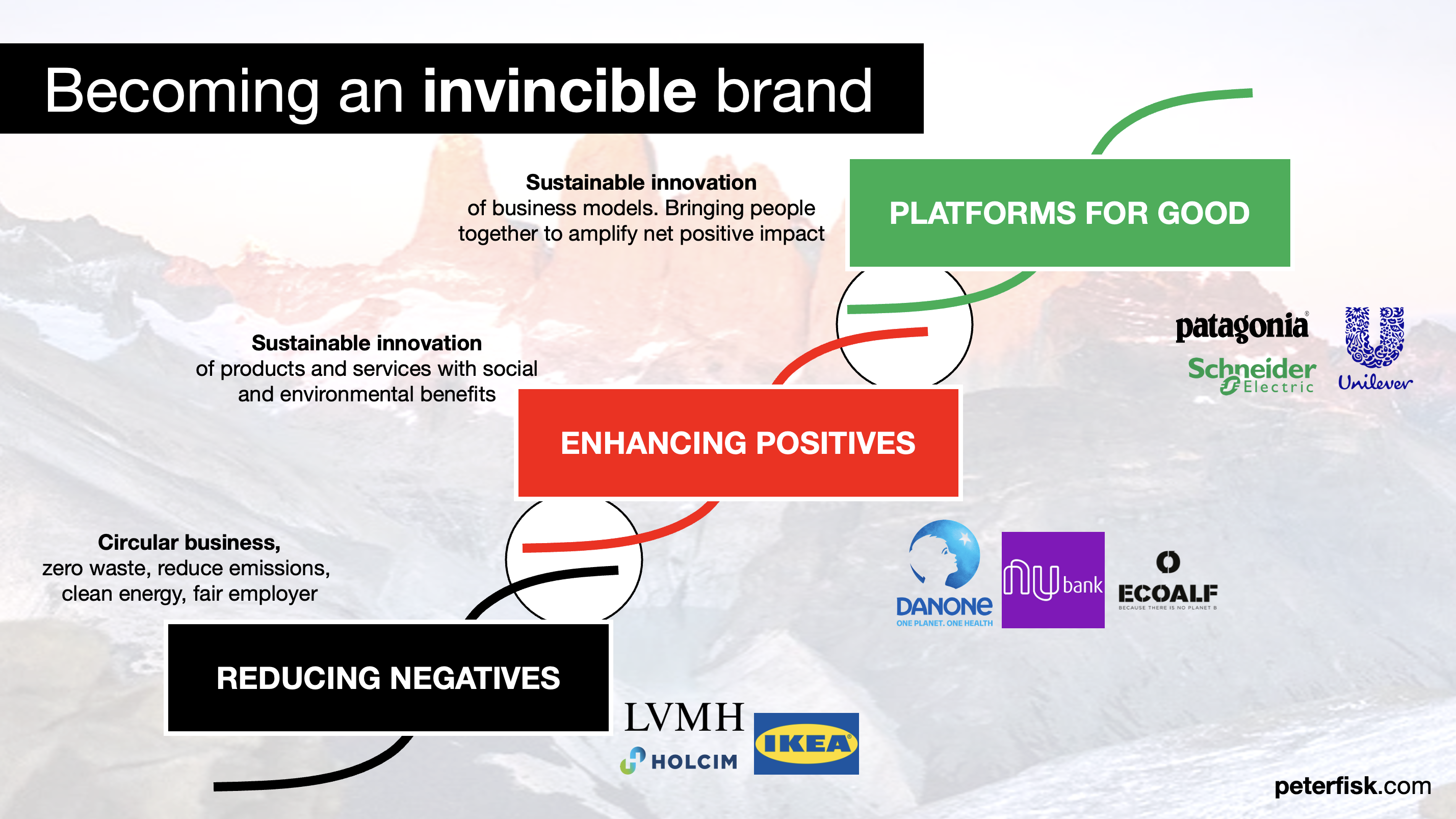
And while there are fabulous sustainable innovations by start-ups, in needs the audiences and resources of much larger companies to embrace these, and transform their organisations for real impact.
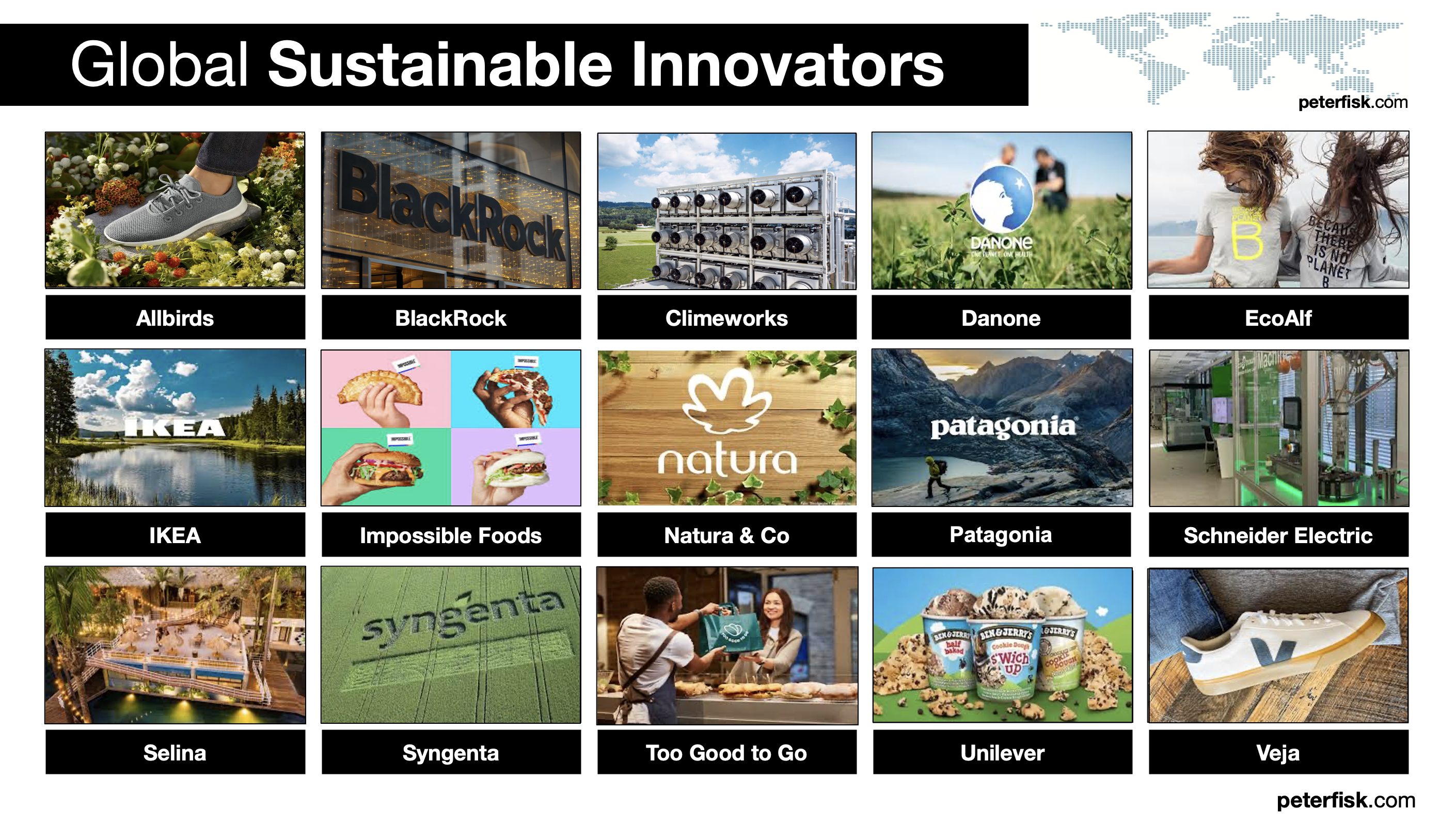
Schneider Electric: Life is On
The French company is a global leader in energy management and automation, and has made significant strides in sustainability, guided by a purpose “to empower people to make the most of their energy and resources, and to bridge progress and sustainability”.
SE’s most distinctive strategy has been to decentralise energy generation and distribution through the use of microgrids, enabling local individuals and communities to generate and share their energy, for consumers to become prosumers. A wide range of solutions help businesses and homes reduce energy consumption. Their products, from smart meters to energy-efficient buildings, help lower carbon emissions. The company invests heavily in renewable energy sources and promotes their use through its energy solutions.
Patagonia’s purpose is to “build the best product, cause no unnecessary harm, and use business to inspire and implement solutions to the environmental crisis.” This mission reflects their commitment to sustainability and environmental stewardship, and they are considered one of the world’s most sustainable brands. The company, founded by Yvon Chouinard in 1973, based in Ventura, California. A certified B-Corporation, is on a mission is to save our home planet.
It prioritises reducing their environmental impact through initiatives like the Worn Wear program, which encourages customers to buy used Patagonia products. The company ensures fair labor conditions in their supply chain, with many of their factories being Fair Trade Certified. They use recycled and organic materials in their products, aiming to create durable, repairable, and recyclable items. Patagonia donates 1% of its annual sales to environmental causes through the 1% for the Planet initiative, and plans to make all of its products by weight from recycled and organic materials by 2025.
The Swedish company’s purpose is “to create a better everyday life for the many people.” This vision goes beyond just selling home furnishings; it aims to have a positive impact on the world, from the communities where they source raw materials to how their products help customers live more sustainably.
It is considered one of the world’s most sustainable innovators. It has set ambitious climate goals, aiming to be climate positive by 2030. This means they plan to reduce more greenhouse gas emissions than they emit. They focus on designing products that can be reused, refurbished, and recycled, minimising waste and promoting resource efficiency. The company uses renewable and recycled materials in their products and aims to phase out single-use plastics, invests in renewable energy sources and energy-efficient technologies in their stores and operations, and ensures fair labour conditions and supports social initiatives, such as providing affordable housing solution.
With a purpose “to make sustainable living commonplace” Unilever seeks to integrate sustainability into every aspect of their business, from product development to supply chain management, and to inspire consumers to adopt more sustainable lifestyles.
Unilever is considered one of the world’s most sustainable brands because if its ambitious goals, including to achieve net zero emissions across its value chain by 2039. They are committed to reducing plastic waste by using more recycled materials and developing innovative packaging solutions. Unilever supports fair trade and ethical sourcing, ensuring that farmers and workers in their supply chain are treated fairly. Through initiatives like the Shakti program, Unilever empowers women in rural communities by providing them with entrepreneurial opportunities.
Harnessing new technologies
While innovations are not just about new technologies, they do provide capabilities to solve the big problems we face in new ways. Here are some of the most exciting sustainable innovations of 2024:
- Sustainable Plastic Alternatives: Innovations aimed at reducing plastic waste by creating biodegradable and compostable materials. eg AirCarbon
- Biodegradable Packaging: New packaging solutions that break down naturally without harming the environment. eg Mori
- Garbage Bins for the Ocean: Devices designed to collect and recycle plastic waste from oceans and waterways. eg Seabin
- Solar Generators: Portable and efficient solar-powered generators for renewable energy on the go.
- Renewable Energy Storage: Advanced storage solutions to capture and store renewable energy more effectively.
- CO2-Reducing Robots: Robots and AI technologies that help reduce carbon dioxide emissions in various industries. eg Kiwibot.
- Zero-Carbon Cement: New methods of producing cement with minimal carbon emissions.
- Microbial Fertilizers: Using microbes to help farmers reduce the need for chemical fertilize
- Carbon-Capturing Microbes: Microbes engineered to capture and store carbon dioxide from the atmosphere.
Building better brands
Developing a sustainable brand typically involves several stages or levels:
- Finding purpose: Understanding the core purpose and mission of your brand. This involves identifying why sustainability matters to your brand and how it aligns with your values.
- Establish priorities: Assessing your current practices and identifying areas for improvement. This step helps you understand your environmental impact and set realistic goals.
- Build a roadmap: Developing a clear strategy and action plan to achieve your sustainability goals, and how they link to business priorities and results.
- Sustainable practices: Integrate basic sustainable practices into your operations, from sourcing materials like clean energy to production and distribution, building a circular model over time.
- Build a platform for good: Engaging with stakeholders, including customers, employees, and partners, to create a community around your sustainable brand.
- Authentic storytelling: Effectively sharing your sustainability journey and achievements with your audience in a way that is real, tangible and useful. Get others to tell the story for you.
- Business dashboard: Continuously track your progress and report on your sustainability efforts to maintain transparency and accountability, and show how they enhance business results too.
- Sustain and evolve: Regularly review and refine your sustainability practices, gradually making them more core to your business model, your competitive advantage and commercial success.
Contact me at peterfisk@peterfisk.com
More free downloads:
- New research: The World’s Most Sustainable Innovators
- New research: Gamechangers Turkey: The Most Sustainable Innovators
- Video: Business for a Better World
- Article: Sustainable Advantage
- Book: People Planet Profit: Sustainable Innovation by Peter Fisk
- New research: Ipsos Global Trends Report
- Resources: Sustainable Futures Project
More from Peter Fisk:
- Keynote speaking: inspiring speaker on future megatrends, disruptive innovation, and courageous leadership
- Business workshops: world class facilitation, applying the most innovative ideas practically
- Executive education: customised, leading edge, in-house programs and with top business schools
- Strategic consulting: expert, collaborative, facilitate support and advice to boards, executives and project teams
Navi Radjou is a joyful guy. A friend, a great thinker, and inspiration.
I first met him almost 20 years ago, as a fellow new entrant to the Thinkers50 radar of new business thinkers. His beaming face and infectious laugh are enough to like him immediately. And then he tells his story, of where he has come from, and what matters to him.
Navi describes himself as “an uplifter”, which is perhaps what we all need after a year of pandemic lockdown, fear and anxiety, and economic uncertainty.
In a recent email, he told me how he was that week moving to a new apartment just across the road from New York’s Central Park. To me this seemed like a big upheaval, especially during a pandemic, but he reassured me that with every move he finds himself with less possessions – living light, you might say.
Another word is frugal – which is perhaps what he is best known for – or rather the concept of “frugal innovation”. Labelling himself as a French-American, who grew up in Pondicherry in south-eastern India (made famous by the book, Life of Pi), he has a passion for how companies can innovate faster, better, and sustainably in today’s tech-driven, resource-constrained global economy that is increasingly shaped by climate change.
Big idea
His next big idea is “conscious design” which he describes as “the ability to integrate our thinking, feeling, intuiting, doing”.
“When I turned 45, I reflected on my life and saw a pattern. Until then, I had treated the various aspects of my background — my Indian roots, French education, and my professional life in the USA — as distinct. I realised that the time has come for me to integrate these unconnected dots of my background into something more holistic.
“I also see this reflected in our times. We are entering what I call The Age of Convergence, in which first-world and third-world issues like climate change, escalating pollution, social inequality, chronic illnesses, are converging to create ‘problems without borders’ that affect every person on Earth irrespective of gender, skin colour, or income level.”
As the world struggles to fight the Covid-19 virus, we can see this challenge more clearly than ever – “until we are also safe, nobody is safe” – in the need to share and support vaccinations in every corner of the planet.
“The human race needs to transcend its superficial differences and converge toward unity so that all men and women can join forces to co-create solutions without borders that overcome the wicked problems afflicting entire mankind.”
He says that he sees this convergence happening in himself as he seeks to integrate the rich aspects of a multicultural background — the millennia-old Indian spiritual wisdom, the French tradition of rational thinking and scientific analysis, and the entrepreneurial spirit of Silicon Valley — to gradually become a “whole” person.
So what does this mean in practice? As we recover from Covid-19 we need to design new products and services, processes and experiences with emphasis on safety, health, and sustainability. However, even more importantly, he says, we also need to design
- new organizational structures (to accommodate virtualised/decentralised workplaces and drive bottom-up innovation)
- new wise and resilient leadership models that foster diversity and thrive on ambiguity
- new collaborative industry value networks (that encourage co-creation rather than competition
- new inclusive/regenerative socio-economic ecosystems like the frugal economy (the title of his bestselling book).
- new grassroots political governance (like participative democracy).
All the above activities, he suggests, are focused on designing a better outer world, yet we should perhaps pay more attention to also creating a better inner life.
“There is a spiritual revolution under way as more people, especially Gens Y/Z seek meaning in life. As such, we all need to become conscious designers of our subjective inner life” he says.
“To consciously design a more purposeful life, one needs to harness and integrate four inter-related faculties related faculties: thinking (mind), feeling (heart), intuiting (soul), and doing (body).”
Radjou intends to infuse this holistic and integrative perspective into his work so that he can inspire people worldwide to create a better future. “Conscious design will be key to crafting a fulfilling personal life and to co-create conscious organizations and conscious societies of the 21st century.”
Here is my latest World Economic Forum article on Triple Regeneration, a new “caring” paradigm that goes beyond sustainability and CSR.
New book
And now, I’m so excited that his new book is finally here: The Frugal Economy.
Great title. A book has immediate power when it defines a new paradigm, a new way of thinking, and winning. This book does. Particularly the subtitle.
Or as Navi puts it, “Humanity’s pursuit of greatness meets the reality of finite resources”.
In the book he delivers an incisive and engrossing treatment of how human beings facing climate change can reconcile our built-in drive to “do more” and “be better” with our planet’s finite resources. You’ll discover how we can thrive within planetary boundaries while achieving sustainable growth for generations to come.
He says “the book offers a wise middle path between degrowth and hypergrowth.”
It’s enriched with over 100 inspiring examples, helping you to explore how to create greater value with less and find:
- Practical strategies for doing more with less, benefiting both people and the planet
- Success stories of businesses fueling transformative megatrends like B2B sharing, distributed manufacturing, and triple regeneration
- Insights into reshaping economic systems to promote social and ecological harmony
He, and the book, are catalysts for positive change.
Business leaders need to achieve more in today’s fast, dynamic and intensely competitive markets. Peter Fisk explores what it takes to deliver peak performance.
Imagine that you are days away from competing in the Paris 2024 Olympic Games. As you prepare for the greatest race of your life, you consider the moments ahead, anticipate what might happen, your alternative strategies. And maybe, you just dare to dream.
In reality, you need to be ready for anything. It’s no use overthinking. You are in the best condition of your life, you have the training behind you, you’re ready. In reality you are simply consumed by the moment, at one with your body, focused on the race.
When you are at your “peak”, your body and mind flow in unison, you know what to do.
In the world of business, you need to be an elite athlete too. Here we explore the physical and mental characteristics required to perform at the highest levels.
Finding your peak performance
Mihaly Csikszentmihalyi believes that peak performance comes from inside, and that people have the unique ability to create environments that facilitate the development of a state of mind which he calls “flow”, or what some might call “in the zone”.
Flow is the experience I get when I’m working intensely on a project, the challenge is significant, the team around me are great people, the timeframes are tight, and the ambition is very high.
Once I am into the project, I find I can work at great pace, there is a stream of consciousness, ideas emerge rapidly.
Under the stress and stretch of high octane situations, we can often do our best work. Csikszentmihalyi says “the best moments usually occur when a person’s body or mind is stretched to its limits in a voluntary effort to accomplish something difficult and worthwhile. Optimal experience is thus something we make happen”
It is a feeling of immersion, focus and concentration, removed from the repetition and distractions of everyday, you feel like you have more purpose, with heightened awareness of the situation and possibilities. Complexity seems less intimidating, and uncertainty less daunting. You are energised, you are empowered, you can achieve so much more.
Flow is achieved through an intensity of concentration and effort as you apply yourself to the task. You are energised by possibility, and released from the fear of failure. You rise above yourself, above the distractions of today. The experience of this flow is as good as the outcomes.
5 ways for business leaders to find their “flow” state every day are:
- Select tasks that are stimulating and engaging, they challenge you to the point of excitement. They are problems you would love to solve.
- Assemble a great team, people you love and trust, who you know that together you can do great things (or you, on occasions, you can also do this alone).
- Define audacious goals, that go beyond the accepted norms, 10x not 10% targets, and also a sense of what the rewards could be, personal or organisational.
- Focus your mind, a stream of consciousness towards the goal, eliminating the daily trivia, the distractions of the normal workspace
- Immerse yourself in the moment, active not passive, thinking ideas, doing tasks, making progress, building momentum, going for the goal.
The “flow” state of mind becomes the everyday state of business leaders. It becomes normal. Every day, working towards the future, whilst also delivering today. Your mind working overtime, connecting ideas, searching for progress, focused on the actions which will create a better tomorrow. Indeed, you can only ever do things today, even it is focused on a better future.
Playing to your athletic strengths
We have grown used to exploring the “strengths and weaknesses” of human character, or in this case of leadership behaviour. The problem is that this kind of diagnostic encourages us to focus on our weaknesses, to make them better, to be “good enough” at everything.
An alternative is focus on your strengths and how to make them better.
Yet few business leaders say they get to use their strengths in most of their work. The challenge in any team is to bring a diverse group of people together, where their combined strengths are irresistible. This means that as long as all the important attributes are covered, then the team will be strong in all areas, and amplify its impact far beyond that of any individual.
Psychologist Martin Seligman studied cultures around the world to understand what they regarded as “strengths” in leaders. The research explored major religions and philosophical traditions and found that the same six virtues were shared in almost all cultures.
Gallup’s StrengthFinder assessment model is one of the most useful tool for exploring the practical component of these virtues as 24 character strengths:
- The Wisdom of Leaders: the more curious and creative we become, the more we gain perspective, knowledge and wisdom. Component strengths are creativity, curiosity, open-mindedness, love of learning, and perspective.
- The Courage of Leaders: the braver and more persistent we become, the more confident we feel, and more courageous we act. Component strengths are bravery, perseverance, honesty and vitality.
- The Humanity of Leaders: the more we approach people with respect, appreciation, and interest, the more engaged they become. Component strengths are love, kindness and social intelligence.
- The Justice of Leaders: the more responsible we are, embracing fairness and justice, the more stable community we can build for mutual benefit. Component strengths are teamwork, fairness and leadership.
- The Temperance of Leaders: being forgiving, humble, prudent, and in control of our behaviours, helps us to avoid being arrogant, selfish, and unbalanced. Component strengths are forgiveness, humility, prudence and self-control.
- The Transcendence of Leaders: never losing hope in humanity’s potential, appreciating nature and people, enables us to connect with a higher purpose. Component strengths are appreciation of beauty, gratitude, hope, humour and spirituality.
Additional studies have shown that women typically score higher in interpersonal strengths, such as love and kindness, honesty and gratitude. Men tend to score higher on cognitive strengths, creativity and curiosity, hope and humour, but also highly on honesty. Whilst these differences are interesting, and largely conform to stereotypes suggesting that they might be shaped by culture, there are also many shared strengths.
Playing to your strengths not only enables you to perform better, and contribute more to a team, it can also result in feeling more engaged and confident, and enable you to progress faster.
The leader’s athletic brain
We used to assume that we each have our established ways of thinking and behaving, and as we get older the capability of our brain to learn and adapt declines. Yet our brain can grow new neurons at any age. Each neuron can transmit up to 1,000 nerve signals a second and make as many as 10,000 connections with other neurons. Our thoughts come from the chemical signals that pass across the synaptic gaps between neurons: the more connections we make, the more powerful and adaptive our brain can be.
Tara Swart is a neuroscientist, practising medical doctor, and executive coach, with a background in psychiatry. I first met her on stage in Bratislava, where we both were delivering our “Big Idea” for Europe. Her first book, “Neuroscience for Leadership” was more of an academic text, while her new book is “The Source” is more populist, and claims most of the things we want from life – health, happiness, wealth, love – are governed by our ability to think, feel and act. In other words, by our brain.
Keeping the brain fit through exercise, continual learning and rich experiences, enhances your mental agility. In the past leaders relied more upon experience and procedure, in today’s world we need leaders who can make sense of new patterns, imagine new possibilities, thrive on diversity of thought and complexity of action. Leaders need to have a mind that is always ahead, seeing and anticipating what next.
“Think of the brain as the hardware of a computer” says Swart. “Your mind is the software. You’re the coder who upgrades the software to transform the data (your thoughts). You also control the power supply that fuels the computer — the food and drink you consume, when and how to exercise and meditate, who to interact with… You have the power to maintain or destroy your neural connections.”
Mindful activities such as yoga or meditation reduce levels of cortisol and increase the fold of the outer cortex of the brain, allowing the pre-frontal cortex to better regulate our emotional responses. Swart says just 12 minutes a day, most days of the week, will make a noticeable difference. New experiences such as travel, learning a skill, such as a foreign language, and meeting new people can stimulate the growth of new neurons.
There are some obvious ways to improve your brain function, such as drink more water, get more exercise, and don’t read from electronic screens in the last hour before bed. Sleeping less than seven to eight hours a night isn’t sustainable for most people, because that’s how long it takes to clear out toxins. Sleeping on your left side helps the brain to flush out toxins more efficiently, and downing a spoonful of coconut oil before a big meeting boosts brain power for about 20 minutes.
The journey ahead will have high and lows. Endurance demands physical fitness and emotional agility, but also taking moments to pause, and celebrate progress.
James Dyson took 15 years and 5127 attempts to perfect his bagless vacuum. When he succeeded, he created a revolution, but it required incredible persistence to get there. Not only is the future difficult to create, but everything keeps changing on the journey towards it.
The mental toughness, the grit to persist, is not just about keeping going, but the resilience to overcome challenges and obstacles. Sometimes, just the sheer volume of information – emails, analysis, reports, ideas, articles, books, meetings – will become overbearing. As a leader it’s easy to feel overloaded.
It’s also easy to feel you need to know everything, which you don’t, although you do need to prioritise what matters most. The biggest challenge for any visionary leader is not how to make ideas happen, but how to overcome all the people who say that they won’t. Critics and pessimists can be frustrating, and a motivational drain.
There will also be moments of great success, people might even call you a hero. It will feel good, even to the humblest, and you will inevitably remind everyone that it was a team effort. Yet the euphoria can quickly disappear, with the next challenge.
Leaders need endurance, resilience, and gratitude, to cope with relentless change; to be able to change your own mind, to stay on the rollercoaster of progress, to keep teams engaged, and to thrive at both work and in your life.
The athletic endurance of leaders
Endurance is as much about mind as muscle power.
Like an athlete – runner, cyclist, rower – there are many physiological elements at play, from core body temperature to oxygen intake, plus psychological factors, such as perceived effort and pain tolerance. Each of these factors is significant in the level of athletic performance humans which any person is capable of, especially when testing the perceived limits of performance, such as setting new world records.
Almost every athlete will attest to faster recovery if they jump into an ice bath after a competition. Yet studies show that this practice doesn’t actually decrease inflammation levels, the thing the baths are intended to reduce. However most physiologists will still say that if there’s a method that helps you recover, even if it’s purely psychological, then it is useful because sometimes belief is just as influential as science.
In “Endure” Alex Hutchinson starts by retelling the race to break 4 minutes for one mile. For years, men across the globe had raced to within a second or two of the barrier, but never quite breaking the iconic time. When Britain’s Roger Bannister finally ran 3.59.4 in 1954, Australian John Landy who had been trying to run the time for years, went on to improve Banister’s time by another second, only weeks later.
A number of important factors can help people, including business leaders, to endure more:
- We always have a little more to give. Watch how athletes pace themselves so that they always have one final effort at the end of a long distance event. And somehow an Olympic champion, despite a punishing race, can always rise to celebrate victory
- We can endure more than we think. Athletes have a higher than normal pain tolerance enabling them to push harder. They learn to cope with this by training at a “threshold” pace, learning to sustain oxygen debt, despite its searing pain.
- Fitness enables us to perform better. Athletic performance greatly relies on oxygen intake, which is enhanced through heightened fitness. Business leaders also need oxygen, and the physical fitness to sustain leadership performance.
- Fatigue reduces our performance.Having a tired brain can affect how much we can endure physically. A tired brain is one that doesn’t have a break, isn’t refuelled, doesn’t have variety, doesn’t keep learning, doesn’t get enough sleep.
- Stress stops us performing. Of the many factors, stress can be the killer. However stress comes in two forms – stress from outside, eg timescales, and stress we put on ourselves. External stress can stimulate us, internal stress we can control.
Hutchinson’s research led him to South Africa to work with Tim Noakes, the controversial sports scientist who first proposed the “central governor theory,” which argues that the brain limits performance well before the body has reached its maximum output. He also explores the research of another pioneering scientist, Samuele Marcora, who has developed a series of brain-training exercises to push that governor.
He also recalls talking to Eliud Kipchoge just before he ran the world’s first sub-2 hour marathon, when the Kenyan said he hadn’t really changed anything in his training. What then, he asked, would make the difference? “My mind will be different” replied the runner. People he says, have a curiously elastic limit to what they can achieve, driven mainly be their mental toughness.
The athletic resilience of leaders
Resilience is our ability to bounce back from adversity. It’s what allows us to recover quickly from change or setbacks, trauma or failure, whether at work or in life. It is the ability to maintain a sense if purpose, a positive attitude, a belief in better, throughout times of challenge. Resilience sustains progress, whilst others might give up.
Angela Duckworth calls it grit. “Grit is passion and perseverance for long-term goals” she says. She compares it not to a marathon, but to a series of sprints combined with a boxing match. In business you are not just running but also getting hit along the way. As you seek to deliver on your strategy, to make new ideas happen, to transform the business, it’s not just about coping with the time and effort. It’s also about overcoming many challenges.
Grit keeps you moving forward through the sting of rejection, pain of failure, and struggle with adversity. “When things knock you down, you may want to stay down and give up, but grit won’t let you quit” says Duckworth.
Most entrepreneurs have tremendous resilience, because they’ve had to fight for the business through some of the most difficult times. The search for seed funding when every VC dismissed them with a laugh or smile, the long days in a bedroom or garage trying to make the first prototype or win the first contract, the growing pains of scale-up as they have to adapt to survive and thrive. Letting go of control as investors take over, making you wealthy but taking away your baby. Most entrepreneurs know about grit.
But then so do corporate leaders. If not from starting up, then from surviving the challenges of internal politics, of learning how to engage and influence people in a positive way, of progressing as a star individual whilst keeping colleagues and teams on side. Of balancing personal ambition with collective progress. Resilience demands that we:
- Have ambition: Knowing what you truly want, and are prepared to work hard and persevere in order to achieve it. Vision isn’t just a milestone, it becomes a pursuit. Whilst not everybody will know your ambition, you will, and it will keep you striving.
- Have purpose: This is why you want to achieve more, it’s about what will be better when you achieve your ambition, not just for you, but your business, your family, your world. Purpose is how you contribute, what you fight for, why you get up in the morning.
- Have passion: You need to love it, to be great at it. Otherwise it’s not worth the sacrifices, the long hours, and the pain. Aligning your purpose and ambition allows you to find love, for your work, your team, your business, and the world you seek to impact.
- Have persistence: You will sometimes fail. Few things change without challenges. Failure doesn’t define you, it refines you. If you didn’t fail, you wouldn’t learn. There is always another way. Stay confident and stay strong.
Michael Phelps, winner of an epic 23 Olympic gold medals, said “You can’t put a limit on anything. The more you dream, the farther you get.” Mia Hamm, Olympic champion in women’s soccer said “I am building a fire, and every day I train, I add more fuel. At just the right moment, I light the match.” And the great Jesse Owens said “We all have dreams. But in order to make dreams come into reality, it takes an awful lot of determination, dedication, self-discipline and effort.”
One of my personal favourite Olympic moments was in the Sydney 2000 Olympics when Cathy Freeman, the small, shy aboriginal Australian 400m runner had the expectation of her nation on her shoulders. She knew this was the moment that would define her career, even her life. She decided to embrace the event by wearing a unique one-piece body suit, alongside gold spikes. She stood on the start line, and looked upwards to the dark Sydney sky. “You got to try and reach for the stars or try and achieve the unreachable.”
© Peter Fisk 2024
Peter Fisk is a global thought leader, bestselling author, and inspiring keynote speaker. Scientist to strategist, entrepreneur and academic, he has worked with over 250 companies in 50 countries. Airlines to automotive, cosmetics to cement, finance and pharma, he helps leaders to make sense of change, explore innovative strategies to compete, and embrace the mindset to transform organisations and deliver sustainable impact. With 10 books in 35 languages, most recently Business Recoded, he continues to inspire and shape the business landscape.
- Next is Now: Superfast chips to fast-busting drugs
- 24 for 2024: New ideas, new trends, new possibilities
- The New Leadership DNA: Creating a better future
- 100 Inspiring Leaders: Bernard Arnault to Zhang Yiming
Over 30 years of working with some of the world’s leading companies, I am still amazed by the lack of real strategy development in so many companies.
Many like to dream big, but then jump to the delivery, without really understanding what is the strategic shift they seek to make. Others are obsessed with planning and metrics, but fail to explore the changing world, to see the bigger picture, or to make decisive choices.
And then, you have public sector.
Government-related organisations struggle even more to define clear strategies, and implement them. Often an even more difficult challenge given the multitude of stakeholders, conflicting objectives, and typically lack of rigorous processes and practices to fall back on.
Over the years I’ve worked with many public sector organisations – from the UK’s health service and justice system, to UAE’s ministry for the future.
I’ve worked with governments in Egypt and Estonia, Kazakhstan and Kuwait, Saudi Arabia and Singapore, UAE and USA – and in areas from education to heritage, transport and tourism, healthcare to housing, local services and financial services, parking and prisons,
Of all these, Estonia’s E-Government Strategy was probably the most impressive, in its vision and delivery.
The small Baltic nation implemented an entirely paperless e-government system, allowing citizens to access nearly all public services online. This innovative approach to digital government is built on trust, transparency, and ease of use.
Developing a strategy within a government department or agency requires a clear vision, comprehensive planning, effective stakeholder engagement, and an understanding of the unique constraints and opportunities that come with the public sector.
Unlike private businesses, government departments must balance efficiency and effectiveness with public accountability, political realities, and social impact. Below are key principles for developing a successful strategy within a government department, along with examples of best practices from around the world.
Each year, I get invited by the OECD to lead a masterclass for their own member organisations, and others like IMF and UN, to explore the latest ideas in strategy and innovation. We look at the drivers of change around the world, how private companies like Apple or Alibaba, are responding, and what it also means for their organisations. What to do, and how.
So what have I learnt about developing strategy in governments, and other public sector organisations?
1. Clear Mission and Vision Alignment
- Principle: A government department’s strategy should align with the broader national or regional objectives and serve the public interest. The mission and vision must be clear, focused on outcomes that improve public well-being, and reflect political, economic, and social priorities.
- Singapore’s Smart Nation Initiative: The vision of making Singapore a global leader in smart cities guides all public sector strategies. The Smart Nation Initiative focuses on improving urban living using technology to enhance economic opportunities and public services, aligning with Singapore’s long-term national goals of sustainability, innovation, and inclusivity.
2. Evidence-Based Decision Making
- Principle: Government strategies should be based on data, evidence, and rigorous analysis. This involves collecting, analyzing, and using quantitative and qualitative data to shape policies and decisions.
- Estonia’s E-Government Strategy: Estonia is a leader in digital government, with its e-Residency program allowing global citizens to access Estonian services digitally. The government makes strategic decisions using data-driven insights from citizen usage patterns, digital transactions, and feedback loops to refine policies and services.
3. Stakeholder Engagement and Consultation
- Principle: A successful strategy must be developed in consultation with key stakeholders, including the public, civil society, the private sector, and other government departments. Engagement helps ensure that the strategy reflects a wide array of perspectives and has broader support.
- Finland’s Education Strategy: Finland’s education policy is developed through a collaborative approach with educators, parents, businesses, and local communities. The ongoing dialogue and consultations help maintain Finland’s reputation for high-quality education and ensure that all relevant stakeholders are invested in the success of the strategy.
4. Clear Objectives and Measurable Outcomes
- Principle: The strategy should have specific, measurable, achievable, relevant, and time-bound (SMART) objectives. Setting clear goals allows the department to track progress and ensure accountability.
- UK “Digital Strategy”: The UK government’s digital strategy set clear targets, such as making 100% of government services digital by 2025. The digital transformation agenda includes measurable objectives such as increasing online access to public services, improving user experience, and achieving cost savings.
5. Integration with Other Government Policies and Initiatives
- Principle: Government strategies should be consistent with other national and local policies, ensuring coherence across sectors. This requires a holistic approach where each department’s strategy is connected and complementary to others.
- The Netherlands’ Sustainable Development Strategy: The Dutch government has integrated sustainability into its national development strategy, linking various policies in areas like climate action, economic growth, and social equity. This cross-departmental approach has helped the country make significant strides toward achieving the United Nations Sustainable Development Goals (SDGs).
6. Flexibility and Adaptability
- Principle: The political, economic, and technological landscape can shift rapidly. A good government strategy should be adaptable to change and resilient in the face of unforeseen challenges.
- New Zealand’s Public Service Strategy: New Zealand’s public service strategy, particularly the “Better Public Services” program, emphasizes adaptability. For example, the government introduced flexibility in policy delivery and used a results-focused approach to allow departments to modify strategies as new information and conditions arose.
7. Resource Allocation and Risk Management
- Principle: Effective strategy development involves identifying available resources and budgeting appropriately to ensure the goals are achievable. It also requires recognizing potential risks and preparing mitigation plans.
- Canada’s Innovation Strategy: The Canadian government’s strategy prioritizes innovation funding for key sectors, focusing on science and technology. It integrates robust risk management frameworks to anticipate challenges in areas like cybersecurity and global competition, ensuring resources are allocated to high-impact initiatives.
8. Public Transparency and Accountability
- Principle: Public trust is key in government strategy, and transparency should be built into the strategy development process. Clear reporting mechanisms, open data, and regular progress reviews foster accountability and trust.
- South Korea’s Open Government Strategy: South Korea has made significant progress in establishing open government initiatives. The government regularly releases detailed information on budgetary allocations, progress on strategic goals, and evaluations of policy effectiveness, engaging citizens in the policy process through digital platforms.
9. Performance Management and Evaluation
- Principle: Regular monitoring and evaluation of strategy implementation help ensure that the strategy is on track. Continuous performance reviews and feedback loops allow for course correction and ensure public funds are being spent efficiently.
- Germany’s “Performance-Oriented Budgeting”: Germany uses a performance-oriented budgeting system where the impact of government spending is evaluated against predefined outcomes. This system helps ensure that taxpayer money is allocated efficiently and that public services meet defined performance targets.
A well-crafted government strategy is built on clear, evidence-based objectives, and is driven by stakeholder engagement, accountability, and adaptability. Global best practices—from Estonia’s digital governance to Singapore’s Smart Nation Initiative—demonstrate how public departments can leverage technology, data, and collaboration to drive sustainable outcomes that benefit society.