Business futurist. Innovative strategist. Leadership advisor. Bestselling author. Inspiring speaker.
Martin Seligman is a pioneer of “positive psychology.”
He famously developed a systematic theory about why happy people are happy, and used scientific method to explore it. Through the use of exhaustive questionnaires, Seligman found that the most satisfied, upbeat people were those who had discovered and exploited their unique combination of “signature strengths,” such as humanity, temperance and persistence.
This vision of happiness, he says, combines the virtue ethics of Confucius, Mencius and Aristotle with modern psychological theories of motivation. He concluded that happiness has three dimensions that can be cultivated:
the Pleasant Life … positive emotions, pleasure … feeling more
the Good Life … togetherness, engagement … contributing more
the Meaningful Life … fulfilment, meaning … achieving more
The Pleasant Life is realised if we learn to savour and appreciate such basic pleasures as companionship, the natural environment and our bodily needs.
We can remain pleasantly stuck at this stage or we can go on to experience the Good Life, which is achieved through discovering our unique virtues and strengths, and employing them creatively to enhance our lives. According to modern theories of self-esteem life is only genuinely satisfying if we discover value within ourselves. Yet one of the best ways of discovering this value is by nourishing our unique strengths in contributing to the happiness of our fellow humans.
Consequently the final stage is the Meaningful Life, in which we find a deep sense of fulfilment by employing our unique strengths for a purpose greater than ourselves.
He calls the combination a “Full Life“, or authentic happiness.
“PERMA” stands for the five essential elements that contribute to individual or team well-being. These are:
P – Positive Emotion
This element is, perhaps, the most obvious connection to happiness. Focusing on positive emotions is more than smiling: it is the ability to remain optimistic and view one’s past, present, and future from a constructive perspective.A positive view can help in relationships and work, and inspire others to be more creative and take more chances.
In everyone’s life, there are highs and lows; focusing on “the lows” does increase your chances of developing depression, although the equation for depression is very complicated.Regardless, there are many health benefits to optimism and positivity.How do we distinguish between pleasure and enjoyment for this? Pleasure is connected to satisfying bodily needs for survival, such as thirst, hunger, and sleep. Whereas enjoyment comes from intellectual stimulation and creativity.
When a child completes a complex lego car that requires their concentration, for example, they might beam with joy and satisfaction from their work.This type of positive emotion is crucial. It can help people enjoys the daily tasks in their lives and persevere with challenges they will face by remaining optimistic about eventual outcomes
E – Engagement
Activities that meet our need for engagement flood the body with positive neurotransmitters and hormones that elevate one’s sense of well-being. This engagement helps us remain present, as well as synthesize the activities where we find calm, focus, and joy.People find enjoyment in different things, whether it’s playing an instrument, playing a sport, dancing, working on an interesting project at work or even just a hobby.
When time truly “flies by” during an activity, it is likely because the people involved were experiencing this sense of engagement. We all need something in our lives that absorbs us into the current moment, creating a ‘flow’ of blissful immersion into the task or activity. This type of ‘flow’ of engagement stretches our intelligence, skills, and emotional capabilities
R – Relationships
Relationships and social connections are crucial to meaningful lives.Too often, the pursuit of happiness has this Western bias of “individuality” where each person steers their personal happiness ship to shore. This is not realistic. We are social animals who are hard-wired to bond and depend on other humans. Hence, the basic need for healthy relationships.We thrive on connections that promote love, intimacy, and a strong emotional and physical interaction with other humans. Positive relationships with one’s parents, siblings, peers, coworkers, and friends is a key ingredient to overall joy. Strong relationships also provide support in difficult times that require resilience.
In an interview with Dr. Mitch Printein’s about his course on the psychology of popularity, Printein explained the research on pain centers in the human brain.Basically, our pain centers become activated when we are at risk of isolation. From an evolutionary perspective, isolation is the worse thing we could do for survival.These activation centers are like fire alarms in the body, discouraging people to continue feeling this pain, and ideally, reconnect socially with someone or a group. We need, neurologically, to know that we belong to a group; it helps us feel safe and valued, and has for millions of years.
M – Meaning
Having an answer as to “why are we on this earth?” is a key ingredient that can drive us towards fulfillment.Religion and spirituality provide many people with meaning, as can working for a good company, raising children, volunteering for a greater cause, and expressing ourselves creatively.Unfortunately, the media worships glamour and the pursuit of material wealth, impacting many people to feel like money is the gateway to happiness.
While we do need money to pay for basic needs, once those basic needs are met and financial stress is not an issue, money is not what provides people with happiness.Understanding the impact of your work and why you chose to “show up at the office” may help you enjoy the tasks and become more satisfied with what you do. Whether you work in an office or not, think of what you spend most of your time doing. What does that activity provide you with?
Check out Itai Ivtzan’s Awareness-Meaning Therapy if you want more resources on this weighty aspect of happiness. His video in that link on “Awareness is Freedom” has provided inspiration to reflect and change for thousands of people.A – AccomplishmentsHaving goals and ambition in life can help us to achieve things that can give us a sense of accomplishment. You should make realistic goals that can be met and just putting in the effort to achieving those goals can already give you a sense of satisfaction when you finally achieve those goals a sense of pride and fulfillment will be reached.Having accomplishments in life is important to push ourselves to thrive and flourish.
Brands are swamped by noise in a world of frenetic marketing, and even more chaotic social media-driven chat. It’s not easy to stand out in a world of obsessive clutter.
Innovation should be the answer, but most creative ideas still struggle to rise up, so brands try even harder to create ideas that will become talked about, spread rapidly, and become desired. Yes, it encourages gimmicks, trivial creativity that has a shellfire of days, but it also creates a story, which the brand and its more enduring products and services can potentially ride off.
The challenge of course is to ensure that the “gimmick”, and the creative execution, has some form of strategic logic behind it – understanding the mindset of the target audience (typically the mobile hugging, viral Tiktok messaging, young audience), and the values which the brand seeks to identify itself with. I’m not sure this is always the case.
In just the last week, 4 examples include:
Supreme Oreos
Oreo last week became the latest brand to link up with fashion superbrand Supreme, and follows many other Supreme collaboration including with Louis Vuitton, Commes des Garcons, Nike, Champion, and many others. The Supreme Oreos cost $8 for three of these cookies, a considerable markup considering a normal Oreo pack of 39 which sells for around $3.50. However things have gone crazy on eBay with bidding reaching $92,000.
Supreme started as an American skateboarding shop and clothing brand established in New York City in April 1994, launched by James Jebia. The brand produces clothes and accessories and also manufactures skateboards. It’s shoes, clothing, and accessories are sold extensively in the secondary market, meaning that huge queues wait for new lines to be launched, before immediately rushing to upload them to eBay and sell for many times what they cost, such is the hyped demand for the cult brand and its collaborations.
Crystal Pepsi Diamond Ring
Pepsi has released an engagement ring made that, while sporting a lab-grown diamond, is also infused with Crystal Pepsi. The ring consists of a 1.53-carat diamond on a platinum band. Pepsi fans can tweet their ideas for the perfect proposal for a chance to win the sparkler. In the official contest rules, Pepsi says the prize is an “IGI Laboratory Grown Diamond Crystal Pepsi engagement ring” with a value of about $3,000.
According to AdWeek, the diamond “was made by boiling down Pepsi’s clear beverage to its most basic carbon form, resulting in a powder.” The powder was incorporated in the diamond-growing process. Entries must include the hashtags #PepsiProposal and #Contest, and the @Pepsi Twitter account must be tagged. They can include up to four photos and one video up to 30 seconds long. A winner will be announced on March 16.
https://www.youtube.com/watch?v=gk_AC_ofG6U
McDonalds Burger-Scented Candles
McDonalds has launched a collection of burger-scented candles. Each candle is made to replicate the scent of the ingredients that make up its quarter pounder: 100% fresh beef, ketchup, pickle, cheese, onion and sesame seed bun. the set of 6 custom scented candles celebrate the burger’s 50th anniversary being on the menu. the listing on the fan club website recommends burning all the scents at once for ‘maximum deliciousness.’
McDonald’s debuted the collection of ‘quarter pounder’ scented candles as part of its quarter pounder fan club, a series of merchandise crafted for its quarter pounder fans. other items include a quarter pounder with love locket, couples quarter pounder mittens, 2020 quarter pounder calendar, quarter pounder fan club t-shirt.
The limited-edition merchandise is available online, with items available throughout the week, according to McDonald’s. the chain also said fans can find out more about the release date of each by following McDonald’s on instagram. On February 26 McDonald’s will also be honouring a lucky city for taking its quarter pounder fandom to new heights with a special monument.
Burger King’s Mouldy Whopper
Burger King is using a mouldy Whopper in its new advertising campaign, seeking to demonstrate that its products are now free of artificial additives. The television ads – running in Europe and the US – begin with someone making a fresh burger to the sound of Dinah Washington’s song What Difference A Day Makes, and then uses a time-lapse showing it rotting over 34 days. The fast food chain says the campaign is highlighting its decision to remove artificial preservatives from the product. In a tweet , Burger King said: “The beauty of real food is that it gets ugly.”
The Whopper is topped with onions, lettuce, tomato, mayonnaise and pickles, all of which will contain no artificial preservatives. The firm, based in Miami, Florida, said it has removed them from the Whopper in several European countries – including France, Sweden and Spain – and around 400 of its 7,346 US restaurants. It plans to get rid of preservatives from the burger served in all of its restaurants this year. It is acknowledged as the work of ad maverick CMO Fernando Merchado. To me it just looks disgusting, and I wouldn’t want my brand to leave such a negative image in consumers’ minds.
https://www.youtube.com/watch?v=oSDC4C3_16Y
Through positive wellness and personalised pharma, robotics and genetics, digital applications and patient-centric business models … the future of health is about specialisation and innovation, patient-centric solutions that are faster and more efficient. The fast-changing science is one factor, however far more significant is the convergence of pharma and biotech, insurance and hospitals, physicians and pharmacists … working together to make life better.
For just $99 we can see our life before us, with a DNA profile from 23 and Me, and as a result we go to PatientsLikeMe to find out how others have responded. We eat the best foods from GSK, and check our daily fitness with Nike+, maybe with a little help from Avumio’s diagnostic apps and online advice from Dr Koop.
If we need help, we turn to ZocDoc where a local nurse with Epocrates at his fingertips, who prescribes a standard drug from Wuxi, or a custom prescription from Genentech. A night in W Hotel’s clinic, or a surgical trip to Antalya is unlikely. Instead we spray on our L’Oreal skin protection, sip on our super-vitamin Zespri kiwi juice, and smile.
7 “gamechangers” in healthcare
The future of healthcare is personal, predictive and proactive, using advanced diagnostics so that people can themselves understand their likely conditions, and take better actions now to reduce risks or avoid illnesses. In this sense it is about positive wellbeing, rather than caring or curing. However when misfortune does strike, then care is about patients and personalisation, putting people at the heart of the medical process, supported by physicians and pharmaceuticals which are right for individuals.
23andMe– The $99 DNA profile could change your life
Babylon Health – Everyone’s personal, mobile health service
Buurtzorg– The revolutionary Dutch healthcare model
CVS Health – From negative pharmacy to positive wellness
Grail – To detect cancer early, when it can be cured
One Medical – Healthcare reinvented, any service, when you need it
Technological innovations are transforming healthcare – from the most advanced surgical procedures, to the way in which generic drugs are sold and delivered. But while all eyes are on blockchain, 3D printing, machine learning (ML), natural language processing (NLP), and internet of things (IoT), technology is is only one part of the story. The key factor will be shifts in consumer behavior.
Putting personal information online is the new normal. And in turn, people are becoming increasingly comfortable sharing details about their lives – including their health and wellbeing. Equally, people increasingly trust digital interfaces rather than demanding human interactions in all cases.
Improved telecoms, 5G and mobile devices enable real time support:
Stuward VU: Switzerland-based healthcare company Stuward recently launched a telemedicine application amid the roll-out of 5G. The service helps connect independent medical professionals with people seeking online consultations. It was created partly to help doctors better compete with the much larger tech companies that generally have significantly larger marketing budgets and other administrative resources at their disposal.
Eedoctorsfrom Switzerland has created the first virtual doctor’s office using smartphones. The company established this app to enable formal diagnoses through virtual consultations, which had been a challenge for previous telemedicine companies because of bandwidth issues and other limitations. This remote consultation service is quickly becoming a prominent healthcare trend in Switzerland and facilitates online visits with general practitioners and emergency physicians.
Data enables healthcare to be more predictive:
Medopadis a London-based healthcare startup supported by pharmaceutical company Bayer. The company has developed an app that compiles and analyzes health data from patient wearables, mobile devices, and medical bodies to predict chronic diseases. With the use of both big data and machine learning, the startup wants to “understand, treat, and ultimately prevent ill health“. Medopad recently acquired rival Sherbit, another startup that also uses personal data collected from sensors, apps, and devices in uncovering health insights.
AIME, which stands for artificial intelligence in medical epidemiology, is a US-based startup that uses machine learning and big data analytics to predict in real-time where and when infectious disease outbreaks will occur. The end goal is to detect outbreaks in advance and keep them in check. AIME has a bot named REDINT that scours over 40 databases of weather, geographical, and epidemiological data. According to AIME’s CEO, Dr. Helmi Zakariah, AIME’s use throughout the healthcare sector is crucial to its success. The system will be ineffective if it does not have “a continuous stream of new disease incidence data” that it can use to continue learning.
Drug distribution improves through automation and robotics
Pensiamo, a technology spinoff of the University of Pittsburgh Medical Center (UPMC), has recently developed CognitiveRx, a tool for predicting drug supply disruption risk. The tool was developed together with supply chain technology provider Premier. Powered by machine learning, CognitiveRx is a valuable tool that hospitals can use in the rapid identification of solutions related to purchasing and inventory. Jim Szilagy, chief supply chain officer of UPMC and Pensiamo’s CEO, says that with CognitiveRx, patients across the United States will have a higher chance of receiving the medication they need at the time they need it. US Healthcare Provider Premier will soon offer CognitiveRx to its member health systems and hospitals.
Matternet: Drones or unmanned aerial vehicles used as a solution to logistical problems in healthcare is one of the healthcare trends in the US to watch. The United Parcel Service (UPS), for example, is currently partnering with California-based drone technology startup Matternet to work on the delivery of medical samples across WakeMed Health & Hospitals’ campus in Raleigh, North Carolina. The expectation is that with drone delivery, same-day and on-demand delivery of medical specimens and samples will be possible, and consequently, hospital costs will be reduced, and the patient experience will improve. It was in 2015 in Zurich, Switzerland, that Matternet first tested a drone delivery system for transporting pathology and blood samples. Since then, Matternet has significantly expanded its Swiss operations and has conducted over 1,700 drone flights to execute over 850 deliveries of patient samples.
https://www.youtube.com/watch?v=o8NIN8dJqdc
AI is transforming making healthcare more personal and predictive
iCarbonXis a healthcare startup that‘s created a patient data platform to collect patient information, and monitor, understand, analyze, and improve the lives of its users through technology. The platform uses AI combined with the patients’ medical history, behavioral, and biological data to create a map of human health based on information collected from patients all over the world. The information collected is then used to learn from diseases, classify conditions, make more accurate diagnoses, and provide better treatments.
PathAI is one of the top startups disrupting the healthcare industry with AI. PathAI’s goal is to use AI to improve cancer diagnosis and solve pathology problems. PathAI uses data collected over many years and combines it with AI to integrate technologies that improve decision-making and treatment. According to Adhitya Khosla, CTO of the company, PathAI will help pathologists through algorithms that extract images from the clients’ blood, tissues, or scans to detect cancer, decreasing the rate of human error, and detecting cancer earlier.
The 2020s will be a decade of transformation. It will be a decade of shifting power, driven by incredible technologies, connected and intelligent, which are accelerating the economic and political shifts across the world, but are also needed to address the resource and demographic changes which we see from climate change to ageing populations.
A world that is connected more across nations, also sees a huge shift in the nature of power.
The future of power … a tipping point, from hard to soft power
Power used to be “hard” – driven by hierarchy and control – now it is primarily “soft” – more human and social.
Hard power belonged to a world defined by border, by institutions and hierarchies – prescriptive and rational, seeking control and stability. Soft power belongs to a world defined by connections, trust and collaboration – personal and emotional, seeking action and progress.
Nations were effectively a construct of hard power. They defined independence, boundaries and defensiveness. But trust in all forms of institutions – most notably governments – has declined. People generally distrust the old hierarchies, and instead turn to other like them to trust more. We see this in business, the rise of influence, word of mouth, and communities. Tribes, be they in the form of friends, social networks, diasporas, organisations, shared passions, have little respect for these old boundaries.
Indeed what is a nation, when these boundaries blur, when cities become melting pots of multi-cultures and ethnicities; when most businesses see themselves as multi-nationals, with global audiences largely digital; when most sports are global activities, take eSports with 2.2 billion players who have no sense of nationalism; when the biggest issues in the world are global issues, and need urgent responses by countries working together?
Who do people turn to in a world of change? They turn to the people, the organisations, maybe even the nations, who inspire hope, who facilitate solutions, and drive progress.
We are at a tipping point, from hard to soft power.
If nations want to play in a world of soft power, they need to act differently. Hard power, from military forces to economic sanctions, was asserted. Soft power is in the hands of people, and has to be earned.
Global Soft Power Index 2020 … China’s rising star, UAE’s future potential
Brand Finance today launched a new Global Soft Power Index, based on a huge research study of 50,000 people, and many experts, across the world. It explored the awareness, influence and reputation of nations, and more importantly what they were doing in the different dimensions of soft power.
The index was built around a construct of 7 pillars of soft power. To me, these pillars were more the legacy of a hard power world, where nations could still assert their actions on the world, rather than engage with the new sources of power. The index delivered a rather predictable ranking of nations, largely because the details were scaled up by GDP and so big nations dominated.
USA unsurprisingly came out as the world’s #1 soft power. Yes it has huge influence across the world, economically and militarily, but equally in terms of aspects like entertainment and sport. But its reputation has been hugely tarnished by crude and isolationist politics, and its soft power has certainly declined from what it was. Germany and UK followed, the former built on its technical excellence of recent decades, whilst UK’s diplomacy and heritage still shines for some. In both these cases, their soft power is looking increasingly fragile amidst the global shifts in power, and changing positions in the world.
More interesting were the rising stars of the global stage.
China, in fifth place, is likely to be a leader in years to come. Whilst the huge nation is far from homogenous – 34 of the world’s 45 megacities sit within its borders – it is also highly influential in a world of change. And whilst there are many elements of hard power – City Brains and social credits, for example – there is much soft too. Carrot and stick. Chinese businesses are the most exciting innovators today. A few hours in Shanghai or Shenzhen will transform your worldview, with businesses form Alibaba to Bytedance, Tencent to Wanda, transforming the worlds of technology, retail, media, entertainment and more. The Belt and Road Initiative is a story of soft power, building connections across the nations to enable trade and help many nations to grow.
Other rising stars include South Korea – where the “Hallya”, or Korean Wave, from the world’s most popular music band BTS to Oscar-winning Parasite – has changed the way in which people see the nation; Sweden and Denmark, leading the way in sustainable practices – take Orsted, for example, the Danish energy company that transformed itself from 95% carbon-based, to zero-carbon within 10 years, showing what is possible, and becoming the “world’s most sustainable company” this year.
And smaller nations like UAE are sparkling in this new world too. In December, I was working at the Ministry of Possibilities in Dubai (How many nations have one of those?) In it, I met their Minister for AI (How many have one of those?) UAE is choosing to focus on the future, just as it seeks to demonstrate at Expo 2020 this year. It does not need to do everything itself, but can be much more of a global hub, just like its airline, Emirates. With a focus on driving the tech-enabled future, it becomes a hub of ideas, a hub of knowledge, a hub of talent. This is a soft power strategy to build a nation’s future.
Global Soft Power Summit 2o20 … Ban Ki-moon’s passionate call for collaboration
The new index was launched today at the summit, where it was fabulous to contribute alongside a host of other experts from across nations and diverse perspectives. Brand Finance’s David Haigh kicked off by demonstrating the shifting nature of hard, soft and economic power – how economies have risen as armies have declined.
The British Council’s Sir Ciaran Devane talked about trust, despite its decline in governments, and the power of stories. Seb Coe, President of World Athletics, made a passionate argument for how sport changes societies, from Jesse Owens to Black Power, Moscow to Qatar. And Omar Salha talked about the power of new forms of diplomacy – from fashion to gastro-diplomacy.
Most significant, was former UN Secretary-General, Ban Ki-moon’s keynote, that combined pride in his home nation’s soft power, and passion for a world to come together and solve the most desperate problems it faces today.
Here are some of his best quotes:
“In a time of increasing nationalism, I’m of the view that soft power is now of more importance than ever … it matters more than ever amidst nationalism, uncertainty and transnational issues”
“Soft power builds bridges and brings the world together … for peaceful, inclusive, resilient societies. Soft Power can help peace and developmentgoals, including the SDGs“
“3 key UN pillars – peace and security, sustainable development and human rights – are all in line with objectives of soft power. Soft Power can bring people together through cooperation and partnership.”
“I respectfully call on all of you here today to play your part in continuing to center the UN’s global goals in your ongoing work to leverage soft power”
“Soft Power, as opposed to hard power, reinforces constructive cooperation and partnership. It transcends borders, builds bridges and brings the world together. Hard power coerces”
“Donald Trump has been reckless and irresponsible in choosing not to embrace some of the biggest issues in the world today, preferring to retreat and become isolationist”
“Governments and organisations like UN and WHO must work together to address issues like coronavirus. The initial measures from China might have been insufficient, inadequate so that’s why it has spread without any stopping.”
We live in a time of incredible change. Dramatic, pervasive, and relentless. More change in the next 10 years than the last 250 years. The challenges are numerous, the opportunities are greater. Incredible technologies transforming our lives and work, expectant consumers and disruptive competitors, power shifts economically and culturally, climate crisis and social distrust. The 2020s will be a decade of transformation.
The 2020s will be a decade of transformation. It will be a decade of shifting power. Whilst we used to think of power as hard and hierarchical, new power is soft and social. I call it “Meta Power” because it goes beyond our traditional sources of power, and boundaries of control. In particular it goes beyond nations, beyond the power nodes and codes of the past.
Megatrends and Metapower
Meta power is not about having the largest army, it is about having the best story. It harnesses the new structures of our society, and is achieved through inspiration and influence. It comes from the voice of people who are loved and respected. It is the emotion stirred through culture and sport. It is the actions that positively contribute to a better society, healthier and happier. It is less tangible and less structural, more human and collaborative. It is a pull not a push, a carrot not a stick.
Thunberg is more respected than Trump, U2 has more influence than the UN, Messi is more followed than Macron. Leaders realise that social media is more effective than press releases, nations realise that culture is more potent than politics, media realise that people love stories of real people beyond celebrity. The best brands win through word of mouth rather than advertising, music and movies are promoted through immersive experiences.
Think of the power of social media in driving the Arab Spring, which no nation was able to influence or contain. Think about reality television which immerse people in trivial yet everyday lives. Think about the most memorable Olympic stories: Jesse Owens as he underminded Hitler in Berlin, Eric “the Eel” Moussambani who have never swum in a pool before Sydney, or Sarah Attar, who ran in London in a headscarf, and inspired the liberation of women in Saudi Arabia.
We are only starting to appreciate the seismic nature of change in our world, technologically and socially, and how it is changing the very concepts of power.
We are all familiar with how the smartphone has transformed the way we live, how we shop and connect, how we work and learn, how we vote and identify ourselves. The rising economies of Asia, its new brands and new middle class, transform business, but also the power behind movies, fashion, and sports. Jurassic Park to Harvey Nichols, Volvo Cars to Weetabix. We might be concerned about Huawei, we should probably be more concerned about TikTok, and its disruptive impact on our children. Indeed, artificial intelligence will be the most powerful transformative force of all, with its applications from genetic recoding to self-learning machines.
Take a look at three megatrends shaping our decade ahead, and the consequences for power, be it for nations, and also for entities that exist beyond or across nations:
Cities and tribes are the new the power nodes
Rapid urbanisation is redefining our world, the nature of markets and nations. 1.5 million more people live in cities every week. By 2025, Asia will be home to 33 of the world’s 49 megacities, of over 10 million people. In fact China expects to have 200 cities with a population of over one million people by 2025. To tackle overcrowding in Beijing, China is building a new city – Xiongan New Area – from scratch 100km southwest of the capital. Delhi will replace Tokyo as the world’s largest city, whilst all 10 of the world’s fastest growing cities will be in India, with the port of Surat growing fastest of all.
Economic growth is driving the rise of a new global middle class, 3.2 billion people today, growing across Asia to 5.3 billion by 2030, the world’s fastest growing market. At the same time, people have migrated across the world. Nations are increasingly heterogeneous, multi-cultural and diverse. Over 350 million people live in a different country from their birth, a number that will triple in 10 years. Diasporas and tribes, driven by culture or religion, a love of hip hop or running will spread across the world, dispersed but connected.
“Meta power” lies in the new communities of cities, and the global tribes of the future.
Social issues are the new power drivers
Environmental threats are intensifying, challenging our desire for industrialisation and progress, demanding a new balance between short- and long-term impacts. As individuals and brands embrace more resource-efficient behaviours, from bike-sharing to material recycling, social and environmental issues have become critical drivers of decision making. 66% of consumers, including 73% of millennials, say they will pay more for environmentally-friendly products.
Last year Formula 1 pledged to become carbon-neutral by 2030, and to make all grand prix sustainable by 2025. For a sport that produces 225,000 tonnes of CO2 each session, and transports 10 teams to 21 races around the globe, this is a huge commitment, and demonstrates the shift in society’s priorities. In a world under threat, people seek positive solutions, authenticity and hope, more human and sustainable solutions. Economic inequality is at an all-time high, whilst trust in all types of institutions is at an all-time low.
“Meta power” lies in stories of humanity, and improved lives and social progress.
Technology platforms are the new power brokers
Connective technology means that by 2020 there will be 7 times as many connected devices as people on the planet. The power of networks, formal and informal, grows exponentially, as we can see from the rise of new platform-based companies – Alibaba to Amazon, Airbnb to Netflix. They thrive as exchanges, fuelled by immense amounts of data. 90% of all data on the planet was created in the last 2 years. Intelligence accelerates growth, through personal relevance and precision influence. These businesses realise that they don’t need to be big to be powerful, instead they are smart and collaborative. Maybe this is a model for the future of nation power.
AI accelerates the data trend, from driverless cars to smart homes, personalised medicines to brain-linked controls. 90% of stock market trading is now done by algorithm. Look too at the addictive power of participation through technology – 2.2 billion people now participate in eSports, more than any other social activity, whilst games like Fortnite drive youth culture and aspiration.
“Meta power” lies in the hyper-connectedness and intelligence achieved through technologies, augmenting and fusing with the real world.
Welcome to a new power generation
“Hard power” succeeded in a world of borders and controls. It is aggressive and coercive, imposed through physical size and strength. “Soft power” is more effective in a world of connections and cooperation. It is more engaging and influential, independent of physicality. Meta power goes further, it harness the new structures and dynamics of a changing world.
We have reached a tipping point. The notion of power has changed, and its effectiveness.
Nations are wasting huge amounts of public money on traditional forms of hard power such as military interventions and economic sanctions, increasingly ineffective in today’s world. Instead they should refocus investments into activities that have a positive influence on other nations, communities and individuals.
Soft power activities, such as more cultural and sporting investment, more humanitarian and environmental support, deliver a better return on their investments, enabling nations to influence their stakeholders and build positive national reputations with enlightened influence.
Meta power goes beyond nations, but can be embraced by them.
In a world of blurred boundaries and multicultural tribes, power lies in the new stories of society – the sports teams we love, the influencers we follow, the movies we watch, the people who reflect our aspirations. This new power transcends nationalism, it embraces globalism, but in relevant ways. It gives individual people the freedom to choose how they are influenced.
Perhaps the most potent source of power in today’s world is change itself. Embrace the changing world, its new structures and codes, and become more powerful. Neglect it, and your power will rapidly diminish.
Change is power, because it is the story of the future, which any one of us can write, and shape to our advantage.
The Global Soft Power Index 2020 is the world’s most comprehensive soft power study, developed by Brand Finance, surveying opinions of over 50,000 people in more than 85 countries.
It specifically explores the ranking of nations, built on a new model of six power drivers. It seeks to understand the relative standing of countries by publics around the world, how effectively they build this new power, and what they can do to better more effective.
The Global Soft Power Summit 2020 will explore what does foreign policy success look like? Is soft power at the heart of diplomacy? Are we witnessing a shift in global soft and hard power dynamics? What are the key drivers of soft power? Is hard power making a resurgence?
Peter Fisk, global thought leader on strategy and innovation, explores the changing nature of power. He will look forwards to the future, making sense of the megatrends driving society and business, to understand where is power heading, and how can it be built and deployed for the future.
Other speakers include:
Ban Ki-Moon, 8th Secretary-General, United Nations
Sebastian Coe, President, World Athletics
Sir Ciarán Devane, CEO, British Council
Dr Yu Jie, Asia-Pacific Programme, Chatham House
David Haigh, CEO, Brand Finance
Mishal Husain. International Broadcaster
There are two summits, in London and Oxford. Free tickets by email softpower@brandfinance.com … Details below:
“The Korean Wave” (sometimes known as “Hallyu”) is a broad theme to describe the global popularity of South Korea’s cultural economy – from fashion and film to music and cuisine.
At the Oscars we saw the movie Parasite sweep the top awards. But it is far from being the first example of Hallyu.
A few years ago, back in 2012, Psy’s “Gangnam Style” made the world do the horse dance and proved that South Korean cultural content could go beyond East Asia and even spread to other continents. It’s spread was massively accelerated by social media, and in particular huge amounts of user generated content – people imitating Psy – on YouTube, Snapchat and more.
Today, South Korea with a population of 51 million is a cultural powerhouse with artists and cultural content shaping the zeitgeist of global culture, a great example of “soft power” influencing nations and people across continents.
Here are South Korea’s “three Bs” of the moment:
Bong Joon-ho
Bong Joon-ho and his movie “Parasite” swept the Academy Awards and snagged four Oscars, including the trophies for best film and best director. This victory followed a long list of honors, including a Golden Globe and the Palme d’Or at the Cannes Film Festival. “Parasite” is the first foreign-language film to win an Oscar for best picture in the 92 year-history of the Academy Awards. The production costs of the movie are estimated at somewhere between 13.5 billion ($11.3 million) won and 20 billion won. Bong’s movie had raked in over $200 billion from box offices in 205 countries around the world.
BTS
The seven-member boy band BTS is making K-pop history. The band has a huge fan base around the world called the BTS Army and has topped music charts in many countries including the US, the UK and Australia. This year it became the first Korean act to perform at the Grammy Awards and set a record by staying at the top of the Billboard Social 50 chart for 165 consecutive weeks.
Big Hit Entertainment said it generated record revenue of 587.9 billion won and 97.5 billion won in operating profit in 2019, double what it brought in the previous year. But the success of BTS has had an even stronger impact on the economy: The Hyundai Economic Research Institute said in 2018 that the BTS phenomenon was worth some 5.5 trillion won a year. For instance, according to Bang Si-hyuk, Big Hit Entertainment’s founder and CEO, BTS’ three-day concerts in Seoul brought 187,000 visitors to Korea, generating 100 billion won in economic value.
Baby Shark
Who knew “Baby Shark,” a Korean children’s song, would grab the attention of so many children and their parents?
First uploaded on YouTube in November 2015, “Baby Shark” went on to get 4.58 billion views. As of Feb. 17, it was YouTube’s third-most-viewed video — not too far behind Ed Sheeran’s “Shape of You.” The catchy song from Pinkfong, an education brand within Korean media startup SmartStudy, has been translated into 19 languages and is a favorite of many parents who use the song to soothe their children. It’s success isn’t limited to YouTube either. The song took over Nationals Park, the home of the Washington Nationals, last year throughout the Major League Baseball season. At the World Series, it became the team’s battle cry. In 2019, the song ranked 75th on the Billboard Year-End Hot 100 chart. Backed by “Baby Shark,” the company’s sales soared from 40 billion won in 2018 to 60 billion won in 2019. In 2014, the company posted sales of 7.6 billion won. “Baby Shark” has also made a fortune for the family behind SmartStudy. Kim Min-seok, who co-founded the company in 2010, owns 23 percent of the startup, and Samsung Publishing owns another 21 percent. Kim’s family owns 63 percent of the company, according to Bloomberg.
So what’s their formula for success? Maybe we should look at their own words for a clue.
“When I was young and studying cinema there was saying that I carved deep into my heart, which is ‘the most personal, is the most creative.’ That quote was from our great Martin Scorsese,” Bong Joon-ho said in his Oscar acceptance speech.
“Emotion and music are universally shared values, but it is still important to localize some parts of the content,” SmartStudy CFO Lee Seung-gyu said Nov. 29 at K-Startup Week ComeUp 2019. “BTS also used a similar strategy. They sang in Korean but the way they communicated with global fans was localized.”
Pocket-size ultrasound devices that cost 50 times less than the machines in hospitals (and connect to your phone). Virtual reality that speeds healing in rehab. Artificial intelligence that’s better than medical experts at spotting lung tumors. These are just some of the innovations now transforming medicine at a remarkable pace.
Time Magazine recently explored some of the latest ideas, inventions and innovations that are changing the world of healthcare in 2020. No one can predict the future, but it can at least be glimpsed in the dozen inventions and concepts below. Like the people behind them, they stand at the vanguard of health care. Neither exhaustive nor exclusive, the list is, rather, representative of the recasting of public health and medical science likely to come in the 2020s.
David Abney: Drone-delivered medical supplies
Since March, UPS has been conducting a trial program called Flight Forward, using autonomous drone deliveries of critical medical samples including blood or tissue between two branches of a hospital in Raleigh, N.C., located 150 yards apart. A fleet-footed runner could cover the distance almost as fast as the drones, but as a proof-of-concept program, it succeeded, and in October the FAA granted the company approval to expand to 20 hospitals around the U.S. over the next two years. “We expect UPS Flight Forward to one day be a very significant part of our company,” says UPS CEO David Abney of the service, which will deliver urine, blood and tissue samples, and medical essentials like drugs and transfusable blood. UPS is not alone in pioneering air deliveries. Wing, a division of Google’s parent company Alphabet, received similar, but more limited, FAA approval to make deliveries for both Walgreens and FedEx. And in Ghana and Rwanda, drones operated by Silicon Valley startup Zipline are already delivering medical supplies to rural villages. —Jeffrey Kluger
Christine Lemke: The biggest Big Data
There are 7.5 billion humans, and tens of millions of us track our health with wearables like smart watches, as well as with more traditional devices like blood-pressure monitors. If there were a way to aggregate all that data from even a few million of us and make it all anonymous but searchable, medical researchers would have a powerful tool for drug development, lifestyle studies and more. California-based Big Data firm Evidation has developed just such a tool, with information from 3 million volunteers providing trillions of data points. Evidation partners with drug manufacturers like Sanofi and Eli Lilly to parse that data; that work has led to dozens of peer-reviewed studies already, on subjects ranging from sleep and diet to cognitive-health patterns. For founder Christine Lemke, one of Evidation’s ongoing projects, to see if new technologies can effectively measure chronic pain, is personal: Lemke has a rare genetic disease that causes frequent back pain. Evidation is partnering with Brigham and Women’s Hospital on the project.—Jeffrey Kluger
Doug Melton: A stem-cell cure for diabetes
Type 1 diabetes affects 1.25 million Americans, but two in particular got Harvard biologist Doug Melton’s attention: his daughter Emma and son Sam. Treatment can involve a lifetime of careful eating, insulin injections and multiple daily blood-glucose tests. Melton has a different approach: using stem cells to create replacement beta cells that produce insulin. He started the work over 10 years ago, when stem-cell research was raising hopes and controversy. In 2014 he co-founded Semma Therapeutics—the name is derived from Sam and Emma—to develop the technology, and this summer it was acquired by Vertex Pharmaceuticals for $950 million. The company has created a small, implantable device that holds millions of replacement beta cells, letting glucose and insulin through but keeping immune cells out. “If it works in people as well as it does in animals, it’s possible that people will not be diabetic,” Melton says. “They will eat and drink and play like those of us who are not.”—Don Steinberg
Abasi Ene-Obong: A more diverse global bio bank
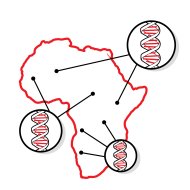
A major limitation threatens to hamper the era of personalized medicine: people of Caucasian descent are a minority in the global population yet make up nearly 80% of the subjects in human-genome research, creating blind spots in drug research. Dr. Abasi Ene-Obong, 34, founded 54gene to change that. Named for Africa’s 54 countries, the Nigeria-based startup is sourcing genetic material from volunteers across the continent, to make drug research and development more equitable. 54gene is conscious of the ugly history of colonial exploitation in Africa. If companies are going to profit by developing marketable drugs based on the DNA of African people, Africa should benefit: so, when partnering with companies, 54gene prioritizes those that commit to including African countries in marketing plans for any resulting drugs. “If we are part of the pathway for drug creation, then maybe we can also become part of the pathway to get these drugs into Africa,” Ene-Obong says.—Corinne Purtill
Sean Parker: A disruptive approach to cancer research
One of the original disrupters of the new economy is bringing his approach to medical research. The Parker Institute for Cancer Immunotherapy, established by Napster co-founder and former Facebook president Sean Parker, is a network of top institutions including Memorial Sloan Kettering, Stanford, the MD Anderson Cancer Center and more. Its goal is to identify and remove obstacles to innovation in traditional research. For example, all of the participating institutes have agreed to accept an approval decision by any of their respective Institutional Review Boards, which “allows us to get major clinical trials off the ground in weeks rather than years,” says Parker, and at lower costs. Perhaps most important, Parker wants to infuse the project with his market sensibility: “We follow the discoveries coming from our researchers and then put our money behind commercializing them,” he says, either by licensing a product or spinning it out into a company. Since its founding in 2016, the institute has brought 11 projects to clinical trials and supported some 2,000 research papers.
Thomas Reardon: A wristband that can read your mind
A man wearing what looks like a chunky black wristwatch stares at a tiny digital dinosaur leaping over obstacles on a computer screen before him. The man’s hands are motionless, but he’s controlling the dinosaur—with his brain. The device on his wrist is the CTRL-kit, which detects the electrical impulses that travel from the motor neurons down the arm muscles and to the hand almost as soon as a person thinks about a particular movement. “I want machines to do what we want them to do, and I want us to not be enslaved by the machines,” says Thomas Reardon, CEO and co-founder of CTRL-Labs, the device maker. The hunched-over posture and fumbling keystrokes of the smartphone era represent “a step backward for humanity,” says Reardon, a neuroscientist who, in a past life, led the development of Microsoft’s Internet Explorer. The technology could open up new forms of rehabilitation and access for patients recovering from a stroke or amputation, as well as those with Parkinson’s disease, multiple sclerosis and other neurodegenerative conditions, Reardon says.—Corinne Purtill
Jonathan Rothberg: An ultrasound in your pocket
There are more than 4 billion people globally who don’t have access to medical imaging—and could benefit from Butterfly iQ, a handheld ultrasound device. Jonathan Rothberg, a Yale genetics researcher and serial entrepreneur, figured out how to put ultrasound technology on a chip, so instead of a $100,000 machine in a hospital, it’s a $2,000 go-anywhere gadget that connects to an iPhone app. It went on sale last year to medical professionals. “Our goal is to sell to 150 countries that can pay for it. And [the Gates Foundation] is distributing it in 53 countries that can’t,” Rothberg says. The device isn’t as good as the big machines are and won’t replace them in prosperous parts of the world. But it could make scanning more routine. “There was a time when the thermometer was only used in a medical setting, when a blood-pressure cuff was only used in a medical center,” Rothberg says. “Democratizing [health] happens on multiple dimensions.”—Don Steinberg
Symptoms of lung cancer usually don’t appear until its later stages, when it’s difficult to treat. Early screening of high-risk populations with CT scans can reduce the risk of dying, but it comes with risks of its own. The U.S. National Institutes of Health found that 2.5% of patients who received CT scans later endured needlessly invasive treatments—-sometimes with fatal results—after radiologists erroneously diagnosed false positives. Shravya Shetty believes artificial intelligence may be the solution. Shetty is the research lead of a Google Health team that in the past two years built an AI system that outperforms human radiologists in diagnosing lung cancer. After being trained on more than 45,000 patient CT scans, Google’s algorithm detected 5% more cancer cases and had 11% fewer false positives than a control group of six human radiologists. The early results are promising, but “there’s a pretty big gap between where things are and where they could be,” says Shetty. “It’s that potential impact that keeps me going.”—Corinne Purtill
Joanna Shields: AI to read every science paper
Every year, more than 2 million peer-reviewed research papers are published—far too many for any individual scientist to digest. Machines, however, don’t share this human limitation. BenevolentAI has created algorithms that scour research papers, clinical trial results and other sources of biomedical information in search of previously overlooked relationships between genes, drugs and disease. BenevolentAI CEO Joanna Shields was an executive at companies such as Google and Facebook, and then the U.K.’s Minister for Internet Safety and Security, before joining BenevolentAI. A frequent critic of the tech industry’s lapses in protecting young people from exploitation and abuse online, Shields sees BenevolentAI as an opportunity to harness technology’s power for good. “All of us have family members, friends who are diagnosed with diseases that have no treatment,” she says. “Unless we apply the scaling and the principles of the technology revolution to drug discovery and development, we’re not going to see a change in that outcome anytime soon.” —Corinne Purtill
Sean Slovenski: Walmart-ification of health care
Whenever the world’s biggest retailer aims its gigantic footprint at a new market, the ground shakes. In September, Walmart opened its first Health Center, a medical mall where customers can get primary care, vision tests, dental exams and root canals; lab work, X-rays and EKGs; counseling; even fitness and diet classes. The prices are affordable without insurance ($30 for an annual physical; $45 for a counseling session), and the potential is huge. In any given week, the equivalent of half of America passes through a Walmart. “When I first started here … [I] thought, That can’t be true,” says Sean Slovenski, a former Humana exec who joined Walmart last year to lead its health care push. If the concept spreads, repercussions await in every direction. Like Walmart’s merchandise suppliers, doctors and other medical pros may need to adjust to the retailer’s everyday low prices. Still, cautions Moody’s analyst Charles O’Shea: “Health care is multiple times harder than selling food.”—Don Steinberg
Charles Taylor: 3-D digital hearts
For too many people with suspected heart problems, invasive catheterization is necessary to diagnose blocked or narrowed arteries. Doctors must then choose the best method for improving blood flow from a handful of options, including balloon angioplasty and stenting. Charles Taylor, a former Stanford professor, started HeartFlow to help patients avoid invasive diagnostic procedures and improve treatment outcomes. The company’s system creates personalized 3-D models that can be rotated and zoomed into, so doctors can simulate various approaches on screens. In some cases, it can help avoid invasive procedures entirely. “By adding the HeartFlow … to our available resources for diagnosing stable coronary disease, we are able to provide patients with better care as we evaluate risk,” said Duke University cardiologist Manesh Patel, at the American College of Cardiology’s annual meeting in March. —Jeffrey Kluger
Isabel Van de Keere: Rehab in virtual reality
Isabel Van de Keere was at work one day in 2010 when a steel light fixture pulled loose from the ceiling and fell on her. The accident left Van de Keere, a Belgian-born Ph.D. in biomedical engineering, with a cervical spine injury and severe vertigo that required three years of intense neurological rehabilitation. She practiced the same tedious exercises dozens of times in a row, with progress so slow it seemed undetectable. Now 38, she’s the founder and CEO of Immersive Rehab, a London-based startup whose goal is to change the neurological-rehab experience using virtual reality. By expanding the range and type of exercises patients can try, VR creates more opportunities to harness the brain’s plasticity and repair neural pathways; increases the amount of data caregivers can use to measure progress and adapt programs; and improves the monotonous, frustrating experience of rehab. Feedback from volunteer patients and therapists has been promising; the company is now preparing to run clinical trials in the U.S. and Europe.—Corinne Purtill
In 2004, after decades of creating race-winning, record-setting running shoes, Adidas wanted to push the boundaries even further by developing a shoe that would really redefine the meaning of fast.
There was no better craftsman for the task than Japan’s legendary shoe designer Toshiaki Omori, who has helped make world-class running shoes for Adidas since 1999.
Having spent his life developing his “inside out” design philosophy, Omori believes the anatomy of the foot must always come first in the crafting process. Using molds of real feet, known as lasts, he worked to create the most perfect, streamlined fit possible – what he calls a “microfit’.
To achieve this symbiosis between foot and shoe, simplicity was essential. From the choice of materials and textiles, to the weight and cushioning of the sole, every element was carefully considered. The shoe needed a lightweight feel to maximize speed without compromising comfort. It had to be elegant, with a sock-like fit, and pace to burn. Plus, as runners know, a shoe has to look as fast as it feels.
During every step of the design journey, there was a new challenge for the team to overcome. The shoe had to be versatile and adaptable to any running conditions an athlete might encounter – kilometer repeats on the track, a 10K tempo run, treadmill interval sessions, or an ultra-marathon.
Needless to say, the design and development team had their work cut out for them. Finally, after years of careful development, it was time to introduce the world to the adizero.
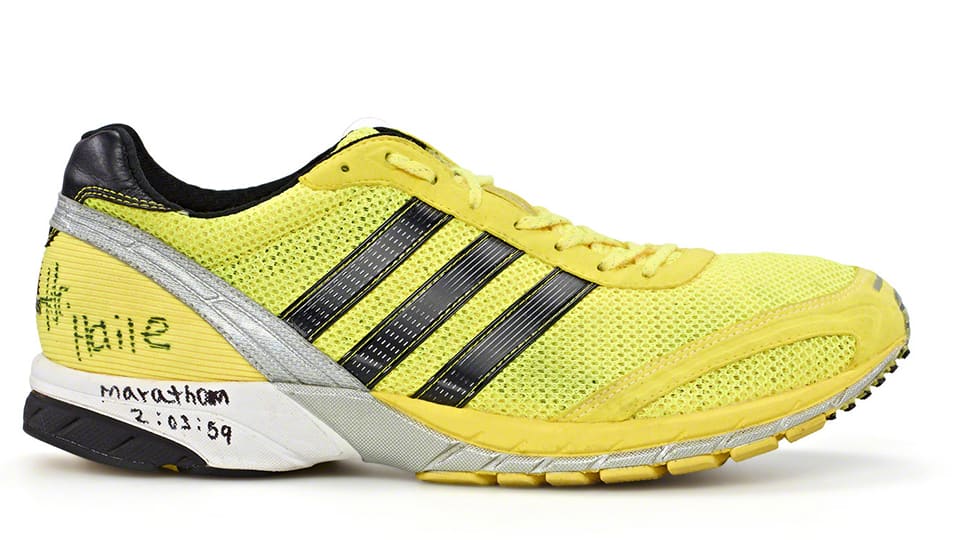
It was September 2008, the night before the Berlin Marathon. In his hotel room, Ethiopian long-distance runner Haile Gebrselassie laced up the first adizero Adios prototypes. He ran up and down the hotel corridor, testing them out, feeling the responsiveness of the soles as his feet touched the ground. Impressed, he decided to wear the adizeros for the marathon.
The next day, he broke the world record in them by 29 seconds with an incredible 2.03.59 finishing time. His third consecutive win.
Since their 2008 debut, adizeros’ have collected over 150 victories in the world of elite racing. To make these wins possible, the adizero team has rigorously refined the shoe – “testing and improving with the support of athletes is fundamental in our process,” says adidas running footwear designer, Moritz Hoellmueller.
With this athlete feedback as their guide, the designers are constantly trying to harness their creativity to unlock new innovations. Each time they do, athletes are empowered to push themselves further.
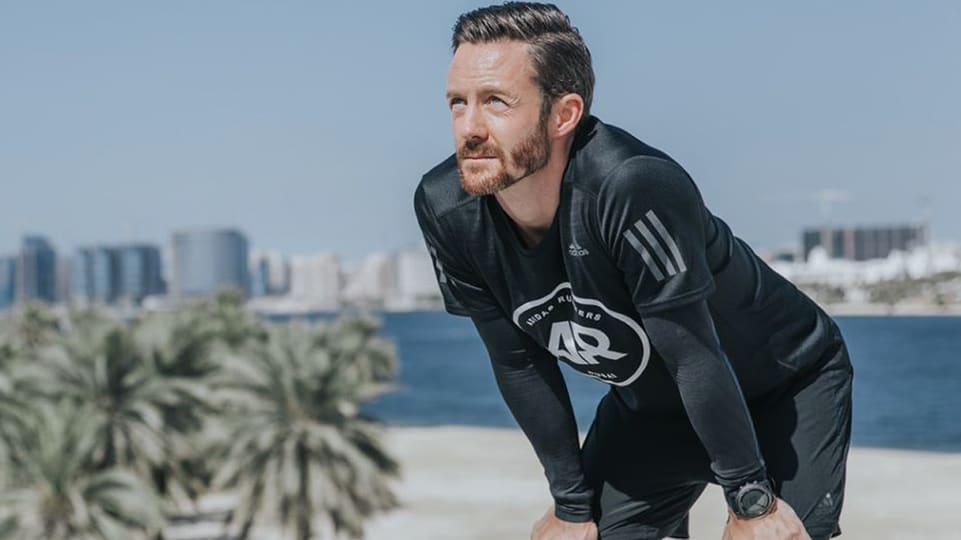
Lee Ryan, current adidas Runners Dubai captain and father of two, has improved his performance along with the shoe’s evolution. In adizeros, he’s broken five world records, including fastest marathon with a double stroller. “The shoe became better over time, just as I performed better over time,” says Ryan.
Ryan couldn’t have said it better; adizeros are constantly improving alongside our athletes. Just three years after Gebrselassie’s Berlin Marathon win, Patrick Makau wore the next evolution of the shoe to beat the previous record by 21 seconds. In 2014, yet another adizero evolution broke the record when Dennis Kimetto shaved 41 seconds off Makau’s time in the adizero Adios Boost.
As more and more elite athletes started wearing and being seen in the shoes, interest in them from runners of all paces grew. adidas addressed that. Today, adizero has expanded into a range of shoes for every level. Ben Herath, a designer on the first adizero Adios, believes that “lightweight is for everyone because we all want to run fast. That was the goal, to open up speed for everyone.”
adizero has become a gateway shoe, democratizing speed for the masses. Mathilde Have, captain of adidas Runners Copenhagen, feels that wearing adizeros has reshaped her relationship with speed – “I felt faster, and that feeling made me go faster.” Like other adizero runners, the shoes made her feel more confident, allowing her to rediscover her love of running fast.
Since then there has been something of a revolution in running shoe design. The development of carbon fibre technology has enabled other brands to develop a new generation of shoes that have far greater spring-like properties, that have been claimed to improve performance by 4% or more. In a marathon that is a huge gain, whatever the level of performance.
Adidas again turned to Japanese master designer Toshiaki Omori, to find something as good, if not better.
With an all-new shape for the shoe secured, adidas then went about testing out technologies that would help runners be at their fastest and most efficient over 26.2 miles.
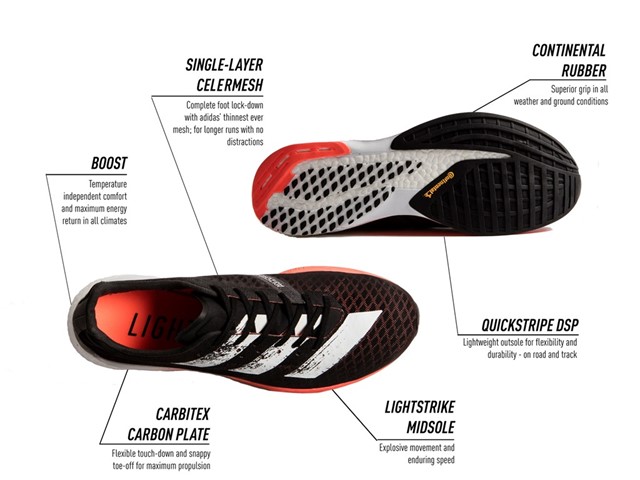
Another exercise in doing things ‘right’, the midsole of the adizero Pro introduces LIGHTSTRIKE for the first time on a running shoe. First debuted on the NXTLVL Basketball shoe in 2018, LIGHTSTRIKE combines energy return and stability into one of the lightest TPU foams on the market for a ride that runners will appreciate across the full distance.
Sandwiched between the LIGHSTRIKE and the sockliner is an all-new CARBITEX Carbon plate. Having been a feature of adidas shoes since the 1980’s, the newly-commissioned CARBITEX plate delivers flexibility at touchdown and a snappy toe-off for maximum propulsion and an economically guided stride.
Finishing off the new features is CELERMESH: adidas’ thinnest mesh ever, which completely locks down the foot for a fast feeling with no distractions by engineering an internal support structure within the mesh itself for lightweight lockdown. To complete the package, the iconic BOOST cushioning takes its spot in the heel to give a plush element of comfort that retains all its qualities independent of temperature, and best-in-class Continential rubber on the outsole for outstanding grip.
The adizero continues breaking records, most recently Rhonex Kipruto’s blistering 10km World Record in Valencia in January 2020. The adizero Pro will be available to everyone from May 15, 2020.
I first met Elvin Turner a decade ago in a funky, converted mill, just outside Guildford.
He was working on a project for my book publisher, Wiley, and exploring how they could improve. He clicked on the video camera and we started talking. I had lots to say. I’ve written six books published by Wiley (and the next is on its way), and it’s always been a struggle (although getting better).
We all know that the publishing industry needs a radical transformation. Innovation is urgent in everything from book formats to production, marketing and business models. Elvin was in two minds whether he dare show the video to his client. But he plucked up the courage and went back to start working with them on his project.
A decade later Elvin is a free spirit, a champion of better innovation, and has just published a great new book, with Wiley.
Make innovation more remarkable, inevitable and profitable
Be Less Zombie brings together an impressive collection of ideas and insights into a pragmatic, actionable toolkit.
“Zombie” companies cling to what kills them: obsolete and frustrating ways of working that crush innovation and drain people’s motivation. His research goes beyond the business world – a guerrilla negotiator, a cage-fighter trainer, an X-Factor coach, a senior emergency room doctor, and a fashion designer.
Elvin’s Turn It On innovation framework gives leaders and managers tools, processes and pathways to make bolder and more profitable innovation an inevitability, not an anomaly.
The book is designed for managers who need more remarkable innovation with repeatable, scalable approaches, and explores how to:
De-risk bolder, more profitable innovation
Make innovation a predictable and measurable capability
Equip managers with essential tools and skills for leading innovation and transformation
Help teams find new capacity and energy to deliver today’s business whilst discovering tomorrow’s
In this video, Elvin looks at the connection between an organisation’s ability to discover its future (and ultimately survive), and the confidence that individual employees have in being vulnerable – taking the risk of proposing new ‘crazy’ ideas that could ultimately become important, future revenue streams .
Across many industries, very few companies do this well: CEOs make a continued plea for breakthrough ideas from their employees, yet most corporate cultures inadvertently deter individuals from doing so because of the low appetite for risk and perceived personal cost of trying something new and failing. Unfortunately that only leads to incremental innovation which is not enough to survive in today’s disruptive markets.
He says the book is for:
CEOs who need a better, more continuous pipeline of profitable innovation
Senior leaders who need more ideas, collaboration and energy across their divisions
Finance executives who want to resource innovation and yet measure it effectively
Strategy, change and transformation managers charged with delivering greater organisational agility and differentiation
HR executives who are trying to resource and equip leaders and employees with innovation capabilities
Organisational development managers tasked with shaping more agile and innovative ways of working
Team leaders who need to help their people find new capacity and energy to deliver bolder ideas
Individual employees who want their managers to stop blocking their best ideas
The future of food is about authenticity, wellness and relevance – traceability of supply chains, natural and organic ingredients, convenient and well designed packaging, and fantastic, inspiring taste
The UN estimates that by 2050 global food production will have to increase by close to 70% if we want to feed the world. This poses a real conundrum: How do we feed all those people healthy diets, in ways that don’t harm the planet?
In some cases, innovators in this space are doing what was once science fiction. The outcome of these new technologies has profound implications for the human diet, the changing climate, and the global economy.
Here are some most recent examples:
DNA Sushi … London-based conveyor belt sushi restaurant YO! Sushi collaborated with DNAfit to help diners choose dishes based on their DNA.
Smart food … Nestlé XiaoAI, an AI family nutrition assistant, is a smart speaker equipped with nutrition and health knowledge answering questions on custom recipes, music, and nutrition
Upcycled Beer … Kellogg’s teamed up with UK brewery Seven Brothers to convert its rejected Corn Flakes, Rice Krispies, and Coco Pops breakfast cereals into beer.
Mood Tea … Marley Mellow Mood Peach Raspberry Relaxation Tea from the US features mood-enhancing botanicals, which are said to calm the soul and ease the mind.
Genetic Dining … Vita Mojo was the first foodservice chain to give customers nutritional guidance based on their genetics, providing a great conversation as well as healthy eating
Sea Farms … Floating Farm is a dairy farm in Rotterdam, Netherlands, that showcases how food production can become less vulnerable to climate change
Indoor Farms … Bowery Parsley is grown in indoor automated vertical farms in New York City, NY promoting itself as “grown locally (in the city!) with no pesticides”
Edible Fashion … Modern Meadow in New Jersey grows animal-free leather in their labs, indeed recent fashion shows have been full of aubergine and mushroom-based fabrics.
Better Bling … New York City- based Couple is the first company to exclusively sell lab-grown diamond rings as an ethical alternative to real diamonds, and a lot cheaper too!
Splash out on dinner at Heston Blumenthal’s Fat Duck restaurant, and you might find an iPod accompanies your seafood risotto. Sounds of the sea enhance the perceived freshness and flavours, and can also affect our sense of sweetness and saltiness.
Caterpillars, already popular in Africa, contain 28mg of protein per 100g, more than minced beef, and add 35mg of iron too. If you’re in search of a calcium boost, try grasshoppers.
Rising food prices, the growing population and environmental concerns make food one of the big debates for governments, and interest areas for investors. Meat production takes up huge amounts of land, consume water, diverts crops from humans, and adds to carbon emissions.
Insects, perhaps rebranding as micro-protein, could become a staple of our diets – low cost, requiring little space or water. With 1500 edible species, we could soon be tucking into nutrititous crickets and grasshoppers, ground into burgers. Wasps are a delicacy in Japan.
If you still want meat, your next steak could be sourced from a test-tube. Strips of muscle tissue using stem cells taken from cows, a little like calamari to look at, are grown in a lab, and then shaped to expectation, similar to existing meat substitutes such as Quorn. Of course you could just become vegetarian, and still get a balanced diet.
Another source of improved eating, is sensory-engineering. Scientists have shown that look and smell affect how we taste. Condiment Junkie, a sonic-branding company is exploring how certain frequencies can compensate for sugar in foods, thereby improving health, as well as enhancing the whole cooking and eating experience.
However the most significant source of future food is likely to come from algae. 145 species of green, red, and brown seaweed is already eaten in huge quantities across Asia, often as a delicacy. Ground into other foods, its strong flavour can dramatically reduce the amount of salt used, for example in bread or prepared meals. Algae farming, for food as well as energy, could become the world’s largest crop industry by 2030.
However it is not just the food content that could radically change. It is also about embracing technology to deliver more personalised service and added value experiences. A great example comes from Singularity Sushi, which uses DNA analysis to ultra-personalise food, and 3D printing to produce objects of incredible beauty.
Here are 20 case studies of companies who are shaking up the world of food and drink in profound and enlightened ways, riding the consumer trends, embracing digital technologies, with incredible new experiences and profitable new business models:
% Arabica – Asian minimalism, African coffee roastery, and Arabic meeting place
Zespri – Redefining the Chinese gooseberry as the Kiwi fruit
In the past few years, food waste has been a particular sustainable action point for consumers and companies. Companies are finding new ways to reuse food waste. The Kellogg Company worked with UK- based Seven Bro7hers Brewery in 2019 to create beer made from non-standard cereal pieces. Meadow Mushrooms in New Zealand has created a container that is made from the organic waste from its mushroom stalks.
In France, Danone committed to solely using ingredients from regenerative agriculture by 2025. Unilever has a Sustainable Living Plan with three wide-reaching corporate social responsibility goals. Danone, Nestlė, Firmenich, International Flavors & Fragrances, and Sodexo are among more than 80 companies that are part of the We Mean Business climate change coalition. Ecommerce giant Amazon has founded its own Climate Pledge that commits to meeting the goals of the Paris Agreement by 2040.
In the next 10 years, consumers will be able to use easily accessible and affordable customised biological tests, data collection, and analysis to learn what makes their bodies one of a kind. The results will help consumers better understand how to address every aspect of their health, including brain and emotional health. While respecting consumer privacy, food, drink, and foodservice companies will have opportunities to develop personalised recipes, custom diet plans, and individualised products.
Consumers are learning more about the natural connections in their bodies as more research discovers how the systems in our bodies work together. In particular, improved understanding of the research into the microbiome has taught more consumers about the importance of maintaining a healthy gut/brain axis, or the connection that links the brain, digestive system, and emotions.