A wicked problem is a problem that is difficult or impossible to solve because of incomplete, contradictory, and changing requirements that are often difficult to recognize. It refers to an idea or problem that cannot be fixed, where there is no single solution to the problem; and “wicked” denotes resistance to resolution, rather than evil. Another definition is “a problem whose social complexity means that it has no determinable stopping point”. Because of complex interdependencies, the effort to solve one aspect of a wicked problem may reveal or create other problems.
The phrase was introduced in 1967 by Horst Rittel and C. West Churchman in the context of problems of social policy. They contrasted “wicked” problems with relatively “tame”, soluble problems in maths or puzzles. They described it as a problem whose solution requires a great number of people to change their mindsets and behaviour is likely to be a wicked problem. Many examples come from the areas of public planning and policy, including climate change, natural hazards, healthcare, the AIDS epidemic, pandemic influenza, international drug trafficking, nuclear weapons, waste and social injustice.
Wicked problems are typically said to have 10 properties:
- There is no definitive formulation of a wicked problem.
- Wicked problems have no stopping rule.
- Solutions to wicked problems are not true or false, but good or bad.
- There is no immediate and no ultimate test of a solution to a wicked problem.
- Every solution to a wicked problem is a “one-shot” operation; because there is no opportunity to learn by trial and error, every attempt counts significantly.
- Wicked problems do not have an exhaustively describable set of potential solutions, nor is there a well-described set of permissible operations that may be incorporated into the plan.
- Every wicked problem is essentially unique.
- Every wicked problem can be considered to be a symptom of another problem.
- The existence of a discrepancy representing a wicked problem can be explained in numerous ways.
- The planner has no right to be wrong.
The Wicked Seven
Christian Sarker, working with my old 89 year old friend Philip Kotler, the marketing guru, recently built on the language, with their “seven wicked problems “. They felt that one of the main reasons that wicked problems aren’t being addressed is because when we try to solve them individually, the boundaries we draw to frame the problem are reductive – they reduce and diminish the scope of the true underlying causes. So they chose to look at the second problems as one. They included corruption as a wicked problem, because it turns out to be a primary reason why things don’t change for the better.
Sarker says “As the world faces a growing number of existential challenges, our governments and institutions are failing us precisely at the moment we need them most. What if we could come together to work on identifying and developing public, common-good solutions to the world’s most urgent wicked problems?”

“It’s time to re-design society by tackling the Wicked 7. What might that look like?”
- Climate Collapse: the interlinked global crisis of weather-related events from heat waves, forest fires, flooding, hurricanes, ecosystem degradation, and species extinction.
- Inequality: economic inequality is a way to measure social and gender inequality. The growing gap between the 1% and the rest of the population creates an unequal and unjust society.
- Extremism: the growing intolerance and hate fueled by identity-based groups that create social unrest and commit acts of terror.
- War: includes militarism, the culture of war, armies, arms, industries, policies, plans, propaganda, prejudices, and rationalizations that lead to lethal group conflict.
- Corruption: the dishonest conduct by those in power or those seeking to influence them using fraud and bribery. Corruption creates a system that governs not for the many, but for the few.
- Health and Livelihood: the worldwide challenge of public wellbeing – economic and physical health. Includes the economy, the future of work, employment, education, and the new skills and capabilities required to “make a living.”
- Population & Migration: the domestic and global population growth leads to increased conflicts over water, energy, food, open space, transportation, and schooling. Carrying capacity, the number of people, other living organisms, or crops that a region can support without environmental degradation – becomes a key metric for local and national wellbeing. Also includes the growing problem of refugees and asylum seekers, mainly from the “Global South.”
Sarker has brought together a broad community to view the Wicked 7 Project as “a design project to save humanity from itself.”
Wicked Problems and Virtuous Solutions
The team argues that if any lesson has emerged from this Covid-19 pandemic, it is that we must address the urgent systemic problems of the world now Why? Because Covid-19 is just tip of an iceberg, the ecosystem of wicked problems will not wait.
They started with a belief that wicked problems have virtuous solutions.
Their approach was to apply design-thinking to model wicked problems using a collaborative, open-source methodology, and continuously iterate on design models to create a public repository of “virtuous solutions” for the Common Good.
What if we could model a wicked problem and use the model as a “digital twin,” allowing us to simulate alternatives and outcomes?

They sought to create a safe space for a diversity of perspectives. Identify alternatives to the current paradigm at local, national, and global levels – bottom up, top down, and even from the middle.
With the seven wicked problems they sought to map out the cause and effects of the various dimensions of the problem, and maybe using this systems approach to identify seven virtuous solutions as well.
Sidenote: traditional systems diagrams show both positive and negative effects, and are notoriously difficult to comprehend. This approach, inspired by Leonard Schlesinger’s Breaking the Cycle of Failure in Services uses a simpler hypothesis-driven process: model the wicked map, followed by the virtuous map. Then, challenge the assumptions.

To create the wicked and virtuous “digital twin” maps, they introduced an open-source Wicked7 toolkit which includes a wicked problem discovery tool, and a mapping template.
These maps will be public and open-source, enabling us to collectively work on improving them – based on evidence and reason, continuously checking in with “reality.”
Covid-19 as a Wicked Problem
One way to map a wicked problem is to start with the observable facts and asking a series of “why?” questions to get closer to the root cause, and mapping out the cause and effects.
Using data from endcoronavirus.org we can start to understand which countries have addressed the pandemic most successfully, and then consider what they actually did, differently from others.
It quickly becomes apparent that countries that did best – like New Zealand, Taiwan, and Germany – have some common features, including a properly funded health system, technological edge, decisive leadership, and a strong commitment to building public trust. Many also have women leaders who acted swiftly and decisively, with testing and contact tracing protocols across the entire country.
In contrast, worth performing countries were plagued by delay, absence of public trust, misinformation, and incoherent prevention and mitigation protocols. Male authoritarian political figures like Bolsonaro, Trump, Putin, and also Johnson, all fared badly. Weak and fragmented public-health infrastructure also played a role. Most sought to blame others and external factors – like China – for their ineptitude.
This evolved into two divergent maps – the “cycle of failure” and the “cycle of success”.


Resources
The Wicked7 team has also brought together a great range of resources to explore further:
- Design Unbound: Designing for Emergence in a White Water World: Designing for Emergence – Volume 1 and Volume 2 by Ann M. Pendleton-Jullian and John Seely Brown
- The Politics Industry: How Political Innovation Can Break Partisan Gridlock and Save Our Democracy by Katherine Gehl and Michael Porter
- Green Swans: The Coming Boom In Regenerative Capitalism by John Elkington
- The Healing Organization: Awakening the Conscience of Business to Help Save the World by Raj Sisodia and Michael Gelb
- Capital and Ideology by Thomas Piketty
- Rebalancing Society: Radical Renewal Beyond Left, Right, and Center by Henry Mintzberg
- The System: Who Rigged It, How We Fix It by Robert Reich
- Capitalism at the Crossroads: Next Generation Business Strategies for a Post-Crisis World by Stuart Hart
- Out of Poverty: What Works When Traditional Approaches Fail by Paul Polak
- Good Economics for Hard Times by Abhijit Banerjee and Esther Duflo
- The Value of Everything: Making and Taking in the Global Economy by Mariana Mazzucato
- The Hidden Wealth of Nations: The Scourge of Tax Havens by Gabriel Zucman
- The Circular Economy: A Wealth of Flows by Ken Webster
- Creating a World Without Poverty: Social Business and the Future of Capitalism by Muhammad Yunus
- The Narrow Corridor: States, Societies, and the Fate of Liberty by Daron Acemoglu and James A. Robinson
- How Democracies Die by Steven Levitsky , Daniel Ziblatt
- Advancing the Common Good: Strategies for Businesses, Governments, and Nonprofits by Philip Kotler
- Confronting Capitalism: Real Solutions for a Troubled Economic System by Philip Kotler
- Grassroots Innovation: Minds On The Margin Are Not Marginal Minds by Anil Gupta
- Touching the Jaguar: Transforming Fear into Action to Change Your Life and the World by John Perkins
- Small Arcs of Larger Circles: Framing through other patterns by Nora Bateson
- Plunder of the Commons: A Manifesto for Sharing Public Wealth by Guy Standing
- Prosperity without Growth: Foundations for the Economy of Tomorrow by Tim Jackson
- The Metamorphosis of the World: How Climate Change is Transforming Our Concept of the World by Ulrich Beck
- What’s Your Problem?: To Solve Your Toughest Problems, Change the Problems You Solve by Thomas Wedell-Wedellsborg
- Don’t Be Evil: How Big Tech Betrayed Its Founding Principles — and All of Us by Rana Foroohar
- The Business Plan for Peace: Building a World Without War by Scilla Elworthy
- Viking Economics: How the Scandinavians Got It Right-and How We Can, Too by George Lakey
- The Four: The Hidden DNA of Amazon, Apple, Facebook, and Google by Scott Galloway
- The Triumph of Injustice: How the Rich Dodge Taxes and How to Make Them Pay by Emmanuel Saez and Gabriel Zucman
- Seven Steps to Leading a Gender-Balanced Business by Avivah Wittenberg-Cox
- The Future Is Faster Than You Think: How Converging Technologies Are Transforming Business, Industries, and Our Lives by Peter Diamandis
- Presence: An Exploration of Profound Change in People, Organizations, and Society by Peter M. Senge, C. Otto Scharmer, et al.
- The Fifth Discipline: The Art & Practice of The Learning Organization by Peter M. Senge
- Systems Thinking For Social Change: A Practical Guide to Solving Complex Problems, Avoiding Unintended Consequences, and Achieving Lasting Results by David Peter Stroh
- What’s Next, Gen X?: Keeping Up, Moving Ahead, and Getting the Career You Want by Tammy Erickson
- Only Humans Need Apply: Winners and Losers in the Age of Smart Machines by Tom Davenport and Julia Kirby
- The New Human Rights Movement: Reinventing the Economy to End Oppression by Peter Joseph
- The End of Protest: A New Playbook for Revolution by Micah White
- How Soon is Now: From Personal Initiation to Global Transformation by Daniel Pinchbeck
- The Globotics Upheaval: Globalization, Robotics, and the Future of Work by Richard Baldwin
- Jobs to be Done: Theory to Practice by Anthony Ulwick
- Innovation: The Five Disciplines for Creating What Customers Want by Curt Carlson
- Just Start: Take Action, Embrace Uncertainty, Create the Future by Leonard A. Schlesinger, et al.
- Drawdown: The Most Comprehensive Plan Ever Proposed to Reverse Global Warming by Paul Hawken
- Niche Down: How To Become Legendary By Being Different by Christopher Lochhead
- The Great Reversal: How America Gave Up on Free Markets by Thomas Philippon
- The Race for What’s Left: The Global Scramble for the World’s Last Resources by Michael Klare
- The Age of Surveillance Capitalism: The Fight for a Human Future at the New Frontier of Power by Shoshana Zuboff
- Brand Activism: From Purpose to Action by Christian Sarkar and Philip Kotler
Other websites
- Sustainable Prosperity (EU Policy Database)
- P2P Foundation
- Drawdown
- TED COUNTDOWN
- The Systems Thinker
- J-PAL (MIT)
- The Evolution Institute
- Commons Transition
- Commons Network
- The International Bateson Institute
- Eudaimonia & Co
- Pachamama Alliance
- FIXCapitalism.com
- ActivistBrands.com
- www.germinfo.org (Covid-19)
- Worldometer’s Country dashboard (Covid-19)
- John Hopkins’ visual dashboard (Covid-19)
Image: Unsplash
IMD’s annual World Competitiveness Ranking is now in its 32nd year, and showcases a wealth of data on the performance of national economies around the world.
In 2020, Singapore has again ranked top, followed this year by Denmark, Switzerland, the Netherlands and Hong Kong.
Small countries, particularly in times of economic challenge, seem to be the best places to do business. Arturo Bris from IMD’s World Competitiveness Centre says, “the benefit of small economies in the current crisis comes from their ability to fight a pandemic and from their economic competitiveness. In part these may be fed by the fact it is easy to find social consensus.”
Singapore
Factors behind Singapore’s success are its strong economic performance which stems from robust international trade and investment, employment and labor market measures. Stable performances in both its education system and technological infrastructure – telecom, internet bandwidth speed and high-tech exports – also play key roles.

Denmark
The Danes rose from 6th to 2nd place due to a strong economy, labour market, and health and education systems. In addition, the country performs very well in international investment and productivity, and topped Europe in business efficiency. Denmark had a good pandemic too, led in a collaborative way by female PM, Mette Frederiksen.

Switzerland
The Swiss, better known for efficiency, have been gradually edging up too, from 5 to 4 and now 3rd place. Robust international trade fuels its strong economic performance, whilst its scientific infrastructure and health and education systems show consistently strong displays.

Comparing the top three markets, it seems that they have many similarities – partly driven by the small size – although they offer differ somewhat in their democratic structures, and the influence of social priorities.
The comparison graph below shows how Singapore clearly leads in terms of International Trade and Investment, partly due to its geographical positioning within there relatively booming Asian markets, but also because of the government-backed investment funds like Tamasek. Denmark, however lags well behind on tax policy, largely due to its social priorities, and its lack of international trade. Generally, however all three leaders gain their rank through consistency across many factors.

Other countries
For the second year, the USA failed to fight back having been toppled from its number one spot last year by Singapore, and coming in at 10th (3rd in 2019). Trade wars have damaged both China and the USA’s economies, reversing their positive growth trajectories. China this year dropped to 20th position from 14th last year.
While Hong Kong came 5th, this is a far cry from 2nd which it enjoyed last year. The decline can be attributed to a decline in its economic performance, social turmoil in Hong Kong as well as the rub-on effect of the Chinese economy. However, the 2020 rankings do not pick up on events in from the last couple of months.
The UAE also falls from 5th to 9th. The Middle East struggled as a region, reflecting the oil crisis.
Norway made this year’s top ten, at 7th, having been 11th last year. This is partly due to a wider pattern in the region: all the Nordic economies experienced a noteworthy improvement in business efficiency. In fact, they all made the top ten in this measure.
The UK climbed from 23rd to 19th, while France (32nd) slightly lost its 2019 foothold on 31st. One interpretation is that Brexit may have created the sentiment of a business-friendly environment in the making. The UK ranked 20th on the business efficiency measure, compared to 31st least year.
Canada moved up to 8th from 13th. This rise is centered around improvements in measures related to its labor market and in the openness of its society. It led the North American sub-region.
In Latin America, a distrust of institutions may be reflected by minimal changes. Chile (38th) remains the highest-ranked country in the sub-region and Venezuela the lowest.
Sustainability becomes ever more important
This year, new criteria were added to reflect the importance of achieving the UN Sustainable Development Goals. The criteria provide a perception of where the economy stands with respect to different sustainable goals that need to be satisfied in 10 years, such as education and the environment, inclusion and empowerment, ageing and health. Indeed, an important component of the competitiveness study is to align the criteria employed with the important challenges and concerns of the world economy.
This is a key reason why Denmark has performed so well. In the recent ranking of World’s Most Sustainable Companies 2020 by Corporate Knights, three Danish companies featured in the world’s top 10. Orsted, the energy company that has transformed from “black to green” in a decade tops the chart, while fellow Danes Christian Hansen and Novozymes follow in 2nd and 7th.
The Danish focus on sustainability is exemplified by the Copenhagen Letter, a manifesto launched in 2017 calling for technology to put humans ahead of business, or better still to do business, and make the world better at the same time.
In an exclusive extract from my forthcoming book Business Recoded, meet one of the most inspiring business leaders, shaking up today’s world. He embraces the opportunities of relentless change, the power of disruptive technologies, and the courage to create a better future in his own vision. In the book, I explore the stories of many of the world’s most fascinating leaders right now, and develop 49 codes that help you redefine the future of your business, and yourself.
The Leadership Code of Wang Xing
Meituan Dianping is a Chinese delivery business which Fast Company ranked as “the world’s most innovative company” last year.
Despite a series of early setbacks, Wang Xing, a 39-year-old Chinese tech entrepreneur has built what is now considered as the leading on-demand services platform, with a huge fleet of bikes that will deliver anything anywhere anytime in China.
Born in Fujian Province in 1979, Wang was the son of a wealthy businessman and factory owner. As a child, Wang was an avid reader and excelled at school, graduating from Beijing’s Tsinghua University in 2001, and going on to study for a PhD in Delaware, USA. However watching the speed at which Chinese markets were changing, and despite having almost completed his doctorate, he headed back to Beijing to enter the world of business.
Wang became known as “the copycat” because of his habit for creating Chinese versions of successful Western businesses. His initial Facebook-like social network for students did not take off, until he launched Xiaonei in 2005, which swiftly accumulated tens of thousands of users. However, lack of additional funding led him to sell it for $2 million a year later (Renren, its acquirer went on to float it for $740m).
He kept trying, launching a Twitter-like network called Fanfou, which translates as to “have you eaten”. Within two years, it had accumulated millions of users, but was shut down by the government for highlighting political issues.
In 2010 he and his wife Guo Wanhuai launched a Groupon-inspired group-buying platform Meituan. Backed by internet giant Tencent, it quickly expanded to become China’s (and the world’s) largest food delivery company.
Since then the “online to offline” platform has expanded rapidly to over 3000 Chinese cities, and after merging with Dianping in 2015, Wang’s business now brings together TripAdvisor-style restaurant reviews and hotel bookings, bike sharing, cinema tickets, deliveries of all types, and ride-hailing services.
Yoga classes. Movie tickets. Haircuts. Hot pots. Babysitting. Coupons. The business has grown into a tech giant that resembles an combination of many different apps – imagine Yelp listings of local business, OpenTable reservations, Booking flights and accommodation, home repairs, wedding planning. And Uber-style delivery.

Beyond a vast “last mile” delivery network, Wang realised that he had something even more valuable, a huge database of the new, rapidly growing, Chinese middle class. A recent McKinsey study suggested that 76% of China’s urban population will enter the middle income bracket by 2022, with household earning between $9,000 and $34,000.
Despite his personal wealth, estimated to be around $13.5 billion, Wang has earned a new nickname in China, as the “poet entrepreneur”. His many Fanfou blog posts portray a solitary figure, with a particular fondness for Haruki Murakami’s “Norwegian Wood”, along with classic Chinese poems and literature.
© Peter Fisk 2020. Business Recoded will be published in late 2020.
As lockdown shifts to downturn, we have seen how many companies have adapted to new low-touch, socially-distant norms. Cafes and restaurants have developed thriving street-food and delivery businesses, cinemas and theatres have become drive-in experiences, students study online together, contactless payment has finally replaced cash.
In sport, Norway created the “Impossible Games” with athletes from Europe and Africa competing synchronously by video-link in different locations. In business, Apple hosted its annual developer conference (WWDC20) virtually, with impressive online keynotes, animations and interactions, shared by more people than ever. London Fashion Week did likewise.
Fundamentally, we are seeing a rapid shift to what I call “liquid” business models.
In chemistry, you will remember, a “liquid” state exists between a solid and a gas – between a structured and unstructured state. In the business world, between a physical and digital world.
“Liquid” means that we can fuse together the best of physical and digital formats, devices and channels, and also give consumers much more choice in how it is constructed. Liquid businesses are more accessible and agile, responsive and personal.
These “liquid” attributes permeate both the inside and outside of business – shaping the new ways in which we work – how we communicate, collaborate and learn – and the new ways in which we compete – sell, create, manufacture, and support customers.
“Liquid” is a much better word than hybrid, or multi/omni-channel, or physigital, as I’ve even heard the combination of digital and physical called. (Plus, I haven’t heard “liquid” applied to business, or business models, before, so I’m claiming it right here!)
The pandemic has seen rapid adoption of new technologies, and more significantly a shift to “digital me” with elevated Maslow-style human needs of belonging and connectedness. New formats emerge, responding to the new consumer, fusing the best of digital and physical:
- Liquid Health… the fluid combination of digital technologies like Babylon Health and Good Doctor, providing smartphone consultations, AI-enabled diagnostics, robotic surgery, together with empathetic care.
- Liquid Work… the fluid combination of more distributed yet collaborative working from anywhere, more flexible jobs and employment, more diverse and talented teams, creative people augmented by tech.
- Liquid Production… the fluid combination of made remotely and on demand, embracing 3D printing to print what we like as we need it, the shift from fragile slow supply chains to dynamic personal ecosystems.
- Liquid Retail… the fluid combination of digital consumers, with physical delivery – dark kitchens of Deliveroo delivering restaurant meals to our home, luxury brands selling direct, from Tiffany & Co. diamonds to Amazon’s Common Threads.
- Liquid Mobility … the fluid combination of multi-modal transport, as we shift to electric and autonomous cars, we shift from ownership to subscription, enabling a choice of transport modes, as we become more local.
- Liquid Learning… the fluid combination of distance and physical learning experiences, for children to executives, lifelong learning becoming the norm with flexible qualifications, topped up over time, relevant and applied.
Here are some examples:
https://www.youtube.com/watch?time_continue=24&v=CMD6B8h6Pzg&feature=emb_logo
Babylon Health … Ali Parsa’s “liquid healthcare” app uses AI to diagnose your problem, leading to a smartphone consultation, connected to a network of pharmacies, and specialist doctors and hospitals if needed.
Babylon, based in London, now employs over 750 doctors, scientists, engineers and data analysts. They offer a subscription-based service to individuals wanting faster, on-demand health advice. A deal with the UK’s NHS to create a version of Babylon’s service called “GP at Hand” has dramatically scaled-up the service, with similar partnerships internationally. For the NHS it creates a fast, more personal service to patients, directly on your smartphone, and relieves the pressure on physical resources.
Parsa sees Babylon as “the biggest doctor’s brain in the world”, and loves to show how his AI-based analytics can more effectively diagnose patients’ needs than a real person. His real ambition is to create personal and predictive healthcare, using a range of wearable sensors that can monitor individual health, and take action before it’s ever needed.
Icon … the US tech start-up’s “liquid construction” approach enables architects to turn visions for new homes into reality within 24 hours using industrial-scale 3D printing.
In southern Mexico, 50 homeless families have just moved into a 3D-printed housing community, their homes each built in 24 hours, and at a cost of around $4000, by a massive 3D-printer made by Icon. The 15m long printer squirts out layers of Lavacrete, a customised mix of resilient, fluid-like cement, guided by the architect’s digital design, and also includes plumbing and electrical wiring.
Jason Ballard, CEO of Icon, says that the fast construction is ideal for disaster recovery, after earthquakes or hurricanes, but also to improve the standard of housing across the world. Icon is partnering with New Story, a non-profit seeking affordable housing in emerging countries. In Mexico, they are building homes for some of the poorest residents in a rural area near the city of Nacajuca. The homes will be donated to families who are currently living in makeshift shacks that flood every time there’s heavy rain.
Singularity Sushi … Japan’s “liquid restaurant” requires you to order and submit a DNA test in advance of your restaurant visit, at which the chef prepares you personalised sushi to match your nutritional needs and tastes.
“Hyper-personalisation will become common for future foods. Based on DNA, urine and intestinal tests, people will each have individual health IDs,” said the founder. “This identity is analysed, and nutritional matching is performed to match nourishment needs with biometrics, thus the person is automatically provided with the optical diet.”
Once a reservation is booked, the restaurant will send guests a health-test kit to return approximately two weeks prior to the date of the meal. Working in partnership with two health-technology companies, they will use the results of these tests to create a unique health ID for each visitor.
World Economic Forum recently asked the members of its Global Future Councils – academics, business leaders and members of civil society – to imagine a better world in 2030. Only by thinking about where we want to be tomorrow can we prompt the action we need today. Their answers were profound:
1. A world with clean air
By 2030 your CO2 emissions will be far down. The air you breathe is cleaner. Nature is recovering. Saving the climate does involve huge change, but it might make us happier at the same time.
Here is one version of CO-topia: you walk out of your door in the morning into a green and liveable city. You can choose to call upon a car. An algorithm has calculated the smartest route for the vehicle, and it picks up a few other people on the way. Since the city council has banned private cars in the city, tons of new mobility services have arrived. It is cheaper for you not to own your own car, and it reduces congestion, so you arrive at your destination more quickly and don’t have to spend time looking for parking. There are a lot fewer cars on the streets and the rest are electric. All electricity is green by the way.
Single use plastics are a distant memory. When you buy stuff, you buy something that lasts. But because you buy a lot fewer things, you can actually afford better quality products. “Refuse, reuse, reduce, recycle” is the new way of looking at things. Because citizens have buying so much stuff, they have more money to spend on services: cleaning, gardening, laundry help, healthy meals easy to cook, entertainment, experiences, fabulous new restaurants. All of which brings the average modern person more options and more free time. Picking up the mantle against climate change may not be so bad after all.
2. Half the violent crime
The world has an opportunity to dramatically reduce some of the most egregious forms of violence over the next decade. To do this, we will need the same kind of energy and dedication that was mobilized to eradicate other killers like smallpox.
The first step to halving violence by 2030 is to have a clear sense of how it is distributed in time and space. Take the case of lethal violence. There is a misconception that more people die violently in war zones than in countries at peace. While total levels of violence oscillate from year to year, it turns out that the reverse is true. The UN Office for Drugs and Crime estimates that the ratio is roughly 5:1. Put simply, many more people are dying violently as a result of organized and interpersonal crime in countries like Brazil, Colombia and Mexico than in internal conflicts in countries such as Afghanistan, Syria and Yemen. This is not to say that one type of lethal violence is more important than the other, but rather to ensure a more fact-based diagnosis.
The only way to make a serious dent in violence is by acknowledging its full scope and scale together with the factors that drive it. This must be accompanied by sustained investment in reducing the risks and improving the protection of affected areas and populations, and investing in solutions with a positive track record. In the US, for example, research suggeststhat a focus on reducing lethal violence in the 40 cities with the highest rates of homicide could save more than 12,000 lives a year. In Latin America, reducing homicide in just theseven most violent countries over the next 10 years would save more than 365,000 lives.
3. Empowering 8 billion minds with mobile tech
The year is 2030. Imagine this: a young man called Ajay lives in India. In his teens, he experienced an episode of depression. So when, as a new undergraduate, he was offered the chance to sign up for a mental healthcare service, he was keen to do so.
Ajay chose a service that used mobile phone and internet technologies to enable him to carefully manage his personal information. Ajay would later develop clinical depression, but he spotted that something wasn’t right early on when the feedback from his mental healthcare app highlighted changes in his sociability (he was sending fewer messages and leaving his room only to go to campus.)
Shortly thereafter, he received a message on his phone inviting him to get in touch with a mental health therapist: the message also offered a choice of channels through which he could get in touch. Now in his mid-20s, Ajay’s depression is well under control. He has learned to recognise when he’s too anxious and beginning to feel low, and he can practice the techniques he has learned using online tools, as well as easily accessing high-quality advice. His progress through the rare depressive episodes he still experiences is carefully tracked. If he does not respond to the initial, self-care treatment, he can be quickly referred to a medical professional. Ajay’s experience is replicated across the world in low, middle and high-income countries. Similar technology-supported mental illness prevention, prediction and treatment services are available to all.
5. A fair and democratic gig economy
The real future of the gig economy that we should be looking to is one characterised by democratic ownership.
There is no reason why gig workers shouldn’t be their own bosses. The platform cooperativism movement shines a light on some of the real potentials for worker owned- and managed-platforms for every possible service. We can also think about running platforms as civic utilities.
In many places, platforms are becoming utilities. Think for instance of Uber’s desire to become an operating system for the city. Our cities will undoubtedly need operating systems. But we should ask ourselves if we want a privately managed operating system run by an unaccountable company based in another country. Or a locally-managed, locally-owned, democratic, and accountable one.
We aren’t going to be able to turn back the clock to a world with no platforms. But by looking to strategies that involve transparency, accountability, worker power, and democratic ownership, we have in front of us the tools to move towards a less exploitative and more just platform economy. The platform economy in 2030 could be one in which consumers know more about their impacts, regulators are enforcing minimum standards, workers are exercising their collective power, and we have all found ways of building, supporting, and using democratically run and accountable platforms.
6. Peace in the Middle Easy
After two decades of devastating wars in the Middle East, 2020 marked a turn-around leading to the formation of a new regional security forum by 2030 supported by key global powers, including the United States, China and Russia. The forum did not replace traditional regional rivalries or end all conflict, but leading global and regional powers recognized the risks of growing instability and the value of a region-wide mechanism for conflict prevention and management.
Until 2030, the Middle East was the outlier in the world, being the only region to lack a forum for security dialogue. Regional alignments were largely based on the balance of power logic with cooperation limited to containing common external threats, most notably Iran. No venue existed where all regional parties could exchange threat perceptions and engage in confidence-building on areas of common concern. The short-lived Madrid process in the early 1990s had achieved some limited success but was too narrowly linked to progress on Israeli-Palestinian peace, which sadly did not come to pass.
Shifting regional alignments and a dangerous escalation led global powers to see common interests in stabilizing the region through a multilateral forum. At the same time, regional leaders become more open to alternatives that favored diplomacy over conflict, particularly as they faced difficult socioeconomic pressures at home to meet the demands of their rising youth populations. This confluence of global and regional interests provided an opening to launch a new cooperative security dialogue.
7. Cities where you can walk anywhere
Politicians love big infrastructure projects, but do we need them? Clearly new infrastructure for expanding cities is important, but maybe there is a more important question to ask: How well are we using our existing infrastructure?
In the 1980s, when the baby boomers arrived in large numbers at universities around the world, most campuses simply expanded at great expense. One key exception was Cape Town University. Unable to expand its footprint, the university asked the above question and was surprised to find how little its infrastructure was being used. Lecture theatres, for example, were only being used for 17% of the available hours. Over the next 30 years, Cape Town University trebled its numbers on the campus without any major building programmes, simply by reprogramming its timetable. The result was a more vibrant campus and big savings in expenditure.
Much of the infrastructure in our cities is equally underused. Freeways are designed for peak hours; schools have one session per day, usually in the morning, leaving the afternoon and evening free; and the list goes on. A study entitled Transforming Australian Cities showed that if all future development was contained within existing metro boundaries, cities would save $110 billion in infrastructure costs over 50 years for every 1 million people added.
My vision for 2030 is a world where cities make better use of the infrastructure they have, before building new projects at huge financial and environmental cost. This would see people living in closer proximity with good access to essential infrastructure such as public transport, social services and high quality public spaces, as was the case in cities prior to the motor car and urban sprawl; cities, in other words, where walking is the dominant form of transport and the street is the dominant location for public life.
8. Clean electricity dominates energy
If we get things right, by 2030 the global carbon concentration will drop to 350 parts per million from 407 parts today. By then, the energy sector will largely be electricity, and at least half of the electricity is from renewable resources. Deep de-carbonizing efforts will be demonstrated by governments and corporates, and yes, even the ordinary members of the public.
By 2030, electricity will also be democratized and people will be empowered with choices and they will choose energy sources that sustain life. Power generations will also shift from centralized structure to greater distributed renewable generations. The electricity system will be defined by further digitalization, enabling the concept of sharing economy in the energy space.
By 2030, trading of excess solar electricity with neighbours and sharing of electric vehicles within the community will be the way of living. Children will be taught to live in harmony with the environment. All these did not happen by chance. It happened because there was sufficient willpower to deliberately shape the future of energy. It happened because the need to preserve the future of our children finally matters.
9. Virtual reality for mental health
I see a world where technology such as smartphones improve mental health and reduce suicide risk. Sensors in smartphones combined with AI will allow software to create “buddies” that will assimilate mental health knowledge about each person, and then help them navigate safely day-to-day. This so-called ‘digital phenotyping’ uses both passively collected data, voice analysis, cognitive indicators and self-reporting from smartphones, and it will yield these prediction and monitoring capabilities within a decade.
I predict that people around the world will have continuous, immediate and effective access to digital therapeutics for mental health. Support will be offered proactively and ‘just in time’. The clunky and rigid digital interventions we have today will be transformed into interactive games and experiences that deliver ‘therapeutic content’ enjoyably, by stealth, using technologies such as virtual reality.
I see people having access to mental health dashboards on their devices so that they can share their data – which they own – when and how they wish. I see more research into how people relate and learn to live as ‘cyborgs’ from an early age. I see the potential of social networks to be used to reduce stigma and promote understanding.
10. Circular economy is the economy
Let me share my vision for 2030. By then, nobody talks about the circular economy; it’s just the economy.
We wince at the grim days of the 2010s, when billions of tonnes of materials were extracted every year to meet the functional needs of society – but only a fraction was ever recycled back into our economies.
Rapidly falling technology costs created major opportunities to reduce waste. We focused on capturing more value from existing infrastructure and ‘designing out’ the impacts of pollution, climate change, toxins and congestion. We got our act together.
What was the one thing that made the biggest difference? Some will point to the youth movement that drove awareness and campaigned for action. Others will champion the new breakthroughs in technology that were unthinkable in 2020. These played a part – but we would never have got here if the world’s lawmakers had stayed on the sidelines.
After all, it was the public sector and policymakers who could strongly influence industries and could steer outcomes at a system level. The private sector wasn’t allowed to leave the public sector behind, either; the right rules were put in place to ensure that jobs were preserved, and new ones created.
Sound good? I’ll see you there.
12. Streets made for people not cars
The future of transportation, as most of us imagine it, is dominated by driverless cars – but to truly build a sustainable future for our cities, we need to reduce the numbers of cars on the roads full-stop. This can be achieved through a fairly simple, practical and proven strategy: temporarily taking cars off our streets altogether.
In the mid-1970s, the Colombian capital Bogotá saw the birth of what would become aglobal movement called Ciclovia, often known as ‘open streets’ in English-speaking countries, which entails the creation of car-free routes throughout the city every Sunday and public holiday.
As well as improving public health, both by encouraging people to take exercise as well as reducing traffic pollution, Ciclovia fosters a sense of inclusion and ownership of their city among its participants. It has even helped to erase barriers between historically segregated communities.
This model has been replicated all over the world, especially in other Latin American countries and in cities the length of Africa. To ensure sustainable cities all around the world, we must move away from our over-dependency on the automobile. Temporary interventions – like car-free days – work with existing assets and focus on shifting people’s perception, which will ultimately shape how we view and exercise sustainable urban planning in the long term.
13. No more preventable suffering
By 2030, I envision a world free from preventable forms of suffering, especially those inflicted by infectious and non-communicable diseases. This can easily be achieved through the equitable application of new technologies such as blockchain, the internet of things and artificial intelligence (AI), which can drive the development of innovative tools to make healthcare delivery more accessible, affordable and – importantly – more precise to all of humanity, and particularly to people in low and middle-income countries (LMICs).
For example, using AI to develop algorithms that take into account the influence of genetic diversity and environment on drug responses would go a long way towards increasing positive outcomes and reducing adverse drug effects. Using blockchain technology to track ‘open data’ agreements, meanwhile, will benefit individuals or communities that participate in research studies. Thus, accessibility to affordable and innovative precision healthcare products such as drugs, vaccines and precise prevention guidelines should significantly reduce the level of suffering caused by disease.
Unfortunately, the technologies described above that could accelerate my vision remain poorly accessible by LMICs despite their potential to hasten development in these regions. The factors hindering their uptake are multifaceted and, in some cases, historical. We need to increase awareness and knowledge around these technologies, while creating culturally relevant guidelines to guide their uptake and reducing the costs of implementation. This will, in turn, promote their adoption and reduce the likelihood of any disparity that might be created by uneven access to these technologies globally.
14. Technology for our ageing populations
Many developed countries are facing a combination of declining birth rates and increased longevity. This poses challenges to many social systems that have taken a pyramid-shaped population structure – a broad section of younger people supporting a small pinnacle of the elderly – for granted.
Some of the problems, such as pensions and health insurance systems, are well recognized and may be solved by redistributing benefits and costs under political initiatives. But there are other issues that cannot be solved this way.
One example is the shortage of blood for transfusion. Tens of millions of patientsreceive blood transfusions worldwide every year thanks to blood donors – most of whom are from younger generations. In Japan, 80% of the patients receiving blood transfusions are over the age of 60, whereas 90% of blood donors are younger than 60. By 2030, a more than 10% shortage of blood for transfusion is expected, and this gap will continue to worsen.
A shortage of blood is something redistribution cannot solve even with a social consensus. To compensate for this expected shortfall, a project to mass-produce platelets and other blood components from induced pluripotent stem cells (iPSC) is currently under development at my biotech start-up, Megakaryon, which I founded with the support of the Japanese Government.
There are other areas where technological innovation may offer solutions to the challenges presented by our ageing populations, such as robotics assisting in caring for older people. These challenges, however, are unavoidable and technological moon shots need time. The next 10 years will be critical for our preparations. We will only find out who is swimming naked when the tide goes out in 2030. Japan is set to be the first country where the population tide goes out and can be considered as a showcase for the problem.
15. Economies beyond GDP
For the global economy to be successful over the next 10 years, a different mix of economic policies is needed. It is high time to act.
A public policy rethink is overdue in three major dimensions. First, less is more in terms of central bank action. Targeted fiscal stimulus and more supply-side reforms need to do the heavy lifting now. We should remember Reagan’s supply-side economics and not just believe blindly in Keynes’ demand stimulus. Second, we need to respond decisively to the inevitable economic consequences of climate change and demographics. Third, economists’ toolkits need to take into account key societal factors. Focusing on aggregate macro variables, like GDP and the consumer price index, is not a recipe for future economic success. This is even more true against the current backdrop of an ageing and ever more unequal society, and political polarization.
We have a lot to gain if we draw the right lessons from the past decade. The current economic realities of many societies are not pretty. Public policies need to take into account their distributional consequences. Living standards increase for everyone when conducive public policies allow and empower individuals and corporations to thrive. As such, we have an inherent self-interest in departing from the status quo. For societies to be better off in 10 years’ time, the focus of our public policy needs to change.
16. Old age care starts young
If old age represents the accumulation of every advantage and disadvantage built up throughout a person’s life, whether economic, social, environmental or behavioural, then surely the solution to healthy ageing lies in a whole-life approach. However, concerns about a patient’s financial, social and emotional health often emerge too late, and well after a serious medical diagnosis. A holistic, multi-disciplinary and person-centred model of care can ensure dignity, comfort and well-being during the final phase of a patient’s life.
My vision for 2030 is that these comprehensive and wellness-oriented aspects of care are integrated much earlier in each person’s life, and become part of primary care. As the global burden of disease shifts towards non-communicable diseases, much more can be done around the world to enhance the capacity of the primary care sector to care for a person’s overall welfare. This approach would include addressing socio-economic constraints and their impact on lifestyle choices (such as diet, exercise, alcohol and tobacco consumption), mental health issues such as depression, stress and loneliness, and other social or environmental barriers, all of which are proven to have significant repercussions for the ageing process.
As an easily accessible point of contact the healthcare system for millions of people, primary care providers hold the key to shaping the ageing process for the better. Beyond preventative healthcare and screening for early disease detection and management, how can sound policies empower primary care providers to offer services like lifestyle counselling or tailored care plans that promote better health proactively? It is time for policymakers and industry leaders to reimagine the way societies structure, finance and deliver primary care to promote healthy ageing for all.
18. More intelligent social policies
Legislators and regulators require strong policy development tools to capitalize on the opportunities that come with technological advancement. These include policy redesign and fit-for-purpose regulatory and enforcement actions – all while balancing opportunities, impacts, risks and security aspects.
To maximise the benefits of science and technology, elected decision-makers need access to evidence-based analysis which walks them through the impact of proposed policy changes. Defining problems clearly using thorough cost-benefit analysis and studies of distributional impacts will be central to understanding and taking advantage of innovative technologies.
Regulators should work with affected stakeholders, industry leaders and technology partners to incorporate technological innovation into their decision-making processes. Involving stakeholders at the design phase will help to both test assumptions with affected parties, and to map-out expected behavioural responses.
Finally, timely publishing of impact analyses is essential to ensure that decision-makers can shape public policy based on early and regular feedback, and that stakeholders can be well-informed of decisions that government has taken.
19. A new kind of capitalism
In 2030, a new economy is established that addresses the needs of all stakeholders – communities, vendors, customers, employees and company owners. This new breed of new capitalism is enabled thanks to a new way of assessing the performance of companies based on a valuation of their overall impact – a change in which policymakers and standard-setters have played a crucial role. Governments, stock markets and businesses fully embrace the new order that has given rise to a thriving new type of public-private partnership.
This new type of public-private partnership has allowed mankind to effectively address major challenges and to resolve some of them; extreme poverty belongs to the past, as do increasing CO2 emissions levels and the huge volumes of plastic in the ocean. There have been improvements in tackling other challenges, too; forced labour, child labour and corruption – to name a few – have been significantly reduced.
The new way of assessing business performance is based on standardized, comprehensive and simple impact-valuation metrics. These enhance the usual financial statements with other dimensions like society, human rights and the environment, leading to a ‘total impact’ rating that is used by management and investors alike. Governments appreciate ‘total impact’ as key information in understanding the relevance of a sector and individual business, beyond the GDP and employment figures that were the dominant measures of wealth contribution 10 years ago. ‘Total impact’ is a simple way of assessing how much a sector or a business contributes to social coherence, citizens’ wellbeing, environmental protection and the UN Sustainable Development Goals. Consumers and investors appreciate the transparency that ‘total impact’ provides for each product.
Impact valuation expresses what matters in monetary terms, allowing the full range of stakeholders to agree what ‘good’ looks like – in the economy and in society.
20. Cutting poverty in half with tech
In 2030 the diversification and sophistication of productive activities, enabled using information and communication technology (ICT), will have contributed to a 50% reduction of poverty around the world.
The first decade of the 21st century showed us that the use of ICT has positive effects on the productivity of individuals, households and the economy in general. The World Bank found that, for developing countries, an increase of 10% in the fixed internet penetration rate was associated with an average increase of 1.38% in the GDP growth rate between 1980 and 2006.
Other studies, meanwhile, have found that when broadband is introduced, GDP per capita is between 2.7% and 3.9% higher than when it has not yet been introduced. Inspired by these international results, Colombia’s National Planning Department (DNP) found in 2018 that increasing the average download speed in Colombia by 1 Mbps is associated with a 2.9% increase in GDP per capita. With this purpose, progress has been made in broadening the access, use and appropriation of ICT. Public efforts to do so were focused on the poor and other vulnerable populations, as well as on rural and remote areas.
Therefore the rapid progress made in closing the digital divide and ensuring the almost half of the world’s population who lacked access to the internet in 2019 were connected, was the key element in leading social and economic development up to 2030. This allowed us to enhance the great capacity of innovation, generation of added value and diversification of human ingenuity that – supported by technologies such as artificial intelligence – increased its efficiency and effectiveness. All this was achieved by making sure no one was left behind.
21. Hyper transparency beats corruption
In 2030, a primary goal of business is to earn and retain public trust. A narrow focus on shareholder value and regulatory compliance is widely deemed hopelessly regressive, and companies understand that they operate in a hyper-transparent environment in which everything they say or do will instantly become public knowledge. Questions of corporate purpose are no longer approached as marketing exercises, so companies that cannot explain and measure how they provide value to society are failing.
Corporate anti-corruption efforts are no longer formulaic attempts to deflect regulatory pressure, and now address all forms of abuse of entrusted power for private gain. Public disgust over global corruption has forced a reframing of the anti-corruption environment, and governments and businesses have had no choice but to meet the moment by creating meaningful beneficial ownership registries, broadening corporate due-diligence requirements to encompass human rights, and building institutional accountability.
Meanwhile, the role of accountants, lawyers, and other gatekeepers in facilitating corruption has become clear, and new ethical standards have been created. It is now considered unacceptable to avoid taxes, conduct backdoor lobbying, and operate via hidden ownership structures. The systemic impacts of corruption are far better understood. Companies see cooperating to solve profound global challenges as the only way for them to survive and thrive over the long term.
22. Space tech drives Earth security
By 2030, the combination of space technology and AI will have helped us deal with global challenges like deforestation, oil spills, farming, cross-border terrorism and migration flows, and will continue to provide insights that are meaningful at a local level for the economy.
For this to happen, we need to make sure three things happen. First, we will have to apply common ethical standards to the way big data and AI are used. Second, we will need to design AI systems to guarantee privacy and data protection, as well as ensuring transparency to ensure people know when they are interacting with AI. And third, accountability must be established with internal and external independent audits, especially for AI systems whose use affects fundamental rights
If we get this right, integrated satellite and terrestrial networks will ensure secured communications that make governments and societies less prone to destabilization.
23. Fun and functional cities
In year 2030 over 60% of the world’s population will live in cities, have an urban mindset and a community-based reality. Good life choices can be made based on information and data enabled systems that allow freedom of choice combined with proactive service delivery from city to people.
Climate action required a major paradigm shift in cities and impacts the way city life is organized. By combining new technology, AI and systemic change cities are able to provide a sustainable environment that leaves room for individual choice. People will adapt to the new conditions by a combination of public and private products and services that make life functional, secure and fun. Societies based on trust will flourish.
One of the most pressing global challenges is how to provide energy in a sustainable manner. Energy impacts all city life. Holistic leadership needs to be paired with individual behavioral change in order to find solutions for post-carbon life.
Successful cities in year 2030 utilize scalable solutions from around the world. Urban reality will become a global family of cities that deliver the optimal combination of functionality and fun.
24. Precision medicines for everyone
It would be amazing to think that by 2030, everyone has access to technologies that enable them to make better health decisions. In this future, precision medicine and personalized medicine can become part of everyone’s health options – not just the rich. Everyone is able to acknowledge and balance the limitations of biotechnologies. We know much more about humanity and diseases. Most of all, biotechnology and medicine have not intruded into people’s lives and medicalized the ‘normal’ course of life. People are still able to say no to certain interventions, because health and well-being do not come at a cost of relinquishing rights, choice and freedoms.
How do we get there? As we learn more about pregnancy, screening services can add to knowledge of one’s life course, predicting health outcomes before the child is even born. However, as pregnancy testing and screening services are currently developed with increased genetic sequencing, whether and how we can use this new knowledge will be determined by what society currently considers normal – and the application of these technologies is contested in many societies. Without balanced views, pregnancy screening can harm society, but it does not have to.
First of all, we can harness knowledge from low and middle-income countries, to integrate different perspectives. In these parts of the world we are more in tune not just with our bodies, but with our environments. We realise that life is a complex set of inter-dependencies. Social justice and respect for others underpin all our decisions. Finally, we work respectfully and transparently in every decision we make to alleviate suffering based on local needs and not imposed needs.
25. Moon water fuels space travel
By 2030, humans extract the first resource in outer space – this could be water on the moon. In addition to water, which can be used to drink and maintain agriculture, the water molecule (H2O) can be separated into hydrogen and oxygen, as a clean fuel source. The extraction of water on the moon will not only enable human life to be sustained in space, but it will enable us to build and maintain the necessary space infrastructure, including satellites, to sustain and improve our quality of life on Earth.
By doing so, we do not need to use the resources from our home planet, Earth. Further, our quality of life on will be significantly improved as a result of the innovations we achieve with a sustained human presence in deep space, as well as the extension of the Earth’s economy into space and the subsequent creation of business and jobs. However, in order for all of this to be realized, one key piece of action that needs to be taken today is an international consensus on the rules of engagement for governments and commercial entities to utilize the resources which exist on our moon and in space. Proper governance of space resources is required for a sustainable and peaceful human future. If we can achieve this milestone at the political level, we can elevate our species to a new height.
26. Digital tech closes gender and wealth gap
Digital technologies are currently shaping and transforming whole societies. Increasing access to data and digital technologies empower people. However, the digital divide still exists and it plays out along different dimensions.
By 2030, I envision an inclusive world where divisions have been reduced – especially the gender divide. For this to work, we need to make sure three things happen. First, strengthening digital technologies skills and lifelong learning to include everyone, notably women and low-income individuals. Second, we will need to tackle risks like cybersecurity risks and the misuse of information. Third, we will need to use the digital technologies such as Artificial Intelligence and Machine Learning to help us addressing collective challenges like improving healthcare and curing diseases.
Applying these policies will lead to better lives for all – notably women and low-income groups.
27. Buildings in tune with environment
In 2030, buildings and cities will be naturally responsive to their immediate environmental and cultural context as well as the occupants’ physiological, psychological, sociological and economic needs. An extraordinary outdoor and indoor environment quality that enhances happiness, health and well-being will be achieved with super low energy intelligent systems that is adaptive and resilient.
The construction industry that delivers these infrastructures will be highly integrated and innovative, motivated by sustainable propositions rather than short term business financial interests. It will offer a win-win-win platform (people, profit, planet or triple bottom line) for all stakeholders in government, industry, the workforce, and research and development, to allow everyone to live in an environment that supports health.
28. Harnessing tech for good
We must stop thinking of technology as a threat. The world has an immense opportunity to leverage new technologies in a way that takes advantage of its strengths.
Reforming the way we govern and manage technology is instrumental to doing the right thing in several battles we have waiting for us. To make sure that artificial intelligence and machine learning do not replicate bias. To have a digital identity that does not undermine privacy. To fight the threat of terrorism without building surveillance states.
Because of this, governance of new tech needs to move beyond the state and subscribe to a more inclusive model — this certainly doesn’t mean that governance should be handed over to the private sector.
It’s time for us to reconsider our social contract: is it really the state that we should be handing over some of our rights to? How should the role of states change in a world where private companies have outsized power to shape our everyday lives? A new type of human-centered governance requires transparency and redress at every step and with every actor that poses a threat to our human rights—and our ability to be human. Human-centered governance means that we move away from centralized power in the sovereign state model to a much more adaptive, multidirectional, and multistakeholder governance setup.
29. New economy for nature
Our current economic model is based on externalizing environmental costs – it has been built on exploiting nature, generally without concern for consequences or a recognition of limits. There is no doubt that our business models and economic growth have also led to great success and positive outcomes for society in terms of increased health, education and lifting millions out of poverty. However, the data and science are now clear that the costs of this model outweigh the benefits and ‘business as usual’ is simply untenable.
Now is the moment to change the paradigm from making the business case for protecting biodiversity to thinking: who pays for internalizing the externalities created by ‘business as usual’?
Once we have that out in the open we can deal with re-defining a new paradigm where business can be incentivized and rewarded for creating value for nature and society alongside profitability. We made the game up, we can change the rules to create an economy that protects nature by 2030.
30. Work together to narrow the digital divide
The Internet today is growing at an incredible speed in ways that have enormously expanded people’s work and living spaces. Cyberspace has become a new homeland for human beings, a place where all countries are getting increasingly interdependent, and a community of intertwined interests and shared future.
While digital technology increases the welfare of the general public, it will also lead to unequal development opportunities in different regions and different groups due to the imbalance of Internet development in different countries and the lack of skills of individual citizens.
Therefore, in order to get to my vision for 2030 that features inclusiveness and balanced development, we need to work together to narrow the digital divide.
First, we need to speed up building global Internet infrastructure that is accessible to all. Second, we need to promote inclusive development on a truly global scale. It is important to enhance Internet capacity in developing and underdeveloped countries to support the UN 2030 Agenda for Sustainable Development. Third, the protection of women, children, and other vulnerable groups should be strengthened in cyberspace.
Let us work together to adapt to the trends of the information age and build a community with a shared future in cyberspace.
“Don’t even try to recover, instead find a new path” was the challenging message from Muhammad Yunus, the Nobel Peace Prize recipient who created microfinance as a way for people to escape poverty through work. He joined me online last month for The Recovery Summit alongside over 80 leading thinkers from business, politics, media, sports and beyond.
A unique pause in our careers, a message from the future, a once in a lifetime opportunity. The disruption of today’s global pandemic, may well become a turning point in how we lead our organisations, and live our lives. Rob Shorter’s “Imagination Sundial” has emerged in recent weeks as a new design tool to help us imagine what we might seek from the future, and how.
Shorter, from the north-west of England, spent the last decade working for the Co-op, one of the world’s largest consumer co-operatives, owned by millions of members, and the UK’s fifth largest food retailer. He has now joined “doughnut” economist Kate Raworth and her team, whose model has recently been embraced by the cities of Amsterdam and Copenhagen in recent months, as a blueprint for better growth.
He describes his goal as “to cultivate the collective imagination” towards an economy in which “people and planet thrive in balance.”
The “Imagination Sundial” emerged from a view that we are living in a time of imaginative decline at the very time in history when we need to be at our most imaginative. Rob Hopkins who worked alongside Shorter says “we believe that this decline is first and foremost underpinned by the rise in trauma, stress, anxiety and depression which, neuroscientists have shown, cause a reduction in the hippocampus, the part of the brain most implicated in imagination.” Wendy Suzuki agrees, writing in Forbes “long-term stress is literally killing the cells in your hippocampus that contribute to the deterioration of your memory. But it’s also zapping your creativity”.
If imagination is, as John Dewey defined it, “the ability to see things as if they could be otherwise”, and given that we need to see, as the Intergovernmental Panel on Climate Change (IPCC) put it “rapid, far reaching and unprecedented changes in all aspects of society”, then nurturing our capacity to have the most resilient and dynamic imagination possible is vital.

The sundial contains 4 main elements, described in more detail by Shorter and Hopkins:
- Space … the mental and emotional space that expands our capacity to imagine. Our busy and stressful lives are riddled with fear and anxiety which inhibits our potential for imagining. Space is about how we can slow down, feel safe, open up and connect with others and the natural world to rekindle this capacity. “Morning pages” is a practice recommended by Julia Cameron in “The Artist’s Way” to help people with artist’s block. It is an individual practice of continuous freefall writing of three sides of paper every morning, an unfiltered emptying of your mind, and appreciation of what is there.
- Place … the gathering points for collective imagining, designed for connection and creation, collaboration and chance encounter, encouraging diversity of people and ideas. In Portland, Oregon, Intersection Repairinvites residents who live around a shared intersection to come together to imagine what they want their street to look like, then collectively paint the road surface. The results are truly beautiful and it starts to change the way people see the place. Communities start holding street parties, setting up mini libraries and just generally gathering in the place they once ignored.
- Practices … that connect us and change our frame of possibility. Practices are the things we can do together that take us out of our rational thinking minds into something altogether different, breaking down our internal constraints and societal norms to open up a greater sense of what is possible. A good practice creates bridges between the real and imagined, the known and unknown.For example, “what if” questions are a simple way to open up a range of possibilities. They are sufficiently open-ended that they don’t feel prescriptive while allowing people to shape their own creative responses.
- Pacts … of collaboration that catalyse imagination into action. Action drives belief, and belief inspires further action. It is an agreement that brings together people and organisations who together can make things work. In Italy, for example, Bologna’s Civic Imagination Office works with communities across the city through 6 labs, using visioning tools and activities to come up with a diversity of ideas for the future of the city. When good ideas emerge, the municipality sit down with the community and create a pact, bringing together the support the municipality can offer, and what the community can offer. In the past 5 years, over 500 pacts have been created.
You can download a high resolution PDF of the Imagination Sundial here.
The United Nations’ Sustainable Development Goals (SDGs) create a structured framework for developing better business strategies and transforming markets.
Achieving the 17 goals, agreed by all member states in 2015, would create a world that is comprehensively sustainable, says the UN, which they define as socially fair, environmentally secure, inclusive, economically prosperous, and more predictable. The goals are interconnected, like the world, so progress on them all will have much more impact than achieving only some.
Whilst businesses are clearly important to achieving the SDGs, they also create new opportunities for businesses to grow in a more positive way. The challenge therefore is to embed the 17 goals as a guiding framework for development, particular at a time when companies are looking to reimagine how they work, more in tune with society.
Making the business case for the SDGs in 2017, the UN’s Business and Sustainable Development Commission estimated that they represent a $12 trillion opportunity, combining cost savings and new revenues. They particularly highlighted the opportunities for food and agriculture, cities, energy and materials, health and well-being, together representing 60% of the global economy.
The commission said “to capture these opportunities in full, businesses need to pursue social and environmental sustainability as avidly as they pursue market share and shareholder value. If a critical mass of companies joins us in doing this now, together we will become an unstoppable force. If they don’t, the costs and uncertainty of unsustainable development could swell until there is no viable world in which to do business.”
Example: Cemex and the 17 SDGs
Cemex, the global cement business based in Mexico City, uses the 17 SDG framework as a way to develop its business strategy, and measure impact. This starts with its purpose “to build a better future for everyone” through better communities, which are built on towns, homes, schools and hospitals. This is about much more than cement, or even construction.
The global leader’s CEO, Fernando Gonzalez, says “Our social initiatives aim to make cities and communities more inclusive, safe, resilient, and sustainable. By building strong, high-quality infrastructure, undertaking actions to combat climate change, and offering sustainable products and solutions, we directly contribute to many of the SDGs”.
https://www.youtube.com/watch?v=yU-jsG2BpKE
“We have identified 11 of the 17 SDGs to which Cemex contributes directly (see diagram below) with SDGs 9 and 11 particularly related to our core business” he says, adding that “a growing number of investors and analysts agree that leading environmental, social and governance (ESG) practices can generate higher profitability and may be better long-term investments.
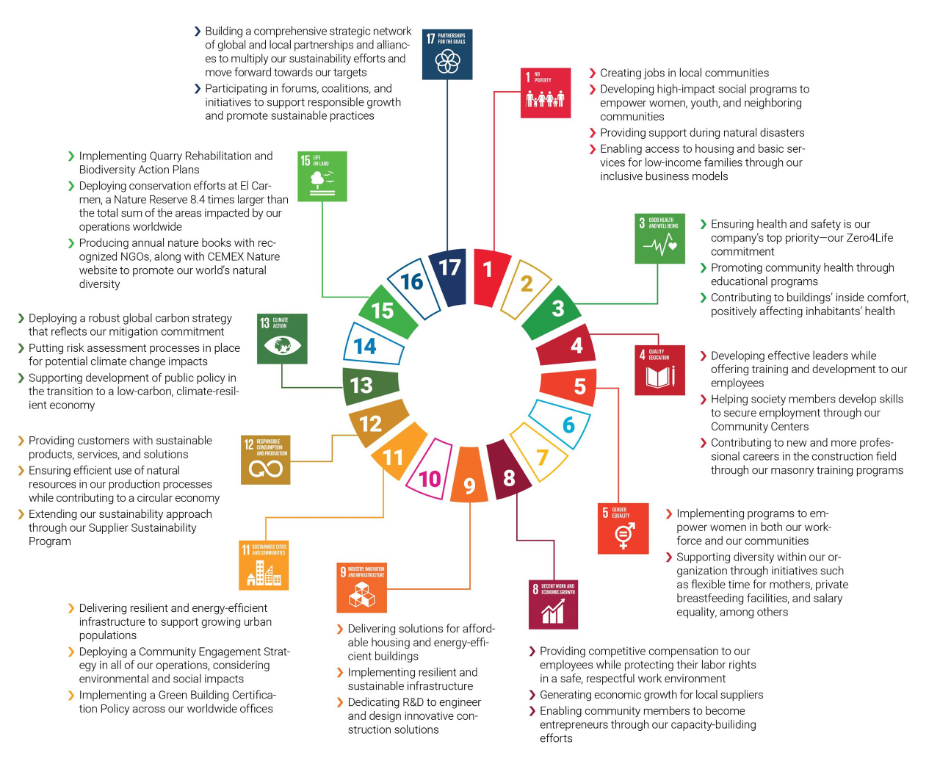
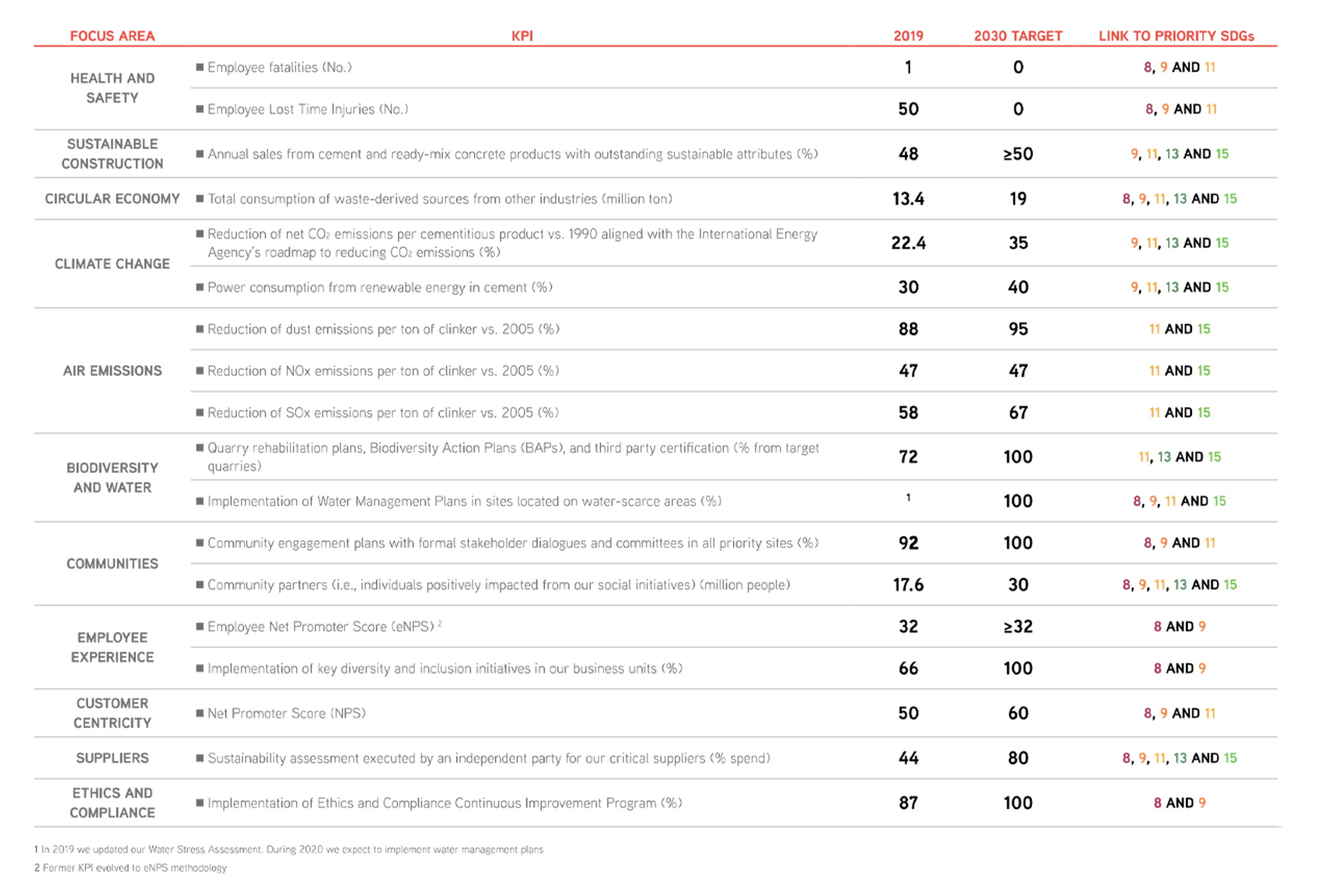
Cemex managers were asked to take the “SDG challenge” and write a postcard to themselves stating what action they would take to be an “SDG mover” describing how they each contribute to specific SDGs through day to day activities. Cemex’s Integrated Report brings together this mapping, tracked by specific KPIs, and detailed by function and geography.
More on the UN’s 17 SDGs and how they drive business innovation and growth
Gary Hamel is one of the world’s great business thinkers.
Today the world is facing many challenges from Covid-19, reducing CO2 emissions, addressing income inequality, cleaning up the oceans, to overcoming political extremism.
“In a world of unrelenting change and unprecedented challenges, we need organisations that are resilient and daring” says Hamel. He argues that organisations should be rebuilt in order to get through all of this. Authoritarian power structures and bureaucratic processes are a drag on organisational resilience and a significant liability in a world of accelerating change.
Resilient, creative, and passionate – those are the qualities organizations now need, Hamel said, yet many organizations can be described with the words inertial, incremental, and inhuman. He implied that in many ways our organizations are less human than the people inside them:
- Humans are adaptable – but organizations are (mostly) not.
- Humans are creative – but organizations are (mostly) not.
- Humans are passionate – but organizations are (mostly) not.
Hamel emphasises that even though openness, flexibility, and creativity are essential, our current bureaucratic organizations are not allowing us to pursue those qualities. A change is needed.
He proposes 5 steps companies can take, in order to create resilient, innovative, and entrepreneurial organisations:
1. Count the cost
According to Hamel, we need to be honest about what the old model is costing us. Most of the bureaucracy is invisible, so leaders should see what is the Bureaucratic Mass index of their organization. You can find out how your organization is doing with this assessment tool by Hamel and his colleague.
2. Learn from the vanguard
Hamel suggested we learn from those organizations that are leading the way in new developments and ideas. He mentions Nucor, Buurtzorg, and Handelsbanken as examples of entrepreneurial and flexible organizations. When looking at these successful and profitable organizations, Hamels says, it is clear that we do not need the old bureaucratic model anymore. Even large organizations can be led with only a few layers of management.
3. Embrace new principles
Hamel stated that we cannot create new organizations with old principles, which is why in addition to new practices, we also need new principles, and even new problems to work on. Before we needed to think about how to maximize compliance, and thereby, operational efficiency. Even though those things are still important, Hamel implied that now it is more crucial to think about how to maximize human contribution and thereby impact. Instead of focusing on the traditional principles like stratification, standardization, specialization, formalization, and routinization, Hamel recommended us to rather focus on principles like experimentation, meritocracy, openness, community, and ownership.
4. Hack the management model
“Bureaucracy is not going to die in one Armageddon-like battle”, says Hamel. He suggested we need to build many hacks across the organization. A top-down reorganisation is not the best way to get rid of bureaucracy. Actually teaching and letting people hack the old model and innovate on new principles and practices is more likely to work better. Hamel further emphasized that change management is not the way to go, because the change should start from the frontline one experiment at a time. “All effective change is going to roll up, not down”, Hamel concluded.
5. Start from where you are
Hamel advised that we should go back to our team with these ideas, and take a few hours to just consider: what should we change in order to get serious about openness, creativity, experimentation, and meritocracy? He proposed that we would not try to blow up our entire organization immediately, but rather start by thinking about what small steps can we take to reduce bureaucracy and encourage innovation across our organisations.
Do these companies exist?
Yes of course they do. Just consider some of these more enlightened business, covered in my recent blogs and in my new book Business Recoded:
- Organisation made of thousands of micro enterprises, eg Haier
- Teams self organised around key problems, eg Buurtzorg, Valve
- Front line employees drive innovation, eg Intuit
- Strategy is crowd sourced, eg Red Hay
- There are no internal monopolies eg Zappos
- Teams choose their own leaders, eg Haufe, WL Gore
- Every employee thinks like an owner, eg Nucor
- Employees contract with each other, eg Morning Star
- Pricing decisions are entirely decentralised, eg Handelsbanken
In Humanocracy, Hamel and his co-author Michele Zanini make a passionate, data-driven argument for excising bureaucracy and replacing it with something better.
Drawing on more than a decade of research, and packed with practical examples, Humanocracy lays out a detailed blueprint for creating organizations that are as inspired and ingenious as the human beings inside them.
Critical building blocks include:
- Motivation: Rallying colleagues to the challenge of busting bureaucracy
- Models: Leveraging the experience of organizations that have profitably challenged the bureaucratic status quo
- Mindsets: Escaping the industrial age thinking that frustrates progress
- Mobilisation: Activating a pro-change coalition to hack outmoded management systems and processes
- Migration: Embedding the principles of humanocracy—ownership, experimentation, meritocracy, markets, openness, community and paradox—in your organsation’s DNA.
He says “If you’ve finally run out of patience with bureaucratic bullshit. If you want to build an organization that can out-run change. If you’re committed to giving every team member the chance to learn, grow and contribute. Then this book’s for you.”
Read an extract from the book Humanocracy
Many people – from future-looking corporate leaders to business academics, hapless politicians and passionate social activists – have asked how can we use the recovery from Covid-19 to create real, lasting change?
We have seen dramatic change during the pandemic. The shift to digital living – work, school, entertainment, healthcare, shopping, and more. But the status quo is often resistant to meaningful transformations.
The UK-based RSA (Royal Society for the encouragement of Arts, Manufactures and Commerce) believes in a world where everyone is able to participate in creating a better future. It’s new “future change framework” is a way to think about how we have responded to Covid-19 and how that can drive positive change.
The RSA’s framework seeks to help leaders to think through what you’ve stopped, what you’ve paused, what you’ve put in place temporarily, and how you’ve innovated. Focusing on these areas will help you discover the most important actions to take into the future for your organisation, local community, team, or network.

Many of the people and organisations that have already used the framework to host conversations are seeking the same exploration: to make sense of what’s going on and think about their journey to the future. These conversations can occur at a variety of levels – from the individual to the community, the organisation to the system. Being clear about where we are looking and why will make it more likely that we are engaging the right people in better conversations.
Are we looking at a team’s response to Covid-19 or are we looking more systemically? If so, how are we defining the system? Of course this is not a one-off exercise, but a tool for continuous learning.
The RSA offers the following approach to using the tool:
Scan
The first challenge is to see what’s changing. Drawing on some principles of systems thinking, we start by spotting events – the actions and activities that people are taking, the events that are happening, the trends that are emerging. These are the most visible and obvious signs of change.
Digging a little deeper we can see how individual and collective behaviours, relationships, networks, rituals and so on are changing. Underpinning these are structures such as rules, policy, laws, incentives, many of which have changed significantly post-Covid, of course. At the deepest level of our systems are the mental models, thinking, principles, values and assumptions that form the existing paradigm within which everything else exists. To ‘think the unthinkable’ is to challenge these accepted norms.
To shift the paradigm is to open up the possibility of more fundamental, lasting change. In scanning these different levels within the system, we should also consider different scales, from the local to the global.
Map and evaluate
Next, as we collect these examples, we map them on the future change framework. This starts with the top row being those things that are new as a result of the pandemic, and the bottom row being those things we’ve stopped. The former will inevitably be more visible. Crucial to the latter is to see what is no longer there – what’s fallen by the wayside, whether by accident or design. What does that tell us about the importance and value of each activity during – and after – the crisis?
For now, of course, we may not have enough information to accurately allocate the things we’ve found to the four quadrants. We may need patient experience or user feedback, cost or performance data alongside contextual information in order to determine whether an intervention is one we want to amplify or whether it was specific to the crisis response. Waiting until we have such information is an important point in avoiding knee-jerk decisions – and speaks to the importance of the time dimension.
Track
To get to the required level of detail requires us to track changes over time. The actions we take in the systems we work in and the changing context we are responding to mean that we are continuously ‘course-correcting’ and responding to the presenting issues. This stage is therefore crucial in order to determine what, over time, we might see as a temporary or lasting measure, and whether other work and approaches become redundant as things change.
It is entirely likely, as some have found, that certain measures shift category over time. Something that was innovative and seemed worthy of amplifying into the future may be rendered a temporary measure as time moves on. Measures that were relevant in the immediate aftermath of the lockdown may not be those required to meet the demands of the next phases of opening up society. In any event, society itself is in a different place to where it was eight, ten, twelve weeks ago.

Respond
The toughest phase may be the next one – determining how (and when) we best respond to the resulting challenges for each quadrant. How might we…
- end temporary measures in ways that enable us to learn from the experience?
- amplify innovative measures in ways that lead to systemic change?
- let go of obsolete activity in ways that avoid regression to the norm?
- restart paused activity in ways that add most value?
Previously the RSA has undertaken research into new ways of addressing complex societal challenges such as these, defined as the imperative on public servants to move fast and fix things. In the study, they identified a range of methods that support work in complex settings where traditional approaches are not fit for purpose.
We can’t address questions such as these through linear processes of planning and delivering solutions – we are not working in areas where reductionist thinking and presumptions of direct causation are helpful. Instead, we advocate the combination of systemic understanding, entrepreneurial activity and commitment to impact that underpin theapproach to change.
Reflective learning
Of course, models are only helpful if people find them useful. The way people have used the RSA future change framework in a variety of contexts has been enlightening. Organisations and teams have used it to frame conversations (both internally and systems-focused), often in an impromptu fashion or as part of existing meetings. The value of these conversations may never be known, but perhaps, alongside other models and tools and with inspirational leadership from people across systems and communities, such conversations are helping shape a more positive future.
We live in a world of constant change that emerges from the interactions of the various parts of complex dynamic systems, now longer can we assume stability and direct causality. As a result, we can’t predict, mandate and control events with any degree of certainty in order to bring about the kinds of change we want to see nor manage the kinds of change we don’t. No amount of centralisation, command-and-control management or prescription can achieve that.
Working in such uncertainty requires leaders who “ask the right questions rather than provide the right answers, because the answers may not be self-evident and will require a collaborative proves to make any kind of progress”. The RSA says that such leadership is less about pulling levers of hierarchy and power and more about taking human approach, leveraging the power in co-operation, humility and empathy. And it is those who are able to host open, collaborative conversations in this spirit – with families, teams, organisations, communities – who will be the kind of leaders we’ll need.
With thanks to theRSA.org
Melanie Perkin’s Canva … She founded a unicorn by 30, now she’s taking on the tech giants
Canva is a workplace collaboration platform, and one of the world’s most valuable female-led start-ups. It enables people to create graphics, presentations, videos, marketing materials and social media content. It has 30 million users across 190 countries, creating 80 designs per second, a total of over 3 billion designs since launch.
Melanie Perkins, its 32-year-old Australian founder, used to describe Canva as a graphic design tool, but “reframed” it as a workplace collaboration platform, and therefore comparable to hyped businesses like Slack and Zoom, transforming perceptions and valuations.
Perkins was a teenage entrepreneur. She launched her first business at 14, designing and selling handmade scarves to sell in her hometown of Perth. 8 years later, she founded her next company, an online system for schools to design their yearbooks called Fusion Books, which is now the largest yearbook publisher in Australia.
In 2013, she launched her third business, Canva, a platform that allows anyone to create professional-quality designs no matter their level of expertise. The platform is available in 100 languages and has a library of over 3 million images, with new inspiration added every day. Within 5 years Canva had 250 employees, and became a $1 billion-valued unicorn.
“Before Canva, creating a professional looking design was a complex process – you had to purchase expensive software, learn how to use it, purchase stock photography, decide on a layout, slice images, design, share ideas between the team by email only to find revisions needed to be made, then send your design to print.”
Individuals and companies pay a flat subscription fee that enables them to set up a brand kit with logos, preferred colours, fonts and assets, and ensure consistency across their designs, access to billions of images and much more, and a print service that gives users the ability to produce professional prints in a variety of formats and sizes, delivered straight to their doorstep.
Perkins says that Canva has seen huge demand during the pandemic, as the world has shifted online, people have adapted businesses and launched new concepts.
“Canva’s accelerated growth during Covid-19 is indicative of the new normal, as more teams realize the need for a more scalable, more collaborative, more affordable and more user-friendly design platform” she says. “Now more than ever, organisations of all sizes are doubling down on building a reliable remote workplace, and are turning to modern productivity platforms like Canva to ensure they remain flexible and scalable.”
Ankiti Bose’s Zilingo … She’s set to become India’s first female unicorn founder – and she’s only in her 20s
27-year-old Ankiti Bose is on course to become India’s first female unicorn founder with her near-$1 billion fashion start-up Zilingo. Bose describes the business as a technology and commerce platform in the fashion industry. The Singapore headquartered startup was founded in 2015 by Bose and her colleague Dhruv Kapoor, and now has operations spanning across Asia and USA. Today, the company employs over 600 staff representing more than 20 different nationalities, and works with close to 50,000 partners across the fashion supply chain. The idea came from when Bose was on holiday in Bangkok and noticed that many of the small and medium-sized shops had no online presence. Zilingo, a play on the word “zillion”.
Carousell … Could this be Southeast Asia’s next $1 billion start-up?
Carousell was founded by Siu Rui, Lucas and Marcus back in August 2012 – giving its small business entrepreneurs the tools to solve problems- whether it’s decluttering or earning side income. “At Carousell, we believe in more than just buying and selling. We believe in the power of possibilities that people bring to the process. Through every buyer, seller and listing, we believe there’s opportunity beyond the transactional. Our mission is to inspire every person in the world to start selling and buying to make more possible for one another, on a global scale. We believe that technology is an enabler to solve meaningful problems at scale. We are crafting the most seamless user experience for people to sell what they don’t need and find what they need” says Rui. CNBC explores how the three 30-somethings are using Artificial Intelligence to fuel the rapid growth of their online marketplace, Carousell
Su Jin Lee’s Yanolja and the rise of the love hotel, South Korea’s latest $1 billion business
In the Korean language, Yanolja means “Hey, let’s play.” To be a successful entrepreneur, they say you’ve got to have passion. That’s something Su Jin Lee had in spades when he started his business. After all, he was going after an industry built on the stuff. Lee is the founder of Yanolja, an online accommodation bookings platform that has reinvigorated South Korea’s once dying love hotel industry and given birth to the country’s latest billion-dollar start-up. Love hotels are a type of short-term, pay-per-hour accommodation famed across the global for their exotic — and indeed erotic — stylings. The Korean entrepreneur started the company in Seoul in 2007 in a bid to modernize what he saw as a misrepresented market. It has since grown it into a multifaceted hospitality business with 32 million downloads and a major millennial following. But what has everyone so hot for love hotels? CNBC heads to Seoul to find out.
Bom Kim’s Coupang … How a Harvard dropout founded South Korea’s most valuable start-up
Bom Kim made history as the founder of Korea’s most valuable start-up and the country’s newest billionaire. Coupang is one of the largest and fastest-growing consumer internet companies in the world. Our innovative technologies and novel approach to mobile commerce and customer service have set a new standard for e-commerce in Korea and beyond. Powered by its proprietary technology infrastructure, Coupang offers the largest end-to-end fulfillment operation in Korea and one of the most revolutionary last-mile delivery services in the world. “We’re on a mission to revolutionize everyday lives for our customers, employees and partners. We solve problems no one has solved before to create a world where people ask, ‘How did we ever live without Coupang?’” CNBC met with the Coupang CEO in Seoul to hear how he went from a Harvard Business School dropout to the founder of Korea’s answer to Amazon.
Chang Wen Lai’s Ninja Van … He quit banking to build Southeast Asia’s next big thing
Chang Wen Lai’s express delivery service, Ninja Van, is tipped to be one of Southeast Asia’s next $1 billion unicorns. Launched in 2014, Ninja Van started operations in Singapore to address the logistics needs of customers by offering them options of tracking their parcels, receiving real-time updates and gaining access to alternative pickup points. Recognising that consumers across SEA want a consistent experience regardless of where they buy from (domestic and/or international) and clients want a singular access point into the region, we decided to expand our network to cover SEA. Our vision is to have a Ninja within reach of any consumer in Southeast Asia. “At Ninja Van, we exist to revolutionise logistics through our technology-enabled delivery systems in Southeast Asia (SEA). Combining our passion for harnessing cutting-edge technology solutions and our in-depth knowledge of e-commerce needs, we ensure that logistics is a hassle-free affair for our business partners and consumers. Just like real Ninjas, we are dependable and deliver on our promises to you” says Chang. CNBC met the 32-year-old CEO in Singapore to hear about his bold bet to go from trading floor to entrepreneur.
Min Liang Tan’s Razer … how a billionaire gamer built a pandemic-proof business
Business is booming for gaming giant Razer. Razer is the world’s leading lifestyle brand for gamers. The triple-headed snake trademark of Razer is one of the most recognized logos in the global gaming and esports communities. With a fan base that spans every continent, the company has designed and built the world’s largest gamer-focused ecosystem of hardware, software and services. Razer’s award-winning hardware includes high-performance gaming peripherals and Blade gaming laptops. Razer’s software platform, with over 70 million users, includes Razer Synapse (an Internet of Things platform), Razer Chroma™ (a proprietary RGB lighting technology system), and Razer Cortex (a game optimizer and launcher). In services, Razer Gold is one of the world’s largest virtual credit services for gamers, and Razer Fintech is one of the largest online-to-offline digital payment networks in SE Asia. Founded in 2005 and dual-headquartered in Irvine and Singapore, Razer has 18 offices worldwide. CNBC spoke to the company’s self-made billionaire co-founder, Min Liang Tan, to hear how he’s pivoting his brand in response — and what it could mean
Image: Unsplash