See it, want it, buy it … “shoppable TV” is here, and it might even change the future of marketing … new technology business Silvr, created by two Google innovators, brings the dream of Emily in Paris to life
March 4, 2026

Silvr, launched just last week, could change the future of marketing.
That’s not hyperbole — it’s an honest assessment from someone who has spent 35 years building brands, shaping strategy, and wrestling with the ever‑moving goalposts of consumer attention.
If I were to mark the major inflection points in marketing from the past few decades, the list would read like a highlight reel of disruption: the first clickable banners on the early internet; the boom (and bust) of the dotcom era; the unraveling of traditional advertising models; the rise of direct‑to‑consumer brands; the decline of the high street; the explosive influence of social platforms; and the advent of livestream commerce. Each of these moments forced rethinking the way we touch consumers, measure impact, and ultimately drive purchase.
Now comes shoppable television — and with it, a technology called Silvr that promises to collapse inspiration and purchase into a single instant. This development doesn’t merely optimise an existing channel; it rewires the fundamental relationship between content and commerce.
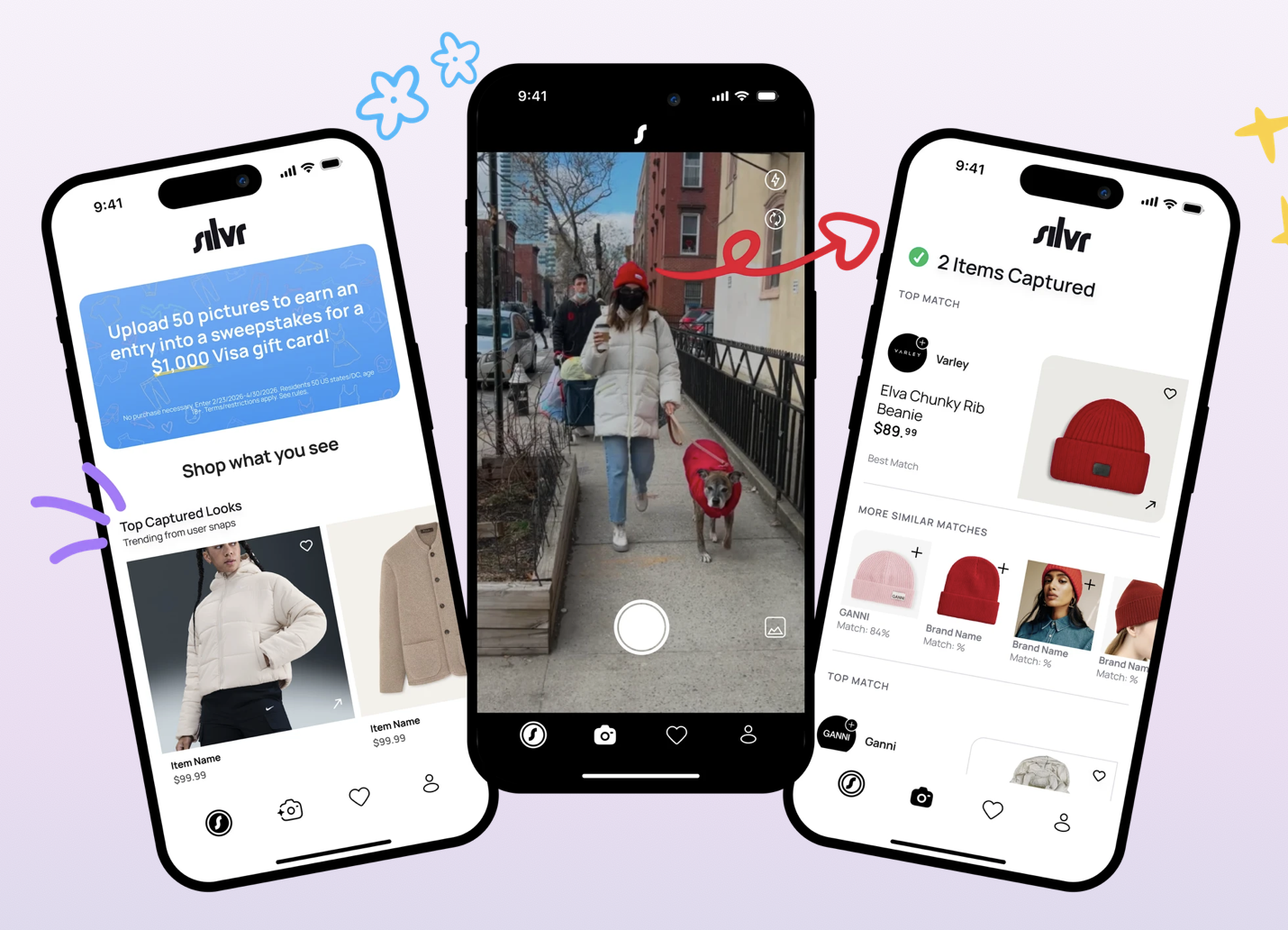
The origins of Silvr
Silvr is the brainchild of two former Google engineers, Josh Lanzet and Jason Fahlstrom, both of whom spent years immersed in machine perception, real‑time search, and human–computer interaction. Their premise was simple yet ambitious: if machines can see, recognise, and classify the world around us, why shouldn’t they recognise objects within video content and connect them directly to commerce?
This question became Silvr’s mission — to liberate products from the static tyranny of e‑commerce catalogs and embed them directly into the stories that inspire desire in the first place.
Behind the scenes, Silvr’s strategy is built on three technological pillars:
- Computer Vision: Advanced neural networks trained on millions of visual datapoints to identify objects — clothing, accessories, furniture, décor — with remarkable accuracy.
- Contextual AI Matching: Beyond pattern recognition, the system considers aesthetics, brand cues, and product metadata to deliver precise or high‑quality near‑matches.
- Real‑Time Commerce Integration: Live links to retailer feeds, inventory systems, pricing engines, and fulfilment pipelines to enable instant purchase.
Lancet says “We are on a mission to make everything you see—from outfits to accessories— seamlessly shoppable! Silvr’s custom vision model identifies items from your favorite shows, social content, or real-world fits and allows you to shop them instantly. The company is launching a consumer-facing app this year and has white-labeled B2B integrations with streaming platforms coming in 2026.”
By launching this platform, the two ex-Googlers are betting that the next evolution of digital commerce isn’t a social feed or a search bar — it’s the television screen itself, the arena where storytelling and aspiration have always been at their strongest.
What shoppable TV actually is
Silvr makes television shoppable — meaning viewers can interact with the moving images in ways that were previously the stuff of sci‑fi or speculation.
Here’s how it works in practice:
- A viewer watches a show on their TV or device.
- They see an item they like — perhaps the coat worn by Emily in Emily in Paris, or the lamp on an interior design show.
- With a quick scan of their smartphone camera, or eventually an on‑screen tap in integrated platforms, Silvr’s AI recognises the item.
- The viewer is presented with product information, pricing, retailer links, and the option to buy immediately.
What was once inspiration becomes action in real time.
From inspiration to purchase
Traditional marketing funnels are long and leaky:
Awareness → Consideration → Search → Purchase
Television has always excelled at awareness. Social platforms have dominated consideration and engagement. Search and e‑commerce have captured intent and purchase. But each step required friction — time, effort, attention.
Shoppable TV collapses this funnel:
Content → Want → Buy
By enabling purchase at the exact moment of desire — while the emotion is hot and the impulse is real — Silvr fundamentally reconfigures the value exchange between consumer and content.
For marketers, this is akin to discovering a hidden switch that turns passive viewers into active buyers — instantly.
Why this matters for brands
The implications for brand strategy are enormous. For decades, product placement has been a subtle art — insert your product in context, hope it resonates, and wait for the halo effect.
Shoppable TV makes that halo effect traceable and transactional. Suddenly, questions like “Did this appearance boost awareness?” are replaced with “How many scans did this generate?” and “What was the direct conversion rate?”
Creative teams must evolve: costume designers, stylists, set decorators and cinematographers now play roles in commerce outcomes. Product decisions become strategic choices with measurable revenue impact.
The creative brief expands from aesthetics alone to include commercial outcomes — a paradigm shift in how brands and content producers collaborate.
What it means for retailers
For retailers, shoppable TV is not just a new touchpoint — it is a new distribution surface. Television and streaming content reach massive audiences with deep emotional engagement. Now they reach buyers in situ.
Retailers who embrace this early could gain:
- First‑mover advantage in a rapidly emerging commerce channel.
- Rich new data signals tied directly to real appetite and purchase intent.
- Deeper integration with cultural moments — when a product is not just seen but acted upon.
However, this opportunity carries operational challenges. To monetise a shoppable moment effectively, retailers must align:
- Real‑time inventory visibility
- Dynamic pricing capability
- Robust fulfilment and returns systems
- Seamless mobile checkout experiences
Without these, a moment of desire can turn into frustration — and that’s worse than no opportunity at all.
The broader ecosystem … social platforms, commerce and content
Shoppable TV does not exist in isolation. It sits amid a broader evolution of commerce platforms. Instagram and TikTok, for example, have spent years refining social commerce — from shoppable posts and product tags to livestream selling and influencer‑driven storefronts.
Shoppable TV could extend, absorb, and even compete with these ecosystems. The future might hold hybrid experiences:
- Streaming platforms with native commerce layers.
- Social platforms licensing episodic video designed for shoppable interaction.
- Retailers producing narrative content optimised for transaction conversion.
In this future, the distinction between “platform” and “storefront” blurs. Content becomes commerce, and commerce becomes content.
Consumer behaviour … the psychology of instant purchase
For consumers, the value is immediacy. No more searching for long‑lost product names or struggling to find lookalikes online. A moment of attraction becomes a moment of action.
But this introduces a behavioural shift. Instant buying amplifies impulse. Without pause or friction, decisions are influenced by the heat of the moment. Brands and platforms will need to balance convenience with thoughtful design to ensure that consumer trust and long‑term satisfaction are not undermined by transactional urgency.
The user experience must be intuitive and unobtrusive — adding value without disrupting viewing pleasure. Integration must feel like an enhancement, not an intrusion.
Data, attribution and accountability
One of marketing’s oldest challenges has been measurement. Attribution models have long been filled with guesswork, assumptions, and fragmentation across channels and devices.
Shoppable TV introduces clarity. A scan equals intent. A purchase equals conversion. That’s a clean signal tied directly to content. It’s the kind of precision that transforms planning, budgeting, and creative strategy.
Marketers will have real, measurable data on the exact moment desire turns into purchase — and that insight will inform everything from creative briefs to media plans.
Comparisons
Silvr is not the first attempt at shoppable content, but it is the most sophisticated to date. Earlier models included:
- Interactive ads embedded in streaming services
- Livestream commerce in markets like China
- Shoppable posts on social feeds
What sets Silvr apart is scale and context. It’s not tied to a platform feed. It’s tied to narrative content — episodes, films, documentaries — where consumer inspiration is deep, sustained, and emotionally anchored.
In livestream commerce, users buy in reaction to a host’s prompt. In social commerce, users may act on social cues. Shoppable TV combines narrative influence with real‑time transaction capability — an unprecedented fusion.
Strategic considerations
Adopting shoppable TV — and harnessing its potential — requires organisational shifts:
- Cross‑functional collaboration: Marketing, creative, operations, and commerce must integrate seamlessly.
- Real‑time commerce infrastructure: Inventory, pricing, fulfilment and returns must be synchronised with on‑screen moments.
- Data literacy: Teams must interpret and act on new attribution signals tied to content performance.
- Consumer experience design: Shoppable interactions must feel intuitive, helpful, and non‑disruptive.
Those who adapt quickly stand to gain not just revenue, but long‑term consumer loyalty built from moments of inspired action.
A new era for brands and commerce
From Emily in Paris to interior design shows, documentaries and lifestyle content, shoppable TV invites consumers to participate in the story they are watching. Desire is not deferred — it is activated.
Thirty‑five years in this business has taught me to recognise when a shift is truly structural versus merely tactical. Shoppable TV — and Silvr in particular — feels structural. It changes where and when commerce happens, and replaces friction with immediacy.
For consumers, it’s convenience realised. For brands, it’s commerce embedded in culture. For retailers, new pathways open. And for platforms, the lines between storytelling and selling blur ever further.
The era of passive viewing is over. The future belongs to shoppable moments, and it has already begun.
More from the blog