What I Learnt in 2025 … it started with a spritz, evolved into green cement, super shoes and fast cars, clean energy and smart cities, predictive finance and future retail, reimagined luxury and transformative tech
December 23, 2025

How was your 2025? For me, it felt like a year of economic recalibration, and tech acceleration.
After the inflationary shocks of recent years, uncertainty and complexity became the normal, and global markets transitioned to a new era of AI-enabled productivity and innovative possibilities.
From Campari in Italy to Cartier in Switzerland, Mercedes Benz in Germany to Minibea Mitsui in Japen, Orascom in Egypt to Oxxo in Mexico, “reinvention” was on the mind of every business leader I worked with.
It’s only when you look back that it’s really possible to see what a pivotal year 2025 has been. The $5 trillion valuations and thinking machines, agentic workflows and premium humanity, regenerative business models and hyper-personalisation, China’s EV revolutionaries and Dyson’s incredible Airstrait.
So here is what I learnt in 2025, as I travelled around the world, working with incredible companies and impressive business leaders. What did you learn from 2025, and are you ready to go further, even faster, in 2026?

January 2025 … Building brands with more spritz
My year started with a Spritz, or more correctly, with a project exploring the future of Campari, where Aperol Spritz has dominated their portfolio for the last two decades. What next, in a world of shifting tastes, social behaviours and aspirational wellness? Campari is still a Milan-based family business, and I worked with the Italian company’s leaders around the world to explore new innovative ideas in drinks concepts, brand experiences and business models. Key will be to take a more consumer-centric approach, recognising different audiences and cultures, then driving occasions and experiences, then products.
- What will you do next? … AI rocket ships and quantum speed, hairy mammoths and Olympic champions. Now is a time of great acceleration. My take on the biggest ideas shaking up markets, and the minds of business leaders.
- The Rise of Jio … from free phone to super app, and now India’s lifestyle brand, created by the petrochemical giant Reliance … How to reimagine your future with new audiences, in new sectors, with new brands and business models
- Be More Human … How technical brands are finding their voice: how auto brands look beyond the car, pharma brands look beyond the pill, tech brands look beyond the spec, to engage and inspire, build empathy and desire.
Across the Alps in Switzerland, I explored the future of commodity trading with Holcim, and the changing nature of supply chains and commercial strategies for the world’s leading cement business. I also helped their finance teams to step up in their role from reporting the past to envisioning the future, to help leaders focus on the best innovation opportunities for value creation, rather than just revenue or profit, and how to engage shareholders in their “NextGen Growth” strategy. While cement has been a major carbon emitter, this is a great example of putting sustainability at the core of strategy, innovation and growth.
Also in January …
- AI as industrial agent … The Economist’s The World Ahead 2025 gave us a deep dive into the “Trump Effect” on global trade when his planned tariffs were just bluster, and the transition of AI from “creative toy” to “industrial agent.”
- Sovereign tech … BlackRock’s 2025 Global Outlook introduced its mega forces framework, urging investors to pivot toward AI infrastructure and “Sovereign Tech” as traditional business cycles break down.
- $4 trillion business … Nvidia became the first company to achieve a $4 trillion market valuation, driven by the announcement at CES 2025 of its massive rollout of its “Blackwell” chips
- Geopolitical tech … France and the UAE announced national “AI sovereignty” funds to build localised infrastructure, moving away from US-based clouds.
February 2025 … Das Beste oder Nichts
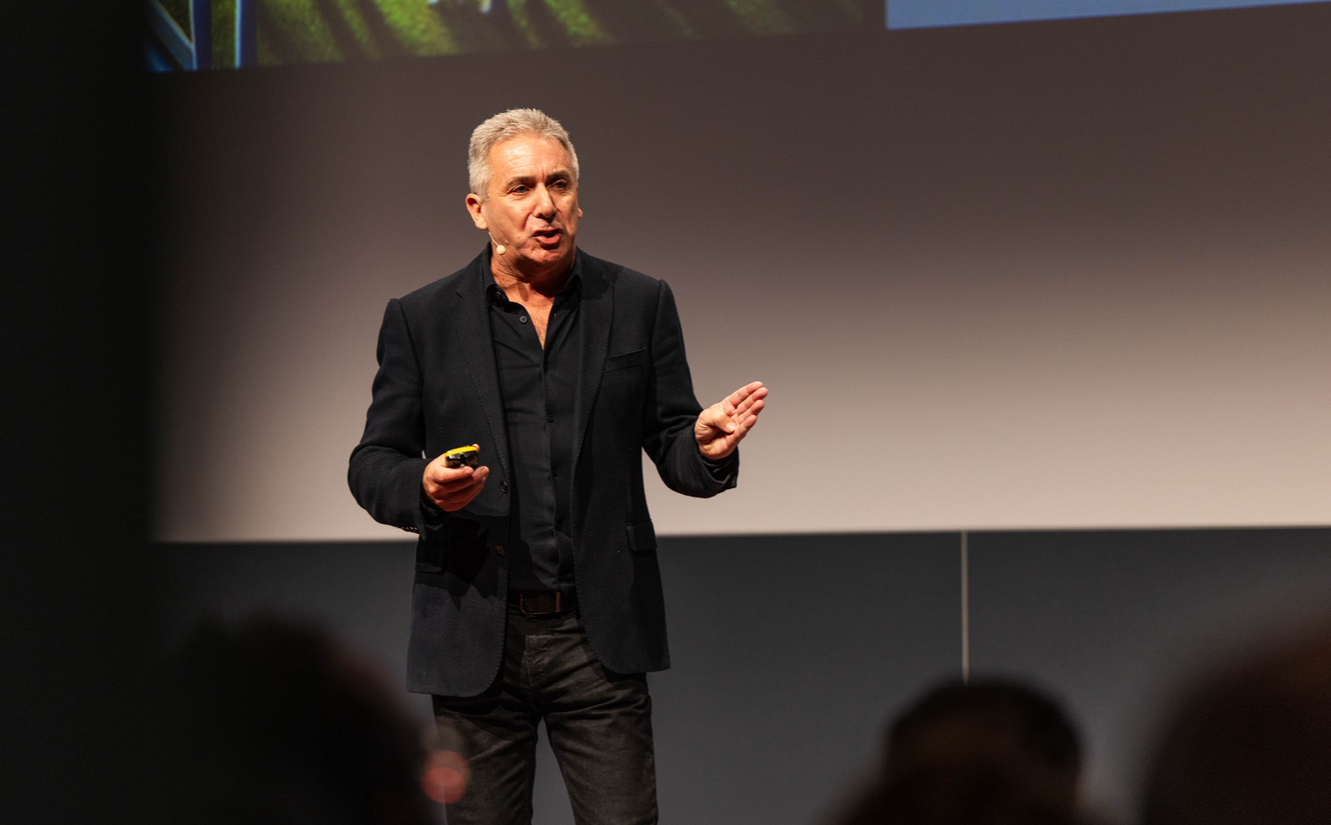
Adidas stepped up in 2025 with more world marathon majors medals than any other running shoe brand, and in Nuremberg, I worked with their Global Running team to explore what’s next. Led by SVP Alberto Uncini Manganelli, they recognised that the real challenge is not just to create great products, but to enable consumers to achieve more. One example was their launch of the world’s first dedicated treadmill shoe, the Treadwell, months in advance of the announcement by World Athletics a few months later of the first World Treadmill Running Championships in 2026, where anybody can compete against the world’s best asynchronously, on a treadmill.
- Coaching Champions … Emmanuel Wanyonyi, the young Kenyan 800m runner, was one step away from an Olympic gold medal at Paris 2024. Claudio Berardelli, his coach, thought about what to say to him.
- The Fender Guitar Experience … Transforming guitar culture through digital ecosystem-based innovation, from online learning to community building, new business models and enhanced brand experience.
- The AI Pioneers … 10 pioneering companies redefining business through AI and technology … ASML, Deepseek, GitLab, Illumina, KlimaDAO, Rocket Lab, Shopify, Slack, 37 Signals, and Waymo.
A little further north in Germany I worked with the leaders of Mercedes Benz, in partnership with St Gallen Business School, to explore automotive futures, in a market increasingly dominated by Chinese EVs. We explored new strategies and innovations, looking for inspiration into sectors like consumer electronics, retail and entertainment. For the German business, this meant a focus on AI-driven driving experiences beyond the powertrain.
Also in February …
- Organisational stagility … Deloitte’s 2025 Global Human Capital Trends coined the term “stagility” meaning the need for companies to balance structural stability with extreme agility as AI eliminates traditional entry-level roles.
- Delivering agentic AI … Gartner’s Top Strategic Tech Trends for 2025 highlighted “Agentic AI” and “Spatial Computing” as the two technologies that will define corporate spending for the next 36 months.
- Unilever splits … the UK/Dutch consumer giant announced the spin-off of its ice cream business (to be know as the Magnum Ice Cream Company, including Ben & Jerry’s) pivoting entirely towards beauty and well-being and home care
- Super Bowl economy … a record $20 billion was spent on Super Bowl-related commerce, with Temu and TikTok Shop dominating the ad slots.
March 2025 … “Future Junkies” in Manhattan
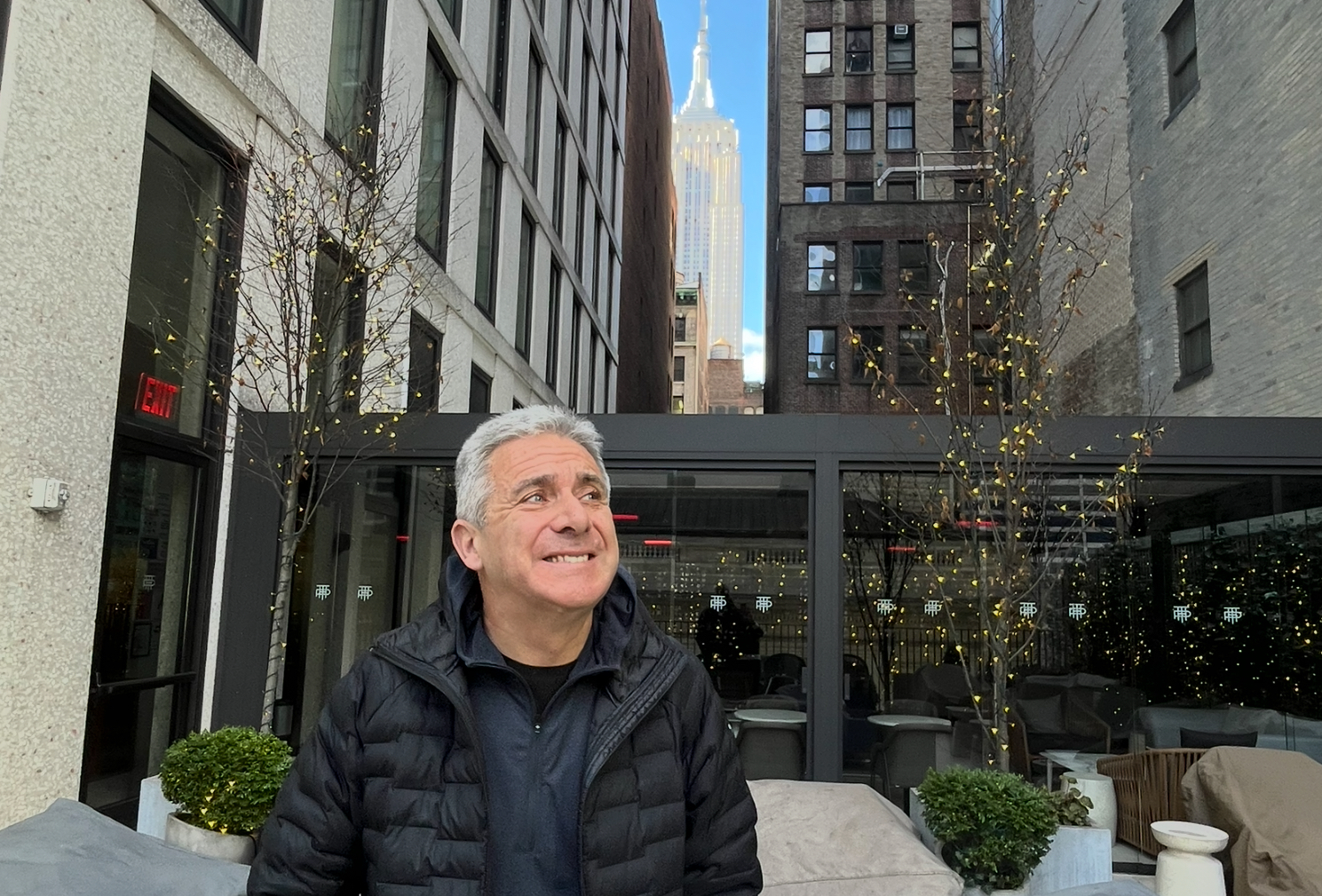
“Future Junkies” launched in New York in March, my new project to explore how the world’s best leaders are reimagining the future. Junkies are obsessives, and these leaders (think of Nvidia’s Jensen Huang who started 30 years ago dreaming of his superpowered chips, or OpenAI’s Sam Altman obsessed with what’s next). The project explores the diversity of emerging trends, and how leaders can build a forward-looking mindset that flows into strategies, innovations and action. It’s a research platform for new keynote events and workshops, and also a living futures book, constantly updated with the latest ideas and trends, insight and foresight.
- The Great Reinvention … How every industry is being radically shaken up, and rapidly reinvented. Who will be the winners and losers, what will matter most, and what comes next?
- The Innovation Mindsets of America vs Europe vs Asia … from the American dream to Europe’s social responsibility to Asia’s new ambition. What drives innovation, growth, and the future?
- The B2B Superpowers … ABB to Biontech, Climeworks and DSM, Fedex to Holcim, Illumina and Nvidia, Open AI to Stripe, Vestas and Waymo. Who are the most inspiring B2B companies, and how are they reinventing themselves?
Iberdrola has seen dramatic growth in market value over the last year, as one of the leaders in the clean energy revolution. Partnering with Headspring, I worked with their leaders from around the world to explore how to accelerate decarbonisation, and their own business. We dived deep into the strategies of peers like Next Era Energy and Schneider Electric to explore the changing business models, and what’s working and what’s not. We explored my model of the 4Ds of the energy transition – decarbonised, digitalised, deregulated and decentralised – and what they mean together.
Also in March …
- BYD’s international surge … the Chinese EV giant officially opened its first major factory in Hungary, radically undercutting European automakers on price.
- Accelerating clean energy … IEA’s Global Energy Investment 2025 reported that for the first time, investment in “Grid Modernization” and “AI Data Center Cooling” surpassed investment in new solar capacity.
- Simpler sustainability … a global trend of deregulation saw the US and UK slash ESG reporting requirements for small businesses to stimulate startup growth.
- Tech billionaires … Forbes’ World’s Billionaires List 2025 highlighted a massive shift in wealth toward “compute barons”, meaning individuals whose net worth is tied to semiconductor supply chains and datacenter ownership.
April 2025 … Megatrends accelerated by tech convergence
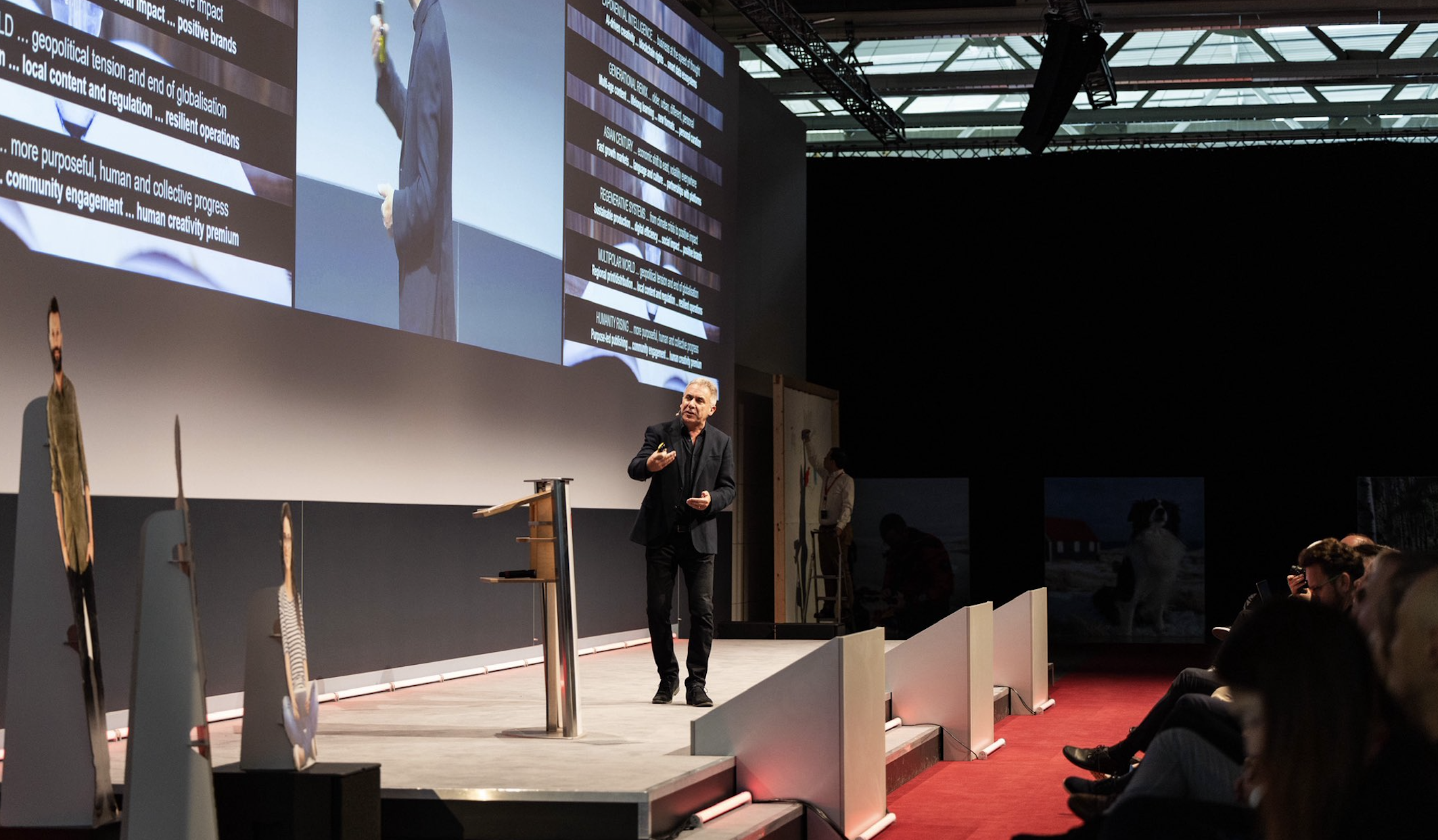
Megatrends 2035 is my new report defining the 6 dynamic forces shaking up every industry. While AI dominates, its impacts is as much in accelerates the convergence of other technologies, like genomics, robotics, networks and batteries. And also in offering new ways to address other megatrend challenges like climate change, ageing populations, dense urbanisation, and geopolitical fragmentation.
- Megatrends 2035: The 6 dramatic forces shaking up every market and driving every business to reinvent itself, from demographic revolution to exponential intelligence, regenerative systems and humanity rising.
- The New Leadership DNA … How do the world’s most inspiring business leaders thrive in a world of relentless change? Inspired by Satya Nadella and Sam Altman, Jessica Jackley and Mary Barra, Melania Perkins and Nik Storonsky.
- Performer Transformers … the art of delivering today and creating tomorrow. How today’s best leaders need to have a dual mindset, connecting short and long-term focus in a world of continual change and reinvention
NTT Data is consistently ranked as one of the world’s most innovative companies, but the Japanese tech business is less well known than most innovators. Its transformation seeks to align its global capabilities to deliver mega client projects. For me, the real challenge is to help corporate clients themselves to see the opportunities of AI and convergent tech, positioning NTT Data as a strategic partner in business transformation rather than just a very smart IT supplier.
Also in April …
- Liberation day … Trump introduced sweeping new import tariffs, based on bilateral trade “imbalances” and therefore penalising countries with strong exports to the US, and causing the worst stock market falls since Covid-19.
- Spatial first … Apple’s iPhone 17 Pro launched as a “spatial-first” device, featuring a 3D-capture camera as the new industry standard, and yet many consumers still wonder whether Apple’s launches are getting ever-more incremental.
- Waymo innovative … Fast Company’s Most Innovative Companies 2025 report awarded top honours to Waymo and Nvidia. OpenAI and Mistral AI, followed, emphasising the rise of “Sovereign AI” startups in Europe and Asia.
- Smarter growth … IMF’s latest World Economic Outlook still shows global growth at around 2-3% (1% or less in Europe), but with more optimism, driven by AI-driven productivity gains in the service sectors of developed economies.
May 2025 … Leading in the footsteps of Columbus
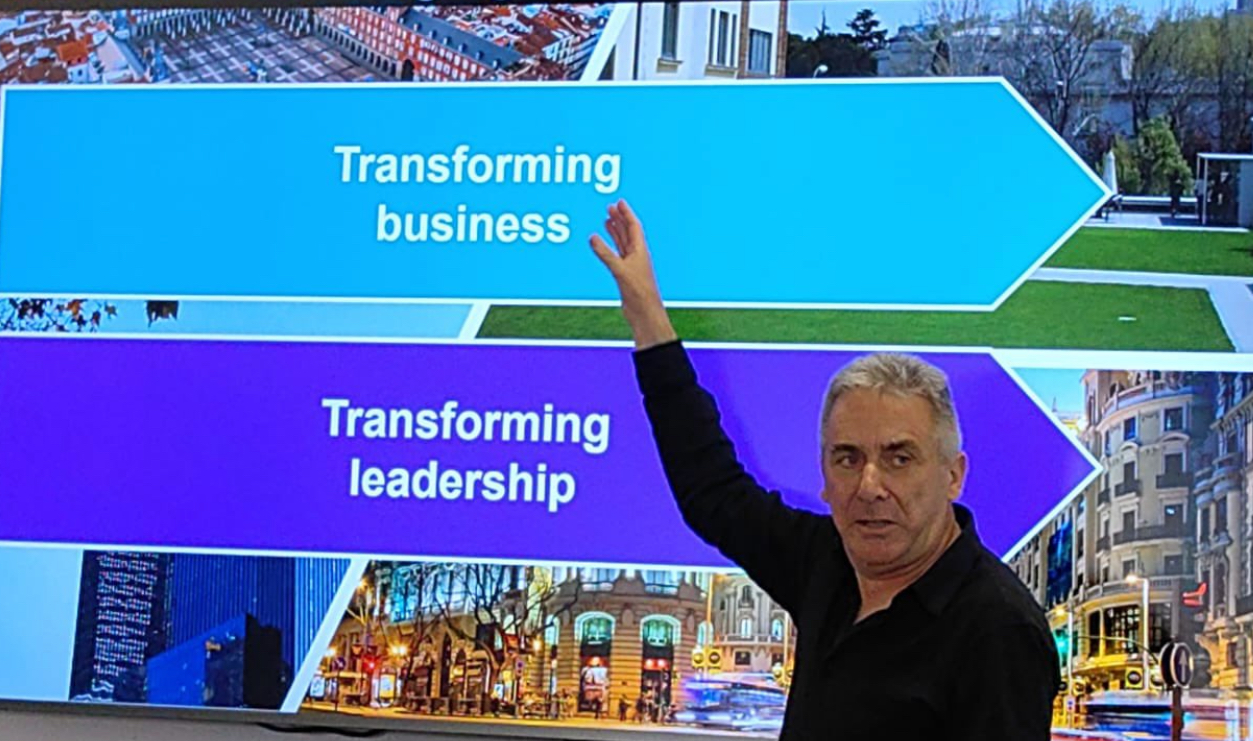
Every year I work with a small group of global executives to explore their futures, transform their organisations, and themselves. This year’s 6 month Global AMP program, organised with IE Business School, came to a climax in beautiful Segovia, in northern Spain. In a historic room, where Christopher Columbus was asked by the Spanish Queen, Isabella, to explore the Americas in 1492, we mapped out new strategies for the reinvention of businesses from Argentina to Sweden, energy to retail.
- Space Thinking … reframing markets as spaces not sectors … talking in the customer’s language, anticipating unmet needs, designing propositions that resonate, and driving innovation and profitable growth
- A Guided Tour of Europe’s Innovators … 15 Inspiring Cities and 15 Innovative Companies: from Adyen in Amsterdam to DeepMind in London, Too Good to Go in Copenhagen and GoodAI in Prague
- The Net Positive Playbook … building a new generation of businesses that give more than they take, reinventing organisations for sustainable growth
Transformation is the new business leaders’ superpower. So it was great to continue my great partnership with StrategyTools to deliver the “Transform!” business simulation where business leaders, as competing exec teams of leading companies, race to reinvent themselves, and create $60 billion of market value. Simulating 10 years in 10 weeks, they rapidly learn how to master P&Ls and DCFs, acquisitions and mergers, changing regulation and employee strikes, to create a business fit for the future.
Also in May …
- AI literacy … LinkedIn’s Workplace Learning Report 2025 revealed that “AI Literacy” has officially replaced “Digital Literacy” as the most requested skill in global job postings.
- Fortune 500 … Walmart retained the #1 spot (still generating more revenue than Amazon, but Amazon is three times more valuable), while 15% of the list’s total profit now comes from companies that didn’t exist 30 years ago.

June 2025 … Futures inspired by the past
Orascom is one of Egypt’s most interesting companies, a construction business that has focused on creating entirely new towns and cities, designing an entire infrastructure, from homes to infrastructure, shopping malls to entertainment. Back in 2018 I first worked with them at their ready-made La Gouna town, on the Red Sea, and subsequently in other locations like Montenegro. Now, thinking far beyond being a construction company, they are ready to explore even more ambitious ideas for urban development in an accelerating digitally-enabled world.
- Next Generation Business Models … redefining value, ownership, scale, and trust; powered by AI and data, decentralised and human, plus sustainability; Bytedance and Earthchain, KlimaDAO and On, Ping An and Soul Machines.
- Ecosystems Inc … How the music industry was reinvented through ecosystems, from Napster and Spotify, to TikTok and Fortnite, and what this means for every industry.
- “There’s nothing like this” … how Taylor Swift embraced anti-fragility, blue oceans, socialised branding, analytics and AI, and platform reinvention, and some of my other favourite business books to read.
I was also inspired by Mitsis, the largest privately-owned hospitality business in Greece. It started in 1954 as a family textiles business in Athens, until its sweaters gave way to swimwear in the 1970s, with the development of an impressive all-inclusive hotel chain, plus other business in publishing and winemaking. Mitsis resorts, with my favourites in Crete and Rhodes, are distinctive for their “filoxenia”, combining local cultures, modern architecture and genuine Greek hospitality.
- The 3:2 worklife … a new global survey confirmed that 85% of Fortune 500 companies have settled on the “3 days in, 2 days out” hybrid work model
- Future jobs … World Economic Forum’s Future of Jobs Report 2025 predicted that 22% of current total jobs will be “transformed” by structural labour-market shifts, primarily AI and green transitions, by 2030.
- Creative leaders … Cannes Lions used to be an ad agency blast, but the annual Festival of Creativity is increasingly a meeting place for CEOs who seek to fuse creativity and technology to reinvent business, not just to create ads.
- Product authenticity … the new EU Digital Product Passport became mandatory for textiles sold in Europe, forcing a massive supply chain audit.
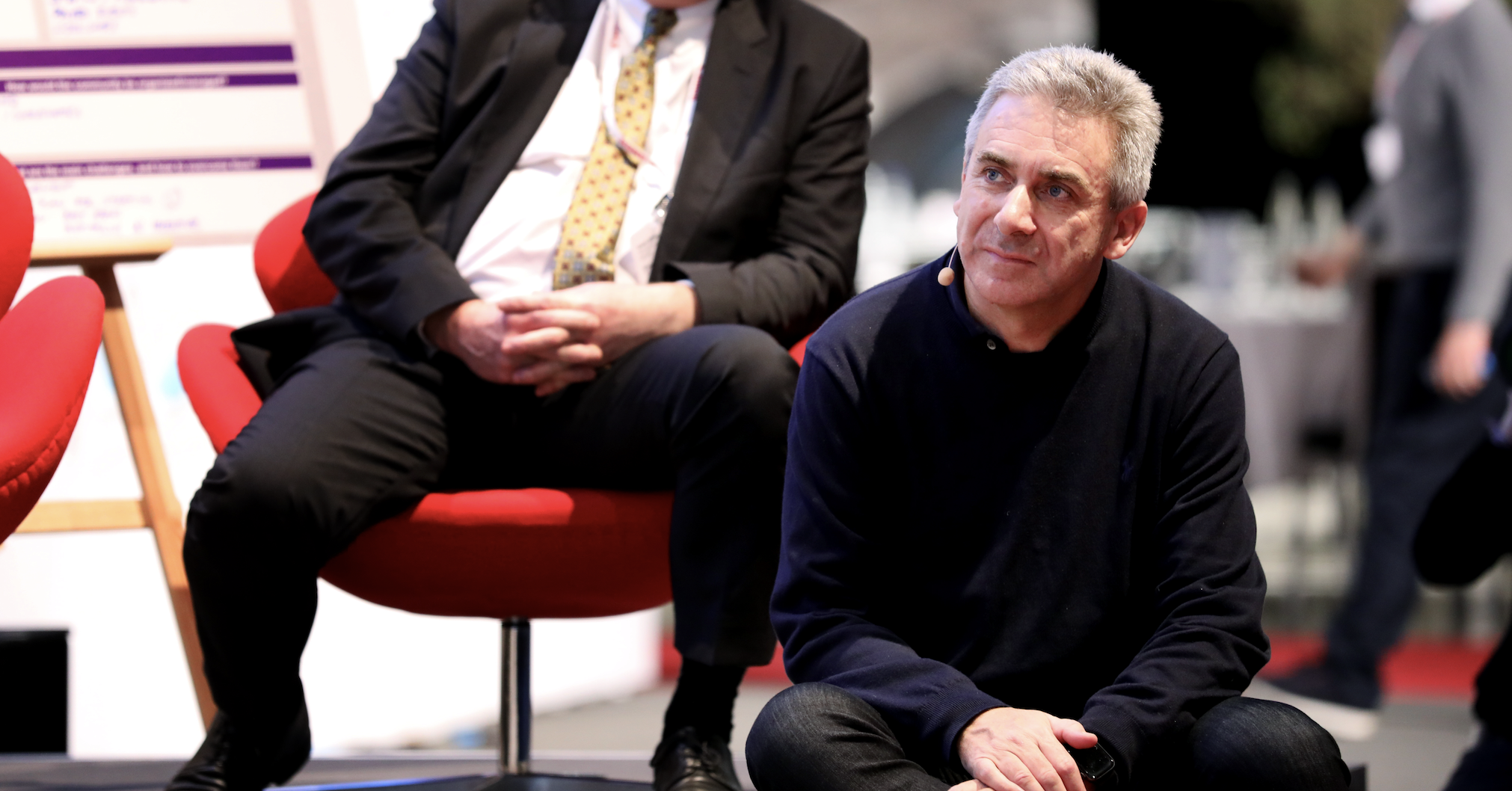
July 2025 … Businesses as platforms for change
At the OECD in Paris, I worked the some of the world’s leading international organisations seeking to enable change in our world, bringing together governments and companies to address the challenges and opportunities of those six megatrends. I particularly focused on projects in emerging markets, from Asia to Latin America, where a little organisation and investment nudge can connect private and public sectors to make a huge difference to local societies, driving new entrepreneurial action.
- The Leader’s Leap … stepping up from being a manager to leader is more significant and difficult than most people imagine; navigating chaos, innovative problem-solving, driving growth.
- Customer Psychology … from neuroscience to nudges, 95% of consumer decisions are subconscious, most in less than 2 seconds, and 80% of product launches fail. So how can business know people better than they know themselves?
- Reinventing business with a future mindset … anticipatory living and shapeshifting organisations, meta systems and fractal growth loops … 10 radical pathways to more enlightened business transformation
CEOs have a huge challenge in today’s dynamic markets, addressing a diversity of competing forces, while also seizing the best new opportunities. Working with the new country-based CEOs of Vodafone, we sought to make sense of their dynamic markets, and how to align investment and resources to survive today and thrive tomorrow. Not easy, but an exciting journey to map out and lead their teams forwards with new visions and approaches.
- CEO fear mass extinction … PwC’s Global CEO Survey said that 45% of CEOs believe their current business model will not be viable in 10 years without a total AI pivot.
- The “sovereign search” breakout … Perplexity AI reached 100 million monthly users, marking the first real threat to Google’s search dominance in 25 years.
- US tariff impact … reports showed 32% of trading businesses were already seeing 18% cost increases due to the newly implemented, and constantly renegotiated, US trade barriers.
- Global 500 … Walmart is #1 for the 12th year (still generating more revenue than Amazon, although Amazon is 3 times more valuable). Aramco is the world’s most profitable company ($105 billion), but 3 times less valuable than Nvidia.
August 2025 … Reinventing everything, everywhere
Japan’s Minebea Mitsui started out 75 years ago as one of the world’s leading ball bearing manufacturer. After multiple reinventions – enabled through acquisitions, integrations and transformations – it is now precision electronic components business supporting the future of AI and energy, EVs and robotics. I helped MM explore how to fuse these capabilities with new sustainable models which enable companies to go beyond net zero.
- The Curious Leader’s Guide to the Future … 250 forces shaping tomorrow, from AI and ageing to batteries and brains, climate and crypto to DAOs and DNA; the ideas and innovations driving every business future
- Reinventing Business with AI… the 5 big shifts enabled by AI that can reinvent every business, inspired by TikTok and L’Oreal, Insilico to PingAn, Enel and Inditex, Amazon and Coke
- The Hire-Wire Act of Leadership … Leading in a world of intense competition and relentless change; being visionary and innovative, learning to adapt and endure; inspired by Taylor Swift, Roger Federer, Beyoncé, Lionel Messi and more
“Reinvention” has become my keyword this year. And so I’ve spent much time over recent months researching and writing my next book, The Reinvention Playbook. Over my previous 10 titles, I’ve developed a model that combines deep insight and interviews into what’s actually happening in companies, with the practical frameworks to apply them to your business. Of course, reinvention is not new – Lamborghini went from world’s leading tractor company to supercars, Samsung went from grocery stores to smartphones – but it has become the new superpower of business leaders in a world of relentless change.
Also in August …
- Humanoid robotics pilot … Tesla deployed the first 1,000 “Optimus” robots into its Texas Gigafactory for assembly line testing. 2026 will see a significant pivot to physical AI, fusing intelligence with robotics.
- BlackRock’s tokenization fund … the “BUIDL” fund reached $5 billion in assets, proving that “Real-World Asset” (RWA) tokenization is now institutional grade.
- Nvidia brand … in Interbrand’s Best Global Brands 2025 reported Apple and Microsoft continued to lead, but Nvidia saw the largest leap in brand value in the history of the report.
- Algorithmic advertising … AdAge’s World’s Largest Advertisers 2025 highlighted the shift from “broadcast spending” to “algorithmic placement” with retail media networks (Amazo and Walmart) taking the lead.
September 2025 … Finding new growth and innovation
Insurance might seem like an industry immune to change, but with a dramatic increase in risks and payouts due to climate change – think of the floods in Europe, and wildfires in LA, earlier this year – it is embracing the latest AI-enabled predictive technologies to transform its business models from paying claims to helping clients reduce risks.
- The New Growth Playbook… Unlocking the new growth engines that enable businesses to thrive … accelerating growth in a world of relentless change and incredible opportunity.
- The Super Innovators … 10 radical ways to disrupt conventions, embrace deeper insights, unlock valuable assets, and stretch innovation for more dramatic impact.
- Leading in the Age of Paradox … “There’s never been a better time, but there’s never been a worse time.” Thriving in a world of challenge and uncertainty, change and opportunity.
In Berlin, in the street that once had the wall running down it, I worked with Eurapco to explore how companies like Allianz and Swiss Re are reinventing insurance by embracing AI to anticipate risks and build new parametric and inclusive business models. In Austria, Uniqa has become an innovator in healthcare services from hospitals and well-being, across Central and Eastern Europe. Meanwhile in Japan, I worked with their leading insurer, Sompo, on its growing portfolio of services for better living, with less risk.
Also in September …
- Lawyers against AI … Pentarc is a major new IP law firm based in Munich, and the largest spin-off in European history, occurred as legal firms restructured to handle the “AI patent wars.”
- Starlink global coverage … SpaceX announced that Starlink now covers 99.9% of the Earth’s surface, fundamentally enabling the “Remote Everything” economy.
- Mistral AI’s $10B valuation … the French AI startup became the “European champion” of AI securing a valuation that rivals Silicon Valley’s heavyweights.
- Wealth transfer … UBS’ Global Wealth Report 2025 analyzed the “Great Wealth Transfer” noting that $84 trillion is currently moving to GenZ and Millennials, who prioritise impact investing.
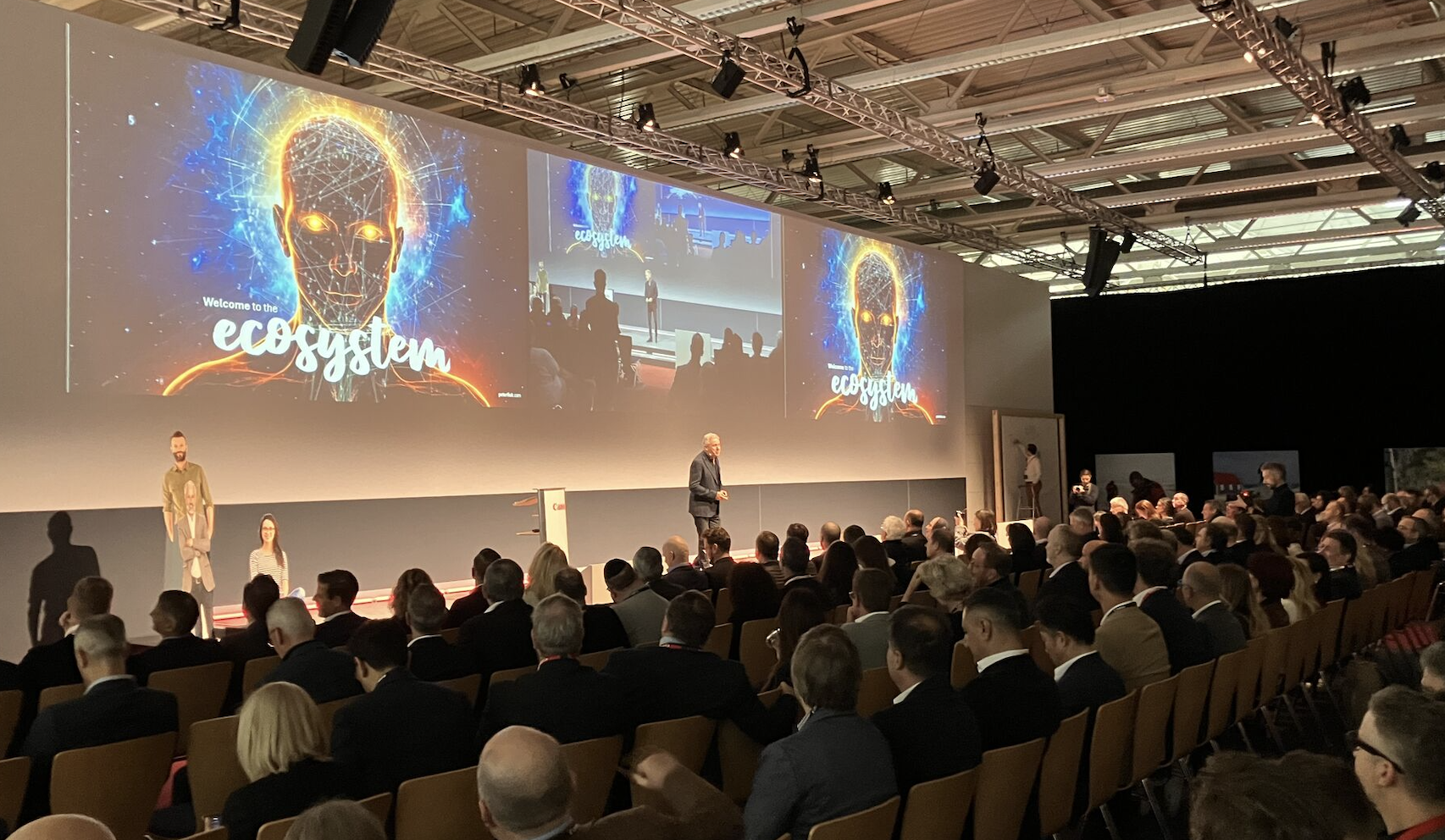
October 2025 … Data, networks and the “Nexus Effect”
“The Nexus Effect” is an idea that I have worked on for sometime, how organisations can embrace the idea of network thinking to create more integrated and personalised services for consumers, through platform and community-based models. Nestle Purina, one of the world’s leading petcare companies, embraced the concept as their new strategy, and in Barcelona I worked with their European leaders to explore how it can transform their business, from product to consumer, services and experiences, over the coming years.
- The Nexus Effect … How brands and business can multiply their impact by unlocking the power of connections; today’s economy is no longer defined by the simple transaction of product for price, but by networks of value, communities to ecosystems, enabled by data and networks, that bind customers and companies together in ongoing relationships.
- The AI-Enabled Leader … how AI is rapidly transforming the way leaders think, decide and act; a new leadership mindset, with inspiration from Apple and Inditex, LVMH and Kering, Ferrari and Nvidia
- Breakthrough Ideas for Business Leaders … reshuffle and regenerate, courage and the hive mind, from paradoxes and polarities, to proximity and spaciousness, with net positive impact
In Zurich, I worked with the leaders of Richemont, one of the world’s leading luxury businesses, with brands like Cartier and Jaeger-LeCoultre. How will AI transform their world, from artisan craftsmanship to personal relationships? Rather than AI automation, it will be a story of human augmentation, from digital-twinned design to blockchain authenticity, ultra-niche marketing to price optimisation. Like every industry, AI will be transformative, but in relevant and valuable ways.
- Fat jabs … Novo Nordisk, the Danish pharma giant, won a landmark patent battle for Wegovy, securing its dominance in a market now estimated at $100 billion.
- Reglobalisation … WTO’s World Trade Report 2025 explored “re-globalisation” where trade is growing between “politically aligned” nations (aka friend-shoring) rather than the cheapest providers.
- End of the MBA … FT’s Executive Education Rankings 2025 showed a surge in demand for short-form “AI Leadership” courses over traditional two-year MBAs. Indeed, MBAs have become increasingly commoditised and first degree-like.
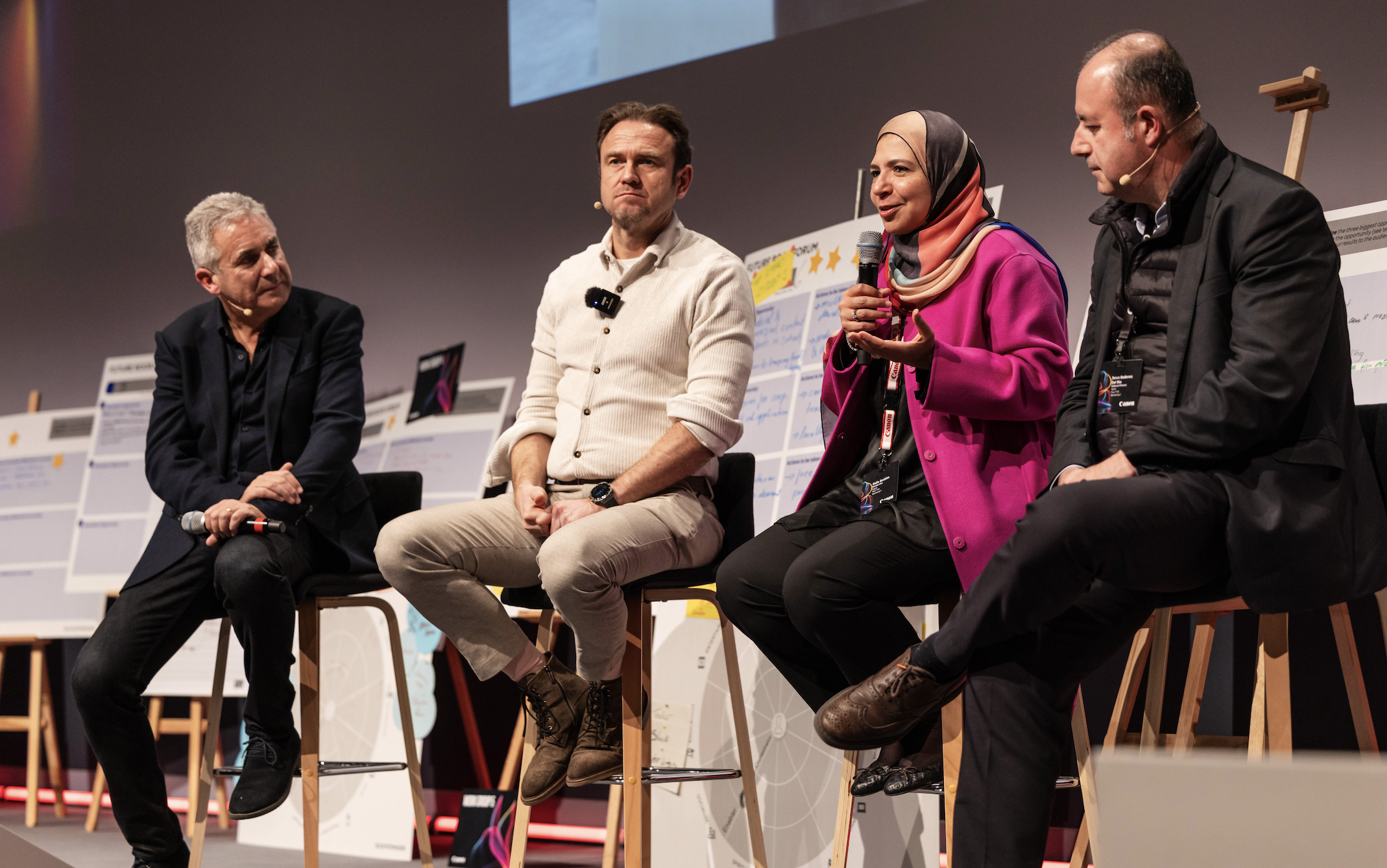
November 2025 … How to build a future megacity
12 years ago I created the annual Future Book Forum with my client, Canon Europe. They wanted to sell next generation printing machines to printers, but I argued that they should really be selling the benefits of digital printing to the decision-makers, the publishers. Imagine a world where every book can be personalised, printed locally on demand, with zero waste. It’s taken a decade, but as I opened this year’s event, it became clear that the publishing world is being rapidly transformed, from stackable content to enriched experiences.
- The Dual OS of Business … How the best organisations reinvent themselves to perform and transform, simultaneously and continuously, to exploit today and explore tomorrow. This new operating system challenges and transforms how a business approaches strategy, investment, leadership, prioritisation, and delivery.
- The Regenerative Revolution … Reinventing business for people, planet and profit; from Acciona and Arket, to Greiner and Interface, Veja and Vestre; going beyond sustainability to create net positive futures
- How to be Future Ready … from strategic foresight to dynamic strategy, agile organisations and cultural plasticity: the best ways to shape your future, and shift before you have to
KAEC, or the King Abdullah Economic City, is one of the most ambitious megacity construction projects in the world, located just north of Jeddah, Saudi Arabia, on the Red Sea. With a super-port ready to connect Asia and Europe, and a perfectly located manufacturing hub it has huge potential. We explored alternative commercial Smart City models, from the classic city designs of Amsterdam and Copenhagen, to vibrant new cities like Songdo, the South Korean port city, and Tangier, as a gateway to Africa.
- Personal Shopping … 70% of Black Friday purchases were driven by “hyper-personalized” AI ads, with conversion rates doubling compared to 2024.
- TexMex Business … Trump’s “Border Commerce” Plan included new announcements regarding North American trade routes and led to a 15% surge in Mexican logistics stocks.
- Green Compute … UNEP’s Emissions Gap Report 2025, released ahead of COP30, highlighted that “Green Compute” (low-energy AI) is now a critical component of national carbon targets.
- COP30 “green surge” … The climate summit in Brazil led to $1 trillion in new “regenerative finance” commitments from global banks.
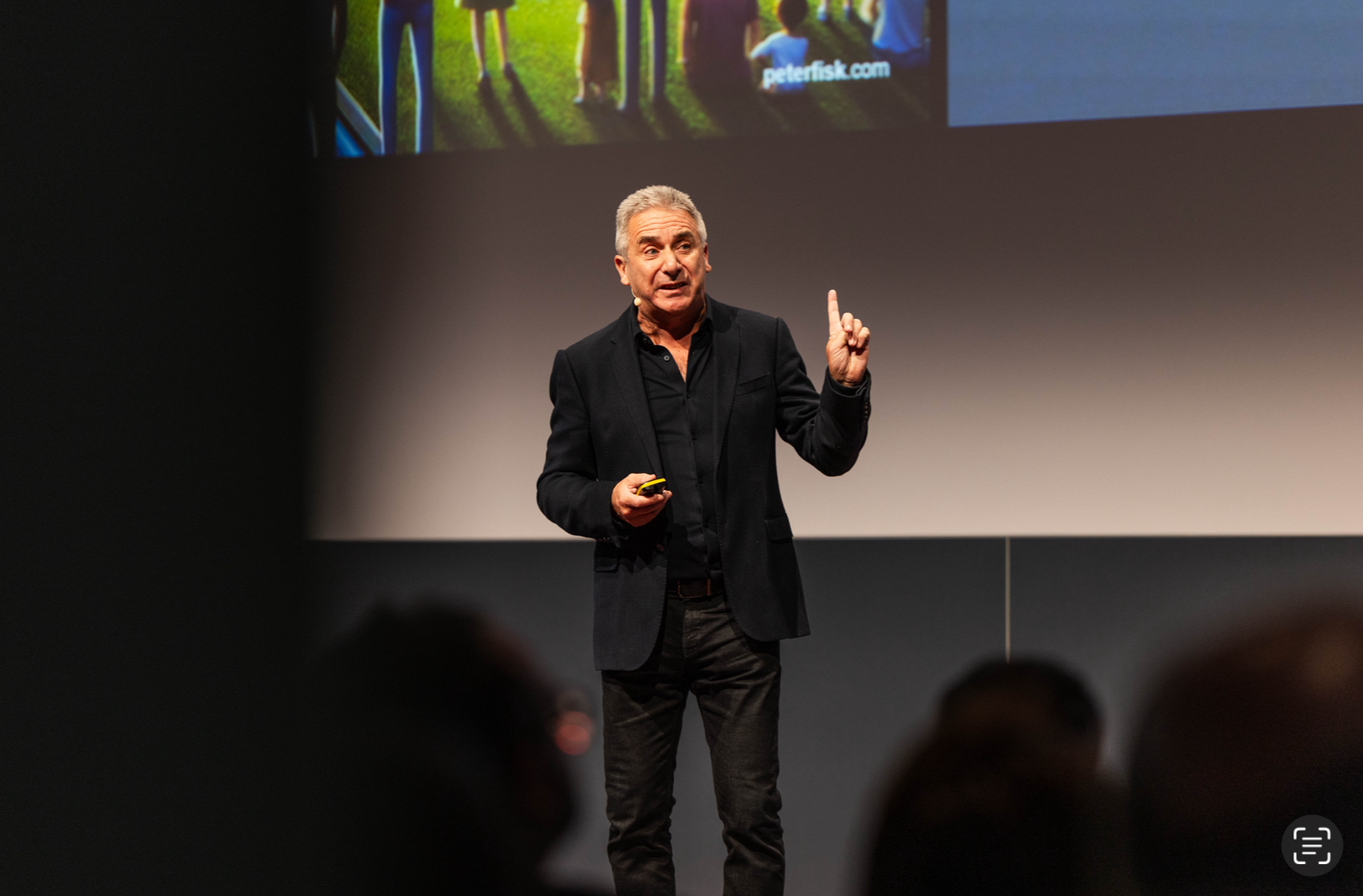
December 2025 … Changing world, leading change
Azerbaijan is often described as the land of fire, symbolised by huge flaming oil fields visible on your arriving flight, to the vast digitally-flaming modern tower blocks in the heart of Baku. It is a small country with big ambitions, and Pasha Holding is one of its largest businesses. From banking and insurance to real estate and hospitality, I worked with Pasha’s leaders to understand the convergent opportunities of AI and human talent, and how to reinvent business models and operations in a world of new capability and expectation.
- Strategic Jazz … My new article “from Sting’s improvisation to strategy’s adaptiveness” explored dynamic strategy, combining direction/focus and agility/change with a strategy process.
- Trend Kaleidoscope 2026 … curating and connecting all the trend reports for business leaders; from I acceleration and consumer ambivalence, lifestyle fluidity and global slowbalisation
- 26 Trends for 2026 … my A-Z of how 2026 will be a pivotal year of big shifts for business: remapping of human priorities, redesign of market systems, reinvention of business models.
I ended my year in Morocco, including a road trip in torrential rain from Marrakesh to Rabat. Morocco has the world’s largest reserves of phosphate rock, around 50 billion tonnes, 70% of the world’s total. As a result, OCP has become a global leader in fertiliser, and potentially much more. In Ben Guerir, I visited the stunning UM6P, a vast new campus focused on applied sciences and entrepreneurship – from coding labs, to startup accelerators, test farms and solar energy park. Meanwhile the Jorf Lasfar industrial complex near Casablanca is an impressive example of a sustainable, closed loop industrial ecosystem, including 100% clean energy, water desalination and hydrogen production. A rapidly changing business, with a dynamic strategy.
Also in December …
- Nvidia’s unstoppable year … Nvidia ended 2025 as the world’s most valuable company (having hit $5 trillion market cap in October, then falling back slightly)
- TikTok survives in USA … US authorities finally allowed TikTok, the Chinese subsidiary of Bytedance, to continue operating in the US under new “localised data” laws.
- Global business health … Global GDP grew at a resilient 2.9% at end of 2025, defying “recession” predictions as AI-driven productivity gains began to show in national data.
- More change ahead … WEF’s review of 2025 summarised how regenerative business and sovereign AI reshaped the corporate world, while The Economist’s predictions for 2026 included a “robotics inflection point”.
Top 10 Business Concepts of 2025
Business has evolved from experimenting with “future tech” to institutionalising it as a core economic pillar. Here are my top 10 business concepts of 2025:
1. Sovereign AI
Sovereign AI is the strategic movement by nations and corporations to build, host, and control their own artificial intelligence infrastructure, models, and datasets. Unlike the early 2020s, which relied on US-based “Big Tech” clouds, 2025 is defined by “digital borders.” Countries are prioritizing AI systems that reflect their local languages, cultural nuances, and legal frameworks (like GDPR) to avoid foreign dependency. This ensures that sensitive data never leaves national or corporate jurisdiction, protecting against geopolitical shifts and ensuring that the “brain” of a nation’s economy remains under its own control.
Example: Iliad (France) … Through its “Kyutai” nonprofit lab, it has built Europe’s first open-source AI models to ensure European data sovereignty.
Read more: STL Partners: Sovereign AI Country Playbooks (2025)
2. Agentic Workflows
The era of “chatting” with AI is over; 2025 is the year of “AI Agents.” Agentic Workflows involve multiple specialized AI agents working together autonomously to complete complex, multi-step business objectives without constant human prompting. For instance, an “Agentic Sales Team” might include one agent to research leads, another to draft personalized emails, and a third to manage the calendar, all collaborating in the background. This shift moves AI from a passive assistant to an active participant in the workforce, focusing on goal-oriented execution rather than just answering questions.
Example: Microsoft … Their “Copilot Studio” allows enterprises to build autonomous agents that manage end-to-end supply chain logistics.
Read more: DeepLearning.AI: The Era of Agentic Workflows
3. The Humanity Premium
As AI-generated content and services become the “commodity” standard, businesses have begun charging a “Humanity Premium” for products and services guaranteed to be human-led. This marketing concept flips the script on automation: human empathy, artisanal craft, and physical presence are now marketed as luxury status symbols. Whether it is a “Hand-Knitted” garment or “Human-Only” customer support, brands are using certification labels to prove no AI was used in the process. This has created a bifurcated market where automation is cheap and “Human-Made” is the new high-end.
Example: Brunello Cucinelli … The Italian luxury brand maintains its ultra-high valuation by emphasising “Humanist Capitalism” and artisanal hand-crafting.
Read more: Deloitte Digital: 2025 Marketing Trends – Human AI Synergy
4. Digital Product Passports (DPP)
Driven by EU regulation, the Digital Product Passport is a mandatory “digital twin” for physical goods. By scanning a QR code or RFID tag, consumers and recyclers can access a product’s entire history—including raw material sourcing, carbon footprint, repair instructions, and recycling protocols. This concept has transformed global supply chains from a “take-make-waste” model to a circular one. Companies no longer just sell a product; they manage its lifecycle. In 2025, the DPP has become the global standard for transparency, forcing even non-EU companies to comply to maintain market access.
Example: H&M Group … Now provides “Digital IDs” for garments to facilitate their “Re-wear” and recycling programs.
Read more: European Commission: Digital Product Passport Framework
5. Asynchronous Mastery
The “meeting-first” corporate culture collapsed in 2025, replaced by Asynchronous Mastery. This concept prioritizes “deep work” by making live meetings the exception rather than the rule. Employees communicate via recorded video memos (Loom), threaded documentation (Notion), and shared project boards (Monday). This allows global, distributed teams to collaborate across time zones without the “Zoom fatigue” that defined the early 2020s. Mastery in this context means a company’s ability to move projects forward without every stakeholder needing to be online at the same time, significantly boosting productivity and employee satisfaction.
Example: GitLab … An “all-remote” pioneer that operates almost entirely through public documentation and asynchronous workflows.
Read more: Great Place To Work: Building an Async-First Culture (2025)
6. Real-World Asset (RWA) Tokenization
RWA Tokenization is the process of bringing “off-chain” assets—such as real estate, gold, fine art, or government bonds—onto the blockchain as digital tokens. This allows for fractional ownership, where a retail investor can buy 1% of a commercial skyscraper or a rare painting. In 2025, this has moved from a crypto-niche to a $30 billion institutional standard. By automating the legal and financial layers through “smart contracts,” RWA tokenization reduces transaction costs, increases market liquidity, and allows for 24/7 global trading of assets that were previously locked in slow, paper-based systems.
Example: BlackRock … Their “BUIDL” fund tokenizes US Treasury bills, allowing for instant settlement on the Ethereum blockchain.
Read more: XBTO: Real-World Asset Tokenization Use Cases 2025
7. Regenerative Business Models
Moving beyond “Sustainability” (which aims to do less harm), Regenerative Business Models aim to leave the environment and society better than they were found. This involves “Net Positive” goals, such as sequestering more carbon than emitted or returning cleaner water to the ecosystem than was taken. In 2025, companies are rewarded by investors for “restorative” supply chains. This concept treats nature not as a resource to be extracted, but as a stakeholder to be nurtured. It is the evolution of ESG into a more proactive, biology-integrated form of capitalism.
Example: Patagonia … Their “Worn Wear” and “Regenerative Organic” initiatives actively restore soil health and reduce textile waste.
Read more: Boss Magazine: 6 Inspirational Regenerative Examples in 2025
8. Algorithmic Management Transparency
As AI began managing human workflows—scheduling shifts, tracking productivity, and even assisting in hiring/firing—the concept of Algorithmic Transparency became a legal necessity in 2025. This ensures that employees have the “Right to Explanation” regarding how an automated system made a decision affecting their livelihood. Businesses must now maintain “human-in-the-loop” oversight, preventing “death by algorithm.” This concept balances efficiency with worker rights, requiring companies to publish “Algorithm Registers” that detail what data is collected and how it is used to monitor or reward staff.
Example: Uber … Under new EU “Platform Work” directives, they have implemented features explaining fare and route logic to drivers.
Read more: European Parliament: Rules on Algorithmic Management at Work
9. Hyper-Personalization at Scale
In 2025, marketing has moved from “Segmenting” (targeting groups) to “Individualizing” (targeting the person). Hyper-Personalization at Scale uses generative AI to create unique websites, ads, and product recommendations for every single user in real-time based on their current mood, biometric data, and past behavior. A website might change its layout, colors, and tone of voice instantly to match the person viewing it. This concept has vastly increased conversion rates, as consumers no longer see “generalized” ads, but rather products that appear to be custom-tailored to their specific needs at that exact moment.
Example: Coca-Cola … Their 2025 “Create Real Magic” platform uses AI to generate individualized digital ads for millions of fans simultaneously.
Read more: Bloomreach: AI Personalization Examples and Challenges (2025)
10. Compute-Standard Valuation
Compute-Standard Valuation is a new economic theory used to value tech-heavy companies not just by revenue, but by their “Compute Reserves”—the amount of GPU power and high-quality proprietary data they own. In 2025, “Compute” is considered the new “Oil.” Investors look at a company’s ability to process AI models as a leading indicator of future growth. This has led to “Compute Hoarding,” where firms like Meta or Tesla are valued higher because of their massive H100/Blackwell chip clusters, which are seen as the “hard assets” of the digital age.
Example: Nvidia … Their valuation reflects their role as the sole supplier of the “compute currency” that powers the entire 2025 global economy.
Read more: Visual Capitalist: Market Cap of the World’s Most Valuable Companies 2025
Top 10 Growth Companies of 2025
Amidst all the focus on technologies, changing markets and profitability, it’s easy for companies to stop growing. Growth remains the key driver of value creation, and the growth engines available to a company are more diverse and powerful than ever:
1. OpenAI (USA): Transitioned from a research lab to an enterprise powerhouse. In 2025, their “GPT-5” enterprise integration led to a 300% revenue surge as corporations replaced legacy software with agentic AI systems.
Read more: Fortune: OpenAI’s Path to $10B Revenue
2. BYD (China): Surpassed Tesla in global EV sales by dominating the “affordable luxury” segment in Europe and Southeast Asia, growing their export volume by 150% this year alone.
Read more: Bloomberg: BYD’s Global Expansion Strategy
3. Perplexity AI (USA): The “search disruptor” saw exponential user growth as people abandoned traditional ad-cluttered search engines for direct, AI-cited answers, achieving a 400% increase in daily active users.
Read more: TechCrunch: The Rise of Answer Engines
4. Eli Lilly (USA): Driven by the global rollout of “Zepbound,” their growth is fueled by the metabolic health revolution, making them the fastest-growing pharmaceutical giant in history by market cap.
Read more: CNBC: Eli Lilly’s Metabolic Health Dominance
5. Scale AI (USA): As every company rushed to build “Sovereign AI,” Scale AI became the essential provider of “RLHF” (Reinforcement Learning from Human Feedback), doubling their workforce to meet data-labeling demands.
Read more: Forbes: Why Scale AI is the Data Engine of 2025
6. Mistral AI (France): The “European AI Champion” achieved massive growth by offering lightweight, open-source models that appeal to privacy-conscious EU governments and industrial giants.
Read more: Le Monde: Mistral’s Role in EU Tech Sovereignty
7. Arm Holdings (UK): Their energy-efficient architecture became the standard for AI-capable PCs and smartphones, leading to a record-breaking year for license royalties as the “Edge AI” era began.
Read more: Reuters: Arm’s Record Royalties in the AI Era
8. Grab (Singapore): Successfully pivoted to a “Super-App for Finance,” seeing 80% growth in its digital banking division across Southeast Asia, moving far beyond its ride-hailing roots.
Read more: Nikkei Asia: Grab’s Fintech Revolution
9. Databricks (USA): Profited from the “Data Maturity” phase of 2025, helping companies organize messy internal data to make it “AI-ready,” leading to a highly anticipated and record-breaking IPO.
Read more: Wall Street Journal: Databricks and the AI Data Goldmine
10. NuBank (Brazil): Now the most valuable financial institution in Latin America, they grew by 60% by expanding into Mexico and Colombia with frictionless, mobile-first credit products.
Read more: Financial Times: NuBank’s Latin American Expansion
Top 10 Product Innovations of 2025
From Apple’s intelligence to Dyson’s hair straighteners, Samsung’s ring and Sony’s EV, product innovations were straight out of sci-fi movie of a decade ago. AI is now embedded in almost every walk of life, often without us realising:
1. Apple Intelligence (Vision Pro 2): The first wearable to replace the laptop for many professionals, featuring “Eyes-Free” AI navigation and ultra-high-definition spatial multitasking.
2. Dyson Airstrait 2.0: A masterclass in “hard-tech” engineering that uses high-pressure air to style hair without heat damage, becoming the fastest-selling beauty tool in history.
3. The “Humanoid” Optimus (Gen 3): Tesla’s first commercially available robot for light industrial work, marking the beginning of the “Robotics-as-a-Service” (RaaS) business model.
4. Meta Orion Glasses: The first true AR glasses that look like standard frames, allowing users to see digital “holograms” over their real-world environment during business meetings.
5. Google Gemini 2.0 Ultra: The first “Omni-Model” that can see, hear, and speak in real-time with zero latency, effectively acting as a personal chief of staff for millions.
6. Rivian R2: The “Electric Jeep” for the masses; its launch was the most successful automotive debut of 2025, proving that affordable EVs can still be “cool.”
7. Samsung Galaxy Ring: The product that took “Health-Tech” mainstream by providing hospital-grade sleep and stress tracking in a device that never needs to be taken off.
8. Sony “Afeela” EV: A collaboration with Honda, this car is the first “Computer on Wheels,” designed for autonomous transit where the interior serves as a mobile cinema/office.
9. Starlink Mini: A backpack-sized satellite dish that brought high-speed internet to the most remote “Digital Nomad” locations on earth, fundamentally changing the “Work from Anywhere” concept.
10. Adobe GenStudio: A specialized “AI-First” creative suite that allows brands to generate 1,000 unique, brand-safe ad variations in seconds, revolutionizing the marketing agency model.
Top 10 Ad Campaigns of 2025
While ads are no longer the powerful marketing tool they were, they are still cultural icons narrating brand stories. They reflect changing attitudes and expectations of consumers, and the roles of business in people’s lives:
1. Dove: “Keep Beauty Real” — A global pledge not to use AI-generated women in their ads. It sparked a worldwide conversation about the “Humanity Premium” in marketing.
2. Duolingo: “The Duo Layoff” — A viral prank where the mascot “Duo” was supposedly replaced by AI, only to return and prove that “Human Motivation” is irreplaceable for learning.
3. Nike: “Winning Isn’t for Everyone” — A gritty, elite-focused campaign for the 2025 World Games that abandoned “lifestyle” vibes to return to Nike’s high-performance roots.
4. Spotify: “Your 2025 AI-Ears” — An evolution of “Wrapped” that used AI to generate a podcast summarizing your year in music, narrated by a voice clone of your favorite artist.
5. Coke: “Masterpiece 2.0” — A seamless integration of classical art and modern AI, where museum paintings come to life to share a Coke, showcasing the “Human-AI Synergy.”
6. Lego: “Adults Welcome” — A series of high-design ads targeting “Kidults” (adult collectors), turning Lego sets into home décor status symbols for the millennial generation.
7. Airbnb: “Live Like a Legend” — A campaign offering stays in famous fictional locations (like the Up house), focusing on “Experiential Luxury” over mere accommodation.
8. IKEA: “The Circular Sofa” — A campaign promoting their new “Buy Back” program, where they showed sofas from 1980 still in use, emphasizing durability over fast furniture.
9. Cadbury: “Generosity Maps” — An AI-powered app that allowed users to find and support local “mom-and-pop” shops in their neighborhood, positioning the brand as a community builder.
10. Patagonia: “Don’t Buy This AI” — A bold campaign criticizing the carbon footprint of large AI models, urging tech companies to use “Regenerative Compute” infrastructure.
Top 10 Business Transformations of 2025
Business transformation is my leadership superpower. The ability to fundamentally transform the core of your business in some significant way. Not all of these are entire journeys, but they are key pivotal moments as some of the most venerable companies seek to reinvent themselves in a changing world:
1. Walmart: Transformed from a “Big Box Retailer” into a “Logistics and Data Company” using its 4,000 stores as automated “Micro-Fulfillment Centers” for 30-minute drone delivery.
2. Siemens: Pivoted to “Industrial Metaverse” solutions, allowing factories to be designed and tested entirely in digital twins before a single brick is laid.
3. Mercedes-Benz: Shifted from “Selling Cars” to “Software-as-a-Service,” where vehicle features (like extra horsepower or AR-HUD) are unlocked via monthly subscriptions.
4. Philips: Completed its 10-year transformation from a lighting company to a “Health-Tech” leader, focusing entirely on AI-driven diagnostic imaging and patient monitoring.
5. Disney: Transformed “Disney+” into a “Spatial Media” platform, allowing users to “step into” scenes of movies using VR/AR, blurring the line between cinema and theme parks.
6. Maersk: The shipping giant integrated “Blockchain and AI” to create a paperless global supply chain, reducing administrative time for cross-border shipping by 90%.
7. Accenture: Re-trained 700,000 employees in AI literacy, transforming from a traditional “Consultancy” into an “AI Implementation Partner” for the Fortune 500.
8. Goldman Sachs: Replaced 20% of its entry-level analyst tasks with “Automated Financial Agents,” shifting their talent strategy toward “AI Prompt Engineering” and high-level strategy.
9. L’Oréal: Transformed into a “Beauty-Tech” company, using AI to provide personalized “Biometric Skincare” formulas delivered via 3D-printing devices in the home.
10. Standard Chartered: Successfully pivoted to “RWA Tokenization” becoming the leading bank for digital assets and blockchain-based trade finance in Asia and Africa.
Top 10 Business Leaders of 2025
Leadership is more about the future than ever before – making sense of a changing world, seeing the best opportunities, envisioning new business models, and leading the transformational journey to get there. Here were my top 10 leaders, who were also influential across their industries:
1. Jensen Huang (Nvidia): The “General of the AI Revolution.” His vision for accelerated computing has made him the most watched leader in the world, influencing every sector from healthcare to heavy industry.
2. Lisa Su (AMD): Credited with breaking the Nvidia monopoly by providing the “open alternative” to AI chips, ensuring the global market remains competitive and innovative.
3. Sam Altman (OpenAI): Continues to navigate the complex intersection of global policy, AI ethics, and product deployment, effectively setting the pace for how society interacts with artificial intelligence.
4. Fei-Fei Li (World Labs): The “Godmother of AI” launched World Labs in 2025, pioneering “Spatial Intelligence”—the ability for AI to understand the 3D physical world, a breakthrough for robotics.
5. Bernard Arnault (LVMH): Proved that luxury can survive the AI era by doubling down on “Human-Only” experiences and artisanal scarcity, maintaining LVMH’s status as Europe’s cultural and economic anchor.
6. Satya Nadella (Microsoft): Successfully integrated AI across the world’s most used software suite, turning Microsoft into the “Operating System of the AI Economy” without losing market share to agile startups.
7. Elon Musk (Tesla/xAI/SpaceX): Remains influential through the “Grok” AI ecosystem and the successful commercialization of the “Optimus” humanoid robot, which began pilot testing in factories in late 2025.
8. Shemara Wikramanayake (Macquarie): Emerged as the leading global voice on “Green Infrastructure Finance,” directing billions into the renewable energy grids required to power massive AI data centers.
9. Mira Murati (Former OpenAI/New Venture): After her high-profile departure, her new venture into “Safe Robotics” has become the most anticipated startup launch of 2025, influencing the future of human-robot interaction.
10. Gwynne Shotwell (SpaceX): While Musk focuses on AI, Shotwell has turned Starlink into a global telecommunications juggernaut, providing the connectivity backbone for 2025’s “Remote-Everything” business models.
Top 10 Business Books of 2025
And finally books. Yes, we’re still reading, and books create platforms for new ideas, provocations and progress. They capture the aspirations and insights about what comes next, and how we can thrive in a world we perhaps haven’t yet decoded:
1. The Thinking Machine by Stephen Witt: The definitive biography of Nvidia and the 30-year journey to the AI revolution.
2. House of Huawei by Eva Dou: An investigative look at how the Chinese giant navigated the “Tech Cold War” to remain a global leader.
3. The Agentic Era by Andrew Ng: A strategic guide for CEOs on how to transition from “Software-First” to “Agent-First” business models.
4. Abundance Thinking by Peter Diamandis: A 2025 update on how AI and robotics are solving the world’s “Scarcity” problems (energy, water, and food).
5. The Circular Economy Handbook by Catherine Weetman: The essential guide for complying with 2025’s new “Digital Product Passport” regulations.
6. Asynchronous Mastery by Jason Fried: The co-founder of Basecamp details how to build a billion-dollar company without a single “status meeting.”
7. The Humanity Premium by Scott Galloway: An analysis of why human-led services will become the ultimate luxury in a world of 5-cent AI content.
8. Sovereign Tech by Marietje Schaake: A deep dive into why nations are reclaiming their digital borders and what it means for global trade.
9. Tokenizing the World by Larry Fink: The BlackRock CEO explains why every financial asset will eventually exist as a digital token on a blockchain.
10. Regenerative Leadership by Laura Storm: A roadmap for moving beyond “Sustainability” to “Net-Positive” corporate governance.
Here’s saluting a great year of learning and progress in 2025. Onwards to an accelerating future … with thanks and best wishes to everyone I worked with in 2025!
More from the blog